“War does not determine who is right – only who is left.” -Bertrand Russell

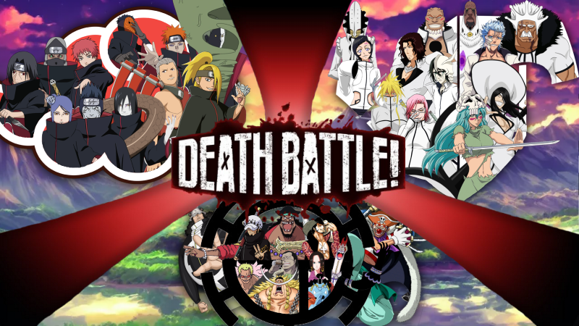
The Akatsuki, Naruto’s rogue shinobi terrorist group.
The Espada, Bleach’s highest-ranking Arrancar.
The Shichibukai, One Piece’s Warlords of the Sea.
Whether you’re an aspiring Hokage, substitute Shinigami, or soon-to-be Pirate King, it’s undeniable that like any good shonen protagonist, you’re gonna run into a lot of adversity along the way. These three anime organizations are famed for their unbelievable strength, their diverse rosters, and putting their protags on the ropes to an extent that few others can claim. So today, we’re pitting ‘em against each other in an all-out war for holy shonen supremacy! Will the Akatsuki force the competition to know pain? Will the Espada crush the souls of their adversaries? Or will the Warlords leave all those in their path drowned? Find out who wins in the biggest, baddest, beefiest DEATH BATTLE! blog we’ve ever done!
Before We Start…
Due to the nature of this blog – specifically the fact that we’re covering three teams for a total of 34 characters – our format for this one will be different than usual, with each team receiving their own dedicated blog post, and the verdict getting its own as well. All specifications for how each team will be handled (such as the specific members we are including, or minutia regarding individual characters) will be made at the beginning of each team document.
The verdict section will include rankings from 3rd to 1st place, in accordance with our stance on the outcome. We will also be including a written fight for a total of five parts in all, which hopefully will allow the diluvial amount of information here to be more easily digested and sorted through. We’re also including an in-depth glossary of all three series for your convenience.
Of note, all calculations will be listed prior to the verdict section, rather than in the team sections. This is both to avoid telegraphing the verdict ahead of time, and to compile the noteworthy calculations for all three verses in one place. Do not be concerned about an absence of calcs in the team sections.
✍️Credits🎬
Glossary
Naruto
(Source)
Have you ever listened to a Naruto debate and wondered what the fuck KCM1 and KCM2 mean, or what people are talking about when they say things like “Hebi Sasuke” or “Edo Madara” or “V2 Killer B”? Well, bad news is we’ll be using those kinds of fan terminologies. Good news is, for ease of understanding, we’ll be explaining right here and now what all of them mean! Consider this the layman’s guide to Naruto. Feel free to consult back here if you ever spot a term that confuses you.
Series Chronology
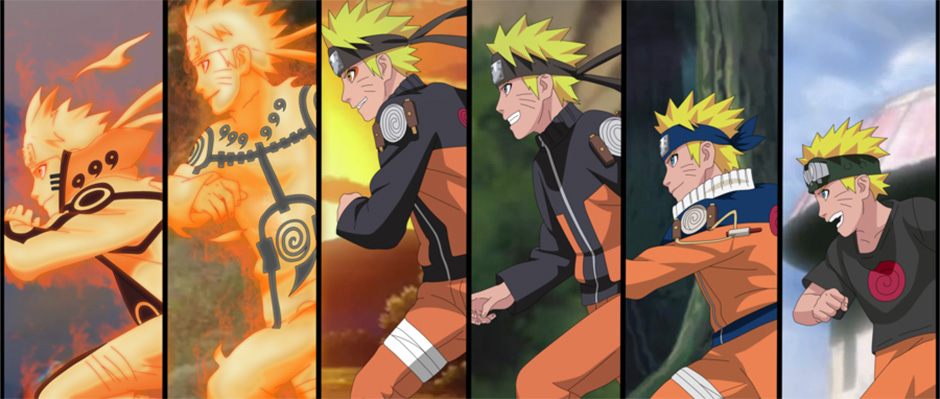
First things first, you have to be able to understand what people mean they refer to different arcs. Since many characters progress in power and ability throughout the series, it’s important to know what point in the timeline we’re talking about at any given time. Naruto is essentially divided into three main parts: Part 1, Part 2 (usually referred to as Shippuden), and Boruto. Part 1 and 2 make up the entirety of the original 700-chapter manga, while Boruto takes place down the line after a considerable time jump. The time period in between Part 2 and Boruto is referred to as the Blank Period.
The progression of the series is as follows:
Part 1
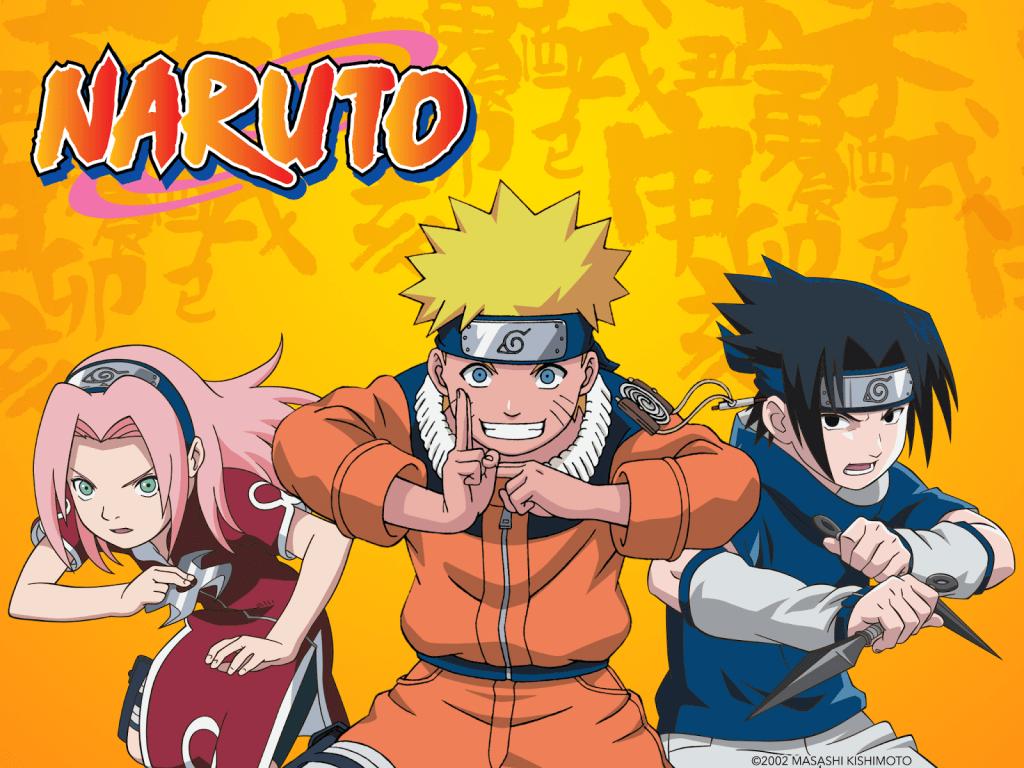
Land of Waves Arc: The first arc in the series, where Naruto, Sasuke, Sakura and Kakashi (known collectively as Team 7) are tasked with escorting a bridge builder to another land, and end up in conflict with shinobi from another village named Haku and Zabuza.
Chunin Exams Arc: The tournament arc, where young shinobi compete for promotion to a higher rank called Chunin. This is the arc where Gaara and his siblings are introduced, as well as Orochimaru. A notable sub-section of this arc is the Forest of Death, which is a portion of the exam where participants need to make their way through a dangerous forest.
Konoha Crush Arc: The Chunin Exams is eventually interrupted by Orochimaru enacting his plans and attempting to assassinate the Hokage, as well as Gaara beginning to transform into his Tailed Beast.
Search For Tsunade Arc: After the Hokage’s death, Naruto and Jiraiya leave Konoha to track down Tsunade, a candidate for Fifth Hokage. Itachi and Kisame also show up at the village and attempt to hunt down Naruto.
Sasuke Retrieval Arc: Sasuke is kidnapped by Orochimaru’s underlings, the Sound Four, and Naruto and the other Genin follow in an attempt to get him back. This culminates in a battle between Naruto and Sasuke in the Final Valley / Valley of the End, which Sasuke wins. Naruto then resolves to get stronger and bring Sasuke back, leading into a 3 year timeskip.
Part 2 (Shippuden)
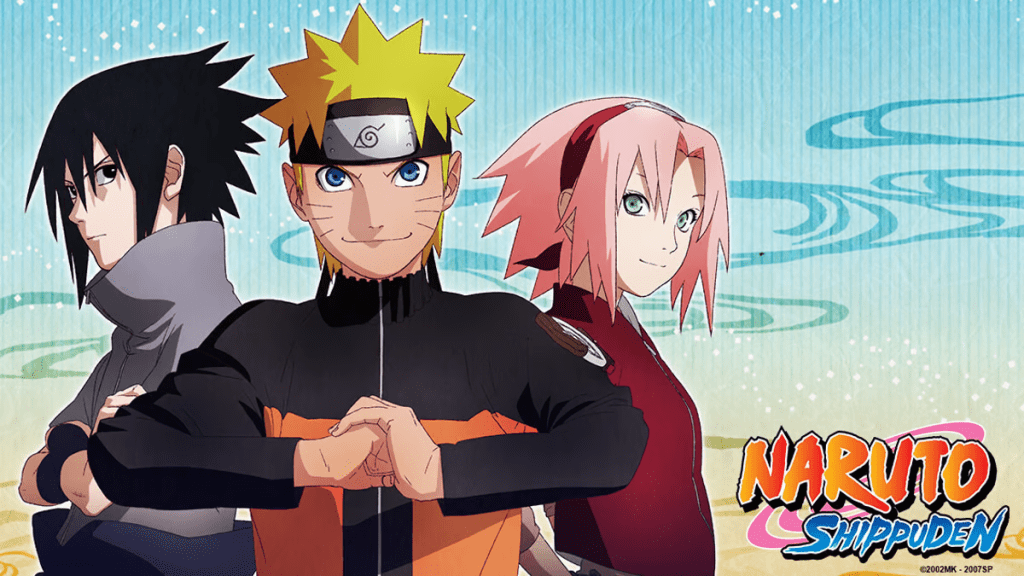
Kazekage Rescue Mission: First post-timeskip arc, in which Deidara and Sasori kidnap Gaara, the new Kazekage, and Naruto and co. have to go save him.
Tenchi Bridge Reconnaissance Mission: Along with two new members of Team 7, Sai and Yamato, Naruto and Sakura use new information from the Akatsuki to try and track down Sasuke, going on a mission to Tenchi Bridge where Sasori had planned to meet up with Kabuto, Orochimaru’s underling.
Akatsuki Suppression Mission: Kakuzu and Hidan are introduced, and Team 10, primarily Shikamaru, end up in conflict with them.
Itachi Pursuit Mission: Naruto and Sasuke both separately attempt to track down Itachi.
Tale of Jiraiya the Gallant: Jiraiya infiltrates the Hidden Rain village and ends up battling Pain, which culminates in his death.
Fated Battle Between Brothers: Sasuke and Itachi’s climactic fight, which ends with Itachi’s death, and is followed by Sasuke learning of Itachi’s true nature.
Pain’s Assault: Pain’s attack on Konoha, in which Naruto masters Sage Mode and battles Pain, eventually defeating him and earning the respect of the village. NOTE that Naruto fans frequently group Tale of Jiraiya, Battle Between Brothers, and Pain’s Assault under the larger umbrella of “the Pain Arc.”
Five Kage Summit: Also known as Gokage Summit if you’re a weeb, which a lot of people are. The Five Kage meet up with each other to discuss how to approach the issue of the Akatsuki, but Sasuke crashes the party, and ends up fighting the Kage.
Fourth Shinobi World War: Most commonly referred to as “the War Arc”, this is technically divided into three sub arcs: Countdown, Confrontation, and Climax. No one ever bothers to differentiate the three, so you don’t need to know the difference. Obito teams up with Kabuto, who has amassed an army of zombie shinobi (known as “reanimated” or “Edo Tensei”) to fight for him, in an attempt to capture Naruto and Killer B, the two remaining Jinchuuriki he needs for his plan. The five great nations unite against them, and a big war happens. Naruto masters the Nine-Tails’ chakra, Madara shows up at this point (he was reanimated), and the reanimation jutsu is eventually halted when Itachi takes out Kabuto. However, Madara and Obito keep going after Kabuto’s defeat, intent on completing their plan to cast the Infinite Tsukuyomi.
Birth of the Ten-Tails Jinchuuriki: Obito completes the Ten-Tails (sort of) and becomes its Jinchuuriki. Shenanigans ensue. He’s eventually defeated, but then Madara just becomes the Jinchuuriki after him. Naruto and Sasuke get their god power-up. Madara casts the Infinite Tsukuyomi, completing his plan.
Kaguya Otsutsuki Strikes: Black Zetsu kills Madara out of nowhere, and Kaguya appears. Team 7 fights her and seals her. Naruto and Sasuke have their final battle in the Final Valley, which Naruto wins. Kakashi becomes the Sixth Hokage. The series then jumps forward to the Boruto Era, where Naruto has become the Seventh Hokage. This is the end of the original manga.
Blank Period
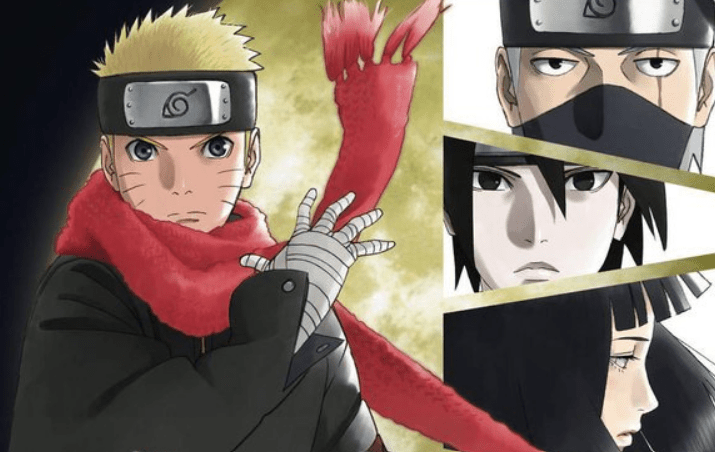
The Last: Naruto The Movie: A movie which takes place between Shippuden and Boruto which basically is just meant to explain how Naruto and Hinata got together. A new Otsutsuki threat named Toneri appears on the moon, and Naruto has a big DBZ battle with him. In the end everyone’s shipping fanfiction becomes canon.
Hiden and Retsuden Novels: Several post-canon novels that focus on various characters during the Blank Period – Kakashi, Sakura, Shikamaru and so on.
Boruto Era
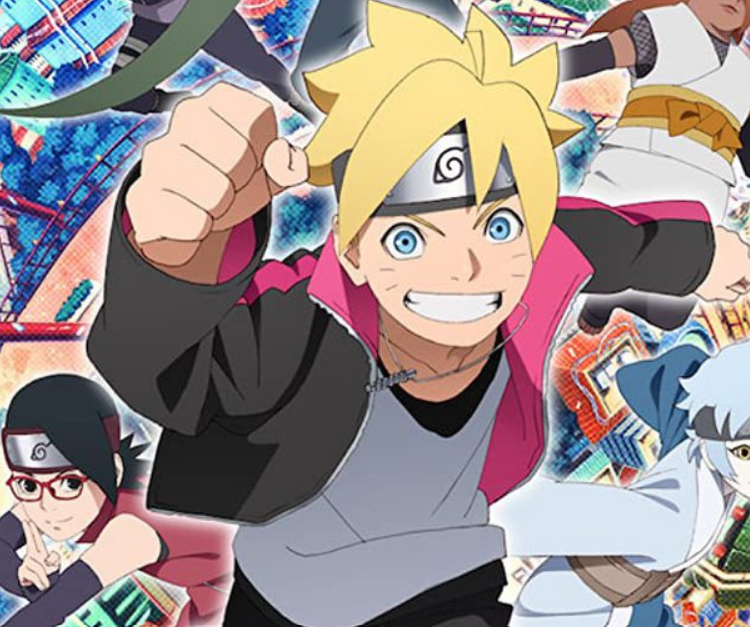
Boruto: Naruto The Movie: No longer canon, but the first media for the Boruto Era, which focuses on Boruto’s attempt at the Chunin exams in the new, peaceful era, before two Otsutsuki named Momoshiki and Kinshiki show up, and Naruto and Sasuke have to fight them. There’s also a novelization of this movie which is also no longer canon, as the events of the movie were adapted and retold by the Boruto manga and anime.
Boruto Manga: Technically the canonical version, primarily focused on dealing with all the weird new Otsutsuki threats who keep showing up, including not only Momoshiki and Kinshiki, but also Isshiki Otsutsuki, who leads the mysterious organization Kara. After Isshiki’s defeat, the story transitions over to his successors, Kawaki and Code, as well as two cyborgs named Eida and Daemon. Naruto is sealed by Kawaki, which leads into a timeskip and Boruto’s Shippuden equivalent, Two Blue Vortex. For the most part you don’t need to know any of this for this blog, but just in case.
Boruto Anime: The anime with more filler than canon content, but somehow better than the manga anyway. The Boruto anime expands on a lot of characters and has numerous unique plotlines, as well as adapting some manga oneshots like one about Orochimaru and his son, or another about Asuma’s daughter. Mostly relevant to Orochimaru for this blog in particular.
General Terminology
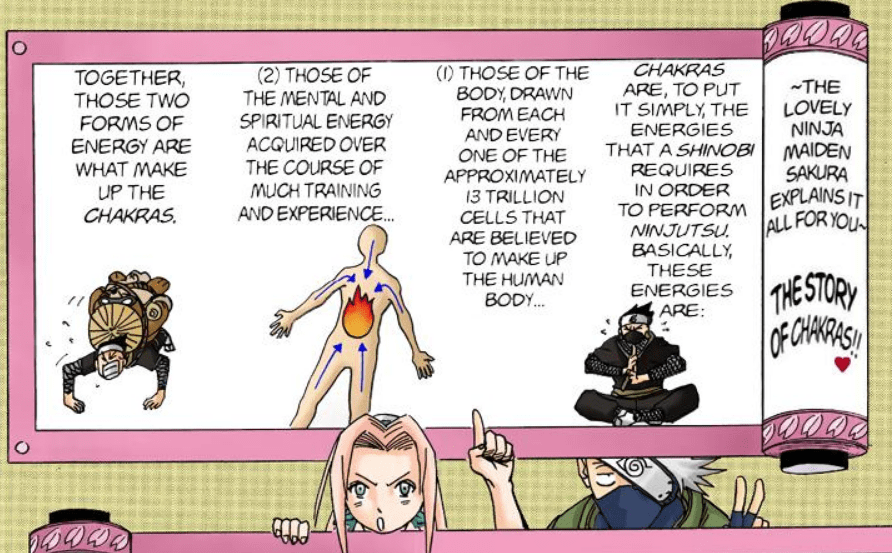
Vocabulary words that you’ll generally need to know in regard to how the series works.
Ninja Ranks
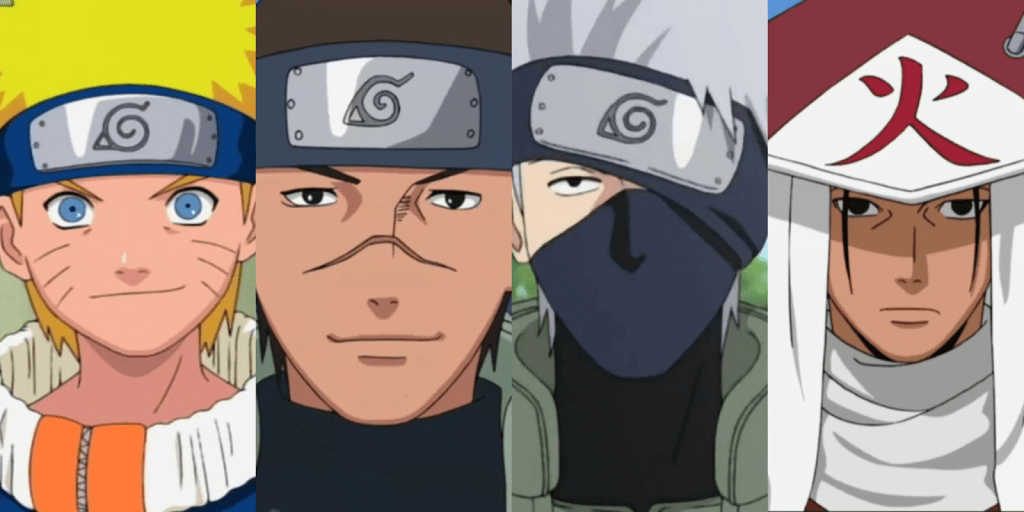
Genin: The lowest ninja rank, which usually refers to young children, though technically you can remain a Genin forever if you don’t improve. Naruto was actually a Genin for the entire series, so it should be noted that your rank doesn’t always define your level of ability, though generally people are rarely overrated, only underrated.
Chunin: A “journeyman” ninja which can essentially be seen as someone who’s still learning, but skilled enough to have greater authority and responsibilities than a Genin. Chunin frequently lead their own missions and such, in the event that the mission is not dangerous enough to require a Jonin.
Jonin: A master-level ninja, who is widely respected in the village and trusted with dangerous missions. Jonin are tasked with teaching young Genin and leading their own units, and some elite Jonin are considered viable candidates for Kage.
Anbu: The Anbu Black Ops are essentially an elite group of shinobi tasked with covert missions. They’re supposed to be beyond normal Jonin level, but frankly they’re usually used in the series as cannon fodder to hype up dangerous threats – in an “oh wow, they took out a whole squad of Anbu” kind of way.
Kage: The highest ninja rank, given to those who are chosen as the leader of one of the Five Great Shinobi hidden villages. The Kage of a village are generally regarded as the strongest ninja of the entire village, and they live up to that hype more often than not.
Village System
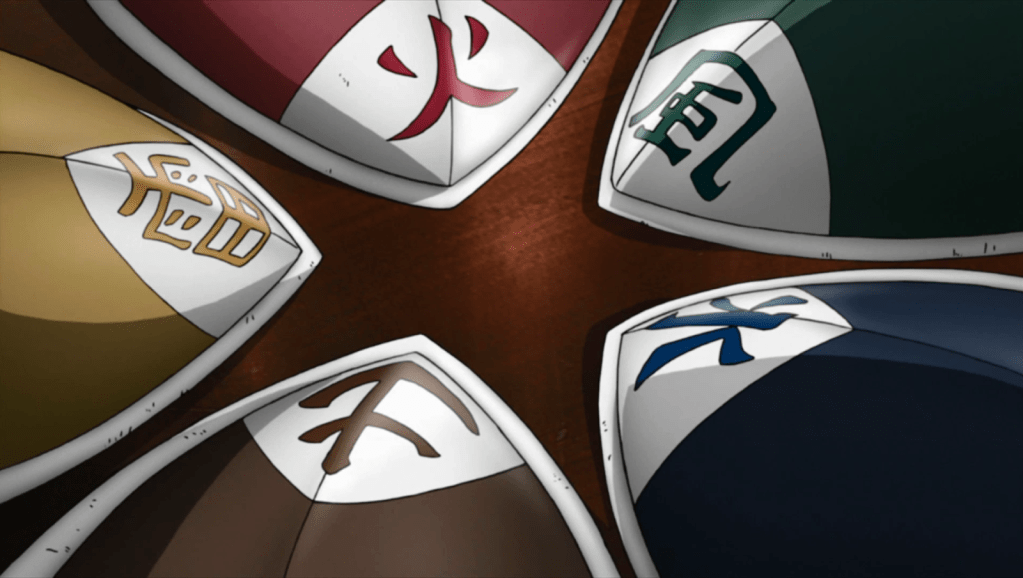
Hokage: The leader of the Hidden Leaf Village (also known as Konohagakure, the Village Hidden in the Leaves, or Konoha) in the Land of Fire. The eight individuals who have been Hokage are, in order: Hashirama Senju, Tobirama Senju, Hiruzen Sarutobi, Minato Namikaze, Tsunade, Kakashi Hatake, Naruto Uzumaki, and Shikamaru Nara. Unofficially, Danzo Shimura was briefly the acting Hokage in between Tsunade and Kakashi. Though not always the case as a hard rule, the Hokage is usually the strongest of the Five Kage.
Kazekage: The leader of the Hidden Sand Village (also known as Sunagakure or Suna) in the Land of Wind. The first two Kazekage were named Reto and Shamon, the third is strangely unnamed despite being notably reputed as the strongest in history, and the fourth and fifth are Rasa and Gaara respectively.
Raikage: The leader of the Hidden Cloud Village, otherwise known as Kumogakure or Kumo, that resides in the Land of Lightning. Every person who has been given the title of Raikage are, in order: A, A, A, A, and Darui.
Mizukage: The leader of the Hidden Mist Village, also known as Kirigakure or Kiri, in the Land of Water. The six known Mizukage are named Byakuren, Gengetsu Hōzuki, the unnamed Third Mizukage, Yagura Karatachi, Mei Terumī, and Chōjūrō.
Tsuchikage: The leader of the Hidden Stone Village, otherwise known as Iwagakure or Iwa, in the Land of Earth. The four known Tsuchikage in order are: Ishikawa, Mū, Ōnoki, and Kurotsuchi.
Tailed Beasts
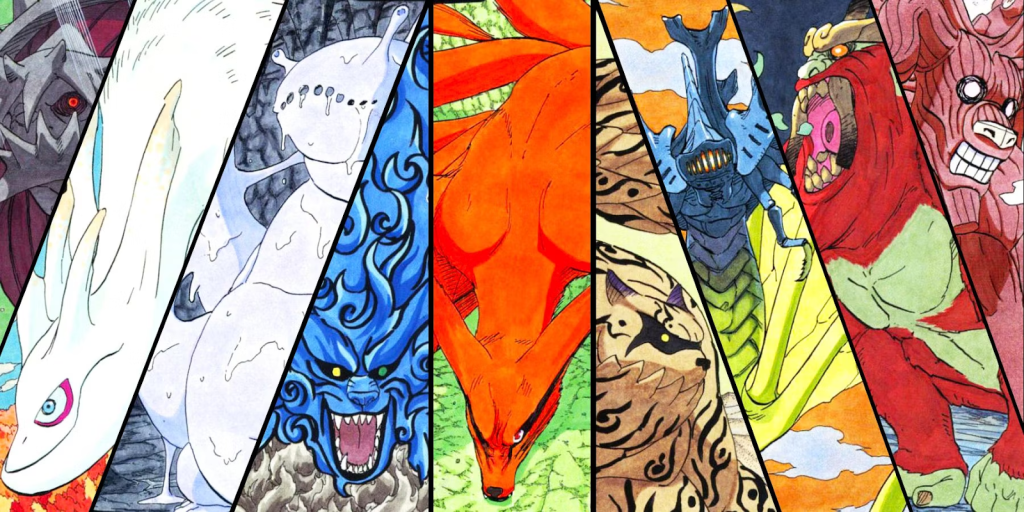
Tailed Beasts: Also known as a “Bijuu” to the weebs, a Tailed Beast is a massive creature made entirely out of chakra. There are nine Tailed Beasts, which were originally created in the distant past by the Sage of Six Paths, a legendary messianic figure who used his Creation of All Things jutsu to split the legendary Ten-Tails (AKA “Juubi”) into nine distinct beings. These creatures were left to wander the world, but were eventually captured by the villages and turned into living weapons of mass destruction. To do so, the villages sealed the creatures inside of living people, with these hosts being known as Jinchuuriki.
The Tailed Beasts can be referred to by either their number of tails (i.e. “the Nine-Tails”), by some kind of moniker (i.e. “Kyuubi”), or by their actual name (i.e. “Kurama”). The ten Tailed Beasts are:
- Shukaku, the One-Tails, Ichibi
- Matatabi, the Two-Tails, Nibi
- Isobu, the Three-Tails, Sanbi
- Son Goku, the Four-Tails, Yonbi
- Kokuo, the Five-Tails, Gobi
- Saiken, the Six-Tails, Rokubi
- Chomei, the Seven-Tails, Shichibi/Nanabi
- Gyuuki, the Eight-Tails, Hachibi
- Kurama, the Nine-Tails, Kyuubi
- The Ten-Tails, Juubi
Character Variants
Naruto
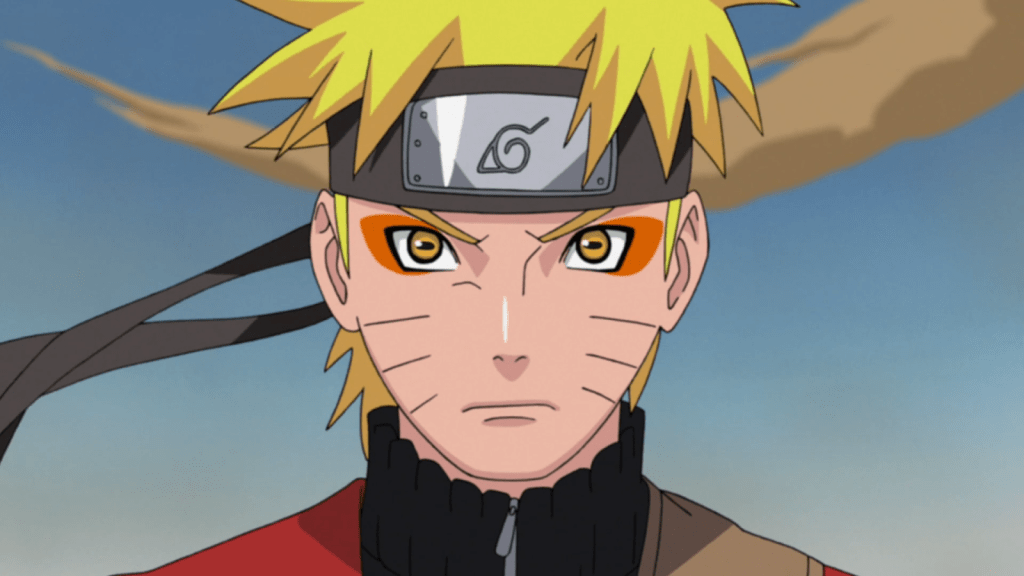
Kid Naruto: Refers generally to any version of Naruto from part 1. Specific arcs or forms may be additionally specified in some circumstances.
KN0 Naruto: This refers to the version of Naruto from the Land of Waves Arc, while tapping into Kyuubi chakra in his fight against Haku. “KN” stands for “Kyuubi Naruto” and “0” refers to his lack of a chakra cloak. As Naruto taps into more and more of Kurama’s chakra, he gains a cloak and manifests more tails made of chakra which correlate with greater power.
KN1 / Final Valley Naruto: The version of Kyuubi Naruto from the end of Part 1, when he used Kurama’s chakra against Sasuke in the Final Valley.
KN2 Naruto: The version of Kyuubi Naruto from the beginning of Shippuden, which appears in the Kazekage Rescue Arc when pursuing Deidara.
Four-Tailed Naruto: A partially transformed version of Naruto which appears in the Tenchi Bridge Arc and fights Orochimaru. Once Naruto manifests four of Kurama’s tails, he loses consciousness and goes on a rampage.
Sage Naruto: Naruto with Sage Mode active. Sage Mode is a transformation that Naruto achieved during the Pain Arc, which channels natural energy (AKA senjutsu chakra, sage chakra, sage energy, or nature energy) to enhance his physicality and drastically boost his senses.
Six-Tailed Naruto: Essentially a more powerful version of Four-Tailed Naruto, with as you’d expect, six tails instead of four. Naruto entered this state during his fight with Pain, after Hinata was seemingly killed in front of him. Pacifying this version of Naruto required Minato to manifest in his mindscape and strengthen Naruto’s seal.
KCM1 Naruto: The first version of Naruto’s Kurama Chakra Mode transformation, which he achieved after defeating Kurama within his mindscape and forcibly taking his chakra for Naruto’s own use. This version of the form is imperfect because Naruto is simply taking chakra from Kurama rather than having truly tamed him. Because of this, when Naruto uses the form, Kurama siphons Naruto’s chakra from him in return, essentially creating an exchange of chakra. For this reason, Naruto cannot remain in the form forever, and doesn’t get the same boost that he would get if Kurama willingly cooperates, though the power boost is still immense.
KCM2 Naruto: The version of KCM that Naruto achieves after befriending Kurama and proceeding under a more cooperative relationship. Visually, this form can be differentiated from KCM1 by the collar and jacket-like appearance, and because Kurama is no longer taking Naruto’s chakra in return, it is much more powerful.
KCM1.5 Naruto: This is a term that you might not have seen, as it’s only briefly seen once, and it’s debatable whether it’s even a separate form from KCM1 or not. Midway through the fight with the Ten-Tails, after Naruto has befriended Kurama, he enters a form that resembles KCM1 but has an open collar more reminiscent of KCM2. Because Naruto was fatigued at the time, some theorize that this may be a transformation “between” KCM1 and KCM2. Others argue that Naruto’s collar was open beforehand, so this is just KCM1 reflecting his apparel. Either way, you might see this from time to time, so it’s worth mentioning.
BSM Naruto: Stands for “Bijuu Sage Mode”, and refers to Naruto combining KCM2 with Sage Mode. He does this during the fight against Juubito, having previously only used one form or the other at a time.
Bijuu Mode Naruto: KCM Naruto can undergo something called Bijuu Transformation where he manifests a massive Kurama Avatar around himself, essentially transforming him into the fox itself to amp himself further.
SPSM Naruto: Six Paths Sage Mode. Achieved after Naruto receives Six Paths Chakra from Hagoromo Otsutsuki, the Sage of Six Paths, in order to battle Juubidara. He can also use KCM in conjunction with this version of Sage Mode.
Adult Naruto: Naruto as he is years down the line in Boruto, much much stronger than he was as a teenager.
Baryon Mode Naruto: Naruto with Baryon Mode active, which he uses against Isshiki Otsutsuki.
Sasuke
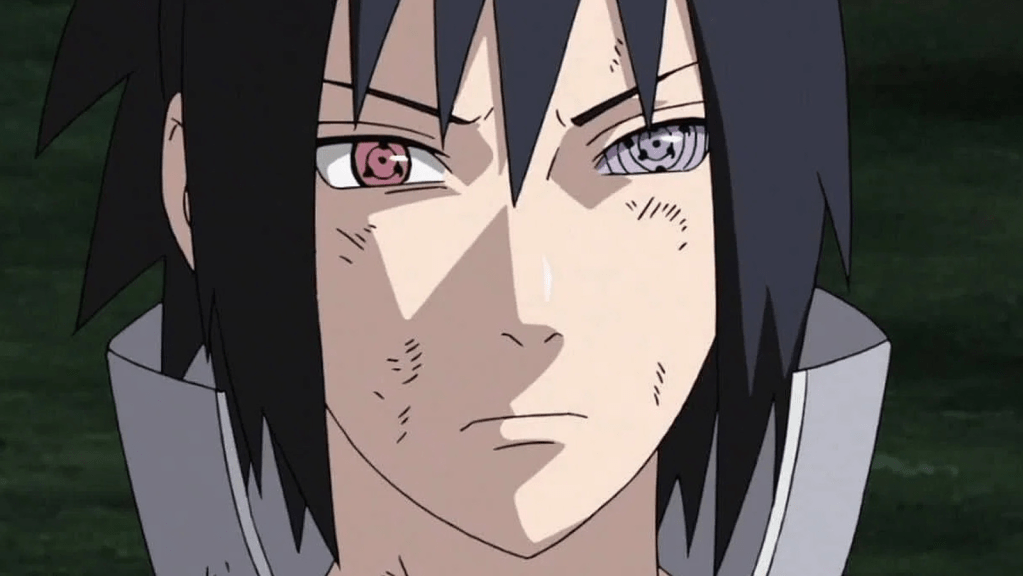
Kid Sasuke: As with Naruto, a blanket term referring to Sasuke throughout Part 1.
CM1 Sasuke: Abbreviation for “Curse Mark 1”. In Part 1 and the beginning of Shippuden up until the Itachi fight, Sasuke was branded with Orochimaru’s Curse Mark, which could grant him more power with two different released states. The first, CM1, involves a black patterning spreading out from the Curse Mark across Sasuke’s body, boosting his physicality.
CM2 Sasuke: The second Curse Mark state, which more drastically transforms Sasuke’s body, causing his skin to turn grey and large, grotesque wings to sprout from his back. This state is established to be a 10x stat boost over his base, and in Shippuden he masters it to the point of transforming portions of his body at a time, rather than the whole thing.
Hebi Sasuke: This refers to the version of Sasuke from Shippuden, after he “kills” Orochimaru up to Itachi’s death. The reason for the term is because after leaving Orochimaru, Sasuke forms a group named the Hebi who are dedicated to tracking down and killing Itachi. This is the version of Sasuke who fought Deidara, and later Itachi.
Taka Sasuke: Immediately after Itachi’s death, Obito informs him of Itachi’s true nature, causing Sasuke to develop a deep hatred of the Hidden Leaf Village. From this point on, he changes his group’s name from the Hebi to the Taka, and sets his sights on destroying the Leaf. This version of Sasuke is actually weaker than Hebi Sasuke due to having lost the Curse Mark and still being weakened from his fight with Itachi. This version of Sasuke fought Killer B.
Gokage Summit / MS Sasuke: Thanks to Itachi’s death, Sasuke awakened the Mangekyo Sharingan, or “MS”, which he began using more heavily after recovering from his injuries. Upon invading the Five Kage Summit, Sasuke began to develop his Mangekyo abilities, causing him to get progressively stronger as the arc went on and he fought his way through various Kage level opponents. However, the trade-off is that as he went on, his eyesight became progressively more damaged.
EMS Sasuke: Abbreviation for “Eternal Mangekyo Sharingan”. After the Five Kage Summit and just before the War Arc, Sasuke consented to having Itachi’s eyes implanted in him, to solve the issue of his blindness. After this process was completed, he gained an overall boost in stats and new eyes that would never go blind, no matter how much he used them. Hence, “eternal.” This is the version of Sasuke throughout most of the War Arc, up until he received Six Paths Chakra from the Sage of Six Paths during the battle with Juubidara.
Senjutsu Susanoo: A specific version of EMS Sasuke’s Susanoo from the fight with Juubito, which implements Senjutsu chakra provided by Sasuke’s ally, Jugo. The addition of Senjutsu chakra amped Sasuke’s Susanoo beyond its normal level.
Rinnegan Sasuke: The version of Sasuke after receiving Six Paths Chakra from the Sage, and awakening the Rinnegan in his left eye. This is the version of Sasuke throughout the end of Shippuden onward.
Adult Sasuke: Sasuke as he is in Boruto, like Naruto is much stronger than his teenage self.
Sakura
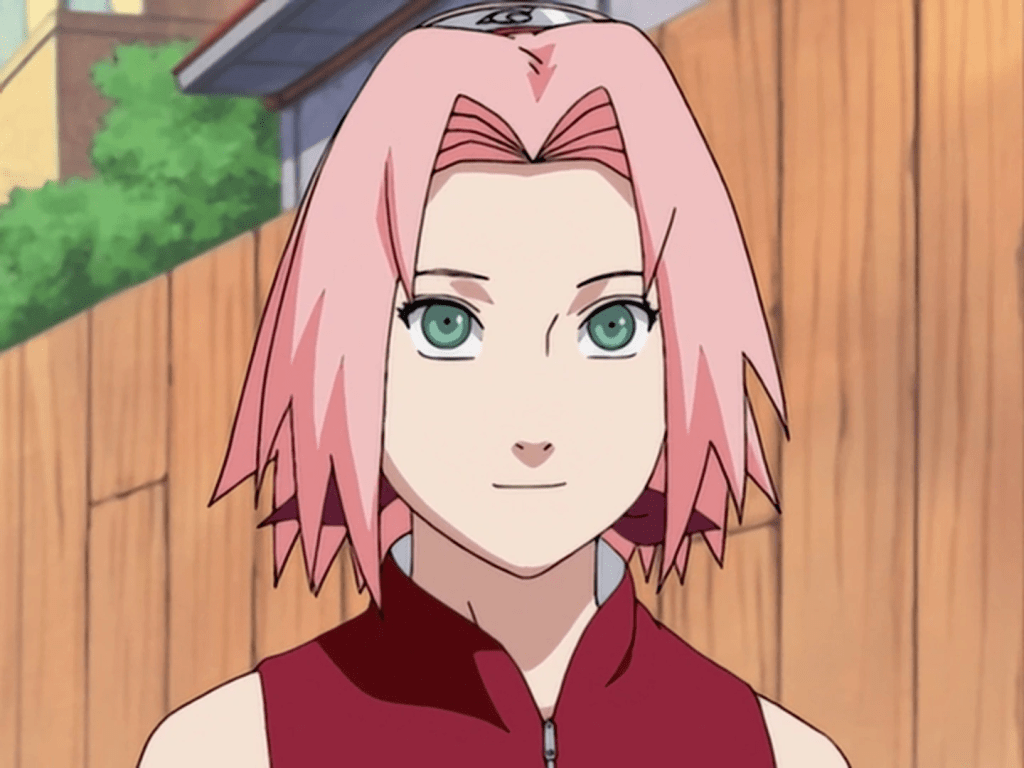
Kid / Part 1 Sakura: Sakura from Part 1. She didn’t really do anything there.
Part 2 Sakura: Much stronger than in Part 1, has undergone training with Tsunade, good at healing and punching.
Byakugou Seal / Strength of 100 Seal / Hundred Healings Sakura: Using a forehead seal that contains a lot of chakra that she built up over time. Gives her regen and increased strength. Note: Tsunade can also use this seal, so you might see it used for her too.
Adult Sakura: Sakura from the Boruto Era and Blank Period.
Kakashi
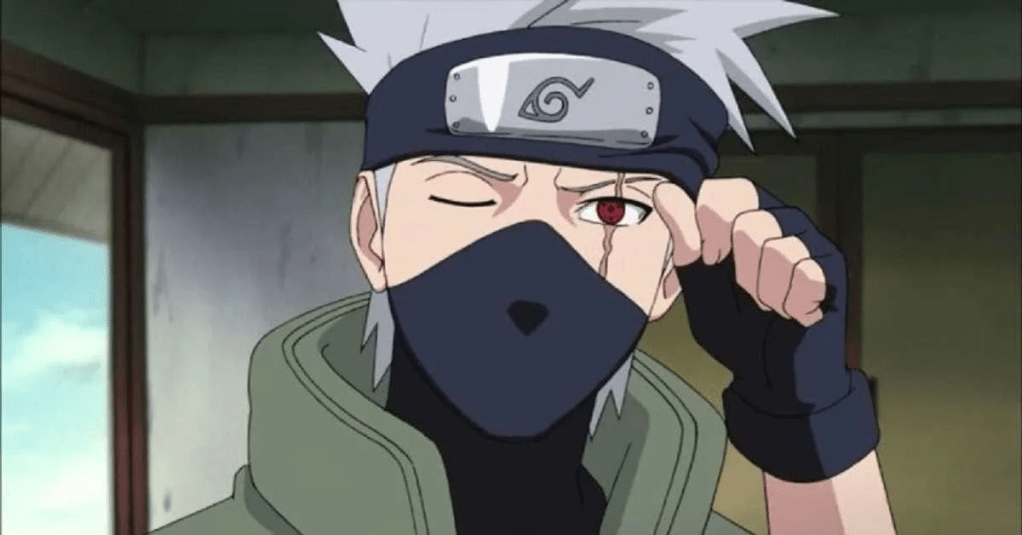
Kid Kakashi: Kakashi as a kid, primarily shown in flashbacks. He was already a Jonin at this point.
Part 1 Kakashi: Self-explanatory, Kakashi as he was in part 1. He could not use the Mangekyo Sharingan at this point, and generally speaking had much greater stamina issues compared to later on, on top of being generally weaker.
Part 2 Kakashi: Kakashi from the beginning of Shippuden up until the beginning of the War Arc. Kakashi throughout this time was learning to use the Mangekyo, becoming progressively more adept in its use, and he was considered a candidate for Hokage at this point.
War Arc Kakashi: Kakashi during the War Arc. This version of Kakashi has much better feats than his previous showings, fighting evenly with Rinnegan Obito despite previously struggling with Pain and Kakuzu, and demonstrated vastly greater proficiency with the Mangekyo, using Kamui many times in succession without becoming fatigued. For these reasons, War Arc Kakashi is generally considered much stronger than he was beforehand.
DMS Kakashi: Abbreviation for “Dual Mangekyo Sharingan”. This refers to Kakashi from the Kaguya fight, when Obito briefly granted him two Sharingan, allowing him to manifest a Perfect Susanoo which was capable of fighting Kaguya. After the fight was over, the Sharingan faded away.
Hokage Kakashi: Kakashi after becoming Hokage, at the end of the series and beyond. This version of Kakashi does not have Sharingan anymore, but the trade-off is that his physicality and chakra levels are greatly improved, due to no longer having to worry about the stamina drain from the Sharingan. As a result, he is stated to be much stronger than he was with the Sharingan, and by the time of the Boruto era, poses a threat to even high-tier Kara Inners like Kashin Koji.
Jiraiya
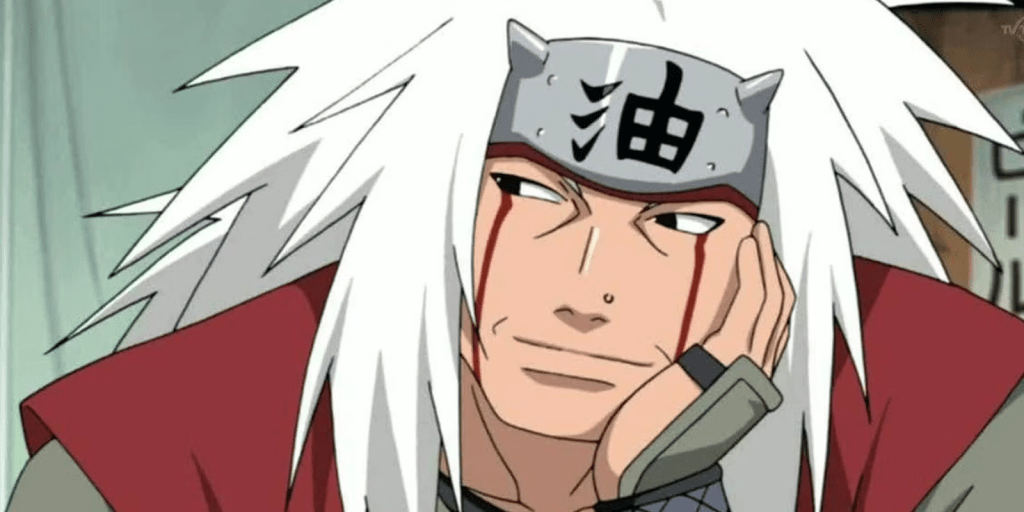
Base Jiraiya: Jiraiya normally, without Sage Mode.
Sage Jiraiya: Jiraiya while in Sage Mode, which he uses in his fight with Pain where he dies.
Gaara
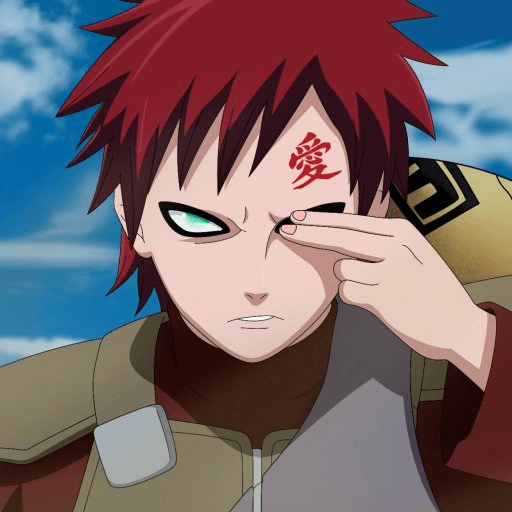
Kid Gaara: From Part 1. Still has Shukaku. He also has partial and even complete Bijuu transformation forms, but no one talks about those because he loses Shukaku at the beginning of Shippuden. Just know that he has them just in case I guess.
Kage / Kazekage / Part 2 / Shippuden Gaara: From the beginning of Part 2, usually used to refer to the version of him who fights Deidara. Still has Shukaku at first and then loses it.
Five Kage / Gokage Summit Gaara: From the Five Kage Summit Arc, the version of him that blocks the Raikage and fights Sasuke for a bit.
War Arc Gaara: From the War Arc, he does a bunch of stuff here.
Adult Gaara: From Boruto, where he fights Otsutsuki and stuff.
Itachi
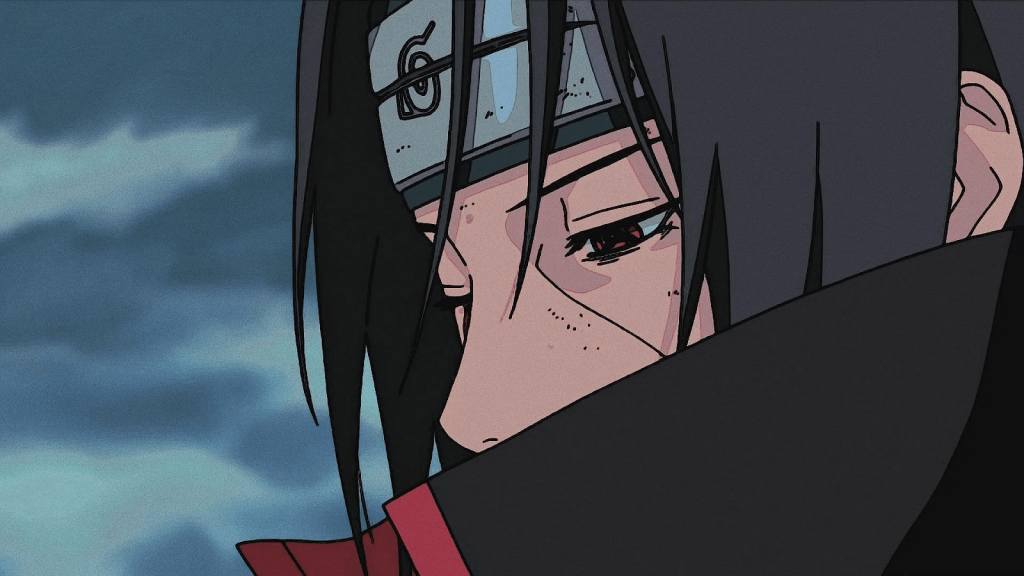
Healthy Itachi: Sometimes referred to as “Prime Itachi”, though much less frequently, this refers to Part 1 Itachi or any version in general that isn’t suffering from the illness that weakened him during the leadup to his death.
Sick Itachi: The version of Itachi that fought Sasuke. At this point he was near death, wracked by illness and the physical repercussions from Sharingan overuse, on top of being nearly blind, all of which required him to use medication just to prolong his life enough to fight Sasuke. In this state, just using the Susanoo for a couple minutes was enough to kill him.
Edo Itachi: The version of Itachi reanimated via Kabuto’s reanimation jutsu, also known as “Edo Tensei”. Edo Tensei are stated to be weaker compared to their alive selves, with the tradeoff being regeneration and inexhaustible chakra. In Itachi’s case, you would never have guessed he was weakened, as he also did not have his illness in this state, and so was immensely stronger than he was when he fought Sasuke. Feats from this version of Itachi are the best indication we have of how strong he was when he was healthy.
Obito
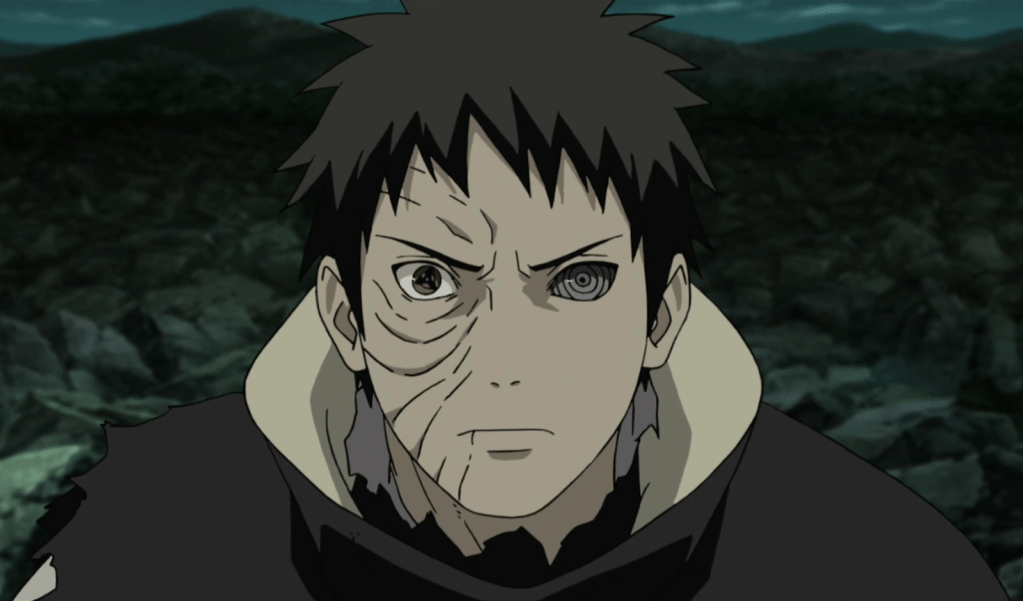
Kid Obito: The version of Obito who was part of a team with Kakashi, Rin and Minato during the Third Great Ninja War.
Yellow Mask Obito: The version of Obito who attacked Konoha via summoning the Nine-Tails, named after the color of his mask. He fought Minato at this point, despite still being a teenager. At this point, he has unlocked his Mangekyo and is capable of using Kamui.
Orange Mask Obito: Commonly referred to as “Tobi” and again named after his mask, this is the version of Obito that worked alongside the Akatsuki from the beginning of Shippuden up until the beginning of the War Arc. In addition to his right Mangekyo eye, he has an implanted left eye from another Uchiha which possesses the standard Sharingan, and can be used for techniques like Izanagi due to being more expendable than his right eye.
White Mask / Rinnegan / War Arc Obito: The version of Obito from the War Arc, who implanted Nagato’s Rinnegan into his left eye socket and donned a new mask much more durable than his old ones. This is the strongest version of Obito outside of the Ten-Tails Jinchuuriki.
Ten-Tails Obito / Juubito: The version of Obito after he becomes the Ten-Tails Jinchuuriki. You might occasionally see people refer to “Unstable Juubito” and “Stable Juubito” which differentiates the versions before and after he gained control over the Ten-Tails.
DMS Obito: The “Dual Mangekyo Sharingan” version of Obito after the Ten-Tails was extracted, who was re-implanted his original left eye in addition to the right eye he still has. This Obito retains some of the Ten-Tails’ power, and can use both versions of Kamui in tandem with one another. His showings in this state take place primarily during the Kaguya fight.
Madara
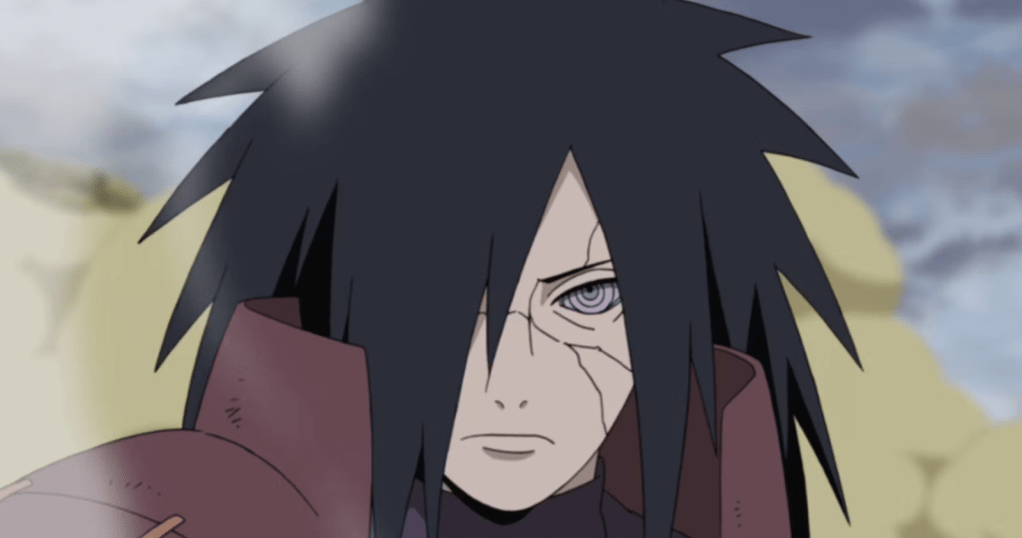
Alive Madara: The version of Madara from the past who fought Hashirama repeatedly, and was in control of the Nine-Tails.
Edo Madara: The version of Madara resurrected through Edo Tensei in the War Arc. Unlike Alive Madara, this Madara has the Rinnegan in addition to his Eternal Mangekyo Sharingan, and Senju implants which grant him regeneration and Wood Release ninjutsu.
Blind Madara: In the War Arc, Madara was eventually revived to life completely via Rinne Rebirth, at which point he lost the false Rinnegan that Edo Madara possessed, but regained the strength and vitality of a living man. Despite being blind, he could still fight via sensory abilities against all the Bijuu at once, and soon regained a real Rinnegan to remove his blindness from the equation.
Ten-Tails Madara / Juubidara: Madara after absorbing the Ten-Tails and becoming its Jinchuuriki. This version of Madara has four major states: One-Eyed, which refers to when he still only had a single Rinnegan (this is the version that fought Might Guy). Post-God Tree, which refers to the version of One-Eyed Juubidara that had absorbed the God Tree into himself for a power boost. Two-Eyed, which refers to the version who had successfully retrieved his second Rinnegan from Obito. And Three-Eyed, which refers to the version who had awakened the Rinne-Sharingan and performed the Infinite Tsukuyomi. Immediately after casting the IT, Three-Eyed Madara was impaled and replaced by Kaguya.
Hashirama
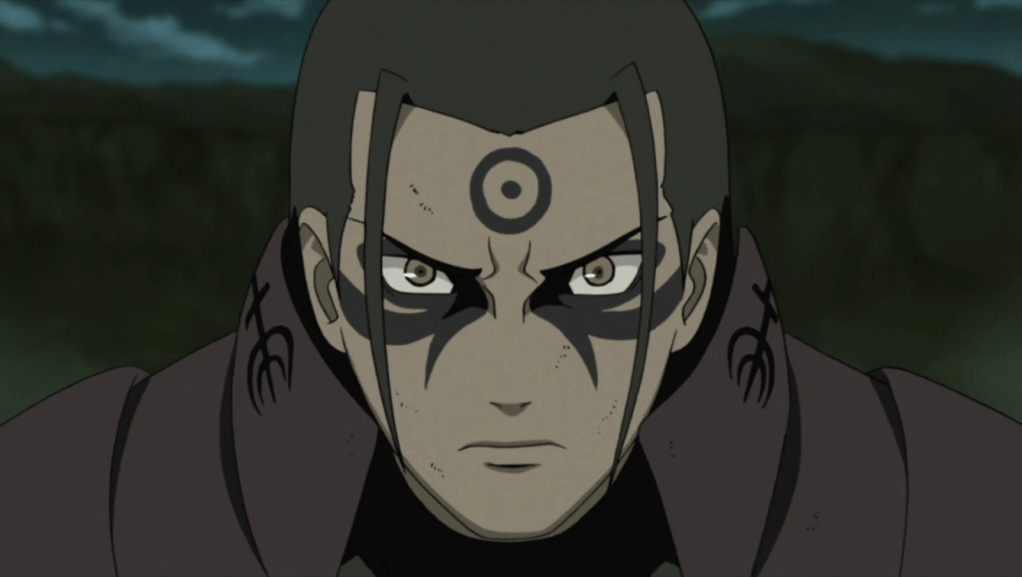
Alive Hashirama: Like Madara, this refers to the version of Hashirama who was, well, alive in the past, and fought against Madara in the Final Valley.
Edo Hashirama: During the War Arc, Hashirama was also reanimated, not by Kabuto but by Orochimaru at Sasuke’s behest. As an Edo Tensei, Hashirama fought against the Ten-Tails, Madara, and eventually Juubito. Edo Hashirama was stated to be nearly as strong as he was when he was alive.
Sage Hashirama: Both Alive and Edo Hashirama can also enter Sage Mode, increasing their power.
Fourth Raikage A
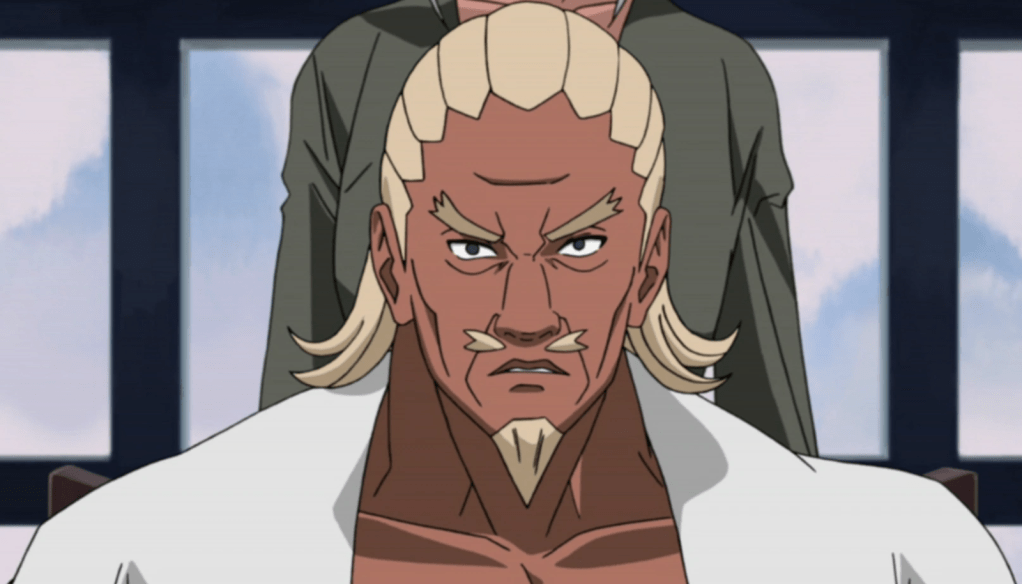
V1 and V2 A: Both of these terms are referring to A’s Lightning Release Chakra Mode, where he envelops his body in an electrical aura of chakra, enhancing his speed and striking power. Version 2, or V2, is simply a stronger and faster version of V1, with the visual distinction being his hair standing up, and his chakra cloak becoming larger and beginning to bubble. Basically think Super Saiyan 1 and Super Saiyan 2.
Killer B
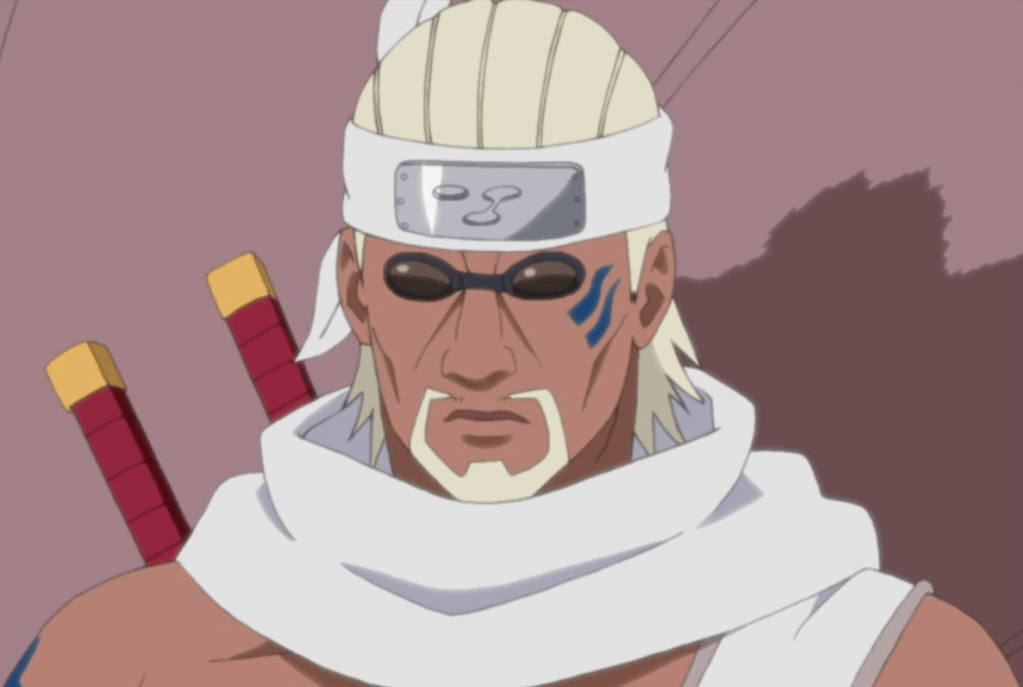
Base Killer B: Killer B when he is not tapping into the Eight-Tails/Gyuuki’s chakra.
V1 Killer B: This is a version of B who is tapping into Gyuuki’s chakra without physically transforming. Visually, this is similar to KN1 and KN2 Naruto, with a red bubbly aura surrounding B’s body.
V2 Killer B: This is when B begins to undergo more drastic transformation via tapping into more of Gyuuki’s chakra, and is visually similar to Four-Tailed Naruto, with his body actually transforming and becoming a darker red color. Unlike Four-Tailed Naruto, however, B remains in control thanks to his bond with Gyuuki.
Gyuuki / Eight-Tails / Bijuu Mode Killer B: B can undergo full Bijuu Transformation, in which he completely transforms into the gigantic kaiju-sized Eight-Tails.
Minato
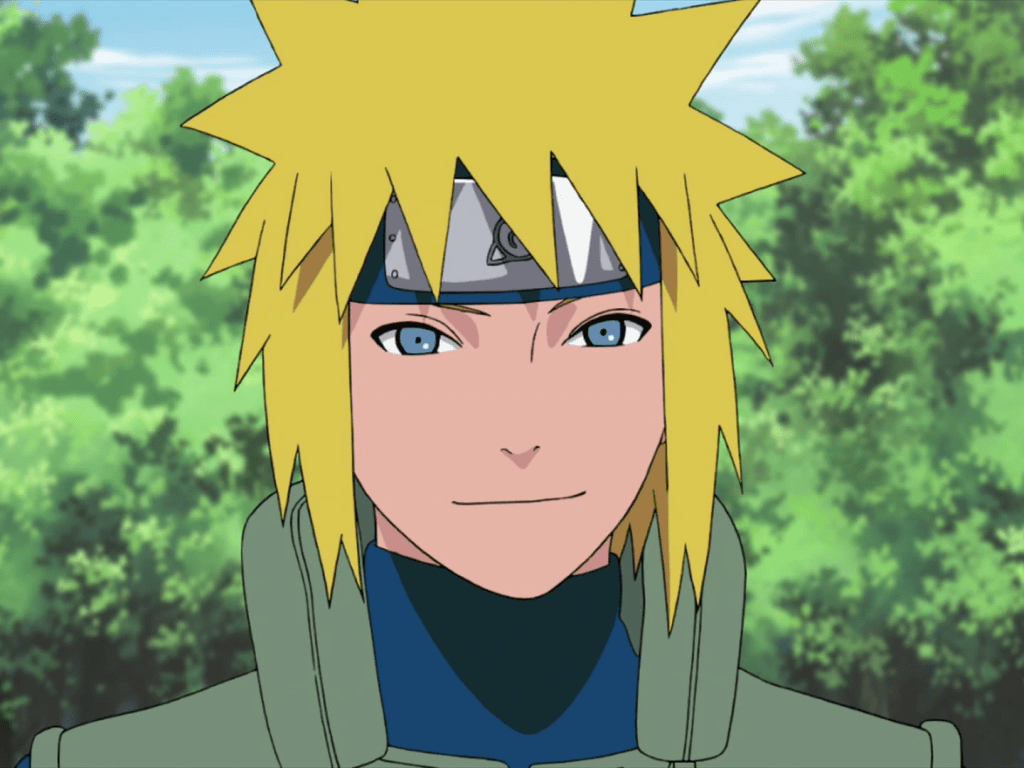
Alive Minato: Minato before he was killed in the Nine-Tails’ attack.
Edo Minato: Minato was also reanimated by Orochimaru in the War Arc.
Sage Minato: Minato can use Sage Mode, though is unskilled with it.
KCM Minato: Thanks to taking half of Kurama into himself upon his death, Edo Minato can enter KCM. Unlike Naruto, he only has one KCM state.
Bijuu Mode Minato: Minato can also undergo Bijuu Transformation, manifesting a Kurama avatar.
Kabuto
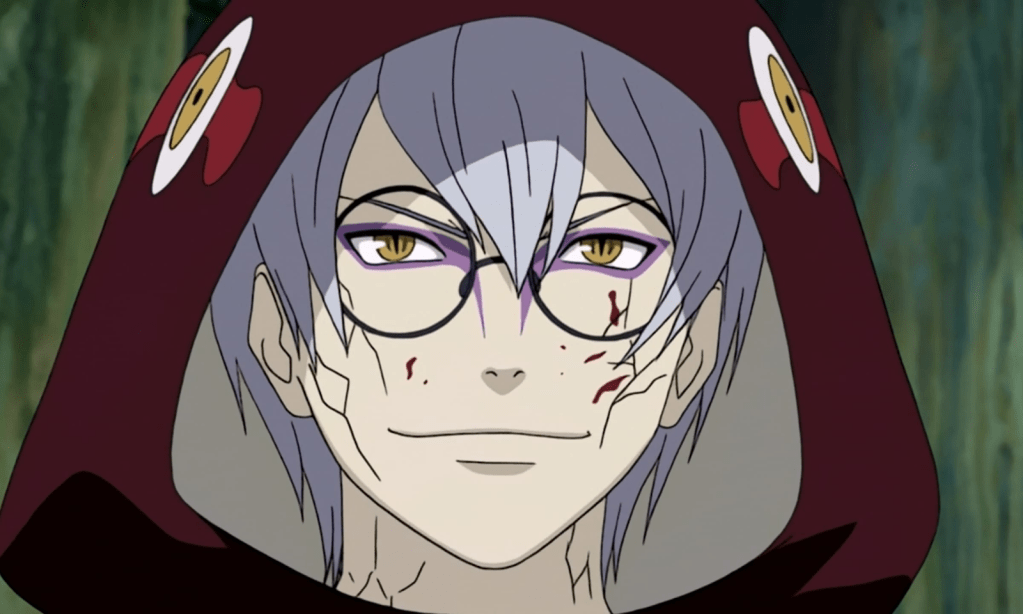
Base Kabuto: Kabuto technically has two different “base” states, one where he’s just a normal guy, and one after he injects himself with some of Orochimaru’s DNA, becoming more snake-like. The latter will basically never come up in scaling conversations ever because he has no fights in that state, but if you ever see someone refer to “snake Kabuto” or something like that, that’s what they’re talking about.
Sage Kabuto / Dragon Sage Kabuto: Kabuto in the War Arc enters “Dragon Sage Mode” during his fight with Itachi and Sasuke. This is the most impressive version of him.
Rock Lee
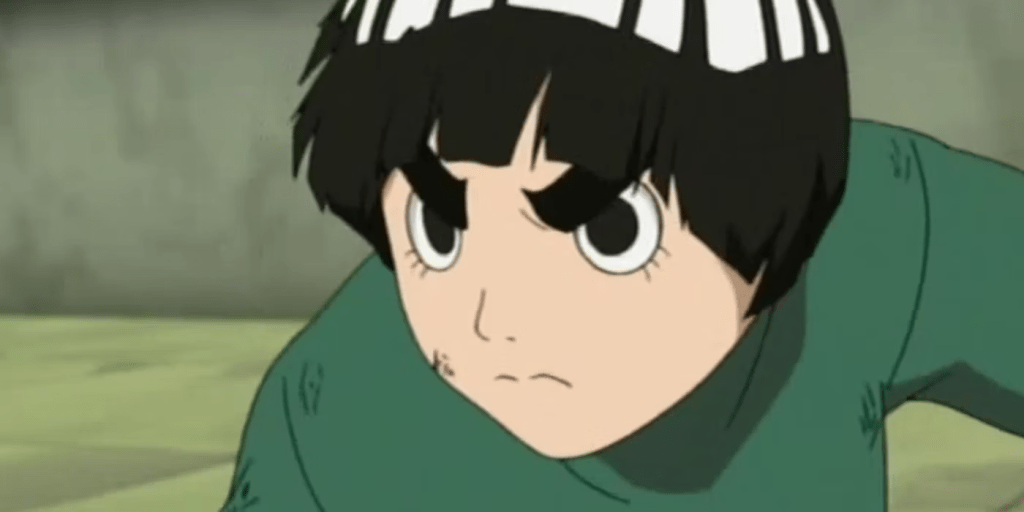
Weighted Lee: Lee wears training weights at all times, which are so heavy they can shatter the ground just from him dropping them. This term refers to a version of Lee who is still wearing them.
Weightless Lee: A version of Lee who has removed the weights, making him much faster and stronger without them holding him back.
Drunk / Drunken Fist Lee: The version of Lee who fought Kimimaro, who adopted an unpredictable fighting style due to drinking sake.
_____ Gate Lee: Lee after opening whichever numbered gate people are talking about. He has currently only been shown to be able to open gates 1 through 6.
Might Guy
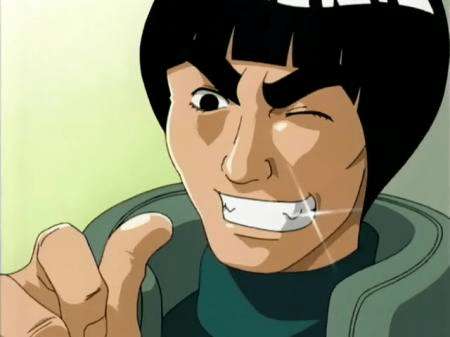
Base Might Guy: Guy without any of the gates open.
____ Gate Guy: Guy after opening whichever numbered gate people are talking about. Guy has never entered gates 1-5, only ever skipping to 6 or higher in the series. He’s used gates 6 and 7 various times against Kisame and in the War Arc, and 8 only once, against One-Eyed Juubidara near the end of the series.
Bleach
Let me ask you this, dear reader: do you know the difference between Gentei Reiin and Gentei Kaijo? What about the distinction between Shunpo, Sonído, and Hirenkyaku? If I asked you to tell me what the Reishukaku is, and how it interacts with the Shakonmaku, could you answer? If you said no, no worries! Time for your dedicated lore dump on all the vocabulary and need-to-know info about the Bleach verse. Please consult this section if anything in the rest of the blog confuses you.
Series Chronology
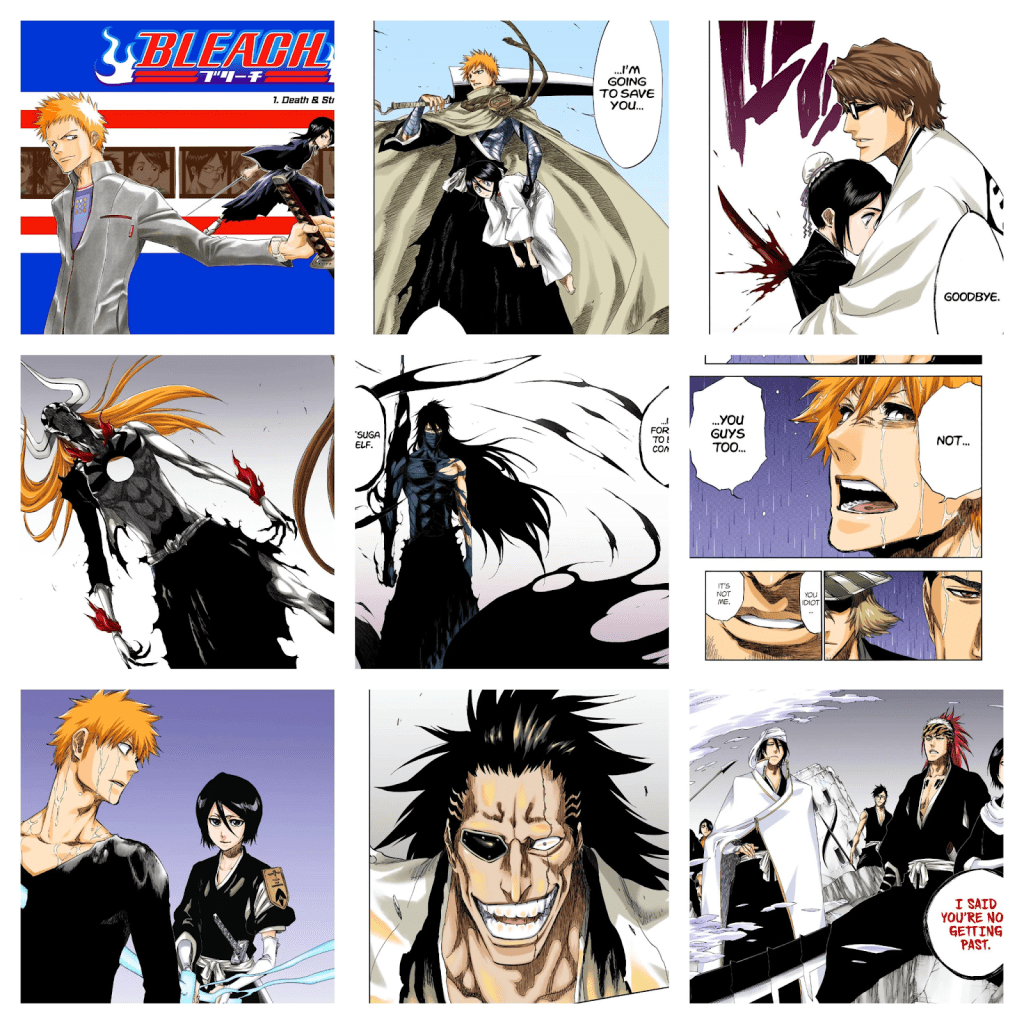
Bleach primarily consists of a 698-chapter manga, four movies, several key novels that take place after the series and during the time skip, and the currently standalone “Hell Chapter” which takes place after a time jump after the end of the series. There are also some games that you’ll need to be familiar with. So to ensure you understand what we’re talking about when we reference specific arcs and entries, let’s go over the chronology of the series first and foremost.
Canon
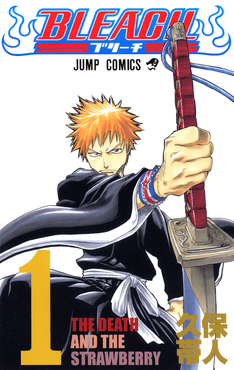
Substitute Shinigami Arc: Also known as the Agent of the Shinigami Arc, this is the first arc of the series, focusing on Ichigo learning how to operate as a Soul Reaper after gaining his powers from Rukia, and simultaneously balancing his school life with his new work. This arc introduces many of his allies, and the conflict of the arc primarily centers around ordinary Hollows.
Soul Society Arc: Rukia is taken back to the Soul Society and is sentenced to be executed, forcing Ichigo and his friends to invade it in order to save her. Throughout this arc, Ichigo and co. do battle against many of the Captains, and unlock new abilities like Bankai. Primarily, this arc serves as the introduction to the Soul Society and its structure, as well as the supporting cast which would become the basis for the rest of the series. At the end of the arc, Ichigo manages to save Rukia from execution, only for it to be revealed that everything that transpired up to this point was the machinations of shinigami captain Sosuke Aizen, an evil mastermind who departs the Soul Society to further his own ambitions.
Arrancar Saga: The next arc after the Soul Society Arc, in which the Espada are introduced and serve as the primary antagonistic force alongside their leader, Aizen. The arc can generally be split into several sub-sections, with the beginning of the saga taking place in Karakura Town, Ichigo’s home, which is invaded by Arrancar led by Grimmjow, the rank 6 Espada. This portion ends with Orihime Inoue being kidnapped by the Espada and taken to Hueco Mundo, homeworld of the Hollows, at which point Ichigo and his other friends invade Hueco Mundo to try and rescue her.
Throughout the Hueco Mundo portion of the arc, the group comes into conflict with various Arrancar and eventually Espada members, culminating in Ichigo’s battle with Grimmjow, followed by several captains arriving to aid against several of the other Espada. After this point, Aizen launches his invasion of Karakura Town, which he needs to destroy as part of a ritual to create an Oken, a key which will grant him access to the Soul King’s Palace.
From this point on, the arc splits into two sides, with Ichigo continuing the assault on the Arrancar’s stronghold in Hueco Mundo and doing battle with Ulquiorra, the rank 4 Espada. In Karakura Town, meanwhile, the remaining captains of the Soul Society do battle against Aizen and the top 3 Espada, along with their underlings. This is known as the Fake Karakura Town Arc.
Once the Espada are fully defeated, the conflict transitions to Aizen himself, and Ichigo returns to Karakura Town, having defeated Ulquiorra. Aizen crushes most of the captains, and begins to evolve to a higher level of power over time, while Ichigo ends up training with his father in the Dangai, intending to defeat Aizen. Eventually, Ichigo arrives, having become strong enough to transcend even Aizen’s evolved state, sacrificing his powers to try and take down Aizen, which fails… sort of, because Aizen is then left weakened enough for Kisuke Urahara to seal him away. And so, Aizen is imprisoned by the Soul Society, and Ichigo is left powerless, leading into a 17 month time-skip.
During these 17 months, the Spirits Are Forever With You novel takes place.
Fullbringer Arc: Known more officially as the Lost Substitute Shinigami Arc, this arc takes place 17 months after Aizen’s defeat, with Ichigo remaining a powerless human. During this arc, Ichigo encounters a strange group known as the Fullbringers, who may hold the key to getting him his powers back. By the end of the arc, with the help of both the Fullbringers and the Soul Society, Ichigo manages to gain his powers back.
Thousand Year Blood War Arc: Sometimes referred to as the Quincy Blood War, after hundreds of years since their supposed extinction, a race of spiritual beings known as the Quincies make their return. Under the leadership of their emperor, Yhwach, they wage a massive war against the Soul Society with the fate of the three worlds hanging in the balance. This arc serves as the conclusion to the original manga.
Can’t Fear Your Own World (CFYOW): A series of novels taking place a few months after the Blood War, focusing on the inhabitants of the Soul Society as they deal with the fallout of the conflict. A new threat emerges in the form of hybrid child Hikone Ubuginu and his Zanpakuto, Ikomikidomoe. Manipulated by the noble, Tokinada Tsunayashiro, Hikone seeks to become the Soul King and gain dominion over all three worlds.
Filler
Bount Arc: This is an anime-only filler arc which takes place after the Soul Society and before the Arrancar Saga, and is pretty widely regarded as the worst arc of Bleach. It focuses on a group of artificially-created immortal beings called the Bounts, and their war against the Soul Society after centuries of suffering.
New Captain Shūsuke Amagai Arc: Filler arc which is placed in the middle of the Arrancar Saga. The new captain of the 3rd division, Shūsuke Amagai, organizes a conspiracy in an attempt to get revenge on Yamamoto for killing his father years prior.
Zanpakutō Rebellion Arc: Filler arc which is also placed in the middle of the Arrancar Saga, where numerous Zanpakuto spirits free themselves from their wielders and stage a rebellion, seeking to become free.
Beast Swords Arc: Continuation of the Zanpakuto Rebellion in which the spirits go berserk, rampaging across the Soul Society in the wake of the recent rebellion.
Gotei 13 Invading Army Arc: Filler arc in which numerous Mod Soul copies of various shinigami are created, leading to an incident in which an anime-only character, Ōko Yushima, attempts to destroy the Soul Society, before ultimately being taken down by his own copy creations.
Movies
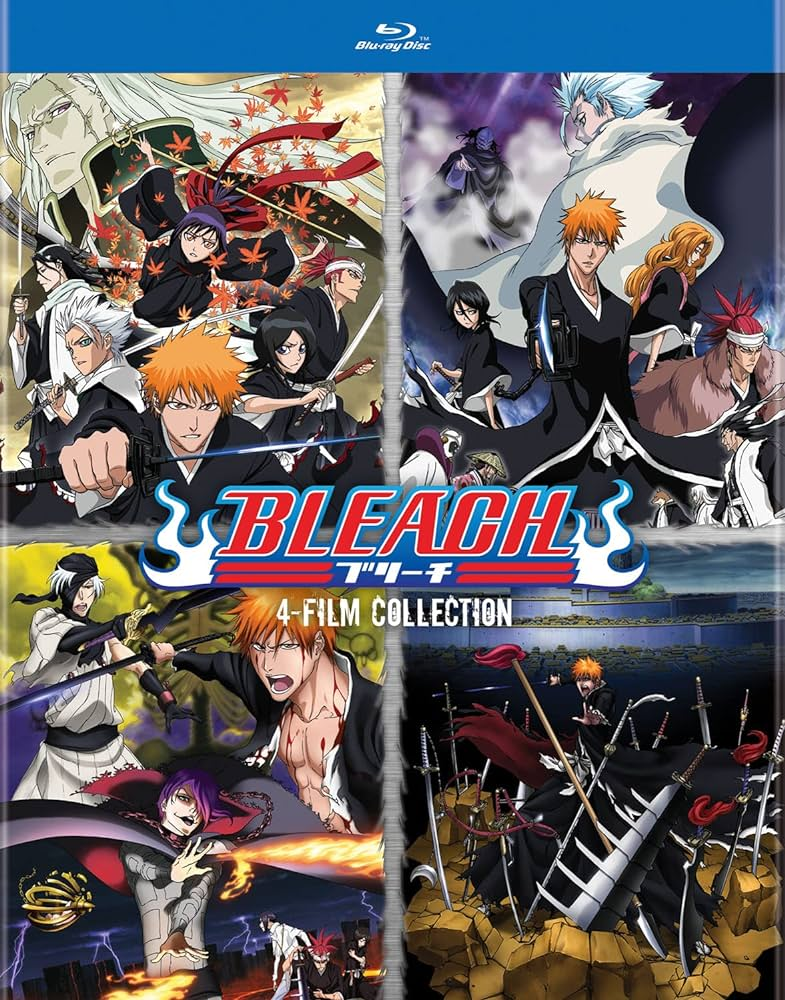
Memories of Nobody: The first movie, which takes place nebulously between the Soul Society and Arrancar Arcs, and deals with the appearance of a pocket reality called the Valley of Screams, which threatens to contract and pull the Living World and Soul Society into one another, threatening both.
The DiamondDust Rebellion: The second movie, which centers around the 10th Division Captain Tōshirō Hitsugaya, who is faced with execution after his division loses a valuable artifact they were escorting.
Fade to Black: The third movie, in which Rukia is erased from the memories of everyone in the Soul Society, causing her and Ichigo to become fugitives. On top of this, a mysterious “Dark Rukia” appears, whose true nature they must unravel.
Hellverse: The fourth movie, in which one of Ichigo’s sisters is kidnapped, and Ichigo and co. must enter Hell to rescue her.
Games
Bleach: Brave Souls: The Bleach mobile game, which adapts Bleach up until the Fullbringer arc, before expansions were added featuring novel and exclusive content.
Terminology
General
Souls and spiritual matter in the verse is made up of Reishi, invisible to mortals and the spiritual counterpart to Kishi, which is the term for the physical matter that composes the Living World. Spiritual beings like Shinigami, Hollows, and more are also able to exert their inherent spiritual energy called Reiryoku in the form of Reiatsu, which is the term for the physical force that Reiryoku creates when released. The ability to sense Reiryoku and Reiatsu is known as Reikaku, an extrasensory ability that spiritual beings frequently come to rely on more intrinsically than their own sight.
The Bleach verse’s cosmology consists of three notable worlds – technically four – and the spaces and structures that separate them. The first is obviously the Living World, home to humans; the second is the Soul Society, the afterlife and home to the Shinigami; the third is Hueco Mundo, the world of Hollows; and the fourth and most mysterious is Hell, the place for souls that did evil in their lives. These worlds are intrinsically interlinked by a very important process known as the Flow of Souls; when a person dies in the Living World, their soul moves on to the Soul Society, while souls residing in the Soul Society are reincarnated in the Living World, creating a cycle which, if disrupted, could destabilize and destroy existence.
The realms are separated by a void between worlds called the Garganta, and within the Garganta is a corridor-like dimension called the Dangai which allows travel between them. Occasionally, wayward souls within the Garganta that get separated from the Flow of Souls (known sometimes as Blanks) congeal together and create small pocket realities known as a Kyōgoku, or a Valley of Screams.
Shinigami
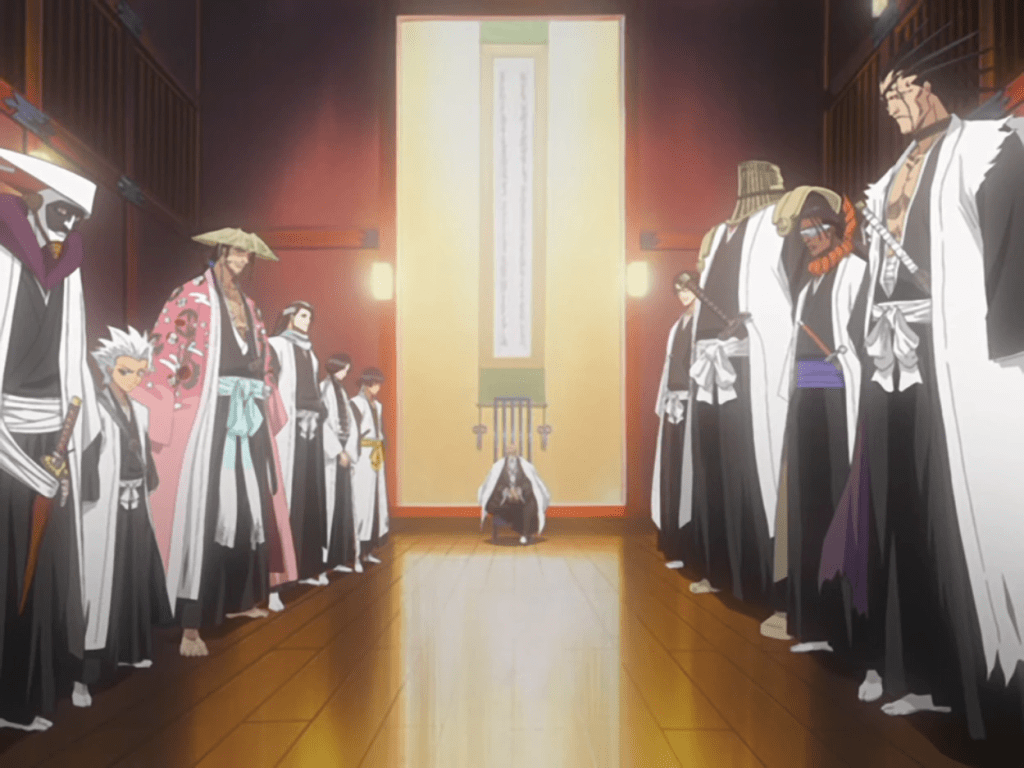
Shinigami, or Soul Reaper in localizations, is a term referring to a group of unearthly beings living in the Soul Society, a parallel world to ours which serves as the afterlife where deceased Souls (or Konpaku) reside prior to their reincarnation. The Shinigami can essentially be considered grim reapers or gods of death, and are assigned to operate within the Living World, ensuring the safe crossing of souls into the Soul Society and combating violent Hollows (see below).
The Soul Society refers to the entirety of the afterlife / spirit world which souls go to after death, but is divided into multiple smaller, more distinct locations. The most important of these locations is the Seireitei, or the Quiet Spirit Court, a massive city at the center of the Soul Society, within which the Shinigami and many deceased souls dwell. The Seireitei is surrounded by a massive wall known as the Seireiheki, with four entrance gates on each side of the wall called the Four Great Pure Soul Gates. Projected from the wall and encircling the city as a dome-shaped barrier is the Shakonmaku, or Soul Shield Membrane, basically a force-field over the city which prevents outside entry.
Outside of the Seireitei is the largest and most populated area of the Soul Society, known as the Rukongai. Divided into 320 districts, you can basically think of this as the Soul Society’s suburbs, where the resident souls live more traditional, low-class lifestyles compared to the people in the more urban Seireitei.
If a person wants to enter the Seireitei from the Rukongai without passing through one of the four gates, some have been known to use the Kakaku Taihō, a massive cannon belonging to the Shiba Clan, who were formerly the fifth noble clan – back when there were five, rather than four. By protecting oneself with the Reishukaku, a sphere which creates a barrier around the holder when infused with sufficient Reiryoku, an individual or group can be (semi-safely) launched from the Kakaku Taihō with enough force to penetrate the Shakonmaku.
As for the Shinigami, they’re organized under a group known as the Gotei 13, also referred to as the 13 Divisions or the Thirteen Court Guard Companies. This is the primary military organization that Shinigami join after graduating from Shin’ō Academy, the institution where they learn to use their spiritual powers. Regarding Shinigami duties, as established their primary roles are to battle violent Hollows, and ferry the souls of the deceased who have not passed on (Pluses) on to the Soul Society.
To do so, they make use of a technique called Konsō, or Soul Funeral, in which they transport souls to the afterlife by touching them with the hilt of their Zanpakuto, or sword. A Zanpakuto is a spiritual blade used for transporting souls and cleansing Hollows of their sins. However, if the soul’s life was full of evil acts, Konsō will send them to Hell rather than the Soul Society.
Each Zanpakuto is actually a living thing, as they house a powerful spirit that defines their nature and abilities. When first created, they are known as Asauchi, swords without names; as they become more developed, they gain names and develop a partnership with their Shinigami. As the Shinigami communicates with their sword and learns the sword’s name, the two of them are able to grow stronger together, with the sword taking on traits that mirror the soul of their wielder.
As a Shinigami becomes more powerful, they can achieve different boons and states that can increase their potential. A Zanpakuto, first of all, has three forms: Sealed, Shikai, and Bankai. A sealed Zanpakuto looks simply like an ordinary sword, with several different possible variations, though overall lacks special abilities. Once a sword is “Released” via its Shinigami saying its name or release incantation, it changes shape and gains special abilities, entering its Shikai state. This is essentially the standard, unrestricted form of a Zanpakuto. Lastly, the final upgraded form of a Zanpakuto is known as “Bankai”, in which the sword again changes form and gains a new function or ability, which typically correlates with a 5 to 10x power boost, the specifics of which vary between swords.
Conversely, even beyond sealing their sword, Shinigami have the means to limit their power below their normal output. Primarily, this is done when entering the Living World, to avoid affecting the planet too much with their power. This is achieved via a seal placed on the body called Gentei Reīn, which reduces the Shinigami’s power by 80%. To remove the seal, the Shinigami can request a limit release known as Gentei Kaijo, which returns them to their normal capacity in emergency situations. If you remember Naruto VS Ichigo bringing up a 5x boost from Shinigami removing their limiters, this is what they were referring to.
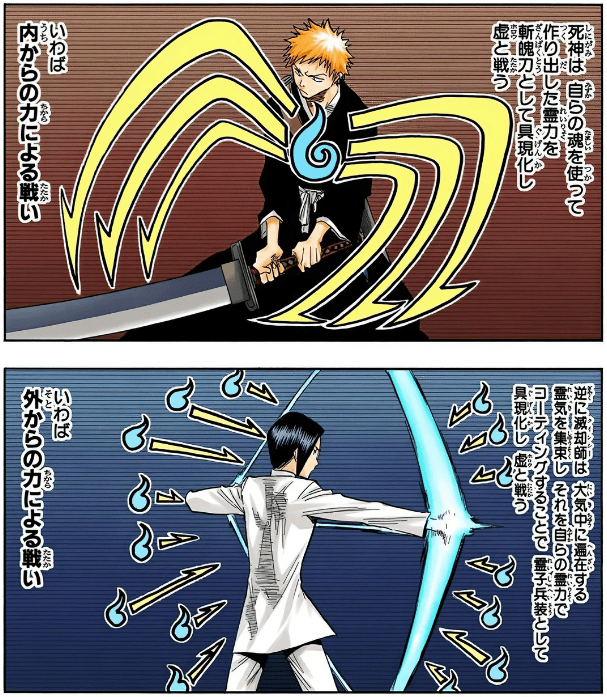
The Shinigami possess four primary methods of combat, collectively dubbed Zankensoki (Cut-Fist-Run-Spirit). The Zan refers to Zanjutsu, the Art of the Sword, which serves as the base for all swordsmanship techniques used by the Soul Reapers. Ken refers to Hakuda, all techniques that focus directly on unarmed, hand-to-hand combat. So refers to Hohō, techniques based around fast movement, with the Shunpo or Flash Step technique being the most iconic of this category, being used by nearly all Shinigami. Lastly, Ki refers to Kido, which will be elaborated on later, but essentially is a category of spells casted through spiritual energy.
As the name implies, the Gotei 13 is divided into 13 primary squads, which carry out the various duties that Shinigami hold. The Gotei 13 as a whole is led by the Captain-Commander, which for most of the series was Genryūsai Shigekuni Yamamoto, until Shunsui Kyoraku succeeded him after his death at the beginning of the Thousand Year Blood War. Below the Captain-Commander in rank, each division of the Gotei 13 is led by its own Captain, who is responsible for managing each division’s individual affairs.
As they are among the most powerful and respected members of the Soul Society, a Captain generally must be the strongest member of their own division, and are required to have mastered Bankai in order to achieve the rank. The only known exception to this rule is Kenpachi Zaraki, whose strength was so great that he became a Captain without it. Ranked just below the Captain in each division is the division’s Lieutenant, who is usually the second-strongest member, and works alongside the Captain to manage the division. Below the lieutenant are the Seated Officers, who hold ranks 3 through 20 in the squad, for a total of 18 officers per division. These officers often lead sub-units within the division, consisting of ordinary Shinigami who lack a notable rank.
Other than those under the umbrella of the Gotei 13, on very rare occasions it is possible for a non-Shinigami to gain power from an already-existing Shinigami, becoming what is known as a Substitute Shinigami, at which point they will be given a badge by the Soul Society which acts as a license to work as though they were any other Shinigami, without operating as a member of any division. Throughout the entire history of the Soul Society, there have only ever been two Substitute Shinigami: Kūgo Ginjō and Ichigo Kurosaki.
The First Division of the Gotei 13 is ranked highest amongst the main thirteen, and its members are considered model Shinigami. For most of the series, it was headed by Yamamoto, until Yamamoto’s death and Shunsui’s subsequent promotion, at which point Shunsui, being the Captain-Commander, took up leadership of the First Division. Under Yamamoto, the Lieutenant of the First Division was Chōjirō Sasakibe (who died, rip bozo), while under Shunsui, two co-lieutenants were assigned: Genshirō Okikiba, the former Third Seat, and Nanao Ise, Shunsui’s own prior Lieutenant.
The Second Division is closely tied with the operations of the Onmitsukidō, also known as the Stealth Force, the Secret Mobile Unit/Corps, the Special Forces, or the Covert Ops, with the Second Division’s Captain also serving as commander-in-chief of the Onmitsukidō. Formerly run by the Shihōin Clan, one of the Soul Society’s Four Noble Families, the Onmitsukidō is responsible for covert operations and assassinations, and its affiliation with the Second Division was strengthened by the former commander-in-chief and Second Division Captain, Yoruichi Shihōin. After Yoruichi abandoned her command of both positions, she was succeeded by one of her protégés, Soi Fon (or Suì-Fēng), who has remained in the position since then, with the Lieutenant being Marechiyo Ōmaeda.
The Third Division was formerly captained by prodigy Shinigami Gin Ichimaru, and unlike the First and Second Divisions has no known special duties. After Gin defected from the Soul Society as one of Aizen’s followers, he was succeeded as Captain by Rōjūrō Ōtoribashi, more commonly referred to as Rose, and the Lieutenant of the division remained Izuru Kira, as it had been before.
The Fourth Division is responsible for medical and supply related work, and was captained for most of the series by Retsu Unohana. One of the original founders of the Gotei 13, Unohana was once the most diabolical criminal in the Soul Society, and held the title of “Kenpachi”, which designates the strongest Shinigami. After the title was taken from her by Kenpachi Zaraki when he was just a child, Unohana became a healer, and as the Captain of the Fourth Division is the Soul Society’s best healer. After being killed by Zaraki near the beginning of the Thousand Year Blood War, Unohana was succeeded by her former Lieutenant, Isane Kotetsu, with Isane’s younger sister Kiyone Kotetsu becoming the new Lieutenant.
The Fifth Division was formerly captained by Sosuke Aizen (wuh-oh…), and has no special duties, though it has been noted that Aizen’s exceptional talent in all aspects led to his subordinates being very well-trained as well. After Aizen’s defection from the Soul Society, he was succeeded by Shinji Hirako, the Fifth Division Captain prior to Aizen, who had been incapacitated due to Hollowfication (see below). Under both Aizen and Shinji, the Fifth Division’s Lieutenant was Momo Hinamori.
The Sixth Division is headed by Byakuya Kuchiki, head of the Kuchiki Clan (another of the Four Noble Families) and one of the few Captains who remained in his position from the beginning of the series until the modern day. His Lieutenant, Renji Abarai, has likewise remained unchanged from the start. The Sixth Division lacks special duties but is characterized by its strict adherence to the rules.
The Seventh Division was, until the Thousand Year Blood War, under the command of Sajin Komamura, a gigantic anthropomorphic wolf-man, whose Lieutenant was Tetsuzaemon Iba. After Komamura turned into a wolf permanently during the Blood War (long story), Iba succeeded him as Captain, with the new Lieutenant being Atau Rindō. The Seventh Division has no special duties, but is characterized by strong moral obligation and compassion.
The Eighth Division was, for most of the series, captained by Shunsui Kyoraku, whose Lieutenant was Nanao Ise. After Shunsui was promoted to Captain-Commander and Captain of the First Division, Nanao accompanied him as well, with the new Captain, as of the Hell Chapter, being Lisa Yadōmaru, whose Lieutenant is Yuyu Yayahara. The Eighth Division has no known special duties.
The Ninth Division was formerly headed by Kaname Tōsen and his Lieutenant, Shūhei Hisagi. Though Tōsen, like Gin, defected from the Soul Society to follow Aizen, Hisagi remained loyal, and remains the Lieutenant to this day under the new Captain, Kensei Muguruma, with the co-Lieutenant being Mashiro Kuna. The Ninth Division has the special duty of defending the Seireitei, remaining on standby for security duties, and is also responsible for overseeing journalism, arts, and culture.
The Tenth Division is headed by Tōshirō Hitsugaya and his Lieutenant Rangiku Matsumoto, both of whom have remained in their positions from the beginning of the series to now. Tōshirō is the youngest of the Captains but very gifted. The Tenth Division has no known special duties.
The Eleventh Division has also been led by the same man since the beginning of the series, because its Captain is Kenpachi Zaraki. Originally, the Lieutenant of the Eleventh was Yachiru Kusajishi, the physical manifestation of Kenpachi’s own Bankai, but after Kenpachi achieved Bankai, she became a part of him again and disappeared. Since then, the former Third Seat Ikkaku Madarame has moved up to the Lieutenant’s position. As you would expect from a bloodthirsty monster like Kenpachi, the Eleventh Division is specialized in all things combat, forgoing all Shinigami arts other than raw strength and swordplay to form the strongest and most dominant division in battle.
The Twelfth Division, for over 100 years, has been linked hand-in-hand with the Shinigami Research and Development Institute, which was founded by the former Twelfth Division Captain, Kisuke Urahara. After Urahara was framed for a crime and driven out of the Soul Society, his former Third Seat, Mayuri Kurotsuchi, took the title of Captain and head of Research and Development. A scientist without morals, Mayuri’s inhumane experimentation and shady dealings characterize this division, with his original Lieutenant being Nemu Kurotsuchi, his artificial “daughter” (more accurately science experiment). After Nemu’s death, the vice-president of Research and Development, Akon, took her place as Mayuri’s Lieutenant.
Some of the R&D department’s creations include the Modified Souls, artificial souls created for combat purposes, meant to be strong enough to assist the Shinigami when fighting against Hollows after being forced into Human corpses and the Gigai, artificial bodies meant to be used by Shinigami in order to directly interact with the World of the Living’s Human inhabitants. Essentially, they can recreate both a soul and a body, basically creating life. Science!
Thanks to this department, Shinigami also have access to a variety of general tools that can help them in the field. For starters, any Shinigami stationed in the Living World uses a Denreishinki to communicate with the Soul Society, and track Hollows via GPS – if you don’t speak anime, it’s a cell phone. A Gokon Tekkō is a glove that can be used to forcibly push a human’s soul out of their body. A Kikanshinki (also referred to as Kiokuchikan) is a memory substitution device that can be used to replace the memories of any human who sees things they shouldn’t. All in all, the R&D department is an essential part of Shinigami affairs, which probably justifies Kurotsuchi’s fucked up experiments… probably.
Last of the main Gotei 13, the Thirteenth Division was formerly led by the chronically-ill Jūshirō Ukitake, until his death in the Thousand Year Blood War. As of the modern day, Ukitake’s former Lieutenant Rukia Kuchiki has become the Captain, with her Lieutenant being the former Third Seat, Sentarō Kotsubaki. The Thirteenth Division has no known special duties.
Outside of the Thirteen Divisions, there are three more prominent factions that need to be discussed: first of all, the Kidō Corps, a separate branch of the Soul Society’s military that focuses on the development and use of Kidō, or Demon Arts, which are basically magic spells. There are three known types of Kidō: Bakudō, or binding spells focused on barriers, seals, and immobilization; Hadō, offensive spells which inflict damage in various ways; and Kaidō (not that one), healing arts which are focused on… well, healing. Kidō are graded on levels 1 to 99, with a higher number correlating with a higher level of potency, and a greater difficulty in terms of casting. Different Kidō require different incantations, some of which are simply the Kidō’s name and others of which are lengthy chants; skilled users can cast all types of Kidō without a chant, but performing one will boost the potency of the Kidō.
The second group to keep in mind is the Visored, which refers to a group of Shinigami from 100 years ago who were partially transformed into Hollows by Aizen’s experimentation, and thus left incapacitated. In the modern day, these Shinigami have worked to tame and master their Hollow powers, allowing them to manifest Hollow Masks for a power boost without succumbing to the corruption that a Hollow would normally cause. These Shinigami have held a century-long grudge against Aizen and participated in the effort to bring him down, rejoining the Soul Society after Aizen’s defeat, and many of them reclaiming high ranks within the Gotei 13 due to their exceptional power. The Visored include: Shinji Hirako, Love Aikawa, Rōjūrō Ōtoribashi (Rose), Kensei Muguruma, Mashiro Kuna, Hiyori Sarugaki, Hachigen Ushōda (commonly known as Hacchi), and Lisa Yadōmaru.
The last major group worth discussing is Squad Zero, also known as the Zero Division or the Royal Guard. Consisting of only five members (Ichibē Hyōsube, Kirio Hikifune, Senjumaru Shutara, Tenjirō Kirinji, and Ōetsu Nimaiya), Squad Zero is the most powerful division in the entire Soul Society, with these members alone exceeding the entire Gotei 13 combined in power. The five of them reside in the Soul King Palace, also known as the Reiōkyū, and are tasked with the protection of the Soul King, or the Reiō.
As the ruler of the Soul Society that nobody has ever seen before, the Soul King’s existence is defined by passively and constantly upholding the stability of all three realms, as without him they would collapse. The trade-off is that he’s basically a corpse in a tube, immobilized for the sole purpose of upholding the realms. Because of the Soul King’s significance as a cosmic lynchpin of reality, many of the series’ villains like Aizen and Yhwach (see below) seek to kill him and usurp his power and role over reality.
Hollow
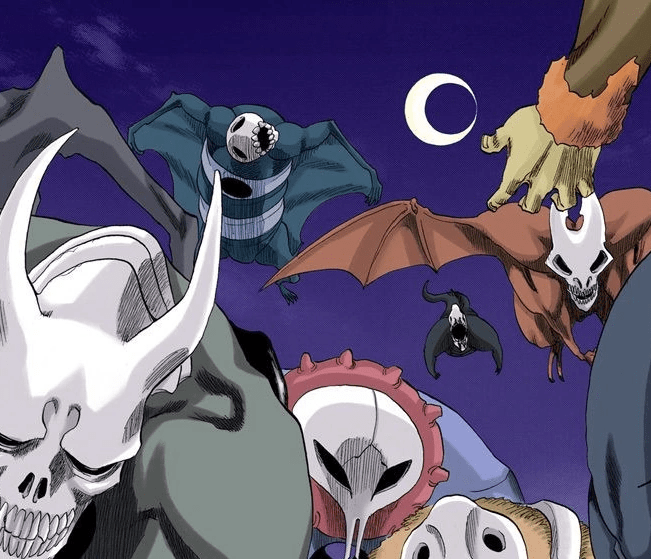
Hollows are creatures that were born from the souls of Pluses, or wandering humans who have not passed on. As a result of losing themselves to despair or regret, the spirit becomes a husk of its former self bent on violence and devouring souls, oftentimes pursuing a twisted version of what their former self desired. A soul that has partially transformed into a Hollow but has not fully changed is known as a Demi-Hollow. It is the job of Shinigami to cleanse Hollows, purifying their spirits and returning them to the Flow of Souls.
Other entities besides souls (primarily Shinigami) can become Hollows unnaturally through a process called Hollowfication, in which the “boundary” between Shinigami and Hollow is forcibly removed, causing the individual to partially or fully mutate into a Hollow and increasing the limit of their strength. Though initially uncontrollable, this state can eventually be tamed and mastered, allowing the Shinigami to call on a Hollow Mask state for greater power in combat. The act of calling on the Hollow Mask is also referred to as Hollowfication. This is a power that Ichigo possessed for much of the story, and is also the process that the Visored were forced to undergo by Aizen.
Hollows that have lived for a time usually settle in Hueco Mundo, the world of Hollows, though are able to cross over to both the Living World and Soul Society if they wish. Hueco Mundo is a world that consists primarily of a barren desert and eternal night, though they do have a stronghold there in the form of Las Noches, a massive fortress within which the strongest Hollows dwell.
There are many different classes of Hollow. Outside the standard weak creature preying on humans, larger ones are known as Huge Hollows, and even beyond that, those which have consumed others of their species to get stronger will first become a giant creature called a Menos or a Menos Grande, which are massive conglomerations made up of hundreds of normal Hollows. The weakest version of a Menos is known as a Gillian, which would be considered a Hollow footsoldier in human terms.
The next level of Menos, achieved through consuming a greater number of Hollow souls, is an Adjuchas, which are both stronger and smarter than Gillians despite being much smaller. Adjuchas vary in shape, with some taking a bulky humanoid form and others being more animal-like. Finally, the highest classification of a Menos is the Vasto Lorde, an entirely human-like Hollow whose strength exceeds even a Captain of the Gotei 13, in theory.
Almost all Hollows, however, are characterized by their Masks, which are formed from their lost hearts (woah when did Xehanort get here-). These masks are white and skull-shaped, and through being split in two alongside the Hollow’s head, serves as the weak point that can be used to kill a Hollow.
However, it is possible for a Hollow to remove its mask. In doing so, as long as the Hollow is Gillian-class or stronger, they can undergo a process called Arrancarfication, becoming much more human-like in nature and appearance, and gaining powers similar in nature to that of a Shinigami – becoming an Arrancar.
In addition to the standard Cero (laser beam), Negación (gravitational light beams), and Sonido (flash step that fools sensory abilities) showcased by normal Hollows, Arrancars gain other abilities that make them more formidable. They can harden their skin with Hierro, detect other individuals and their power level with Pesquisa, create portals through the Garganta via Descorrer, and fire weaker but faster versions of a Cero with Bala. Though not universal, many of them gain High-Speed Regeneration, allowing them to recover almost immediately from injuries short of the destruction of vital organs. Most significantly, Arrancars can utilize a released state called Resurrección, returning them to a more Hollow-like state where their abilities are boosted in a manner similar to Bankai.
Fullbringer
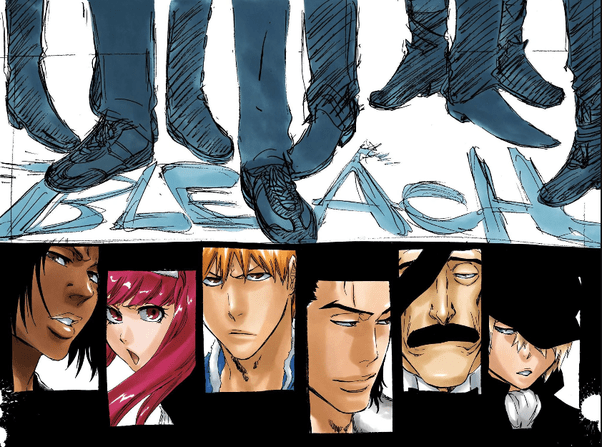
Fullbringers are spiritually-aware humans with abilities born from a variety of factors. All Fullbringers, even before they were born, have pieces of the Soul King within them, which universally attracts Hollows and causes them to attack the individual’s mother before their birth. Once the individual is born, the traces of the Hollow’s power that remains with their mother after the attack is passed on to them, along with what they already had from possessing a portion of the Soul King. Unlike other spiritual beings, a Fullbringer’s body is physical, not composed of Reishi like Shinigami or Hollows.
As a Fullbringer gets older, they can master their ability, which is known as a Fullbring and more closely resembles the power of a Hollow than that of a Shinigami – as makes sense, since the power was partially born from a Hollow to begin with. A Fullbring allows the user to manipulate the “souls” within matter, that being nonliving objects like chairs and such. By “pulling” on the soul of the object, the Fullbringer can both move the object, and alter its traits.
Fullbrings are often contingent on the user’s “affinity” for the object they are manipulating, with an object of great personal value yielding better results than one of little personal value. By boosting and transforming an object, a Fullbringer can create weapons to fight with, or if they are a Clad-Type Fullbringer, shroud their full body with the transformed object.
Through their Fullbring, a Fullbringer can achieve some abilities reminiscent of others demonstrated by different races. For example, they can manifest a green light called Bringer Light in order to achieve High-Speed Movement, similar in nature to the Shunpo used by Shinigami or the Sonido used by Hollows.
Quincy
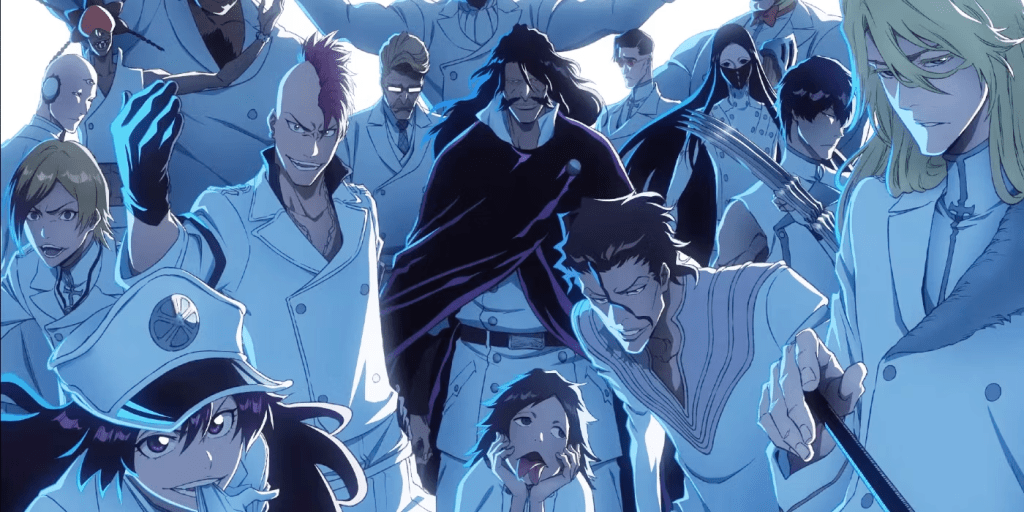
Quincies are a race of spiritually powerful humans who were previously believed to have been exterminated centuries ago. Quincies, like the Shinigami, were dedicated to the extermination of Hollows, but unlike the Shinigami, whose swords cleanse Hollows and return them to the flow of souls, the Quincies abilities erase the soul from existence entirely. In destroying souls in this manner, Quincies began to unbalance the Flow of Souls, which would have led to the destruction of all three worlds, had the Soul Society at the time not stepped in and wiped them out.
In the present, throughout most of the story prior to the Thousand Year Blood War, the only surviving Quincies were believed to be Ichigo’s classmate Uryu Ishida and his family. Thanks to Uryu’s presence, many of the Quincies’ more basic abilities were demonstrated throughout the early stages of the series. Through a cross in the shape of the Quincies’ symbol called a Quincy Cross, a Quincy could focus their power to create a Spirit Weapon known as a Heilig Bogen, which is a fancy word for a bow. With this bow, the Quincy can fire a spiritual arrow known as a Heilig Pfeil, which can wipe out a Hollow’s soul permanently.
A more advanced technique, believed by some to be a Quincy’s trump card, is Ransōtengai, where the user creates strings out of Reishi to control their body parts as they would a puppet, allowing them to counter any offense that would impede them from moving as they normally would.
During the Soul Society Arc, Uryu made use of a special glove called the Sanrei Glove. By removing the glove, the user activates a state called Quincy: Letzt Stil, an even stronger boon than Ransōtengai, which grants them a massive power boost at the cost of losing their powers after it is used. In order to subsequently overcome this sacrifice, a Quincy can make use of a Quincy Bangle, an artifact which draws Reishi from the environment to mimic a Quincy’s natural powers.
Outside of a bow, Quincies can make use of weapons such as Seele Schneider, a totally-not-lightsaber with a blade made of Reishi, which functions similarly to a chainsaw, the Reishi in the blade rotating rapidly for greater cutting power. The sword can also be fired like an arrow for greater range.
Lastly (for the standard stuff), Quincies naturally have their own combat techniques similar to Shinigami and Hollows. Hirenkyaku allows for high-speed movement by riding Reishi beneath the feet, and is similar functionally to Shunpo and Sonido. Blut refers to a Quincy’s ability to channel Reishi through their blood vessels, which can be used for several sub-techniques. Blut Arterie is an increase to attack power comparable to Bankai, Blut Vene is an increase to defense which makes the skin harder to pierce, and Blut Anhaben involves extending Reishi beyond the body to create a barrier around oneself. Lastly, Shadow is a Quincy ability that refers to their ability to teleport via moving through shadows.
Which leaves us with the Thousand Year Blood War and all the vocabulary introduced there. First of all, the Quincy empire is known as the Wandenreich, or the “Invisible Empire”, and is constituted by a city equal in size to the Seireitei which exists within the literal shadows of the Seireitei itself. Through hiding in the shadows in this manner, the Quincies were able to remain undetectable for over a thousand years, biding their time and gathering strength to continue their war with the Shinigami.
The leader of the Wandenreich is known as Yhwach (pronounced YOO-ha-bock), the son of the Soul King. Yhwach’s goal is nothing less than the complete destruction of the three realms, which he sought to achieve by killing and replacing the Soul King himself. Yhwach’s primary ability is known as The Almighty, which allows him to view countless possible futures and select whichever one he desires in a given situation, bringing that future into reality. Yhwach did not initially have the Almighty at the beginning of the Thousand Year Blood War, regaining it during his fight with Ichibe; this is why you’ll sometimes see people refer to pre- and post-Almighty Yhwach.
To achieve his goal, Yhwach enlisted numerous powerful Quincies to serve under him, the most powerful of which were known as the Sternritter. There are 28 Sternritter, each of whom is designated with a letter of the alphabet (the letters S and Y each have two Sternritter) which corresponds with their unique ability. Each of the Sternritter was given a power by Yhwach known as a Schrift, in which he engraves a power directly onto their soul; each power corresponds to a letter. For example, the letter T is “Thunderbolt”, and grants the user the ability to control lightning.
The strongest of the Sternritter are known as the Schutzstaffel, or Yhwach’s Elite Guards. This consists of Uryu, Pernida Parnkgjas, Askin Nakk le Vaar, Gerard Valkyrie, and Lille Barro.
Each of the Sternritter, and Quincy in general, have access to an ability called Quincy: Vollständig, which is a superior version of Letzt Stil that serves as their Bankai and Resurreccion equivalent. By expanding the scope of their Reishi absorption (via a technique called Sklaverei), a Quincy can empower their spirit weapon and general abilities to a greater extent than they can normally.
If Yhwach so desires, he is able to forcibly recover power that he has granted to others, Schrifts and otherwise. To do so, he makes use of an ability called Auswählen, beams of light which engulf the target and steal their powers back, which is fatal to the victim. Yhwach can use this to either return their power to himself, or redistribute it amongst his other troops. He did this to empower the Schutzstaffel, sacrificing his other remaining Sternritter in the process. For this reason you may occasionally see people differentiate the Schutzstaffel pre- and post-Auswählen.
There’s a lot of other miscellaneous vocab but you honestly don’t need to know most of it.
Character States
Ichigo Kurosaki
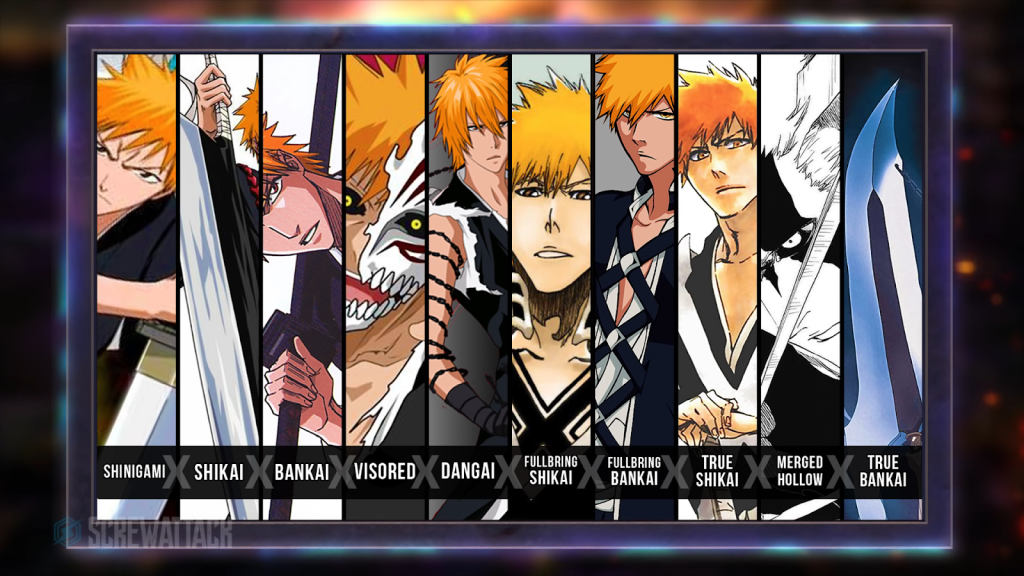
Obviously, it’s not uncommon to specify which arc you’re talking about with Ichigo, since his power changes so much throughout the series, both in nature and degree. If someone specifies an arc name, just keep that in mind for context of when we’re talking about.
In terms of more specific designations and fan terms:
Shikai Ichigo: Refers to Ichigo’s Shikai, obviously. Since his sword doesn’t have a sealed state, this is basically his default state.
Post-Bankai Training Ichigo: During the Soul Society Arc, Ichigo trained with Yoruichi to achieve Bankai over the course of a few days, after which point he interceded in Rukia’s execution and fought Byakuya to save her. This refers to the version of him from after the training.
Bankai Ichigo: Ichigo’s Bankai, a 5-10x stat boost and especially notable for its speed.
Hollow Mask Ichigo: Ichigo can undergo Hollowfication to summon a Hollow Mask to cover his face, boosting his stats even further than he does with just his Bankai by tapping into the Hollow within.
Post-Visored Training Ichigo: In the early stages of the Arrancar Saga, after Grimmjow’s initial attack but before Orihime’s kidnapping, Ichigo trained with the Visored to master Hollowfication, which he previously had tenuous control over at best. This refers to the version of him from after this training.
Dordoni Fight/Grimmjow Fight/Ulquiorra Fight/etc.: Ichigo gets stronger throughout the Arrancar Saga as he faces progressively stronger foes, so you might see specifications of which fight someone is talking about even more specifically than just “Arrancar Saga” or “Post-Visored Training”.
Vasto Lorde Ichigo: Ichigo is killed in the Ulquiorra fight but is “revived”, undergoing full Hollowfication and entering a violent berserker state, which is called “Vasto Lorde Ichigo” among fans. It should be noted however that this is technically a bit of a misnomer that has simply become commonplace. The reason for the fan term is that Ichigo’s transformed state is similar in stature and shape to the silhouette shown when Vasto Lordes were first explained. However, it is simply Ichigo in a fully Hollowfied state, as Ichigo is not a Menos and thus is not a Vasto Lorde. Still, the fan term is harmless and so widely used that there is no problem with using it. If you wanted to be perfectly accurate, though, Full Hollowfication is the term that would be used.
Post-Resurrection Ichigo: After dropping out of the Vasto Lorde form, Ichigo’s fatal wound healed and he was “resurrected” at a higher level of power than he previously was on a base level. This changed the patterning of his Hollow Mask and increased his strength enough that he could take on Yammy pretty casually, despite the fact that Yammy was stronger than Ulquiorra, whom Ichigo had previously struggled immensely with. However, this version of Ichigo still was not strong enough to take on Aizen.
Dangai Ichigo: As Aizen began to evolve, Ichigo underwent training with his father in the Dangai, where time moves differently (think of it like the Hyperbolic Time Chamber from DBZ). While there, he increased in power immensely, and upon exiting had transcended even Aizen’s evolutions in power entirely. Because this level of power was achieved through training in the Dangai, fans often refer to it as “Dangai Ichigo”.
Mugetsu/Final Getsuga Tensho: The ultimate technique that Ichigo learned in the Dangai, where he transforms further, becoming Getsuga itself and performing a final all or nothing attack, at the expense of losing his power afterward. He used this to try to kill Aizen, and while it was unsuccessful, Aizen was left weakened enough that he could be sealed away.
Skull-Clad Ichigo: A movie-exclusive form where Ichigo is granted power by the Kushanāda, the guardians of Hell, allowing him to manifest skull-like armor. You’ll basically never see this come up in discussions since it’s both non-canon and non-standard, but it’s worth mentioning anyway.
Fullbring Shikai Ichigo: Ichigo’s Shikai state after regaining his powers in the Fullbringer Arc.
Fullbring Bankai Ichigo: Ichigo’s Bankai after regaining his powers in the Fullbringer Arc.
True Shikai Ichigo: After losing his Fullbringer powers early in the Thousand Year Blood War, Ichigo underwent training with Squad Zero and reforged his Zanpakuto, learning the truth of his heritage and coming to accept the many aspects of himself, thus achieving the “true” power that always dwelled within him from the beginning. After this point, his Zanpakuto took the form of two swords rather than one, and he was stated by Yhwach to have regained the strength he had used to defeat Aizen (Dangai Ichigo). This is Ichigo’s base at the end of the series.
Merged Hollow Ichigo: Essentially True Shikai Ichigo’s version of Hollowfication, the Merged Hollow state is activated via exposure to large amounts of Quincy Reiatsu, disrupting the balance that Ichigo had previously found within himself, and allowing the Hollow to emerge and meld with his body. In this state, he can combine his normal attacks with Hollow techniques such as the Gran Rey Cero, further boosting his output.
True Bankai Ichigo: Ichigo’s end-of-series Bankai, which was on screen for one page and then was destroyed by Yhwach, who feared its potential power so much that he felt the need to destroy it with the Almighty rather than fight it directly.
Sosuke Aizen
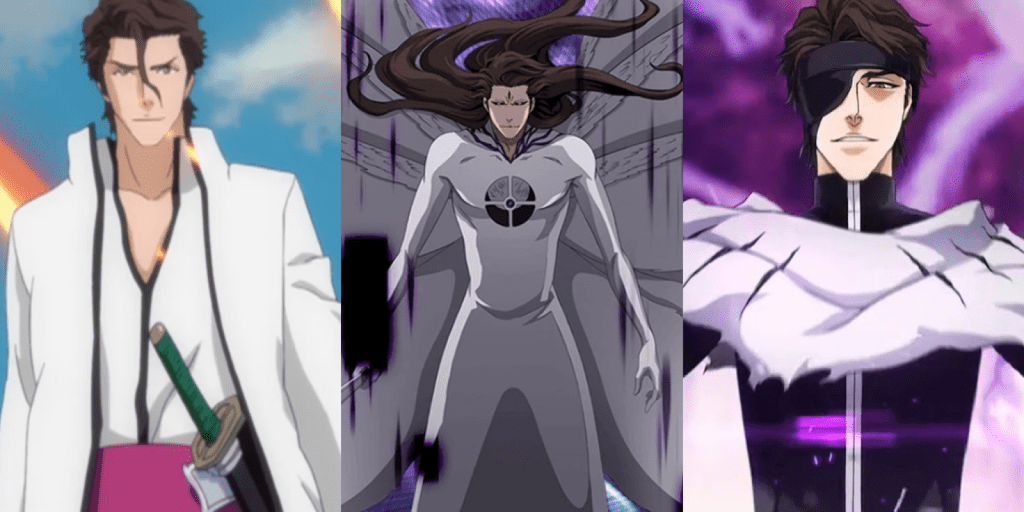
Shinigami Aizen: The version of Aizen that was operating as a member of the Soul Society, up until the Hogyoku began to evolve him midway through the Fake Karakura Town Arc. This version of Aizen was already stronger than nearly all of the Captains. Aizen after fusing with the Hogyoku but before evolving is known as First Fusion Aizen.
Second Fusion Aizen: Aizen’s first Hogyoku transformation, where his body becomes fully covered in a pure white outer shell. He fought Urahara, Yoruichi, and Isshin in this state, and this is when his Reiatsu came to transcend the Shinigami.
Third Fusion Aizen: Aizen’s next Hogyoku form where he somewhat breaks out of the white cocoon and grows long flowing locks. Stronger than Second Fusion, and the form he had up until Gin betrayed him.
Fourth Fusion Aizen: The butterfly form, which he uses to kill Gin before getting face-grabbed and beaten down by Dangai Ichigo.
Final Fusion Aizen: Aizen’s final Hogyoku transformation, where his face turns black and his teeth get sharp. This was the form that Ichigo used Mugetsu against.
Thousand Year Blood War Aizen: After his defeat against Ichigo, Aizen was sealed away in the Soul Society’s prison, the Muken. For this reason, this state is sometimes also referred to as Muken Aizen. At this point, the Hogyoku caused him to evolve even further, merging with his Zanpakuto entirely and transcending the need for a sword – he can still manifest one if he needs to, but in terms of special ability, his body is the sword. This state is even more powerful than he was with his fusion forms, allowing him to fight on par with Soul King Yhwach and end-of-series Ichigo.
Shinigami
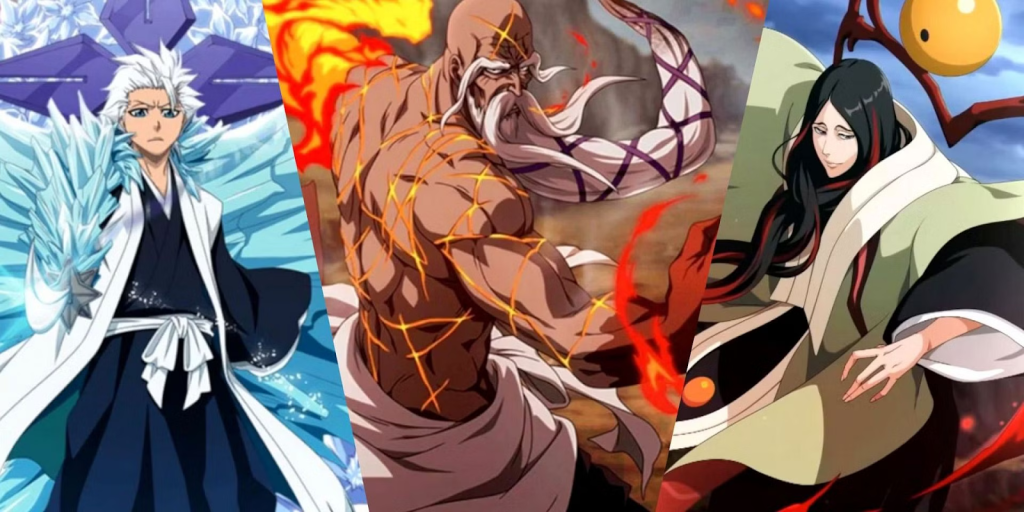
In most cases, the only relevant delineation for the majority of Shinigami is what arc we’re talking about and what form they’re using. So you’ll probably see Shikai/Bankai specified regularly, or something like “War Arc ________”. You might occasionally see “Gentei Reiin ______” to designate a Shinigami with their limiter in place. Most of it is self-explanatory as long as you know what the terminology means.
Sometimes you might see some more specific designations. Byakuya, Renji, and Rukia (along with Ichigo) trained with Squad Zero during the Thousand Year Blood War and got much stronger, so you may see “Post-Training” for them or something along those lines.
For the Visored (as with Ichigo), they can undergo Hollowfication and don their Hollow Masks for more power, which is typically just referred to as “Hollow Mask ______”.
Other than Ichigo and Aizen, there are only a handful of Shinigami with unique transformations other than Bankai. One of them is Yoruichi, who has a transformation called Shunkō: Raijū Senkei: Shunryū Kokubyō Senki, or Flash War Cry: Thunder Beast Battle Form: Flash God Black Cat Warrior Princess. Or Flash Goddess Form, if you aren’t insane. She used that in TYBW against Askin. Another one is Komamura, who has something called the Humanization Technique where he temporarily becomes human at the expense of reverting him to a normal wolf afterward. This was also used in TYBW, against the Sternritter Bambietta.
Other than this, the only major thing you might see are people specifying a character’s Bankai by name instead of just with the word Bankai. Here’s a list of Bankai that you can consult if you find yourself in this situation.
Hollow
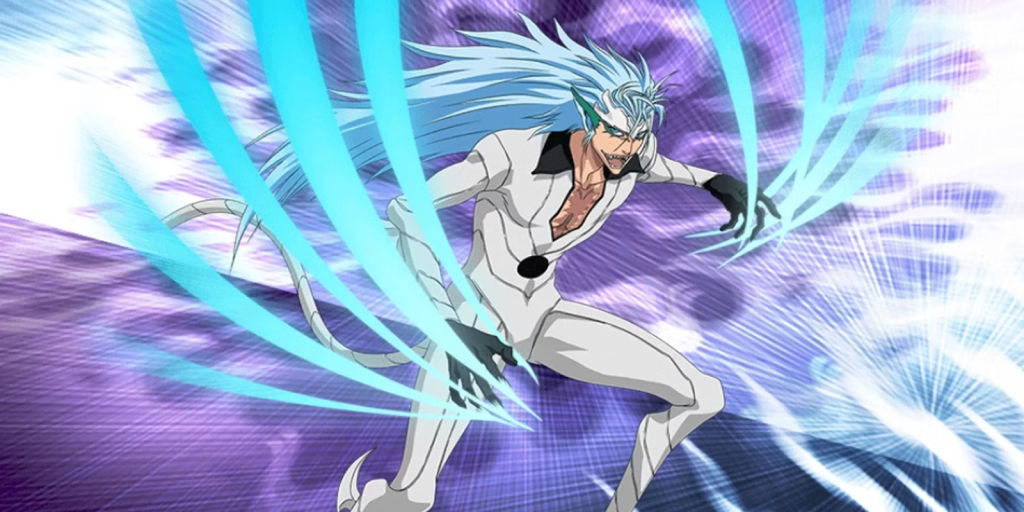
For the most part, the biggest thing for the Hollows that you’ll need to pay attention to is Resurreccion, the Arrancar’s Bankai equivalent, and Segunda Etapa, the second transformation beyond Resurreccion which (as far as we know) only Ulquiorra has ever achieved.
Grimmjow, Luppi, Nel and Harribel also get stronger in the interim between the Arrancar Saga and the Thousand Year Blood War + subsequent Can’t Fear Your Own World novels, so you’ll also see things like “War Arc Grimmjow” and such.
Otherwise, Hollows don’t generally have too many alternative forms and states to watch out for.
Quincy
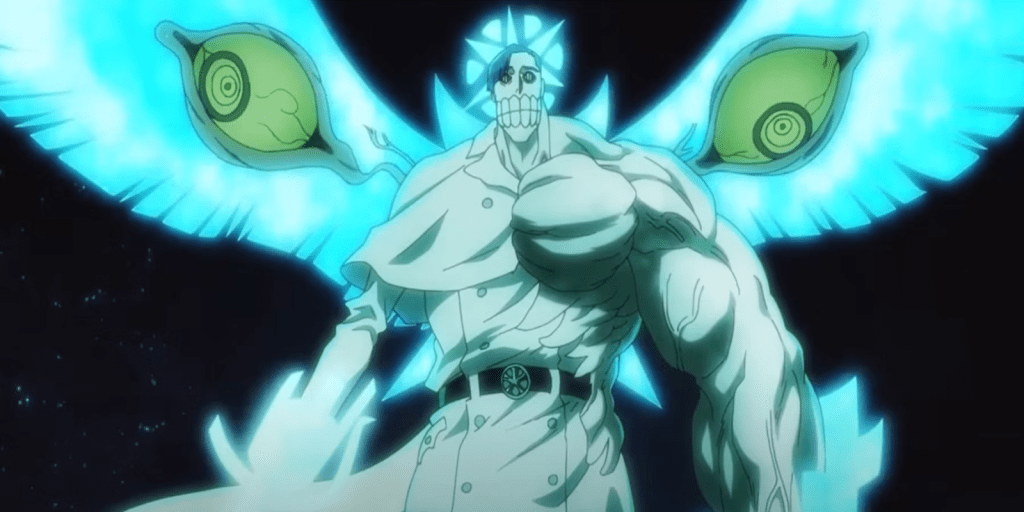
The Quincies’ Bankai equivalent is Vollständig, and they also have the various Blut applications to amp their stats in addition.
Certain characters like Askin, Gerard etc. (the Schutzstaffel) are stronger Post-Auswählen, due to the Sternritters’ power being redistributed by the Auswählen. Other Sternritter who survived the Auswählen but still had their powers drained, such as Liltotto and Giselle, are weaker Post-Auswählen.
The Sternritter Quilge Opie in particular has a power boost where he absorbs Ayon, a powerful Chimera Hollow created from the flesh of several Fraccion. After absorbing it, he becomes stronger.
Yhwach is stronger Post-Almighty than before, since after awakening Almighty, he gained access to OP fate manipulation. He also later absorbs the corpse of the Soul King, gaining dominion over the three worlds, at which point he can be referred to as Soul King Yhwach.
One Piece
Is this video relatable to you? Well don’t worry, we got you covered. One Piece fortunately isn’t as terminology-heavy as Naruto or Bleach despite being much longer, but there’s still some stuff you need to know, so let’s get into it.
Series Chronology
Pre-Timeskip
East Blue Saga: The first big arc of the series, which consists of six smaller arcs that each introduce the earliest members of the Straw Hat Pirates. All of these arcs take place in the East Blue, one of the One Piece world’s four oceans.
- Romance Dawn: The first arc of the series, which introduces Monkey D. Luffy and his goal of becoming King of the Pirates, as well as his role model Red-Haired Shanks, who later in the story will be revealed to be an Emperor of the Sea. Also introduces Luffy’s first mate, Roronoa Zoro, a famous pirate hunter.
- Orange Town: Arc in which Luffy and Zoro first meet Nami, their future navigator. Also introduces Buggy the Clown, who serves as the main antagonist of the arc.
- Syrup Village: Arc which introduces Usopp, a young man prone to lying who would later become the Straw Hats’ sniper. The conflict of the arc centers around Captain Kuro, a feared pirate who sought to murder Usopp’s friend Kaya and acquire her fortune.
- Baratie: Arc which takes place in a seafaring restaurant, and introduces Sanji, the future cook of the Straw Hats. The villain of the arc is the brutal Don Krieg and his pirate crew.
- Arlong Park: Climactic arc of the East Blue Saga, which brings the Straw Hats into conflict with the Fishman, Arlong, for whom Nami had been forced to work since she was a child. This is the arc where Nami formally joins the crew, after Luffy defeats Arlong.
- Loguetown: Final arc that takes place in the East Blue before the Straw Hats make their way to the legendary Grand Line. Loguetown is the town where Gol D. Roger was executed, and this arc introduces major players like Smoker and Monkey D. Dragon, Luffy’s father.
Alabasta Saga: First major saga that takes place in the Grand Line, which centers around the Straw Hats’ conflict with the Baroque Works organization, and their leader Crocodile.
- Reverse Mountain: Arc in which the Straw Hats enter the Grand Line, and meet a giant whale named Laboon, who was left behind by a pirate crew decades prior. This arc introduces Mr. 9 and Miss Wednesday (AKA Nefertari Vivi), two members of Baroque Works.
- Whisky Peak: Arc which takes place in a town inhabited by bounty hunters. Further sets up Baroque Works as an antagonistic force, and ends with the Straw Hats teaming up with Vivi with the goal of ultimately defeating Crocodile.
- Little Garden: Arc that takes place on an island on which two giants have been battling through years. The primary conflict of the arc centers around the Straw Hats battling Baroque Works agents, culminating in them setting off for Alabasta.
- Drum Island: Arc which takes place on a perpetually snowy island, which introduces the Straw Hats’ doctor, Tony Tony Chopper. The primary conflict of the arc centers around the corrupt monarch of Drum Kingdom, Wapol.
- Alabasta: Climactic arc of the Alabasta Saga, which takes place in the desert kingdom of Alabasta and focuses on the Straw Hats’ conflict with Crocodile. Ends with Crocodile being defeated, Alabasta being freed, and the Straw Hats parting ways with Vivi. At the end of the arc, Crocodile’s former associate Nico Robin joins the crew.
Sky Island Saga: Saga which focuses on the Straw Hats’ journey to an island in the sky, and subsequent conflict with the god that rules over that island.
- Jaya: Arc in which the Straw Hats seek to determine whether a Sky Island really does exist, which takes place on the island of Jaya. This arc introduces Blackbeard, and serves to set up the events of the following arc, in which the Straw Hats travel to the Sky Island.
- Skypiea: The arc which takes place in the island in the sky, Skypiea, and focuses on the conflict with Enel, a lightning god who seeks to destroy Skypiea and travel to a place called the Endless Varse, which is revealed to be the Moon.
Water 7 Saga: One of the most major arcs of the story, focusing on the Straw Hats battling against the World Government itself, primarily through the Cipher Pol 9 group, in order to save the life of Nico Robin, with her past finally being revealed.
- Long Ring Long Land: A short arc where the Straw Hats reach a group of small islands collectively known as Long Ring Long Land, and face off against the Foxy Pirates in a series of deadly games with their very own crewmates as the reward for victory. This arc marks the first appearance of an Admiral, with Aokiji’s meeting with the Straw Hats paving the way for the next couple of arcs.
- Water 7: The arc in which Robin leaves the Straw Hats as a result of her past catching up to her, putting the rest of the group against the government organization CP9, who were working undercover in Water 7 to acquire the blueprints for an ancient weapon. This is also the arc where Franky is introduced.
- Enies Lobby: Arc which directly continues the story from Water 7, in which the Straw Hats pursue CP9 and Robin to Enies Lobby, a government stronghold through which high-level criminals are processed. In this arc, the Straw Hats officially declare war on the World Government. Ends with the defeat of CP9, Robin rejoining the crew, and Enies Lobby being destroyed via Buster Call.
- Post-Enies Lobby: Aftermath arc which introduces Luffy’s grandfather Garp, features a fight between Ace and Blackbeard which sets up major events going forward, and sees Franky join the Straw Hat crew. Usopp also rejoins.
Thriller Bark Saga: “Saga” consisting of only one arc, which features the Straw Hats’ conflict with Gecko Moria on the island-sized pirate ship, Thriller Bark.
- Thriller Bark: Halloween-themed arc which takes place on Thriller Bark, and introduces several new Warlords, namely Gecko Moria and Bartholomew Kuma, as well as another new Straw Hat, the skeleton Brook.
Summit War Saga: Final pre-timeskip saga which features a climactic war between the Whitebeard Pirates and the World Government, as a result of Portgas D. Ace being captured by Blackbeard and sentenced to public execution.
- Sabaody Archipelago: Arc in which the Straw Hats prepare to enter the New World, but end up attracting the attention of the Marines and being thoroughly defeated by Kuma, who banishes them all to different islands to train, recognizing that they are unprepared for the New World. Introduces the Supernovas, Admiral Kizaru, and Silvers Rayleigh.
- Amazon Lily: Luffy is separated from the rest of the crew by Kuma and banished to the island of Amazon Lily, ruled by Boa Hancock and her Kuja Tribe. While there, Luffy learns of Ace’s impending execution and decides to set off to rescue him from prison, with Boa’s help.
- Impel Down: Luffy is snuck into Impel Down, the Marines’ highest security prison, where Ace is being held, fighting his way through its many different levels to try and reach Ace. Reintroduces old villains like Crocodile and Buggy who were arrested, as well as a new face, Jinbe. Luffy ultimately is unable to reach Ace before he is transferred to Marineford for execution.
- Marineford: The actual Summit War begins with Ace’s impending execution. Whitebeard arrives to save Ace along with his armada of pirates, and faces off against all of the Warlords and all three Marine Admirals. Arc culminates in Ace being killed by Akainu and Whitebeard being killed by Blackbeard, before Shanks arrives to end the war.
- Post-War: Aftermath arc in which Luffy mourns Ace’s death and resolves to get stronger, beginning training under Rayleigh which would last 2 years, during which time the rest of the Straw Hats also train to get stronger so that they may survive in the New World. Also features a flashback showing Luffy’s relationship with Ace and their third brother, Sabo.
Post-Timeskip
Fishman Island Saga: First post-timeskip saga which reestablishes the Straw Hats after their training, and focuses on their journey to the New World via the underwater Fishman Island.
- Return to Sabaody: Relatively short arc where the Straw Hats reunite at Sabaody and set sail again.
- Fishman Island: Takes place in Fishman Island, an undersea island within a giant bubble where many races of aquatic beings live. The primary conflict of the arc centers on the extremist Hody Jones, and the discrimination that Fishmen have historically suffered at the hands of humans. Also reintroduces Jinbe, whom Luffy asks to join the Straw Hats.
Dressrosa Saga: Saga which focuses primarily on the conflict with the underworld broker Doflamingo, also known as Joker, and his family of criminals.
- Punk Hazard: Takes place on the island of Punk Hazard, which is half ice and half fire, and centers on stopping the machinations of Caesar Clown, an underling of Doflamingo’s who manufactures artificial Devil Fruits and experiments on children. Reintroduces Trafalgar Law and establishes his grudge against Doflamingo, which will become a driving force going forward.
- Dressrosa: Arc in which Doflamingo himself is the main antagonistic force, taking place on the island nation of Dressrosa where Doffy is the king. Notable events include the reintroduction of Luffy’s presumed-dead brother Sabo and his acquisition of Ace’s old Devil Fruit, the formation of a Straw Hat Grand Fleet whose captains are loyal to Luffy, the destruction of Kaido’s SMILE factory, the introduction of various new individuals, abilities, and so forth, and the ultimate downfall of Doflamingo and his underworld empire.
Whole Cake Island Saga: Saga focusing on a conflict with the Emperor Big Mom and her Big Mom Pirates.
- Zou: Arc which takes place on a giant, ancient elephant named Zunesha who traverses the sea. A race of animal humanoids known as the Minks live on his back. This arc primarily serves to establish lore about the Road Poneglyphs and Wano which would be important going forward.
- Whole Cake Island: Arc in which Sanji is taken away by the Big Mom Pirates and returned to his family, the Vinsmokes, who intend to marry him off to Big Mom’s daughter Pudding in order to establish an alliance. Big Mom, however, intends to murder the Vinsmokes at the wedding and seize their assets for herself. This arc fleshes out Sanji’s background and culminates in an assassination attempt on Big Mom which fails, but results in Luffy fighting and defeating her top commander, Katakuri, and the Straw Hats and their allies escaping the island.
- Reverie / Levely: Short arc which focuses on an event known as the Reverie, where leaders of different kingdoms across the world gather at Mariejois to hold council with the World Government. Arc introduces Imu, and the events of the Reverie lead to important later revelations like the Warlords system being discontinued.
Wano Country Saga: Saga consisting solely of the Wano arc, featuring the Straw Hats and their allies’ attempt to take down Kaido, the Emperor of the Sea who controls the country of Wano.
- Wano: Arc which is divided into three acts, featuring Luffy’s arrival on Wano, defeat at the hands of Kaido, subsequent imprisonment and training arc, and finally a climactic raid on the island of Onigashima, in which Kaido and Big Mom are both defeated and cast down, resulting in Luffy becoming an Emperor of the Sea, and Kozuki Momonosuke taking his rightful place as the shogun of Wano. Introduces Luffy’s Gear Fifth form.
Final Saga: Saga which will consist of the final arcs of One Piece, which is currently in its early stages.
- Egghead: Arc taking place in the futuristic Egghead Island. Introduces Doctor Vegapunk, who was previously a figure that was built up but never shown. Reintroduces Cipher Pol as an antagonistic force, explores the backstory of Kuma as well as his daughter Bonney, and features a major battle against the Gorosei and Admiral Kizaru.
- Elbaf: Island inhabited by giants, considered to be the strongest country in the world. The current arc of the story.
Islands We Haven’t Been To Yet
Hachinosu / Pirate Island: The “pirate paradise” currently occupied by the Blackbeard Pirates, which is where the legendary Rocks Pirates were formed in the past.
Lodestar Island: The penultimate island in the Grand Line, right before Laugh Tale where the One Piece is hidden. Not much is currently known about this island.
Raftel / Laugh Tale: The final island, where Gol D. Roger hid the One Piece and where he learned of the world’s secrets, a story which caused him and his crew to simply laugh in response, hence the name “Laugh Tale”.
World of One Piece
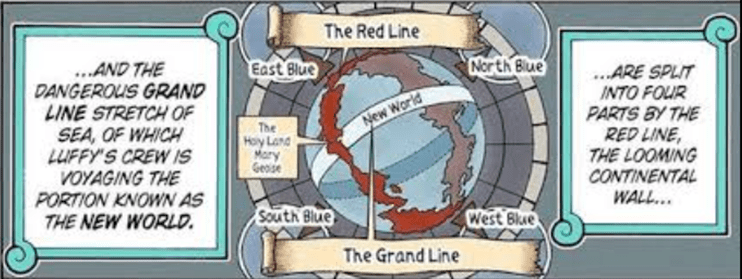
The One Piece planet consists primarily of four massive oceans, which are separated alongside an equator and meridian by the Grand Line and Red Line. The Red Line is a massive, thin continent which stretches around the circumference of the planet, dividing it into two halves. The Red Line is also the location on which Mariejois (or the Holy Land) is located, the home of the World Nobles. The Grand Line is a region of ocean which is perpendicular to the Red Line and also stretches around the planet’s circumference. The four oceans that are divided up by these borders are:
- East Blue: The least dangerous of the four seas, and the one where Luffy comes from. The earliest arcs of the series take place in the East Blue.
- North Blue: The North Blue is the sea where Sanji was born, which was previously ruled over by the Vinsmoke family. The Donquixote Family also achieved notoriety in the North Blue.
- West Blue: The sea where Robin, Brook, Shanks, Moria, Bege, and more were born. Most notably the former location of God Valley, the island where the Rocks Pirates and Roger Pirates did battle in the past.
- South Blue: The sea where Franky, Ace, Sengoku, Kuzan, Kid, Kuma, and more were born.
Generally speaking, these seas aren’t too important, as the majority of the series takes place on the Grand Line, where pirates sail in order to hunt for the One Piece, traveling from island to island. The Grand Line is treacherous, and requires special tools such as a Log Pose (a fancy anime compass) to navigate.
Bordering either side of the Grand Line and separating them from the four seas is what’s known as the Calm Belts, large stretches of ocean which lack ocean currents, and are populated by massive and dangerous Sea Kings, who attack any ship that tries to cross them. Because of this, crossing a Calm Belt is impossible without specific technology, making it extremely difficult to enter and exit the Grand Line.
The Grand Line circles the planet, and is divided into two halves by the Red Line. The second half of the Grand Line is called the New World, and is much more dangerous compared to the first half, generally requiring a much greater level of power and ability to survive within, usually achieved through mastering the use of Haki, without which many pirates are hopeless in the New World.
In order to navigate to the final island, Laugh Tale, and claim the legendary One Piece, a pirate crew would first need to acquire the information transcribed on four Road Poneglyphs, large stone steles inscribed with ancient script. There are many poneglyphs which vary in terms of what information is transcribed on them, but the Road Poneglyphs are the ones that can be used to triangulate the location of Laugh Tale, which cannot be located with a Log Pose.
Pirates
In the world of One Piece, pirates sail the seas and journey the Grand Line for the purpose of finding the legendary One Piece, a treasure trove of unknown nature, left behind by the deceased Gol D. Roger, who was known during his lifetime as the Pirate King. In finding the One Piece, a pirate will not only gain all of Roger’s wealth, fame, and power, but also learn all the world’s lost knowledge and take Roger’s throne as the new Pirate King. It is this dream that motivates those like Luffy to seek out the One Piece.
Certain pirates have special qualifications or roles relative to the world. Most pertinent to this blog are the Shichibukai, or the Seven Warlords of the Sea, which are pirates specially chosen by the World Government to act as allies of the Marines, helping to maintain the world’s balance by lending their strength to the government’s cause. As the name implies, there are seven Warlords at any given time, and they are not persecuted by Marines or government officials; their bounties are frozen and they are allowed to act as they please, so long as they are not defeated and do not take actions that compromise their relationship with the World Government. If a Warlord is defeated or arrested for illegal activities, they will lose their status and the government will seek out a replacement.
Prior to the timeskip, the Seven Warlords were Dracule Mihawk, Sir Crocodile, Gecko Moria, Bartholomew Kuma, Boa Hancock, Jinbe, and Donquixote Doflamingo. After Crocodile was arrested in Alabasta and lost his Warlord title, Blackbeard was accepted into the Warlords as his replacement. During the Summit War, Jinbe and Blackbeard both quit the Warlords, and Gecko Moria was expelled from the group, causing the Marines to find three replacements during the timeskip. These replacements were Trafalgar Law, Buggy the Clown, and Edward Weevil. Doflamingo was then stripped of his title post-timeskip after being arrested in Dressrosa, but a replacement was never found before the Warlords were disbanded during Wano.
On the opposite side of the coin, with which the Warlords were meant to keep a balance, are the most notorious pirates in the world, known as the Yonko or the Four Emperors of the Sea. These pirates are more infamous than any others, and hold massive sway in the New World, with all of them boasting wide territories under their control. Along with their infamy as pirates, the Yonko are also famed for their incredible strength.
Prior to the timeskip, the four Yonko were Whitebeard, Kaido, Big Mom, and Red-Haired Shanks. After Whitebeard’s death in the Summit War, Blackbeard conquered his territories and took his place as a Yonko during the timeskip. Much later on, after Kaido and Big Mom were defeated in Wano, Monkey D. Luffy and Buggy the Clown took their place as the new Yonko, currently rounding out the ranks alongside Blackbeard and Shanks.
Each Yonko has their own crew to call their own. Whitebeard’s crew is known as the Whitebeard Pirates, and he has sixteen Division Commanders who work under him, each of whom serves as one of Whitebeard’s top officers, leading the divisions of his crew. Notable Whitebeard Division Commanders include Marco the Phoenix, Fire Fist Ace, Diamond Jozu, and Flower Sword Vista.
Kaido’s Beast Pirates have three top commanders known as the All-Stars, which are his three strongest subordinates: King, Queen, and Jack, in descending order of power. Below the All-Stars in power are the Tobiroppo, the six strongest Shinuchi in Kaido’s crew, Shinuchi referring to second-grade officers. The Tobiroppo are Page One, Ulti, Who’s-Who, Black Maria, Sasaki, and X Drake.
Big Mom’s Big Mom Pirates mostly consist of her children, and she has a fucking lot of them. At the top of the crew are her Three Sweet Commanders: Charlotte Katakuri, Charlotte Smoothie, and Charlotte Cracker. Formerly, they were the Four Sweet Commanders until the fourth of their number, Charlotte Snack, was defeated by the pirate Urouge and demoted as a result. Below the commanders are the officers, of which there are 74, all of whom are Big Mom’s children. The four most notable of the bunch are Perospero, Compote, Daifuku, and Oven.
Shanks’ Red Hair Pirates are more mysterious at the moment, but we know the highest-ranked of them is his first mate, Ben Beckmann, and under him are eight senior officers: Lucky Roux, Yasopp, Limejuice, Bonk Punch, Monster, Building Snake, Hongo, and Gab. For the most part you don’t need to know any of these people because they haven’t done anything yet.
Blackbeard’s Blackbeard Pirates have ten high-ranking commanders known as the Ten Titanic Captains, each of whom command their own ship and division. These captains are Jesus Burgess, Shiryu of the Rain, Van Augur, Avalo Pizarro, Laffitte, Catarina Devon, Sanjuan Wolf, Vasco Shot, Doc Q, and finally the former Marine Admiral Aokiji, known now by his real name, Kuzan.
Though they differ in name and number, the strongest, highest-ranking officers of the Yonko are referred to collectively by the fanbase as Yonko Commanders, and it’s important to keep them in mind for scaling purposes, you’ll hear things like “YC level” a lot.
Marines & World Government
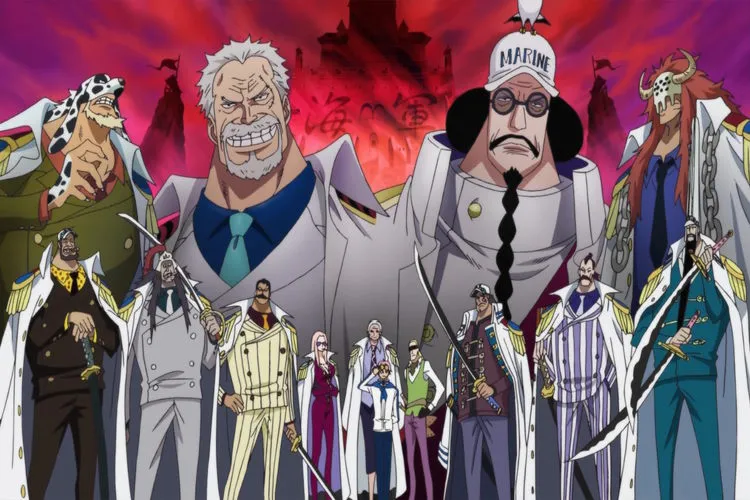
Marine Officers: Average Marine footsoldier.
Marine Vice Admirals: Strong Marine guy who only exists to job. There are currently 31 known Vice Admirals and the only important ones are Monkey D. Garp (Luffy’s grandfather), who is known as the Hero of the Marines and is only a Vice Admiral because he refuses to accept a promotion, and Smoker, one of Luffy’s most recurring adversaries in the Marines. You should also probably know the name Tsuru because she makes an important statement about Whitebeard, and is a very famous and important Marine who was alive and influential during Roger’s time.
Marine Admirals: The three strongest Marines and the most powerful asset at their disposal, the Admirals are second only to the Fleet Admiral in the hierarchy of the Marines. Before the timeskip, the three Admirals were Aokiji (real name Kuzan), Kizaru (real name Borsalino), and Akainu (real name Sakazuki). After the timeskip, Aokiji left the Marines and Akainu was promoted to Fleet Admiral, leaving Kizaru as the only Admiral to remain in his position, now joined by two new Admirals: Fujitora (real name Issho) and Ryokugyu (real name Aramaki).
Marine Fleet Admiral: The highest ranking Marine who presides over the Admirals and answers directly to the World Government. Pre-Timeskip, this position was filled by Sengoku, who retired after the Summit War and was replaced by Akainu.
Doctor Vegapunk: Reputed as the smartest man in the world, Vegapunk isn’t a member of the Marines nor the government, technically, but he does work closely with them, designing much of their technology such as the robotic Pacifistas. His research and discoveries have made him one of the most important and influential figures in the world.
Celestial Dragons / World Nobles: The aristocratic descendents of the twenty people who first founded the World Government. They’re corrupt, greedy, arrogant, absurdly wealthy, and cause many of the world’s problems (clearly this isn’t a metaphor for anything).
The Gorosei / Five Elders: The five “highest authorities” of the World Government, these five elderly men supposedly hold the greatest authority in the world, and make many of the decisions that drive the government’s actions. However, they are all secretly controlled by a mysterious figure known as…
Imu: The shadow king of the World Government who sits atop the Empty Throne. The Five Elders serve him, and currently almost nothing is known of his nature or goals, or even his appearance. It is very likely that Imu will be one of, if not the final villain of the series.
Ancient Weapons: Three weapons of mass destruction that were employed hundreds of years ago, during a great war that took place during the Void Century (a 100-year period where no history was recorded). The three Ancient Weapons are Pluton, an incredibly powerful warship, Poseidon, a mermaid capable of communicating with and controlling Sea Kings, and Uranus, the nature of which is still unknown. These weapons are believed to possess enough power to conquer or even end the world.
The Mother Flame: An energy source created by Vegapunk, a fraction of which was able to power an Ancient Weapon, allowing it to annihilate an entire island and disturb the seas, altering the water level on a planetary scale.


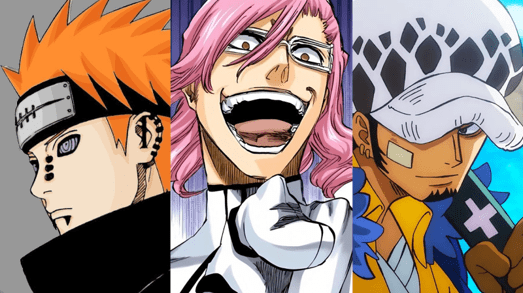
 G1 Death Battle Fan Blogs
Leave a reply to Troceraptor Cancel reply