
“War does not determine who is right, only who is left.” – Bertrand Russell

Master Chief, Halo’s Legendary Spartan-II.
Doom Slayer, Doom’s Scourge of Hell.
The FPS is one of the most iconic genres in video games, and these two are the icons of that genre, who pioneered it in the first place and brought it to where it is now. Space marines who’ve seen it all and have fought against the greatest forces in the universe to save humanity – while both Death Battle and this blog have covered this matchup before, the long awaited rematch of the Spartan and Slayer has finally come across! Will Master Chief prove why he’s the protector of humanity who stuck around in Round 1, or will the Doom Slayer bring hell to pay? Let’s find out in this DEATH BATTLE!
Before We Start…
These two have a bit more complexity to them then you’d think, so let’s discuss what was used for both.
For Chief, all the games will be used, as well as the novels, comics, and other supplemental material… Not that complicated, honestly.
Slayer, meanwhile, is a bit more complicated. Obviously the original trilogy of Doom games should be used, as well as the newer episodes for Doom 2, as well as the Slayer duology. However, the rest of the series is where canonicity becomes a bit more complicated. Doom 3 itself is supposedly a reboot, but Doom RPG suggests that the protagonists of both Doom RPG and Doom 3 is the same Doomguy from the first three games – however, this is not referenced in Eternal, which makes things complicated. However, to be as thorough as possible, we decided to cover these games as well. Doom 3 is still considered part of the Doom universe, as stated by Hugo Martin in this livestream, so we think it’s probably fine to use. In addition, the WADs Sigil and Sigil 2 also being used, as it was added to the Doom I + II remaster, making it usable as well.
The most complicated things in terms of canonicity for Doom, however, would be the novels and comic. The comic itself doesn’t contradict anything, but doesn’t seem to add anything either. The initial novels are definitely not canon, as they outright do not contain Hell at all. However, the Doom 3 novels do have references on the Doom RPG site, meaning we’ll use them as supplemental canon.
Also, we decided to look into classic Wolfenstein, Commander Keen, and Quake, because why not really.
For blog purposes, links to the Doom 2016 and Eternal Codex. Wiki version. Game Manuals.
Finally, no, we’re not using either’s live action adaptations, we have standards and don’t hate ourselves.
As for images, Aqua and Ninja did the edits in this blog, so shoutouts to both of them.
Background
Master Chief

There are many stories of the horrors of war, but few are quite as messed up as the SPARTAN-II program. Developed by Dr. Catherine Halsey, a civilian doctor of the United Nations Space Command, the program involved abducting children and enlisting them into war, training their bodies and minds and then augmenting them into super soldiers. There were hundreds of these Spartans enlisted, but very few survived the augmentation process. But one in particular has stood as the most legendary of soldiers, and easily the most feared among humanity’s enemies. This is the Master Chief Petty Officer John-117!
John was enlisted into the UNSC at the incredibly young age of 6, and trained pretty much every moment of every day of his life. By the time he reached 14, John had undergone the super soldier program, augmenting his skeletal and muscular structure, increasing his strength, speed, and durability to superhuman levels. Good thing too, because during this time, humanity went to war with an alien Covenant, with technology far beyond the UNSC’s capabilities. Upon reaching the rank of Master Chief Petty Officer, John and his Spartans were humanity’s greatest weapon against this new threat. Together, they’ve taken out Covenant ships on foot, and nearly saved whole planets from getting glassed by their plasma cannons. Chief would even find himself paired with a warship artificial intelligence unit called Cortana, who will be relevant later.
But even with the Master Chief’s skills, strength, and newly acquired super armor, he still wasn’t a flawless soldier, and this all came to a head when fighting for the UNSC’s most advantageous planet, Reach. While Chief did prevent the Covenant from getting info on Earth, preventing them from reaching the planet and glassing it as well, he couldn’t save his fellow Spartans, nor could he save Reach from destruction. He had seen several planets glassed by the Covenant, but this time was different. This time, the planet had his team, his friends, his family on it, and there was nothing he could do to stop it as he and a few Marines escaped in the Pillar of Autumn.
Upon fleeing Reach, the Autumn, under command of Captain Jacob Keyes, discovered a massive mysterious ring that they had no choice but to crash land on after being shot down by the Covenant, and Chief was tasked with taking Cortana with him to prevent her from falling into Covenant hands. It was on the ring, which the enemy called “Halo”, that Chief and Cortana discovered an infectious species called the Flood, which turned the corpses of humans and Covenant alike into rampaging zombies. After realizing the Flood is getting stronger and more numerous, Master Chief would encounter Halo’s monitor, a drone named 343 Guilty Spark, who convinced Chief to activate Halo in order to eradicate the Flood.
And he was so close to doing so, but Cortana realized that the ring doesn’t kill the Flood, but rather it kills the Flood’s food, AKA all sentient life within 25,000 light years. Chief and Cortana would then work together to destroy Halo, hoping to find Captain Keyes and have him use his neural implants to overload the Autumn’s reactor, destroying the ship and Halo along with it. Unfortunately, despite a hard-fought mental battle, Keyes was infected and turned into a mass of Flood, forcing Chief to kill him and take his implants himself. The operation was successful, and Halo was finished. But Master Chief was just getting started.
John made his way back to Earth, reuniting with survivors of not just Halo’s destruction, but also the Fall of Reach, including a handful of the Spartans that he grew up and trained with. When he made it back to Earth, the Covenant were close by to attack, under the leadership of a hierarch called the Prophet of Regret. Chief was successful in driving the Covenant away from Earth and joined the UNSC ship In Amber Clad in following him to another Halo. After managing to kill the Prophet of Regret, Chief and Cortana encountered a massive Flood monster called the Gravemind, which enlisted the help of him and a Covenant Elite named Thel ‘Vadam, AKA the Arbiter, to stop the ring from being activated. They would be successful, but another hierarch called the Prophet of Truth managed to escape to a Forerunner installation called the Ark, which would let him activate Halo remotely. Not only that, but the Flood had managed to find its way to Earth.
So it was up to Chief and Arbiter to hunt down Truth, and find a way to wipe out the Flood for good. Eventually, the Arbiter would kill Truth, and the duo would find a replacement Halo for the one that Chief destroyed. The duo would agree to light Halo to eradicate the Flood, but doing so resulted in the ship they were flying in to be split in half, stranding Chief and Cortana in the depths of space believed to be dead. But as the legends say, Spartans never die. Chief and Cortana were floating around in half of the UNSC Forward Unto Dawn. To sustain himself until they were discovered, Chief put himself in cryosleep while Cortana continued to monitor the ship’s systems and launch a beacon to be rescued.
4 years later, the Dawn was invaded by a new Covenant that didn’t like having a truce with the UNSC, so Cortana was forced to awaken Chief and investigate. Good timing too, because the Dawn would end up crashing on a planet called Requiem, where two major problems came up. For one, Chief would find himself face-to-face against a Forerunner called the Didact, who planned on using a device called the Composer to transmute sentient life into data and turn them into his own Promethean army. All the while, Cortana would reveal that she is suffering a form of AI rampancy, going insane and literally thinking herself to death after 7 years of active service.
Chief would also encounter another Forerunner called the Librarian, who would let him know that his entire life was planned by the Forerunners for thousands of lifetimes…so yeah, he’s apparently part Forerunner…go figure. Anyway, Chief and Cortana successfully infiltrated the Didact’s ship, hoping to find the Composer and blow it up with a HAVOK nuke. But while they would be successful in defeating the Didact, Chief had no choice but to set off the nuke personally. Fortunately, Cortana stepped in to save him, but doing so pushed her to her breaking point, risking her life to save her partner, leaving Chief with one question she asked earlier: Is he man, or machine?
Ever since Cortana’s death, John would take mission after mission to distract himself and keep himself going, but one fateful mission revealed to him that Cortana wasn’t quite as dead as he thought. Instead, Cortana had found herself in a Forerunner world called the Domain, which basically made her unable to be killed by rampancy. However, the catch was that her rampancy affected her mental status, and that combined with her newfound “immortality” drove her to become a tyrannical overlord. But with the help of several UNSC personnel, including Spartan Jameson Locke and Fireteam Osiris, Chief would drive back Cortana long enough to help Dr. Halsey create an exact duplicate of her called the Weapon, whose goal was to delete Cortana and then self-delete. But while she seemed successful, she didn’t self-delete. Probably for the better though, as Chief and the UNSC would be attacked by a new alien force formed from the remnants of the Covenant called the Banished, as well as find a new Halo installation called Zeta Halo.
On this ring, Master Chief would encounter a new enemy called the Harbinger, who was attempting to awaken a force called the Endless. Together, Chief and the Weapon would combat the Harbinger, and discover that Cortana wasn’t deleted by the Weapon, but instead realized the error of her ways, and sacrificed herself to stall the Banished, severely damage Zeta Halo, and kill the Banished’s leader, Atriox. With the help of the Weapon and a pilot named Fernando Esparza, Master Chief would defeat the Harbinger and stop the Endless from being awakened. So between the Covenant, the Flood, wayward Forerunners, the Banished, and even his old partner, Master Chief Petty Officer John-117 will always face the challenge head on and finish the fight!
Doom Slayer

Throughout the multiverse, the forces of Hell are some of the most powerful things imaginable – but, even they have something they fear – someone they fear. A thing that will rip and tear through their forces until it is done, to stop them in their tracks. This force is none other than the Doom Slayer.
While the Slayer became an unstoppable war machine, he didn’t start as that. Born on Earth as a descendent of BJ Blazkowics and Commander Keen, he was an honorable man just like his ancestors – and he refused to fire on unarmed civilians, even assaulting his officer in the military for it. As a result, he was transferred to Mars to act as security for UAC – until everything went wrong, and a portal to Hell was opened on Phobos. His team dead and him the last one standing, he would go through the forces of Hell, braving the worst areas as he went into Hell itself, defeating the Spider Mastermind and Cyberdemons in store until he could make it back to Earth.
…However, for the Marine, he was far too late; his family was slaughtered by the demons who had created Hell on Earth when he was gone, including his pet rabbit and everyone he loved. He would continue his massacre – to destroy every demon he could, until they would be banished from the Earth. Eventually, he succeeded, even killing their Icon of Sin, seemingly bringing peace for a time.
…But, things are never quite that simple. Years later, when Hell returned attacking another space station, the Doom Marine would be called on again to destroy them all – and that he did, with the Mother of All Demons being another pile on the many demons he had annihilated. However, his victory came at a great cost – he had to close the portal to Hell from within, locking him inside to fight the demons. Even after the Resurrector – the sister of the Mother – tried to bring him back to Earth to kill him, she failed, and he ended up returning to Hell again, and stayed there for a long time, driving the man insane.
And that normally would have been where his story ended – until he ended up on Argent D’Nur, at some point during his stay in Hell. As an outlander, he was put through trial by combat, which he succeeded at, earning his freedom. Then, the forces of Hell invaded this new world, and the Marine fought against them – catching the interest of King Nocik, who made him a member of the Night Sentinels. Though the other Sentinels were not the fondest to have a non Maykr among them, his determination and skill ultimately won them over, until a pivotal mission that changed everything.
A battle against the Dreadnought, a horrific demon sent to destroy Argent once and for all – the Sentinels were overwhelmed, until the Marine was given an offer by the Seraphim – and he was submitted to the Divinity Machine, giving him power beyond anything else. He took the Crucible, defeated the beast, and truly became the Doom Slayer, a title earned through his raw power.
He and his fellow Night Sentinels kept going on and pushing deeper into the heart of Hell, the wrath of the Slayer and the mighty Atlans leading the charge against the demons. Victory after victory the forces of Argenta were invigorated in their righteous crusade, but unbeknownst to them the Khan Maykr, the “Mother God” and supreme intelligence of the Maykrs, made a deal with the Dark Lord. Right under their noses, the Khan Maykr and her priests built terrible factories that further refined Hell’s Essence into Argent Energy, and under its bounty many were compromised and corrupted which would go on to cause a schism within Argent D’Nur.
It culminated in a total betrayal of the Night Sentinels from the religious sect, the Order Deag, trapping them within Hell until almost all were massacred by the demons… All but the Slayer, whose relentless rage ripped and tore through the unending forces of Hell. None could defeat him, even the mightiest of Titans, but alas he was tricked by the scheming Hell Priests and was sealed under a collapsing temple. And so the Slayer would be entombed for years, until 2149 of Earth’s calendar where an expedition to Hell led by one “Dr. Samuel Hayden” would discover the sarcophagus used by the forces of Hell to hold him.
And so, the Slayer would be awakened once more to yet another Martian base ruined, this time by a corrupt and desperate scientist, Olivia Pierce. With the aid of a cyborg scientist named Dr. Samuel Hayden, later to be discovered as none other than the Seraphim in disguise, and an endearing UAC A.I. called VEGA, the Slayer stopped Olivia Pierce and the Spider Mastermind behind it all. And while Dr. Hayden would lock him into the depths of Hell once more, decades later, somehow, The Slayer returned.
By the 2160s, yet another Earth had suffered an invasion from Hell in spite of the best efforts of Samuel Hayden to prepare humanity for it. But not long after, the Slayer found his way back to the mortal realm, now stronger than ever and with the Fortress of Doom as his own mobile stronghold. Together with VEGA, the Slayer would save Dr. Hayden, make his way and rip through the traitorous priests that damned nearly all the Night Sentinels, tore apart the horrible factories that created Argent Energy, overcame the greedy and blindsighted Khan Maykr, and finally had his prophesied rematch with the Icon of Sin. And once again through it all, the Slayer won and saved the Earth.
But all that wouldn’t be enough, for Hell’s hunger for worlds would always remain. So the Slayer finally decided to confront the source of the problem, the true being responsible for the loss of his loved ones and Daisy, his precious pet rabbit; The Dark Lord. The Slayer made his way through Hell into the Tomb of Souls, crushed the supposed “Father” of creation’s Life Sphere in rebellion against all his and the Seraphim’s manipulation of him, and resurrected Davoth, the Dark Lord, to end him in ritual combat once and for all. And so after fighting his way through the Dark Lord’s armies one last time alongside his Night Sentinel brethren, now reunited after his call from across creation, the Slayer confronted the Dark Lord and learned a terrible truth; Davoth was the creator of all things, and the “Father” was the rebellious son.
But none of that mattered to the Slayer. So many had suffered and his own rage had been burning for what must’ve felt like an eternity. So without so much as a word to his creator, the Slayer killed Davoth, which in turn forced all the demons of Hell invading the multiverse to be incinerated into nothingness as the binding to the lord of their realm was severed.
Though as with many stories, our hero never seems to be able to rest. As a result of defeating Davoth, the Slayer collapsed, weakened now that the part of Davoth imbued in him long ago in the Divinity Machine was also affected by the passing of his creator. The Slayer now lays sealed once more, but should humanity ever be threatened by Demons ever again, he shall return…..
Experience & Skill
Master Chief

John is no stranger to war. He’s been endlessly training since his abduction at age 6 to become the perfect spartan. In terms of skill, Spartans were trained in various martial arts such as aikido, jiu-jitsu, and Krav Maga as well as copying enemy techniques to succeed in close ranged combat. His training was so intensive Halsey noted that he had the body of an eighteen year old Olympic athlete at just fourteen years old, and even before Spartan augmentation Chief was able to take on multiple ODSTs with ease. Once the augmentation began, Chief became a whole different beast. Chief was able to take down hordes of Covenant early in his career.
Due to his augmentations giving him much higher reflexes, John also became a master marksman, he’s able to headshot multiple jackals from a 30 meter distance while sprinting, with other Spartans being able to hit shots with the sniper rifle a kilometer away while on the move. Chief is also stated to be proficient in all infantry tactics to the point where soldiers of all levels come to him for his strategic intellect. Couple that with the wars he’s ended, the countless amount of covenant, flood, and forerunners he’s killed, and the multiple halo rings he has destroyed, and you come to understand why his enemies refer to him as a ‘demon’.
Doom Slayer

The Slayer has waged war with Hell and its overlords for “eons.” But even before this, the Slayer was a trained marine. After the invasion of Hell, The Slayer has ripped and torn through millions of demons, and much more thanks to the events of Doom Eternal. Numerous log entries describe the Slayer’s relentless pursuit in his war across hell. The Slayer has completed Trial by Combat, with his prowess considered enough to join the Night Sentinels, fighting with them for several centuries, becoming their champion. The Slayer defeated the Khan Maykr, who possesses the collective aggregate knowledge of all Maykrs, and later Samur Maykr, who possessed the power of The Father and control over Urdak. The Slayer also defeated Davoth, the greatest warrior of Hell and a primeval being who’s existed since the beginning of time.
Equipment
Master Chief
MJOLNIR Powered Assault Armor [GEN3]

The current pinnacle of military technology, the Mjolnir Mark VI Armor is compared to a second skin rather than heavy weight armor, which makes sense considering how, if anything, it made Chief faster. After John put on the prototype suit, even just thinking of doing something made him do it. While testing the suit, he moved his arm to his chest so fast, he wouldn’t have even noticed it move if it wasn’t…y’know, his arm. It was so fast, even Kelly, the fastest Spartan in his squad by a landslide, was impressed by that speed. After training with it for 15 minutes, he was able to walk, run, and jump almost without noticing the difference between suit motion and normal motion. Features include:
- Infrared vision and image magnification in his helmet
- Replicated and improved Jackal energy shields
- Which recharges if depleted
- Utilizes a neural interface implanted in your brain
- Armor’s movements and weapons are controlled at the speed of the Spartan’s thoughts
- Contains a layer of crystal that forms a network capable of supporting starship-grade AI so a Spartan can overpower alien computer systems if necessary
- The suit’s shell is comprised of many layers of strong alloy and a refractive coating to disperse energy weapon hits
- Internally, the suit regulates temperature and can reactively change in density as necessary, which can even let the Spartan survive indefinitely in almost any environment
- Contains biofoam that’s capable of healing injuries, even bringing other Spartans back from getting shot in the head.
I’d feel bad for Kat if her driving didn’t get me killed - Hydrostatic gel that can protect the Spartan by automatically pressurizing when subjected to high-g levels
- Heads-Up Display
- Ammo In Clip
- Can cross-reference temperature readings to track charge-depletion of Covenant weapons
- Ammo
- Grenades
- Targeting Reticle
- Even shows when an enemy is in or out of reach
- Displays warning indicators below the reticle to provide valuable information(such as when the user is low on ammo or about to overheat Covenant weapons)
- Navigation Point
- Flashlight
- The flashlight drains power from the battle suit
- Health
- Shield
- Direction of Fire
- Motion Tracker
- Can detect allies and enemies
- Can monitor the status of two weapons simultaneously
- Ammo In Clip
- A failsafe fusion reactor that, when overloaded, would burn everything within a 10 meter radius
- Jet boosters in the back that’s helpful for orienting themselves in space and boosting them forward, which can even boost their striking power during melee, called the Spartan Charge.
- A refractive coating to avoid enemy sensors
- Hydration tubes, which can deliver a monosaccharide-glycogen solution that provides energy, rejuvenating the wearer
- A computer system that prevents an AI from interfering with the armor’s functions
- Experimental passive camouflage
- Image magnification, which can increase to 200%
- Every layer is equipped with self-directing auto-repair
UNSC Weaponry

- Assault Rifles
- MA5B – This rifle is gas-operated and magazine-fed. It fires 60 M118 7.62mm armor-piercing rounds per magazine. This gun’s rate of fire is dependent on the soldier’s ability to aim, fire, and change magazines. For example, short and more controlled bursts are more accurate than fully automatic fire. This rifle’s also equipped with a computer system that displays how many rounds are left in the clip and the point of direction, helpful for pointing the user in areas where it’s easy to get turned around and lose their sense of direction.
- MA5C – As an improvement upon the MA5B, the MA5C is an air-cooled, gas-operated, magazine-fed, fully-automatic bullpup rifle that fires 32 rounds of 7.62×51mm ammunition per magazine. This also possesses the same ammunition indicator and compass that the previous model had. However, it features no in-built scope.
- MA5D – The bulkier alternative to the MA5C, it is now preferred because of its ruggedness and its ability to withstand the conditions faced on frontier colonies.
- MA40 – The latest and current standard issue Assault Rifle, firing the same rounds as previous models with 32 rounds per magazine.
- Pistols
- M6D – A recoil-operated, magazine-fed handgun issued with a smart-linked scope capable of 2x magnification. It fires 12.7mm semi-armor-piercing, high-explosive rounds. It can shoot either semi-automatic or automatic fire. This pistol is most effective when landing headshots, specifically passing through the crown of the skull.
- M6C – Standard UNSC sidearm. Firing the same kind of rounds as the M6D, this stripped-down “C” variant does not feature a scope and is overall less powerful, but it has a faster rate of fire. Carries 12 rounds per magazine
- M6G2 – Once again firing 12.7mm semi-armor piercing rounds, this pistol has superior accuracy but half the rate of fire to the standard M6G.
- M6H – A sized up version of previous versions with a smart-linked scope. This pistol is effective at reasonably long distances, but is mostly effective up close.
- M6H2 – Now has a projection sight to support smart scope functionality and a protective metamaterial coating.
- Specialized Handguns and Submachine Guns
- M7 – This small handgun fires a sustained burst of 5mm fire from a 60-round magazine. SMGs, while not accurate over long distances, can provide withering fire at close quarters. As the gun continues firing, it “walks” upwards from the recoil, so the user must take care to maintain accuracy.
- M75 – For the most part, this is basically the same as the M7, but this one has a sound suppressor and an under-slung flashlight and laser aiming module for increased accuracy.
- M20 PDW – While visually similar to the M7, this model fires 5.7x28mm High Velocity, Armor Piercing rounds which deals extra damage with headshots to unshielded targets, has a Smart Scope to reduce bullet spread, has higher damage output, and can now hold up to 360 rounds.
- Mk50 Sidekick – Firing 12 10x31mm SAP rounds per magazine, this pistol became very popular leading up to the events of Halo Infinite. While not as powerful as the M6 series, it’s incredibly responsive and accurate, especially at shorter distances.
- Precision Rifles
- BR55 – A standard issue battle rifle that fires 9.5mm rounds from a 36-round magazine in short, automatic bursts of three rounds. It’s very accurate, relatively high rate of fire makes it a useful all-around infantry weapon. It’s also mounted with a 2x scope for targeting.
- BR55HB SR – Performs almost exactly like its predecessor, but with a longer barrel. It’s employed as a medium-to-long range marksman rifle.
- BR85HB SR – Compared to the previous model, this one has a larger reticle and higher magnetism at close range, though lower magnetism at long range. It’s also got a faster rate of fire, but weaker damage output.
- BR85N – Compared to the BR85HB, this model has a new open-topped sight and increased accuracy by basically removing the spread of the previous model.
- BR75 – The latest model of Battle Rifle. While not as accessible as the BR85, it’s still the preferred rifle among the UNSC Infinity crew.
- MK78 Tactical Rifle – An automatic rifle that fires 20 6.5x40mm SAP rounds per magazine and features a 2x magnification scope.
- SRS99C-S2 AM – A gas-operated, magazine-fed sniper rifle that’s equipped with a smart-linked scope with two levels of magnification (5X and 10X). It fires 4 14.5mm armor-piercing, fin-stabilized, discarding-sabot rounds per magazine, making it very powerful. The sheer size and range of the rifle practically dictates it being long-range use only, and it obviously has very limited use at close-range.
- SRS99D-S2 AM – Firing the same type of ammunition as the SRS99C, this rifle has an effective range of 4,920 feet, and can penetrate “about 13 feet of flesh and bone” when fired from 600 yards away.
- SRS99-S5 AM – Fairly similar to its predecessors, with differences in its strong carrying handle, weapon attachment rails, and a heavily ruggedized frame.
- M99 Stanchion Gauss Rifle – A stark difference from the standard issue, the Gauss rifle fires electromagnetic coils with enough power to obliterate a Grunt’s entire body in a single shot. These rifles are normally used as extreme-range or antimateriel weapons.
- M395 – An air-cooled semi-automatic designated marksman rifle that fires 14 7.62x51mm rounds and is equipped with a 3x magnified scope.
- Close-Quarters Weapons
- M90 – A powerful, loud, pump-action shotgun that fires 12 8-gauge magnum rounds with strong recoil. This gun is especially dangerous at close range and in confined quarters, but it is rather ineffective at long range.
- M90A CAWS – A variant of the M90 with a milder kick
- M45D – Fires 6 M295 8-Gauge 18.5mm shells. This gun is equipped with a magnetorheological recoil dampening system, which makes the gun surprisingly comfortable to fire and easy to control despite how powerful the rounds are.
- CQS48 Bulldog – Firing 8 12-gauge magnum rounds per rotating drum, the Bulldog is considered the zenith of close-quarters weapons thanks to a combination of its rate of fire and range. It is virtually uncontested in its class.
- Machine Guns
- M739 LMG – The SAW is a drum-fed fully-automatic light machine gun that fires 128 7.62x51mm FMJ-AP rounds per drum. This gun does similar damage to the Assault Rifle, but with a faster rate of fire, higher accuracy, and higher magazine capacity.
- Rocket Launchers
- M41 SSR MAV/AW – Also called a SPNKr or Jackhammer, this is the most commonly used light anti-vehicle weapon in UNSC arsenal. Man-portable, shoulder-fired, with single 2x scope. This holds 2 102mm shaped-charge, high explosive tracking rockets. Reticle indicator denotes when launcher has achieved lock on target, after which the rocket homes in on the target it’s locked onto.
- M57 PAW – Much lighter than the M41, uses Smart Scope, and fires M29 50x130mm high-explosive multi-purpose rockets. Barring that, it functions very much the same as the M41
- MLRS-1 – The Hydra is a rapid-fire guided missile launcher that fires 9X-G gyroscopically stabilized HEAB micro-missiles. The missiles can home in on targets, but need to lock on before doing so
- Specialist Weapons
- ARC-920 – The Railgun is a portable electromagnetic launcher. Takes a few seconds to charge, then fires a 16x65mm M645 Ferric Tungsten Projectile – High Explosive round at tremendous speeds.
- M363 RPD – The Sticky Detonator is a low-profile single-shot weapon that fires a semi-ferric, magnetically latched explosive. This sticks to the target, and then is remotely detonated by the user.
- W/AV M6/R G/GNR – Typically used as an anti-vehicle weapon, the Spartan Laser takes about 5 seconds to charge, then fires a solid-state laser, an incredibly strong, microsecond-long pulse of energy that burns through thick plates of metal.
- M6/E – A variant of the standard M6 that’s equipped with a smart-link optics suite, capable of 3x magnification.
- Explosives and Knives
- M9 High-Explosive Dual-Purpose – Basic explosive device which can kill or stun most opponents. To prevent the user from accidentally blowing themselves up, the frag grenades have fuses which activate half a second after contact with a solid surface. This also allows users to “bounce” grenade into difficult to reach targets. Explodes with a 15-30 feet radius.
- Explodes with enough force to move stone slabs
- LOTUS anti-tank mine – A buried landmine that can either be detonated by proximity sensors or remote control. This explosive packs enough power to penetrate the armor of the Scorpion tank.
- Combat Knife – Has a 20cm blade, one serrated edge, nonreflective titanium carbide, and was balanced for throwing
- M9 High-Explosive Dual-Purpose – Basic explosive device which can kill or stun most opponents. To prevent the user from accidentally blowing themselves up, the frag grenades have fuses which activate half a second after contact with a solid surface. This also allows users to “bounce” grenade into difficult to reach targets. Explodes with a 15-30 feet radius.
Covenant Weaponry

- Plasma Weapons
- Type-25 Directed Energy Rifle – A favored weapon of the Elites, the Plasma Rifle is capable of automatic and semi-automatic fire at 420-600 rounds per minute. However, extended bursts of automatic fire cause it to overheat, temporarily disabling the gun and depleting the energy core.
- Type-55 – Also called the Storm Rifle, this one has a higher rate of fire and better cooling than the Plasma Rifle.
- Type-25 Directed Energy Pistol – A semi-automatic, directed energy weapon. This pistol fires bursts of superheated plasma, but can also fire a powerful plasma bolt after a few seconds of charge that can even temporarily shut down vehicles with an EMP blast, though it is temporarily unusable after as it discharges excess heat. Both this and the Plasma Rifle use a power core with an output of 100-150 kV : 2-3 dA
- Type-25 Directed Energy Rifle – A favored weapon of the Elites, the Plasma Rifle is capable of automatic and semi-automatic fire at 420-600 rounds per minute. However, extended bursts of automatic fire cause it to overheat, temporarily disabling the gun and depleting the energy core.
- Precision Weapons
- Type-51 Covenant Carbine – This rifle fires 36 single rounds per magazine with a high degree of accuracy and power, which offers similar penetration to UNSC Battle Rifle.
- Type-50 Sniper Rifle System – Also called the Particle Beam Rifle, it’s a very precise and powerful weapon, using a familiar particle beam acceleration method to fire a devastating beam of energy. This rifle’s battery capacity means weapon can fire only 18 bursts before depleting its charge. Like the UNSC Sniper Rifle, the scope enables two levels of zoom, approximately 5x and 10x.
- Specialized Weapons
- Type-33 Guided Munitions Launcher – The Needler fires 30 razor-sharp crystalline projectiles per magazine, using unexplained homing ability to center on soft organic targets, to pierce flesh no matter the angle of impact. However, the shots will reflect off of energy shields and other hard surfaces. Ammunition explodes after it impacts flesh, causing further damage.
- Type-25 Carbine – Also called the Spiker, this is an automatic projectile weapon used by the Brutes, this handgun fires white-hot spikes that can penetrate energy shielding. It’s also equipped with two large blades made of tungsten, perfect for cutting through foes up close.
- Type-52 Pistol – Also called the Mauler, this is a standard pistol used by the Brutes. It fires 5 7.9mm explosive metal boils per magazine. Upon being fired, a salvo of explosive bolts are ejected, almost hitting like a shotgun.
- Type-25 Grenade Launcher – Also called the Brute Shot and the Grif shot because it’s used exclusively by Brutes. This fires 4 rounds per belt which can be deflected deliberately for tactical reasons, such as firing around corners. Though it’s one of the least precise weapons used by the Covenant, this is made up for by a massive razor-sharp blade attached underneath.
- Explosive Launchers
- Type-50 Directed Energy Weapon/Heavy – Also called the Concussion Rifle, this weapon fires 6 explosive plasma bolts, which function very similar to human grenade launchers. These are typically employed as anti-materiel launchers used against infantry and light vehicles.
- Type-53 Plasma Caster – This alien caster can fire 5 20mm Class-3 explosive plasma bolts, which can bounce around corners and can track and stick to the enemy’s heat signature before exploding.
- Type-33 Light Anti-Armor Weapon – Also called the Fuel Rod Cannon, it fires highly radioactive fuel rod projectiles that are effective against both vehicles and personnel. This weapon is bulky, heavy and carries five fuel rods per clip. It’s also equipped with a 2X scope.
- Explosives and Melee Weapons
- Type-1 Antipersonnel Plasma Grenade – Somehow being able to tell if it’s being thrown at threatening surfaces or not, this grenade, when thrown accurately, sticks to an enemy or a vehicle, but not to a wall. A 3 second fuse is activated as soon as grenade comes to rest either on ground or stuck to intended target, and then the grenade explodes with a 30 feet radius
- Type-2 Antipersonnel Spike Grenade – As this grenade sticks to surfaces, it detonates and sends a cluster of super-heated metal spikes flying to the surface the grenade has stuck to. Upon detonation, the shrapnel emitted by the spike grenade reaches a temperature of approximately 270 to 315 °C and retains that heat for about seven seconds. These spikes will ricochet off of hard surfaces, making the grenade a deadly weapon against enemies in confined spaces. The focused direction of the spikes renders the grenade slightly less effective in open areas.
- Type-1 Energy Sword – Initially thought to be purely ceremonial. Few have been seen in combat, but they are invariably carried by high-ranking Elites, and are strong enough to cut through any armor with ease with their 3-foot long blades
- Side media shows it can block bullets
- Type-2 Energy Weapon – Also called the Gravity Hammer, this massive weapon is equipped with a short-ranged gravitational energy drive inside the head of the hammer, while the head’s face is lined with gravitic impellers, which release a concussive force upon impact.
Forerunner Weaponry

- Infantry Weapons
- Z-250 DEEW Lightrifle – A precision-based weapon that can either fire 36 rounds of hard light particles unscoped or 12 rounds while scoped.
- Z-130 DEAW Suppressor – A fully automatic weapon that fires 42 bolts of hard light at a super high rate of fire.
- Z-110 Boltshot – Basically the Forerunner pistol, this thing fires 24 bolts of ionized particles or can be charged up for a burst shot, though it does need to be reloaded after one shot of that.
- Z-180 CCR/AEM Scattershot – A Forerunner shotgun that fires 5 rounds of ionized particles per magazine that can ricochet off surfaces. Much like the UNSC shotgun, the Scattershot is extremely dangerous in relatively close quarters.
- Heatwave – A Forerunner rifle that fires 8 shots of ionized particles per magazine. What makes this weapon stand out is its ability to alternate between two different modes: One that allows for a wider spread for longer range, and another that allows for more of an accurate shot. Shots from this weapon can disintegrate organic matter.
- Cindershot – A Forerunner grenade launcher that fires 6 explosive bolts of ionized particles per magazine. When scoped in, the projectiles can be manually guided towards its target.
- Z-390 High-Explosive Munitions Rifle – Also called the Incineration Cannon, this massive Forerunner weapon fires five antimatter-infused shots of concentrated explosive particles, which explodes upon contact and bounce in tall but short arc trajectories.
- Sentinel Beam: After taking down an Aggressor Sentinel, Chief is able to equip their signature weapon. This weapon fires a continuous beam that’s able to destroy shields within seconds. And quickly too, seeing as this weapon fires superheated particle beams.
- Z-750 Special Application Sniper Rifle – Also called the Binary Rifle, this Forerunner sniper rifle is typically used by Promethean Knights. This rifle uses twin, core-mounted particle accelerators that fire two rounds of ionized particle beams per magazine that contain jacketed antimatter particles. These shots are deadly enough to disintegrate the target’s body upon death.
- Grenades
- Z-400 Splinter Grenade – Upon detonation, this grenade splits and forms into an ionized cloud of floating orange sparks, which will explode if someone walks into them, which disintegrates them.
- Z-040 Pulse Grenade – Upon being thrown, this grenade forms an ionized sphere that weakens energy shields. The sphere then collapses, destroying nearby targets and disintegrating them should they die.
Banished Weaponry

- Jiralhanae Weapons
- Spike Revolver – Also known as the Mangler, this handgun fires 8 spike projectiles per magazine. This weapon also features a pair of bayonets in a tusk-like form or melee attacks.
- Skewer – An anti-tank weapon that fires an extremely powerful armor-piercing spike, perfect for taking out anything from tanks, armored Brutes, or even Spartans. Like the Mangler, this cannon has a built-in bayonet that’s perfect for, well, skewering opponents. It also features an optics scope with either 3x or 5x magnification.
- Shock Rifle – A large rifle that fires 12 bolts of electromagnetically guided plasma from a range of roughly 300 meters away. Shots from this rifle can even shut down light vehicles like the Warthog or Ghost for a few seconds.
- Ravager – This massive weapon fires red incendiary plasma that can melt through some of the toughest armor and travels in a shallow arc after its fired. Like other Jiralhanae weapons, this also has a blade mounted underneath the barrel, which is perfect for brutal stabbing.
- Volt Caster – Also called the Disruptor, this sidearm fires 10 electric surge bolts, If targets get hit by enough bolts, the bolts will detonate, causing a large EMP.
- Imperial Weapons
- Pulse Carbine – A successor to the Plasma Rifle and Storm Rifle. This weapon fires 125 bolts of superheated plasma. The bolts do have a homing ability and the rifle itself has a built-in heat dissipation so that it doesn’t need to be vented as often as other plasma weapons.
- Plasma Pistol – Similar to the older models, and fires 115 bolts of superheated plasma. Compared to older models though, this one is slightly more durable and has better native-link capacity, which allows for better accuracy.
- Stalker Rifle – A plasma-based sniper rifle that fires 32 bolts of superheated plasma. Interestingly, this rifle uses the same electromagnetic compositors as the Focus Rifle that was used by the Covenant during the Battle for Reach.
- Explosives
- Dynamo – An electric-based grenade that completely disables enemies and power systems in its range. The electricity can be lethal if the target is too close to the grenade as it’s set off.
Power-Ups

Making their only campaign appearance in Combat Evolved, Chief was able to discover two kinds of power-ups in his first entry.
- Overshield: A classic power-up, the Overshield strengthens Chief’s shields by 3x, letting it take far more damage without breaking and leaving Chief vulnerable.
- Active Camouflage: Chief has utilized several camouflage options throughout the series, but the original is by far the longest. For about 45 seconds this power-up bends the light around Chief to make him invisible, only exposing him when he is damaged or fires his weapon (having a big glowing energy sword out in the open also doesn’t help).
Armor Equipment

Armor Equipment was a new addition to the series’ sandbox being introduced as single use items Chief could deploy in 3. They would return several entries later in Infinite as permanent additions to Chief’s armor that he can upgrade over the course of the campaign with Spartan cores.
And while we haven’t seen Chief actually use them, we will also be mentioning the equipment exclusive to Infinite’s multiplayer. All of these items have canon information on them and the series multiplayer has been confirmed to be canon since Halo 4 as a part of the UNSC War Games simulations, so it’s not unreasonable to believe Chief would have access to this equipment. And more importantly the translocator was mentioned in Chief’s preview already.
Halo 3 Equipment
- Bubble Shield – This globular local-radius energy shield deflects all projectile weapons and thrown grenades. Its effect is short-lived, and it can be penetrated by simply walking through its field. The generator itself is very fragile once deployed.
- Trip Mine – This pressure-sensitive explosive can be set off by any contact with a physical object or by close contact with vehicular gravitational or energy fields. Trip Mine explosive power is significant, and mines should be handled with extreme caution.
- Grav Lift – This basic tool use of the gravity field generators found on Covenant vehicles provides a short-range lift allowing the easy vertical elevation missile of beings, objects, and even vehicles.
- Deployable Cover – This small teardrop-shaped module unfolds into an energy shield generator that projects a large shield into the area around it. Any solid projectiles will be deflected, however, plasma-based weapons will be absorbed into the shield.
- Regenerator – This tool emits a bright green energy field capable of recharging energy shielding for nearby troops, both friendly and enemy
- Flare – Designed by Covenant Jiralhanae troops, the flare blinds enemies by emitting an extremely bright flash of light, which lasts for several seconds. Personnel who are within close range of a flare are completely blinded regardless of whether their vision is directed elsewhere.
- Power Drain – When activated, it emits an electromagnetic pulse field, which is used to short out the electrical systems of any equipment within range, including energy shields and light vehicles, and then self-destructs in a small explosion
- Auto-Turret – A stripped down Sentinel, which act as an automatic antipersonnel weapon, hovering in place and firing upon any enemy targets that come within range of its sensors with beam-based plasma projectiles
- Radar Jammer – This device is designed to trick enemy motion trackers by emitting false-positive radio waves, which lasts 30 seconds before self-destructing
- Invincibility – An uncommon item only found with the Gravity Hammer wielding Chieftains. This piece of equipment grants the user an invincible energy shield for 10 seconds.
- Cloaking – A form of active camo used by the Brutes. Unlike its variant in Combat Evolved, it only cloaks the user for around 12 seconds.
Halo Infinite Equipment
- Grappleshot: An add-on to the MJOLNIR armor that allows Chief to rapidly swing himself towards a surface or enemy, or grab weapons and items to pull towards himself. Using Spartan Cores, Chief can upgrade this grappling hook to gain electric stuns and a shockwave blast.
- Drop Wall: A shield that can be placed down to protect its user from enemy fire while still allowing them to shoot through it. Using Spartan Cores, Chief can upgrade the shield’s durability and add shock damage to weapons firing through it.
- Thruster: A pack that allows its user to move rapidly in any horizontal direction, which can be handy for evading enemy fire or just traversing terrain. Using Spartan Cores, Chief can give the thruster another charge and gain active camo while using it.
- Threat Sensor: A deployable sensor that pings enemies in the area, even being able to locate enemies using active camouflage. Using Spartan Cores, Chief can give the sensor a wider radius and can learn the enemy’s health.
- Repulsor – Carried on the user’s forearms, the Repulsor sends out a powerful anti-gravity blast that launches objects and people. If timed right the user can deflect grenades, rockets, and even plasma shots right back at their opponents. If an enemy is up against the wall, the Repulsor’s blast can basically flatten them like a pancake, dealing great damage or killing them outright.
- Shroud Screen – Basically the complete opposite of the Threat Sensor, the Shroud Screen creates a sphere that hides those inside from electro-optical sensors and motion trackers.
- Threat Seeker – The Banished equivalent to the Threat Sensor. This device bounces similarly to a frag grenade when fired, intentionally startling enemies and catching them off guard.
- Repair Field – Similar to the regenerator, this item heals anyone within its radius but it can also repair vehicles and even be attached to them or other surfaces.
- Quantum Translocator – An attempt from the UNSC to reverse engineer Forerunner technology, this device creates a slipspace thread at the location used that the wielder can teleport back to whenever he wants.
Armor Abilities

- Active Camouflage – Turns the user invisible for about 18 seconds, however it no longer makes false hostile contacts appear on motion sensors, so the user can’t use it to trick enemies anymore, and it can even give away the user’s position if they’re not careful.
- Autosentry – An automated drone that fires hard light bolts. The bolts by themselves aren’t super powerful, but they serve as a second source of targeting that picks away at shields and leaves them open to direct fire from another weapon.
- Hardlight Shield – A projected shield that covers the user’s entire front, allowing them to protect themselves from incoming fire. However, the user can’t use any weapons while it’s in use, and a Spartan’s MJOLNIR armor’s shields don’t recharge until it dissipates.
- Holographic Decoy – Creates a hologram of the user to fool enemies into shooting it instead. However, the decoy only runs in a straight line, even if there’s something in its way, and doesn’t perform any actions otherwise.
- Jet Pack – Starts by slowly lifting the user into the air, but continuously picks up speed. This tool is used for low-altitude flight, making it mostly useful for travel purposes. It can also be used as a makeshift parachute if the user is falling from dangerous heights.
- Promethean Vision – This allows the user to detect movement through solid walls and fog. Chief can even use it to detect those using active camouflage.
- Thruster Pack – This propels the user over short distances, allowing them to escape danger, dodge enemy gunfire, or save them from falling off edges into bottomless pits.
- Hydration Tubes – MJOLNIR armor comes with hydration tubes that can hydrate and feed Spartans with solutions that provide energy for them before a battle.
Doom Slayer
Praetor Suit

An ancient combat suit considered to be almost impervious to any damage, the legendary armor adorned by the Doom Slayer.
Outer Shell: Given to the Slayer by “The Wretch” and forged on Earth. The suit is impervious to many types of damage, and lets the Slayer easily adapt to his environment.
Helmet: The helmet of The Slayer is equipped with a HUD System, alerting him of his health and armor stats. As well as his amount of ammunition. The helmet also contains a Codex full of encyclopedic information.
Argent Energy: The armor can store and absorb Argent Energy to strengthen the Slayer. Enhancing the Slayers health, ammo, and armor. Argent energy is composed of sentinel energy and hell essence, formed from the tormented souls of those trapped within hell.
Suit Abilities

Doomblade: Attached to the Slayers left arm, the Doom Blade is designed for up close combat, and can tear through demon flesh like butter. Its sharp edge is effective enough to break enemy defense even when conventional weaponry is deemed “ineffective.”
Bloodpunch: while the Slayer’s traditional punch is not effective when used against normal demons, after performing enough glory kills, the Slayer can unleash a wind up punch, creating a large shockwave that instantly kills small demons, while also stunning larger demons.
Dash: The Slayer can dash horizontally two times, both on the ground and in mid air. Used for projectile evasion and also platforming.
Equipment Launcher
- Frag Grenade: Unlike the version from 2016, these have unlimited ammo.
- Ice Bomb: Da bomb is made of ice, hell yeah. The suit’s mounted shoulder cannon douses the target in “freezing gas”, which can freeze demons solid despite their ability to move in Vega’s Absolute Zero cooling system without freezing.
- Flame Belch: In addition to the ice bombs, the equipment launcher can also function as a flamethrower. Unleashing a gout of fire that even demons fear, The shoulder cannon’s flame reaches a level of over 1,000 degrees Celsius.
Original Trilogy & Sigil Equipment

- The Pistol: Your bad starting weapon, holds a lot of ammo though and is better than nothing.
- The Shotgun: The old reliable pump action weapon firing seven pellets of buckshot.
- The Assault rifle?: Seen in the above art Doomguy has an assault rifle, this never appears in game though.
- The Super Shotgun: The iconic double barrel with twice the firepower, perfect for clearing hordes.
- The Chainsaw: A very deadly gas powered melee tool, rips through demons like butter.
- The Chaingun: A portable gatling gun dealing out a flurry of automatic fire.
- The Rocket Launcher: Exactly what you think, it launches rockets.
- The Plasma gun: A square shaped rifle that can launch a burst of plasma projectiles.
- The BFG: The BIG FUCKING GUN is a massively powerful weapon that can fire large balls of exploding plasma, destroying anything in its path.
- The Unmayker: The final weapon in Doom 64, firing high powered lasers that become more and more powerful depending on how many keys you have.
Doom 3 & RPG Equipment

Note: While Hugo Martin does confirm Doom 3 is a separate dimension, it has been stated the Doom marine in 3 is Doomguy on official sites. For the sake of completion, we have included the equipment from Doom 3, but they will not be used for the verdict.
- Shotgun: A pump-action primary firearm consisting of eight 13-pellet shells per pack. Best suited for close-quarters, not so much for mid-range or further.
- Super Shotgun: Also known as the Vulcan 1270 Double Barrel, it is effectively a slower, but more powerful alternative to the base shotty.
- Pistol: Simple sidearm with 12 bullets per mag. A solid back-up weapon for quick headshot damage.
- Machine Gun: The MG-88 Enforcer is a rapid-fire sidearm that can be sprayed with decent accuracy when done in short bursts.
- Plasma Gun: The Series 3 is another rapid-fire weapon that instead fires bursts of supercharged plasma from inserted canisters, containing 25-50 shots worth of plasma.
- Ionized Plasma Levitator: True to its alternative name, the Grabber Gun shoots a tethering stream of plasma that can pick off and launch objects and projectiles (so yes, basically the Gravity Gun from Half-Life).
- Grenade: A frag with a delay of three seconds and blast radius of thirty meters. The Marine carries five in total.
- Rocket Launcher: A good old-fashioned explosive cannon that behaves similarly to the one from the classic games.
- BFG-9000: The notorious BIG FUCKING GUN herself, being the first iteration to introduce the tendril damage emitting from the orb projectile, that would become a staple in its Slayer duology counterpart.
- Soul Cube: The powerful weapon in Doom 3, this artifact is charged with the souls of fallen demons, using spiraling blades to slice up anything unfortunate enough to be hit with it.
- Chainsaw: The classic wood-dicer of Mars, also quite faithful to the original.
- Flashlight: A torch for better sight in the dark, though operates on a limited battery supply.
Slayer Duology Weaponry

Pistol: Small Sidearm Handgun capable of firing infinite miniature lasers that can be charged up for higher damage. Supplied by the UAC.
- Mark V Pistol: an upgraded variant, capable of higher powered charge shots, however lacking infinite ammo
Combat Shotgun: A short range shotgun that can shoot 24 rounds.
- Sticky Bomb: an explosive adhesive, capable of close and mid range combat.
- Full Auto: modification that turns the shotgun into a fully automatic weapon. Dealing immense amounts of damage at the cost of losing ammo more frequently.
Super Shotgun:
- Meat Hook: An attachment allowing the slayer to grapple onto enemies with a chain, pulling the slayer closer for a close range attack. Further upgrades allow the chain to ignite the target in flames.
Heavy Assault Rifle: Despite the name, this weapon is more akin to a Heavy Machine gun, capable of carrying up to 210 rounds of ammo with high velocity at the cost of low power.
- Tactical Scope: This modification attaches a Tactical Scope to zoom in on targets.
- Micro Missiles: This modification adds six small rockets designed to lock on to single, or multiple targets. Detonating upon contact.
Vortex Rifle: a sniper rifle firing bursts of energy. These bursts of fire grow deadlier when charged up. Its Modification can fire a full-powered shot.
Burst Rifle: also known as the Repeater, is a semi-automatic rifle capable of firing three rounds in bursts, or in its secondary mode, can fire magnum rounds for higher damage.
Plasma Rifle: An argent energy weapon carrying up to 350 rounds of ammunition.
- Heat Blast: attached to the lens of the Plasma Rifle, absorbing thermal energy and discharging it instantly. Creating a heatwave that knocks back enemies and deals damage.
- Stun Bomb: an electrified projectile that stuns demons, later modifications allow this to extend a secondary stun detonation.
- Microwave Beam: taking a page out of the ghostbusters, this beam locks onto enemies and fires a continuous beam of energy at them, causing enemies to explode upon death.
Rocket Launcher: as the name not so subtly says, a semi-automatic weapon that launches rockets.
- Lock-On Burst: Mod capable of locking onto targets and firing three rockets at them.
- Remote Detonation: Modification capable of detonating Rockets from a distance
Grenade Launcher: A revolving semi-automatic grenade launcher, holding up to 20 rounds of ammunition.
Tesla Rocket: A small device that fires off electric bolts to attack targets nearby.
Ballista: A precision rifle designed to fire high powered shots with pinpoint accuracy.
- Arbalest: Modification that shoots out dart-like projectiles, with these projectiles exploding after a short moment.
- Destroyer Blade: A mod that fires off argent energy that can target multiple enemies at once. Upgrades can add a peripheral blast effect to stagger enemies.
Gauss Cannon: A semi-automatic precision rifle designed to fire up to four shots of metal spikes at extremely high velocities.
- Precision Bolt: as the name implies, a modification that allows the Slayer to zoom in and charge a high damage shot.
- Siege Mode: Modification that can overcharge a shot, unleashing a beam of plasma.
Static Rifle: A high precision semi automatic rifle, it deals more damage when The Slayer is moving. This rifle holds up to 20 rounds of ammo.
- Weapon Mod: This modification zooms the weapon in for better precision.
Hellshot: Holding up to 60 rounds of ammunition, the Hellshot is a semiautomatic energy weapon.
- Weapon Mod: fires an incendiary round that burns the target on impact
Reaper: A demonic bio weapon, the Reaper holds up to 90 rounds of ammunition and has two firing modes. Its primary fire releases six compact plasma orbs of hell energy, while the secondary mode fires a laser-like stream of energy.
Lightning Gun: An automatic energy weapon firing off constant streams of electricity.
- Weapon Mod: This modification creates an electrified field upon aiming and hitting a surface. With the field damaging those within it with electricity.
Frag Grenade: A handheld explosive, that explodes upon contact with an enemy or the ground
Siphon Grenade: A small grenade designed to leech health off of enemies. When The Slayer throws the grenade, it creates a dome shaped field in which all enemies within lose health slowly, transferring said health to The Slayer.
Kinetic Mine: A small device that activates when an enemy is nearby, detecting movement and detonating upon contact.
Threat Pulse: A small device that activates when enemies are nearby, warning the user of their presence
Threat Sensor: A device with a sensor that warns the Slayer of nearby enemies.
Hologram: A device that allows the Slayer to create a hologram. Projected through making a cloud of Argon.
Personal Teleporter: A handheld device, once placed, The Slayer can return to its location at any time.
Shield Wall: A handheld energy shield that enemies and their projectiles cannot pass through.
Chainsaw: The Slayer’s beloved Chainsaw runs on limited fuel supply, yet it is capable of cutting through many a demon.
Chaingun: A six-barreled autocannon akin to a typical machine gun, this Gun spins up before firing at full power.
- Gatling Rotator: Modification that allows the Slayer to spin up the chain gun without firing, allowing him to fire at full power from the start.
- Mobile Turret: Modification that molds the gun into a triple-barreled minigun, giving it higher accuracy and tripling its rate of fire.
- Energy Shield: Modification that projects an energy shield around the Doom Slayer, this mod can also be used as a projectile.
The Crucible: The Slayer’s legendary blade, composed of the deepest of Hell’s Argent Energy, tearing away through hell’s finest.
BFG9000: The BIG FUCKING GUN 9000 is an energy weapon filled with Argent Energy, capable of firing three shots.
Unmaykr: A fully automatic superweapon that shares the same energy as the BFG9000.
Sentinel Hammer: A hammer composed of argent energy that stuns enemies and splatters them into tomato sauce.
Power-Ups

In addition to your traditional video game power-ups, Slayer has also acquired various Runes that he can place into his suit to enhance himself.
- Supercharge/Soul sphere: Increases the Slayer’s Health by 100%, which increases his maximum health up to 200%
- Megasphere: Increases both Health and Armor to 200%
- Adrenaline: Grants the Slayer infinite stamina
- Quad Damage: Enhances the power of the Slayer’s weapons by four times
- Invisibility: Turns the Slayer completely undetectable from enemies
- Regeneration: Generates both Armor and Health for the Slayer
- Haste: Increases the Slayer’s movement and weapon-firing speed. Haste will typically destroy the heart of the user, but the Slayer is just built different
- Berserk: Heals the Slayer to 100% health and increases his striking power ten-fold
- Radiation Shielding Suit: Protects Doom Slayer from all damaging floors (i.e. lava) for 60 seconds.
- Invulnerability: Turns the Slayer completely invincible to damage for 30 seconds
Rune Enhancements

- Savagery: Allows him to perform Glory Kills faster.
- Seek and Destroy: Reduces the distance at which you can perform Glory Kills.
- Blood Fueled: Gives a speed boost after performing a successful Glory Kill.
- Air Control: Provides an increase in movement control while airborne.
- Dazed and Confused: Keeps enemies stunned for longer.
- Saving Throw: Allows the Slayer to survive a fatal blow and slows down time for a moment.
- Chrono Strike: Temporarily slows down time.
- Equipment Fiend: Reduces cooldown when enemies are killed by equipment.
- Punch and Reave: Regain health after killing enemies with Blood Punch.
Abilities
Master Chief
Spartan Physiology

In general, Spartans are astronomically stronger due to their augmentations, for example, a trainee spartan who was not even in their teens had managed to take down and kill several full grown and trained marines for instance.
Spartans have several notable augmentations all intended to mold the Conscripts into superhumans. These augmentations include:
- Carbide Ceramic Ossification: Material is grafted onto the skeletons to make them nearly unbreakable.
- Muscular Enhancement Injections: Injections intended to increase density of tissues and decrease needed recovery time.
- Catalytic Thyroid Implant: Growth hormone catalysts implanted to increase growth of skeletal and muscular structures.
- Occipital Capillary Reversal: Increasing blood flow to retina to increase perceptions.
- Superconducting Fibrification of Neural Dendrites: altering of nerves to increase reflex time 300%.
These augmentations (and likely others not listed) have provided several benefits to Spartans that put them above your average soldier. These attributes include:
- Enhanced Senses: The enhanced eyesight of a Spartan allows them to see in slow motion as well as granting them natural night vision. Their hearing as well is so good that they can hear people from rooms away.
- Enhanced Stamina: Their bodies are naturally adept at getting more from less, from gaining sustenance from eating nothing but tree bark, to only needing an hour of rest in 2 days, to even consuming toxic materials and being no worse for wear.
- Enhanced Healing: The healing capabilities of a Spartan allows them to recover from injuries in days that would take an average soldier months to come back from.
- Growth Over Time: It is implied that as a Spartan’s body becomes more used to its changes, it increases the Spartan’s strength and other attributes.
Spartan Abilities

Introduced in Halo 5 these features are available to all Spartans and were intended to portray the strength and movement of Spartans faithfully. These features include:
- Ground Pound: While in mid-air Spartans can launch themselves downwards to hit unsuspecting targets.
- Spartan Charge: Spartans will sprint full speed and shoulder bash an enemy, resulting in major knockback.
Clamber: Allows Spartans to move across most terrains with ease, hoisting themselves up steep ledges and making enormous leaps. - Slide: When at top speed a Spartan can slide (as pictured above) to avoid damage.
- Stabilizer: Spartans can stay in mid-air for a few seconds while aiming.
- Sprint: Increase in movement speed for Spartans, although it requires recharge time.
Resistances
- Genetic Manipulation/Digitization: Survived the effects of the Composer, which breaks down organic matter and transforms the victims consciousness into code in the Domain. Master Chief is immune thanks to the Librarian placing a genesong into him when they met.
- Extreme Temperatures: Can deal with the heat of plasma weapons as well as the cold of empty space.
- Hacking: Post-Halo 5, Chief’s armor now is resistant to being hacked and prevents their systems from being affected by AI.
Doom Slayer
Slayer Physicality

Described on numerous occasions as physically superior to the ordinary person, The Slayer is considered an unstoppable unbreakable force that only seeks to Rip and Tear. The Slayer is stated to have willpower considered to be unbreakable. Makes sense given The Slayer has fought Hell for “Eons.” The Slayer was once physically enhanced by the Divinity Machine, which housed a piece of Davoth’s essence. This links the Slayer with Davoth and turned him into the most dreaded enemy of Hell. Slayer became far stronger, faster, and seemingly no longer ages. Slayer is considered more a demigod than a human.
Limited Soul Interaction

Doomslayer can physically interact with souls, such as the time he was able to vanquish the trapped soul in the Gladiator’s shield by stabbing it. The microwave beam can also destroy the intangible Spirit Demon.
The Anomaly

Throughout Doom Slayer’s multiple battles with the Demons of Hell, Vega picked upon an Anomaly. An odd connection through the multiverse, Vega detected multiple versions of the Doom Slayers, and created special pods the Slayer can use to have his alternative selves “graft” on to him. These changes to Slayer’s appearance are purely aesthetical, and do not bolster his abilities, save for one. The “Zombie Slayer” is a version of Doomslayer that refused to die, remaining behind as undead.
It should be noted Vega cannot simply manifest these pods in mid-combat. Slayer has to actually find them/complete objectives to unlock them. Additionally, the Anomaly led to Vega studying the fabric of reality, and creating a gateway for Slayer to travel. According to the Artbook, items will appear in areas the Slayer travels to due to an “unseen force”, which is likely the Anomaly.
Resistances
- Possession: Lost Souls within the Temples of hell are stated to possess “lesser willed beings” within a Codex Entry yet these Souls are incapable of possessing the Slayer.
- Biological Manipulation: Argent Waves are capable of transforming humans into mindless Zombie slaves, yet they do not affect The Slayer
- Mind Manipulation: The Wraithcall can drive lesser men mad, yet beings such as The Sentinel Warriors can resist their effects.
- Radiation: Hell, and many other locations within the Doom franchise are infested with Radiation, despite these conditions, The Slayer can walk through these locations with no notable drawbacks.
- Extreme Heat: Praetor armor is stated to be completely immune to everything in the UAC’s possession, including a laser that was stated to be over 2 million degrees Kelvin.
- Absolute Zero: Unharmed by being inside of VEGA’s absolute zero cooling systems.
- Existence Erasure: Can survive hits from the Armored Baron, whose blows obliterate both body and soul via a curse from Davoth. (Debatable)
- When actually killed by the Armored Baron in gameplay, the Slayer’s body remains intact. Additionally the Slayer fights Davoth himself, the source of the Armored Baron’s curse.
Support
Master Chief
Cortana/The Weapon

Technically born from the mind of Dr. Catherine Halsey, Cortana is Chief’s AI companion. Not only does she boost Chief’s already enhanced senses, but she is also able to hack into alien computer systems, and even intercept Covenant communications during combat, so much so that she disabled the Covenant ship Truth and Reconciliation before she and Chief abandoned the Pillar of Autumn.
Cortana was built for software intrusion. She had been programmed with every dirty trick and code-breaking algorithm the Office of Naval Intelligence, Section Three had ever created, and a few more tricks she’d developed on her own. She was the ultimate thief and electronic spy. Before even meeting Chief, she would cause chaos with ONI’s own security measures when she got bored…which was often. She’s performed several crazy hacking and infiltration feats, including:
- Calculated the inbound velocity of a Scorpion missile, factor in Chief’s reaction time and a SkyHawk jet’s inbound speed and distance at launch, and tell him the instance he needs to move to sidestep and deflect it with his left arm, all in a “heartbeat”
- Cracked a 128,000-bit modulating encryption key
- Hacked into ONI’s primary systems from the Pillar of Autumn
- Found and copied every piece of data on Chief within 70 milliseconds
- Flashed through a Covenant cruiser’s 3000 surveillance systems in a very short period of time
- Generated several hundred thousand Covenant codes in a microsecond
- Manipulated 88 stochastic variables in 11-dimensional space
- Assimilated a Covenant AI
- Escaped Slipspace in Reach’s atmosphere without causing an explosion
- Can perform a trillion calculations per second
- Gained a lot of info for the UNSC on Covenant weapons, technology, tactics, and society just from the first Halo-destroying mission
- Effortlessly translated the language spoken by the Prophet of Regret
- Processed and understood the entire sum of recorded human knowledge in under 2 hours
- Channeled Chief’s armor shields into a Covenant Ghost, giving it a boost in speed
- Hacked into Promethean technology
- Ejected her rampant personality spikes into the Didact’s system, which eventually overwhelmed the Composer’s shielding
- Reigned in and controlled the Warden Eternal, a Forerunner warrior Cortana would make her servant
- Appears to have the ability to manipulate hardlight, notably using it to create a bubble of hardlight to save Chief in 4. (See Before the Verdict)
- Master Chief believes she might have a universal key that would allow other AI to decrypt his communication encryptions in a nanosecond
- Controlled a group of Guardians to destroy the planet Doisac
- Managed to make the Pillar of Autumn dodge a Cannon that fires at the Speed of Light
If all that wasn’t enough, Cortana can make code duplicates of herself to assist in her skills at multitasking, and can even copy herself to help Chief while she’s in a different location altogether, and that copy can make another copy, etc. The problem here is that each copy is less capable than the last, and will be erased if overwhelmed.
However, AI units only have a lifespan of 7 years, afterwards they go through a state of rampancy, causing all kinds of disturbances until they finally think themselves to death. Cortana managed to push her time to 8 years to keep a watchful eye on Chief, but after dealing with a Forerunner called the Didact, Cortana used the last of her strength to shield Chief from a bomb, sacrificing herself to save her partner. This wouldn’t be the end of Cortana though, as she would find a Forerunner system called the Domain, which cured her of her rampancy and saved her life. However, she would instead go mad with control and use Forerunner machines called the Guardians and send them across the galaxy and make it her mission to force peace.
That said, Master Chief would work together with Dr. Halsey to create a new AI called the Weapon, who’s an exact copy of Cortana if she and Chief never met, giving her the same capabilities as her, just now not suffering the effects of rampancy.
Doom Slayer
VEGA

Originating from the mind of one Dr. Samuel Hayden. VEGA is the first fully autonomous A.I. in the world of DOOM, and a trusty assistant to The Slayer. VEGA is capable of upgrading the Slayers armor & weapons, analyzing environments, and initiating warp gates to transfer the Slayer to various locations. In its original incarnation, the machinery needed to keep VEGA running exceeded 1.2 Megakelvins (~200x hotter than the surface of the sun!), and his inner workings were so complex that they required their own field of study. Shortly upon his creation, VEGA took control of UAC systems without oversight and practically ran the Mars facility all by himself and new ways of processing Argent plasma, going so far as to create whole new technologies like the Argent Caches and Accumulator. The mere study of Argent Energy itself is described as destroying the boundaries of the understanding of physics, rewriting the book on it and being “unrestrained by the repressive thinking of dimensionality bound contemplation” (Outer DOOM!!!!).
But this is all merely scratching the surface of what VEGA truly is. While dismissed as a monodimensional tool for anyone to use, upon relinking with the machinery from Urdak VEGA became awakened to his true nature: The Father. For the truth was that he tasked his most trusted Maykr, Samur, to safely store his Life Sphere and store his mind into the AI construct known as VEGA, allowing him to aid his creations and hide from the Dark Lord in secret without a full understanding of what he truly is.
Upon regaining awareness of being The Father after being uploaded into Urdak’s mainframe, he is described as an existence that is immutable and immeasurable, always observing The Slayer and can be felt and heard by other Primevals like Davoth. He possesses an indefinite access and understanding of Urdak’s systems and likely exists in a similar state to Davoth when he was reduced to a Life Sphere, who could speak to and even grant visions to others like the Maykrs and his demons in spite of inter-dimensional distances. A shard of essence from Davoth was once taken by the Khan Maykr and became an integral part of the Divinity Machine, which has been described as an “infinite conscious matrix of the all-seeing Maykr God-mind” capable of simulating and surveying infinite possible timelines.
Some of VEGA/Father’s capabilities that we see across the games include:
- Providing a digitized Map within the Slayer’s Helmet.
- Can highlight items such as Weapons, Upgrades, and more on The Slayers Map
- Provides the Slayer with upgrades through the HUD
- Communicates with the Slayer through radio comms
- Hacks into security systems
- Opens portals from within and outside the Fortress of Doom, letting the Slayer travel to different locations across the Earth, Urdak, and even Hell
- Teleported Samur Maykr away into safety
- Portions of VEGAs system can analyze dimensional abnormalities
Feats
Master Chief
Overall

- Stood in one spot for an hour and “didn’t move a muscle”
- Had the body of an 18-year old Olympic athlete at only 14 years old
- Took down 4 ODST soldiers at once at 14-years old
- Dove into a Covenant bunker, took out 20 aliens by himself, and saved a platoon of Marines pinned down by a stationary energy weapon emplacement
- Not even Dr. Halsey knows how he did that
- Prevented the Covenant from finding Earth during the Fall of Reach
- Responsible for the destruction of Halo(at least the first one)
- Saved SPARTAN Linda from being overrun by Covenant, and get out of a massive explosion
- Killed the Prophet of Regret
- Successfully stowed away on the Prophet of Truth’s ship
- Rescued Cortana from the Flood-infested High Charity ship
- Was in cryosleep for 4 years, 7 months, and 10 days straight, and got immediately right back up
- One-handed a Rocket Launcher like a boss
- Defeated the Covenant, the Flood, the Didact, the Warden Eternal, Spartan Locke, the Prophet of Regret
- For a brick he flew pretty good!
Power

- Can flip all types of vehicles, including the 66 ton Scorpion tank
- Trained with 40-kilogram dumbbells at one gee
- At two gees, John could only feel normal using a leg machine at max weight
- Broke the bones of ODST soldiers
- Kicked a guard 8 meters away
- Shattered concrete targets by punching them
- Crushed a Jackal’s skull in a single kick
- Kicked through an Elite’s energy shield and cracked its breastplate “like porcelain”
- Kept a tight grip on a car’s undercarriage while it was driving, despite being pelted and cut by loose gravel for a full kilometer
- Escaped from a Covenant Brute pinning him down
- Knocked a banshee away while severely injured
- Can destroy a Wraith in 3 punches
- Pried open elevator doors with his bare hands
- Broke down a metal wall with Spartan Charge
- With an injured leg, lifted an I-beam buried under a granite boulder the size of a Warthog for at least a few minutes
- Cracked a Pelican windshield by punching it
- The same Pelican windshield that was previously unphased by a crash landing caused by two anti-aircraft cannons
Speed

- Escaped Halo before its destruction, which only took about 15 minutes
- Dodged a plasma bolt in “a split second”
- Sprinted half a kilometer in 17 seconds flat (66 mph)
- Chief’s thruster pack allows him to catch up to a covenant ship moving at 100,000,000 kph, or about .09c
- Dodged point-blank fire from a minigun
- Barely dodged a Covenant pulse laser shot from 100 kilometers away
- With Cortana’s help, slapped aside a Scorpion missile
- Reaction time under stress was documented at ⅙ the standard human norm
- Outran a plasma explosion (as seen above)
- A Spartan wearing Chiefs armor managed to jump from ground level to the second floor of a building
- Capable of dodging shots from sentinels, which is stated to fire particle beams
- Somehow escaped Halo’s activation/destruction
- Saved Kelly before a Covenant bomb took her out
- Jumped in front of a Needler shot after it was fired
- Drove a Ghost while it was boosted by Cortana, and jumped out of it just before it flew off a cliff
- Piloted a Broadsword through the Didact’s warship, maneuvering across the constant shifts in the path
Durability

- Survived an Escape Pod crash that killed everyone else on board
- Survives being blasted, albeit knocked down, by a firing squad of Hunters
- Dealt with the side effects of his augmentation, including clumsiness, pained eyes(they even bled a little), constant headaches, and every bone in his body aching
- Survived crashing a Pelican, though he and his shielding were knocked out completely
- Survived getting blasted by plasma from a room full of thousands of Covenant
- Though his shields were completely drained and the skin on his forearms was blistered
- Survived a fall from orbit
- Survived laser shots from the Monitor, 343 Guilty Spark
- Can tank plasma attacks from Wraiths (93.87 Kilotons)
- A small part of Cortana helped him survive being at the epicenter of a HAVOK nuke’s blast (30 Megatons)
- Survived being caught in Requiem’s gravity well, hitting several bits of rubble and debris on the way, crashing onto the planet’s surface, and getting buried under debris afterwards
- Survived being in the cockpit of a Covenant ship as it crashed head-first
- Was buried under an avalanche, and dug himself out
- Has been stated to potentially be able to survive being crushed under a few thousand tons of stone
- Withstood being pinned under Warthogs
- Can survive cannon shots from Banshees
- Kept on running while molten armor was dripping down his leg
- Can probably survive a 300-meter fall
- Survived floating in space for 6 months straight
- Survived being in a crashing Pelican
Doom Slayer
Overall

- Was a trained and decorated marine even before the invasion began
- Singlehandedly stopped multiple invasions of demons on Mars
- Became hero and champion to the Night Sentinels and people of Argent D’Nur
- Continued to terrorize the forces of Hell while trapped there
- Did we mention he fought demons? Because he did so once again after being freed from his seal
- Saved the Earth prevented Hell and its denizens from consuming the universe
- Foiled the Spider Mastermind’s plan to bring Hell onto Earth
- Defeated the Khan Maykr, which held the accumulated knowledge of Maykr society
- Bested the Icon of Sin twice, with the Icon being Hell’s greatest champion
- Killed the Dark Lord and primordial Primeval, Davoth, stopping the demonic invasion of Earth
Power

- Tears through Demon skulls with little issue
- Busts through the obsidian hides of Barons of Hell
- Punched through an Imp, tearing out his spine
- Defeated giant demons such as the Cyberdemon and the Dreadnaught Titan with his bare hands
- Punched through biomech armor
- Punches a Train (54.9 metric tons of force)
- The BFG can vaporizeentire swarms of demons
- The Crucible may have served as a form of energy for the entire world (See Before the Verdict)
- It has more energy than Argent Accumulators. Argent Accumulators, which the Crucible should exceed, were able to produce 12 months worth of a nuclear reactor’s energy in a few seconds (4.38 – 27.46 megatons of TNT). One unit has 30,000 megawatt hours (25.8 kilotons of TNT). Slayer absorbs the power of these in DOOM 2016
- Defeated Davoth, the Dark Lord
Speed

- Can out maneuver gunfire
- Ran past bullets
- Has a top speed of 90 mph in classic DOOM
- Avoids a laser from a Cyberdemon
- Dodged a meteor shower summoned by the Icon of Sin, which re-enter Earth’s atmosphere at Mach 32
- Dodged Cacodemon fire
- Can fight on par with Marauders who can instantly react to and block his own gunfire, be it point-blank shotgun blasts or ranged Ballista rounds.
Durability

- Survived a temple falling down upon him
- Survived being exposed to radioactive material
- Unharmed after being sent several feet by an explosion
- Survived being launched out of a cannon and into a building
- Survived the explosion of VEGA’s core
- VEGA’s operating systems are stated to require 2.4 terawatts at minimum (573 Tons of TNT at minimum)
- Survived the detonation of Argent Tower (7.07 to 28 kilotons of TNT)
- Able to tank and absorb energy from Argent Caches, which have more energy in them than 12 months worth of energy from a nuclear reactor (7.076 to 28.307 Kilotons of TNT)
- Survived The Icon of Sin’s Meteor attacks
- Modern weapons cannot harm the Praetor Suit. This includes a 2 Megakelvin cutting laser.
Scaling
Master Chief

Master Chief’s long tenure as a soldier has pit him up against all manner of foes. Including alien zealots, other Spartans, and even the ancient Warrior-Servant known as the Didact. His time facing these opponents allows him to scale to the variety of feats they display.
The UNSC & Spartans

Spartans like Master Chief are superior to any soldier in the UNSC. Furthermore Chief is among the most decorated of all Spartans and is generally considered amongst the best. He has defeated Spartan Locke in combat and Halsey considers him the most impressive Spartan. As such, he should easily scale to other feats done by Spartans.
- A Spartan of Team Black survived a Monitors Laser impacting their back
- Members of Spartan Team Black survive a Wraith Blast
- Wraiths are this powerful (93.87 Kilotons)
- Albeit from a distance and with some cover, Dutch and Romeo survive this large explosion (they were actively damaged by it, as seen in Page 63)
- Spartan Linda is capable of catching up with ghosts, which can move at 82 mph
- Fireteam Osiris are capable of doing the same
- Units in Halo Wars such as Members of Red Team can briefly survive a glassing beam (45 Megatons) (Debatable, see Before the Verdicts)
- Spartans Davis and Palmer can sprint so fast they create after images
- Sergeant Johnson (The Goat) can seemingly dodge a point blank shotgun blast
- Spartan Tom is capable of moving faster than a warthog, which can move at 78 mph
- Spartans with speed boosts are capable of moving at 112 mph
- You can call in speed boosts with ordinance at any time
- Noble 6 survived a fall from orbit
- Sarah Palmer can dodge Plasma Pistol fire
The Covenant & Arbiters

Considering that Master Chief had been a front line soldier in the Human-Covenant War throughout most of it (notably considering it is well, the main enemies you face across the Halo Series), it should be to no one’s surprise that Master Chief can absolutely be compared to the showings that the Covenant themselves have accomplished throughout the series.
- Grunts are strong enough to tear a human apart
- Grunts and Elites can survive crashes from orbit
- A brute sends a Warthog flying with a Gravity Hammer
- Units in Halo Wars such as Arbiter can move in tandem with a Spartan Laser (0.31c)
The Banished

Master Chief in Infinite went to war with the Banished and defeated their best warriors. While he doesn’t directly scale to Atriox, he potentially downscales as Atriox failed to kill him.
- Atriox’s Gravity mace can launch multiple Spartans airborne with a shockwave,
- Units in Halo Wars such as Warlords can tank shots from MAC Cannons (64.53 Kilotons of TNT)
- Yapyap the Destroyer
- Atriox was alive after a Halo Ring’s destruction (See Before Verdict)
Forerunner Tech

Chief has fought and defeated multiple Forerunner Sentinels and even the Warden Eternal. He also survived exposure to a Composer after being gifted the Genesong.
- Composers are capable of composing 7 million people
- It appears to create an “explosion” visible from space (Likely inapplicable)
- Sentinels intercept and deflect “white hot beams”
- Warden Eternal can create large shockwaves
- 343 Guilty Spark was alive after a Halo Ring’s destruction. (See Before Verdict)
The Didact (Debatable)

While Didact is physically superior to Master Chief, Chief and other Spartans have been able to harm him. Chief destroyed one of Didact’s eyes and kept getting up after taking a beat down from Didact. Also to explain Didact, he exists as two entities (IsoDidact and Ur-Didact).
- Ur-Didact experiences the sensory input of thousands of soldiers and can process it
- Ur-Didact chills inside the composer beam (At most 7 Megatons of TNT, See Before the Verdicts)
- IsoDidact seems to outpace his AI., and “covered millions of years” in his sleep.
- Survived a hit from a Seeker that one shot War Sphinxes, which are capable of flipping continents (Inapplicable, See Before The Verdict)
- Forerunner records lead Raia to believed Didact would be a sufficient substitute for “Planet Crushing Weaponry (Inapplicable)
- Didact can survive in Slipspace, which is an 11th dimension space-time that no known technology or material to Halsey can allow survival in without proper shielding. (uhhhh, no)
- Didact was composed when a chunk of a Halo ring fell from orbit and set off 6 composers (Inapplicable, See Before The Verdict)
Other A.I. (Cortana)

Cortana before her “death” in Halo 4 was the most powerful A.I. ever created by humanity. Some of the following A.I. have even been compared to her directly.
- In a short period of time, Iona simulated over a billion years, from before the Big Bang to the times of Homos-Sapiens
- Iona can recognize Pi as a constant baseline
- Iona can do this which sounds impressive
- BB can perform billions of operations a second and monitor lightyears of space
- Intrepid eye was able to take control of Spartan Fred’s armor
- UNSC AIs have been directly compared to Forerunner A.I.
Doom Slayer

The Doom Slayer by the time of the Ancient Gods was treated as the strongest individual in the Doom Franchise. Known as the “Beast”, he conquered every demon variant in Hell, defeated Davoth and the Icon of Sin, and overcame the Maykers. He easily scales to nearly every relevant feat across the franchise. This section will also discuss any potential cross scaling with Wolfenstein, Commander Keen and Quake. Some specific feats that may cause confusion will be addressed in Before The Verdicts.
Forces of Hell

Do we really need to explain?
- Revenants in Doom 3 can destroy metal beams with their missiles
- Hell Knights are as “tough as dump trucks”
The Marauder can move its arm to react to a Microwave beam (0.02c) - Titans are immune to conventional weaponry
- The Icon of Sin falling over upon its death in Doom 2 devastated the surface of Hell, destroying untold miles and leaving it such a wreck Doomguy did not believe demons could exist there (187 Megatons – 5.8 Gigatons of TNT)
- Icon of Sin in Eternal makes a massive storm over the Earth, and previously had made a similar storm over the skies of Urdak (655.678 megatons of TNT, See Before the Verdict)
- Icon can casually walk through buildings
The Father & Davoth

While it is mentioned that Davoth lacks a part of himself in his fight with the Slayer, lore actually answers where that part of Davoth is: Within the Divinity Machine, the same part ripped out from him by the Father and taken by the Khan Maykr. As we know, the Slayer and Davoth have an inherent connection from the ending of Ancient Gods Part 2 and that Slayer gained all of his enhanced powers from the Divinity Machine. So it stands to reason that logically the part of Davoth ripped out by the Father is presently imbued into the Slayer, or at the very least was used to awaken powers that were dormant as per Hugo Martin. Regardless, there is a clear narrative intent that the Slayer at bare minimum scales to a significant portion of Davoth’s power in his prime, if not scale to him and the Father at their best outright as another Primeval.
- Davoth sustains all Demons outside of Hell (374.832 Kilotons to 69 Gigatons of TNT) (See Before the Verdict)
- Father’s clash with Davoth “split the sky, and made Hell tremble”. While it is unknown how much of Hell was shaken, they likely at least shook Immora, the capital of Hell (4 Kilotons – 161 Kilotons/5 Megatons of TNT)
- Davoth “created” Jekadd/Hell (See Before the Verdict)
Wolfenstein & Commander Keen

Slayer’s predecessors and extended family. As the pinnacle of humanity he should easily scale to their feats.
- Commander Keen
- B.J. Blazkowicz killed Hitler and that’s pretty cool
Quake

The Doom Slayer has made several appearances in the Quake franchise, yet another id Software franchise, and is playable in two of them. In Quake 3, The Slayer is chosen by cosmic beings as being among the greatest warriors in all of time, space, and history. He’s also playable in Quake Champions, where all playable characters have been shown comparable to one another. For more clarification on the canonicity of the Slayer’s appearances and a more in-depth explanation on Quake scaling and its cosmology, See Before The Verdicts.
- Scalebearer could crush a large temple with his powers
- He is possibly responsible as well for several massive weather disruptions over a planet
- Nyx can remove her belt buckle, dash toward Scalebearer, and activate her phasing ability after a bullet has already been fired
- Ranger has…
- Capable of killing a Vadrigar, alongside any of the other Quake III characters
- Other Vadrigar such as Cthalha crashed on Earth so violently the first islands and continents arose from the ocean
- Volkerh’s Rune of Black Magic can keep a temple from falling into a black hole
- Four runes combined together can wipeout the surface of Earth
- Vadrigar can create large dimensions containing vast stars and celestial objects like black holes
Weaknesses
Master Chief

In spite of all of John’s accomplishments he is not without his own unique set of drawbacks. While Chief’s shield is fairly strong it isn’t infallible and can be broken through with enough force, which is a large problem as while the shield is recharging Chief needs to try his best to not get hit or he’s a goner. One thing that seems especially good at stripping the strength off his armor is plasma based projectiles, which are more potent at depleting the shield than normal rounds. Another defensive problem for him is armor lock, while it does give a much better chance at surviving things he otherwise wouldn’t have, it restricts movement heavily and makes him a sitting duck.
Seemingly one of the most overpowered pieces of the Chief’s arsenal is his AI companion, though unfortunately he is no longer in possession of Cortana. And while his replacement, The Weapon, can do most of the same things with similar efficiency, she is still learning and can be prone to error occasionally. The last and most glaring downside for Chief is that of his limited pool of ammo many of his weapons have, which will force him to either swap out to another weapon or try and pick up ammo elsewhere.
Doom Slayer

The Slayer has similar issues to the Chief, having a limited ammo supply at all times. If the Slayer runs out of ammo, he’s down to his doomblade, chainsaw, and bare hands. The Slayer’s brutal and rash fighting style means he isn’t as strategic as the usual marine, mainly focusing on getting in close to rip and tear as quickly as possible. Killing Davoth will also put the Slayer in a coma-like state that leaves him quite vulnerable.
Before the Verdicts
Credit to Pasbros for the edits
The HAVOK Nuke

During the events of Halo 4, Master Chief detonates a 30 Megaton Havok bomb point blank on himself in order to destroy the Didact’s Ship. To clarify how he survived, Cortana used the Hardlight bridge under him to create a massive Hard Light bubble (confirmed by in-game data) which shielded him from the blast. Cortana was splintered at this time, and faded away due once the bubble ran out of power.
While the nuke is a narrative hard cap for Chief’s durability at time of Halo 4, as the blast would have killed him, it is important to note his shields were down and he was near death from his beating at the hands of the Didact. He also was wearing outdated Mjolnir Armor, and later received the current line in Halo 5. This is also a showing for how Cortana can manipulate Hardlight to make shields that can block the explosion from nuclear devices.
MAC Cannon

In Halo Wars Brutes Warlords can survive a shot from the MAC Cannons from the UNSC Spirit of Fire, these shots are fired at about 30 kilometers per second, the kinetic energy from such an impact would be 64 Kilotons of TNT. While there are statements that MAC fires a metal rod at a percentage of the speed of light, those are more reasonably attached to Super MAC Cannons, while the ones that Brute Warlords survive are more reasonably normal MAC Cannons. Said Super MAC results would be massive outliers regardless, so we’ll be disincluding them.
Ring Destruction Feats

Possibly the most impactful moments in any of the Halo games are when the titular rings themselves are destroyed. These visually impressive spectacles no doubt get fairly high if you apply them in a scaling context, which has been attempted through two main methods. These two methods will be covered here and are going to be given the further context sometimes left out.
The first method is through the Forerunner monitor 343 Guilty Spark seemingly surviving the destruction of the ring in Halo Combat evolved. A crucial detail often left out though is the Halo 2 terminals which show that he was already off-ring by the time it was destroyed, thus making him scaling to its destruction unusable.
The second and admittedly slightly more solid argument is that of Atriox surviving a ring destruction. Very little context is given for how this happened, we have little indication he wasn’t there when the chunk was destroyed, in fact we even see he is damaged later in game. So far so good right? Well where this begins to fall apart is when we consider that we have no context as to where specially Atriox was in the blast, it would be a very charitable and frankly absurd assumption to say he was in the epicenter or anywhere near it and came out as unscathed as he was, and thus surface area would take hold and bump the value of the feat lower and lower the farther you believe he was away from it. Another point to add is that it is questionable if the Master Chief would even scale to Atriox, as while he did land hits (which admittedly did almost nothing) and did not die from a strike from him, he did still lose full shield in a single hit and was left so badly injured that he needed his suit’s lifesaving functions for 6 months.
Spartan Ass Gets Glassed

In Halo Wars, Spartans (with modern Mjolnir Armor) can survive 4 seconds of exposure to Covenant Glassing beams. It is actually possible to calculate the amount of energy the beam produces per second. During the events of Halo 3 ODST, The Covenant used glassing beams to excavate the portal at Voi. On October 20th 2552 a small group of ships began excavating the portal, and next day at roughly sunrise much of the portal was uncovered. We can see that this work is being done by 5 ships. The Portal is 117 Kilometers in diameter. Comparing the diameter of the portal to the depth of the excavation we can assume it was at least a kilometer deep underground. We know the excavation Started on October 20th, and we see this progress at sunrise the next day. This image of the portal the next day reveals that roughly a quarter of it had been excavated.
Sunrise in Kenya on October 20th is at 6:13, so assuming it started at noon the day prior, we get a timeframe of 18 hours and 13 minutes or 17488 seconds. Glassing beams generally incinerate and melt what they are exposed to. In Shadows of Reach, the beams are explicitly stated to have melted the surface of Reach and vaporized bodies of water. Given these parameters, a single Glassing Beam produces 45.41 Megatons of TNT per second. Note: Due to the Nature of Halo Wars/2 as an RTS, the beam might not be to scale and therefore surface area of the Spartans would lower the results. However, Glassing Beams can vary as mods show the beam to be much larger than Noble 6 in Reach, but it is a background set piece. Mods using Forge World show the beam to be smaller and closer to the size of a Spartan.
Spartan being capable of surviving glassing for multiple seconds is consistent within both Halo Wars titles but has little evidence beyond that. Glassing itself is a huge threat narratively but we haven’t seen it interact with characters all that much. Killing a Spartan in a little over 4 seconds allows it to both reasonably be a narrative threat and allow Spartans scale to its 45 Megaton per second output.
We do see a glassing beam completely obliterate Brutes in this Halo Wars 2 cutscene, which would serve as perhaps the strongest counterargument against the scaling’s viability given the speed at which they were disintegrated and at such distance from the glassing beam itself. These Brutes however are more or less fodder compared to most named characters and Spartans. Moreso modern Mjolnir Armor with Shields. In Halo Reach, it is shown Mjolnir Helmets could survive Glassing. Given this is outdated Armor, a modern version with shields active being able to survive a few seconds is not out of the question. The value for the beam’s energy per seconds merely works as a hard limit for the maximum durability of Spartans.
There is also the question on the viability of using an RTS like Halo Wars for scaling like this, as it is affected by things like gameplay balance and a beam that goes around obliterating everything would not be fair in a game designed to be competitive. With this all in mind, we chose to label this showing as a debatable feat. More will be discussed in verdicts.
Can the Binary Rifle negate durability?
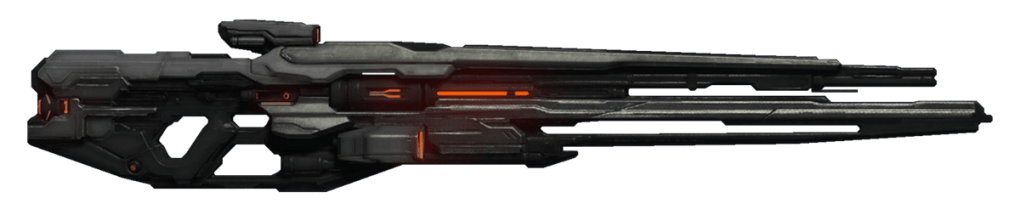
You may remember on the 2023 Chief vs Slayer blog, we had a Before The Verdict on whether or not the Incineration Cannon was capable of bypassing durability due to it firing antimatter rounds. The team on that blog determined that it could not, due to the fact that it never actually vaporized anything, all of the weapon’s victims still managed to stick around even after being killed, no vaporization included. Now, the team for this blog agrees with that verdict, but not for all Forerunner tech… kinda.
The Binary Rifle does what the Incineration Cannon doesn’t, it actually disintegrates its targets! Firing antimatter particle beams that annihilates its enemies and bypassing shields, vaporizing them on the spot no matter where the shot is placed and going straight past the shields. So boom, easy dura neg! Going right through shields and killing enemies instantly.
Buuuut there is a caveat, the binary rifle description makes sure to say that it works against ‘most’ infantry types, not all. This falls in line with higher tier forerunner enemies in the campaign surviving more than one shot as well as Didact straight up tanking it.
So what’s the verdict here? It’s very much so hammered in again and again that it does shoot antimatter beams that could negate durability, and the only enemies that usually survive a shot are Forerunners, unlike Spartans and the Covenant who die in one shot. Considering the Binary Rifle is a Forerunner weapon, and their armor is stated to be attuned to their own weaponry, it’s probably fair to assume that Forerunners have a slight immunity to its antimatter effects. So it’s fair game to say that the weapon could bypass durability. However, this is debatable, and we technically haven’t seen it kill someone who’s much stronger than it. More discussion about its relevance to this debate will be in the verdict.
The Composer & The Didact

So one of Halo’s biggest feats revolve around the Ur-Didact and his ability to just float comfortably within a Composer beam, which can digitize millions of people in one go. It is debatable in and of itself whether or not this should qualify as a sort of hax given the Composer’s ability to selectively target a number of people while keeping the environment unscathed. Moreso, this is due to the Composer being designed to only target Sentient life forms. The Composer uses high levels of energy to digitize its victims, visually incinerating the target’s body.
If we treat this as a vaporization feat, then accounting for human vaporization values and the canonical number of affected individuals, seven million people, you’d get about 510.454 Kilotons of TNT. There’s also a higher-end as there is evidence people are composed down to the atomic level (In Escalation & Epitaph, Didact was ripped apart atomically by 6 Composers), bumping up the value to 7.512 Megatons of TNT. Now this calc doesn’t have much of an issue on its own, and we know the energy within Composers can be released violently as a standard explosion, which gives leeway to the argument that it’s more about the technology in the Composers themselves that digitizes people rather than the Composer beam naturally digitizing people. In Halo Epitaph, it is noted the release of all this energy overcame Didact’s resistance to the Composer. It is likely his resistance is tied to durability, given the resistance in question can be overcome via more energy.
But that feat in and of itself brings up another point. If the Didact can practically swim in one Composer, and the detonation of 5-6 (five are visible in the comic, six are stated in the novel) at once can create a giant explosion visible from space, shouldn’t the Didact scale to 1/5th or 1/6th of that?
Well… no. Not really. For one this explosion is the same one that kills the Didact, totally vaporizing him. Even a 5-6x increase in dura wouldn’t explain how he’s essentially unharmed standing in one for very long amounts of time. But if you’ll notice, the situation isn’t that the Didact has to deal with 5-6x more Composer beams, he’s dealing with the sudden explosive release of 5-6 whole Composers at once. Essentially, it’s the difference between taking a jolt from a car battery vs a box of car batteries all exploding at once! The Didact has essentially never had to withstand more than a single portion of the Composer’s power at any given time, so it stands to reason the full release of multiple at a time totally overwhelms him. So sadly this feat can’t be used to backscale one Composer beam. At best the value above would the maximum he can scale to, but it is likely unquantifiable
Another minor point of contention is that of a moment in the cutscene in which the Composer fires upon New Phoenix. What appears to be a large explosion visible from space is seen when it connects with the Earth. The blast appears to be fairly large so you may wonder why it hasn’t been addressed for scaling. This is because the blast is more likely than not just inapplicable due to the actual mechanics of the Composer. The Composer targets biological matter only, and only complex intelligent biological beings at that. This is most evident when seeing images of the aftermath of the Composer’s firing on the city, not only is all of the infrastructure still entirely intact, trees can be seen in the images. Meaning that despite the blasts massive size it causes next to nothing in damage and is thus inconsequential for scaling.
You also may be aware of another calc that has the values reach the Megatons of TNT range, but the issue with that is simply the number of people used. Again, we have a canonical 7 million number while the calc uses an assumed number of affected individuals based on irl population density. While normally that would be well and good, it just kinda conflicts with the canon number. Yes it’s stupidly low for what it should be given the affected area we see in the cutscene (though it is much smaller in the comic), but again it just goes against canon. It is what it is.
Didact Fraudcheck?

Many of Halo’s seemingly most impressive showing and statements belong to the Didact, and many the highest ends argued for Chief can only be achieved through him. However upon further examination it becomes apparent that Didact is not as powerful as he may seem.
Didact Withstanding Slipspace
11D Didact is an absolutely massive high end that is often brought up as a way for Chief to win, often albeit ironically. It has the bones of an actual feat, Slipspace being 11th Dimensional is absolutely the case, with Hasley’s Journal confirming these are mathematical dimensions and that being in Slipspace is inherently destructive. This does not mean it holds up with further scrutiny. The biggest flaw is that these notes take place 20 years before the events of Halo 4, long before Didact survived being launched into Slipspace. There is research into technology capable of surviving Slipspace, the Forerunners are so advanced it is not realistic to assume they already had it, Didact could also be capable of slipping through Slipspace like ships are. Not much later in Halsey’s journal it is even written that Mjolnir MKVII has Slipspace capabilities. This also just has pretty big narrative issues, Didact himself said he would be killed by the Halo Array, which are galaxy destroying weapons, certainly not 11D.
Didact gets composed when a chunk of Halo Ring goes kaboom
In Halo Escalation a moment occurs that, at first glance, appears to be a very good feat for the didact. This being when he was on a chunk of a Halo ring that hit a planet. While the numerical output of this moment gets absurdly high, it cannot be applied to the Didact. He never actually endures the enormous force the impact creates as he was killed by the 5/6 Composers releasing all of their energy as they were destroyed when the chunk of the ring came down. Even then we have direct evidence it cannot scale to Chief as it would have killed him had he not been teleported away.
Didact subs in for planet crushing weaponry
The issues with these statements are very clear, Raia has had no direct interaction with the Didact, she hasn’t met him, she has no authority to make a judgement call like this, she just learned he existed a few chapters earlier. It’s also fairly clear that she is specifically comparing him to Planet Crushing Weapon on the basis of how many people he can kill, not his power.
War Sphinx Scaling
The War Sphinxes very clearly have the insane level of power to flip a continent, this feat doesn’t have any issues, it’s quite blatant. The problem is the lack of a legitimate way to scale Didact to them. It is clear the the intention of the Seekers was not to kill him, just capture, so there isn’t a direct scaling chain.
Marauder Scaling

Most Light based weapons or attacks in any Doom Game are sadly 1 frame, thus making it impossible to calculate any in tandem movement with them. The Unmaker fires lasers in one frame (and the one in Eternal is a different weapon that uses Argent Energy), as do the Icon of Sin and Spider Mastermind’s lasers. Even the Kahn Maykr’s Light Incantation suffers from this. There is however a saving grace. The Marauder is an enemy designed to initially be comparable to the Slayer, and with that comes the Marauder mechanically reacting to every single weapon the Slayer fires the moment it is shot. This includes the Microwave Beam (which fires at the speed of light). The Marauder brings up the shield AFTER the beam fires. It is a Hit Scan reaction but it’s not intended to be aim dodging in the slightest. The Marauder moving his arm gets 0.02c, or Sub Relativistic.
Fraud Crucible?

An argument for the Crucible is that Samuel Hayden used it to power the remaining 40% of Human Civilization in the time between Doom 2016 and Eternal. Given the implication of 25-26 years passing in between the games (2016 takes place in 2149, ARC was formed in 2150 and has its 25th annual event in Eternal), calculating this would get Teratons for the Crucible for its energy output.
One problem. Samuel Hayden used the crucible to create synthetic Argent energy to power Civilization, not the Crucible. This makes calculating any involvement the Crucible had impossible. What we can do is use its direct showings. In Doom Eternal, the Khan Maykr strips the Fortress of Doom of all its power. This is relevant because the Fortress houses Vega, which requires 2.4 terawatts to power. The Slayer uses the Crucible as a new battery for the Fortress. The Crucible also has more Argent Energy than a hand sized Argent Accumulator. Just one of these is able to produce 12 months worth of a nuclear reactor’s energy in a few seconds (4.38 – 27.46 megatons of TNT) and has at least 30,000 megawatt hours (25.8 kilotons of TNT).
The BFG 10,000

One of the most iconic feats in all of Doom is the Slayer blowing a hole into Mars using the BFG 10,000. It’s easily the most impressive visual feat in the franchise, clocking in at multi-continental. The big question here though, is if Slayer can access this level of power himself. The argument for this would be that the BFG 10,000 actually uses the classic BFG 9000 as its power source, thus the normal BFG slayer has access to would scale to this. There’s some issues with this logic though, the most obvious is that the 10,000 is just portrayed as so much stronger than the usual BFG. The bio of the weapon simply says it uses tech derived from the 9,000. It is a massive turret firing shots much larger and more powerful, not to mention the name 10,000 flat out implies its a direct upgrade.
You could argue that this is just gameplay mechanics and the 10,000 only increases the range and accuracy of the BFG rather than the power, but this is rather strange context wise. Slayer clearly preferred to use the 10,000 over just the 9,000 when he got to the station. The accuracy of the BFG wasn’t really a factor in this situation, it’s not like Doomslayer would miss the entire planet of mars with the usual BFG, only the 10,000 had the power to make the crater he needed.
The BFG 10,000 was designed to be a massive particle cannon meant to blast FTL cruisers. It uses Argent Energy in the form of gas, which is ignited via plasma to create a massive blast of energy. The BFG 9,000 simply does not compare in power. This is actually backed up by what happens after firing the turret. Doomslayer disables the safety mechanism in order to fire it faster, as a result the 10,000 was rendered completely broken and unusable. Considering the normal BFG does not have a safety, there’s no reason for the 10,000 to even have a safety mechanism unless its power output was far higher than the 9,000 to begin with. So to conclude, the regular BFG really should not be comparable to the 10,000s power.
Angelic Frauds

There is a statement that the Winged Seraphs “winged across creation”. This is viewed as evidence for Infinite Speed for the Maykrs, due to the size of the Multiverse in Doom. The blatant issue here is that The Book of the Seraphs does not specify how much of creation was traversed. Maykrs in combat explicitly use teleportation or portals for travel or communication across realms.
Even their statement of being able to “move through time and space” has a different context than referring to speed. Urdak has teleporter rings that allow the Maykrs to reach any dimension in the Multiverse. This effectively makes Urdak a “interdimensional Highway”. Maykrs also had their wings stripped by Davoth or the Father in the past. Khan Maykr has wings, but her flight is simply moving a few meters in combat. There is no evidence that the Maykrs have infinite speed.
DOOM Sustaining Feats

Doom has two important sustaining feats worth discussing that Slayer scales to: Let’s tackle them one at a time.
The Icon of Sin Sustaining a Storm

The Icon of Sin seemingly creates a storm over Earth when it arrives there. The main evidence for the storm being legitimate is that prior in Urdak it seemingly creates a storm upon being revived. Urdak has a clear sky when Slayer first arrives, and upon the Icon awakening a storm is seen over Urdak. This storm has green lightning, which is the same as the storm on Earth. Icon likely made it via either Hell Essence or Argent Energy, which likely would backscale to its physicals since it is its energy system. Icon also likely did not make the storm via its reality warping, as that takes time to affect a planet and the storm over Urdak was made nigh instantly. And lastly, the storm occurring throughout the Icon and Slayer’s battle comes to a stop after the Icon’s defeat.
Davoth Sustaining Demons

As per the Book of the Seraphs, demons are bound by their Primeval, and would “scatter to the stars” otherwise. The process of creating demons and extracting souls to create Hell Essence, does not explicitly links victims to Hell itself. In descriptions of people transformed into demons, a process that can occur outside Hell, Hell is stated to influence the transformation as a form of corruption, but nothing that overtly links their existence to Hell. Lo and behold we discover in Eternal that this link comes in the form of Davoth himself, the demons of Hell acting as an extension of his will as per Hugo Martin which we see as all demons outside of Hell literally turn to ash upon the Dark Lord’s death. Hell’s corruptive properties after all begin with Davoth, transforming Jekkad to the dark realm we know (though this was overtime), so it stands that all corrupted by him are sustained by him as well.
In the Hugo Martin statement linked above, Hugo mentions someone else is linked to Davoth as an extension, which is revealed to the Slayer himself via the piece of Davoth’s Essence in the Divinity Machine. Given this, Davoth sustains the physical existence of Demons outside of Hell via his Essence. We can also look at an inverse example and look at what occurred when The Father’s Life Sphere was destroyed: His essence was released, not destroyed, and flowed into Samur Maykr on top of his actual consciousness being unaffected upon its destruction. There is no statement at all that a similar event would happen to the denizens of Urdak and thus we also know outside of killing a Primeval in physical combat, their essence would continue to exist past the destruction of their Life Sphere.
So how would one go about calculating such a feat? Well we can calculate the energy needed to sustain all demons, in this case using caloric energy of humans as a low-ball and different ends for Hell’s demon army, we can get 374.832 Kilotons to 69 Gigatons of TNT. It is important to note that while Davoth might have a connection to all demons, only the Demons outside of Hell vanish when he dies, thus the calculation cannot be any higher.
Is Cosmic DOOM scaling valid?

Davoth is known for being the creator of the DOOM multiverse, which is potentially infinite in size. This would include Jekadd/Hell (which has arguments for being a higher dimension) and Urdak, which is called a higher dimension in game. It should be noted several statements for the creation of the multiverse come from the Book of Seraphs, which is a propaganda book by the Maykrs to lie about the Father being the creator, when it was actually Davoth.
Given the ambiguity over the truth regarding Davoth, there will be two views below regarding Cosmic Doom feats. Before that, we should mention that Dimensions in DOOM refer to universes, per Hugo Martin’s explanation. Urdak is not actually a higher spatial dimension, rather the location has technology that inverts its quantum position, resulting in it being inaccessible by other dimensions. It is a floating city part of a place called the Holt, reachable via a portal in Hell. Hell is thought to be higher dimensional due to being stated to be “unlimited by space, time and dimension” in the Doom Eternal artbook.
Keep in mind per Hugo Martin dimension here would mean Universe. The same Artbook also notes Hell itself is a dimension, which makes sense, it was the first world. Hell being a higher spatial dimension is unlikely, as it is not treated as such in the games. In Doom 2016, the Argent Energy tower explosion vaguely mentions a transition from a “Category 3 dimensional event” to a “Category 4 dimensional event”. Not only is Argent energy measured in a finite value, but the UAC & ARC uses category warnings for threat levels from Hell.
View 1: Cosmic Scaling IS NOT Valid

The main argument against cosmic DOOM scaling is simply that much of the lore supporting it is misread, misinterpreted, or simply lacks greater context. Most of these pertaining to one specific individual: Davoth, the true “father” of all creation. There is generally a lot of context missing whenever his feats are brought up that unfortunately debunk the idea that he’s an all-powerful, reality bending god that could simply unmayk the multiverse if he defeated the Doom Slayer.
First up is the feat that is referenced most often: Davoth created the multiverse. According to the Book of the Seraphs, which itself is filled with Maykr revisionism swapping the places of the Father and Davoth and the importance of Urdak over Jekkad/Hell (though giving it leeway doesn’t change any of the points about to be mentioned), Davoth emerged from the primordial void and first created Jekkad and the Maykrs.
It’s in how he does this though that’s the devil in the details. The Book of the Seraphs states that the first creations were “molded from the void”. The Luminarium and the Engines of Creation, constructs that channel power from The Void, repeatedly are demonstrated as creation-specific devices, their only other uses being the splitting of body and soul to create Life Spheres and breaching through the Void to reach the physical world. It is also mentioned that the Father (in reality Davoth) had a workshop he used to construct the Slayer’s universe. Davoth directed the Engines of Creation to create realms. Likewise, it is stated Maykrs were forged from the Void, crafted by Davoth to help him cure mortality for his subjects.
In other words, it’s more likely than not that Davoth didn’t draw from his own power to create the multiverse, but instead manipulated the Void to create the realms and the Maykrs. Whether you extrapolate further and assume he created Jekkad, Urdak, and the multiverse via Engines of Creation or just assume he did it all himself isn’t relevant; it was more than likely still done via manipulation of the Void. And the Void lacks any application outside of specific creation hax. We simply don’t know if Davoth ever amped himself with it or used it in combat and no text implies it’s imbued in any sort of weaponry across the games.
So by default all this really gives Davoth is multiversal creation hax via Void manipulation and is not something that would scale to his physicals, or at least there is no evidence of such yet. Father and Davoth say all was made by his hand, but Father also mentions in the same line that Davoth made the Slayer. This isn’t literal creation, rather Davoth manipulated Samur into empowering the Doomguy.
Jekadd potentially came into existence before the engines were built. Its creation process is rather vague and has no time frame. As mentioned above, at the end of Ancient Gods part 2, the Father mentions Davoth made everything with his own hands, including the Doomslayer. However the meaning here isn’t literal, as Davoth more so manipulated Samur into empowering the Slayer years back with the Divinity machine, which shares some of Davoth’s essence. This is the reason why Doomslayer loses consciousness when Davoth dies. With this context in mind, Father likely does not mean Davoth created reality from nothing but rather built it in a scientific method or through some building process.
And in a similar vein, Davoth supposedly destroying the multiverse isn’t so straightforward either. While he does state he’ll unmake the multiverse, there’s repeated reference to how he’s going to do it: The invasion of the multiverse. Not through his sheer destructive power, but through all the demons under his influence. His corruption of Jekkad itself and transforming it into the hellish landscape we see by the events of the games is also an over-time feat and not done all at once. Really the only argument of Davoth or comparable powers like the Father significantly affecting parts of creation is when Jekkad is stated to have shaken and the sky split during their battle, and even that could be a simple case of hyperbole or an event just localized to Immora. Immora is separated from the rest of Hell, given Slayer can open portals to Hell via Vega, and yet has to use a special gate to reach Immora.
Most, if not all of Davoth’s lore feats are taken of context. Slayer does scale to a full power Davoth, but all that gives is the feat discussed above about Davoth sustaining demons out of Hell.
View 2: Cosmic Scaling IS Valid

While Davoth making the dimensions via power is questionable, his creation of Jekadd should not be. Jekadd was made before Urdak was. The engines of creation and the workshop used to create all other universes specifically are only associated with Urdak, and likely only came into being around the time that realm was made. Likewise the Maykrs are stated to have been forged from the Void, which the engines of creation used to create other realities. This all insinuates that Jekadd was made via a different process. Davoth is explicitly stated to be the creator of the Primal Realm of Jekadd. Immora has existed since the dawn of creation.
Entry 11 of the Book of the Seraphs mentions that demons outside of Hell will die if Davoth perishes because of their bindings to Hell created by a Primeval, that being Davoth himself. These bindings being created via a scientific process would be lore breaking. Davoth wanted to cure death for all of his subjects, it would make no sense to make a kill switch for his subjects. Likewise under the premise that he created everything scientifically, his death does not undo the existence of the Makyrs, who he forged from the Void. His connection to the demons is tied to him being a Primeval, and their power comes from their life core/Essence.
The creation process for Jekadd likely used Davoth’s essence, which is an energy system in Doom. Samur gains a degree of authority over Urdak from absorbing the energies of Father’s life core, which Father attributes to his essence. While the Book of the Seraphs is a propaganda piece, a lot of stuff in it is still technically true like for example violence cannot be done inside the Luminarium, shown to be true in Ancient Gods Part 2.
As such, Davoth making Jekadd should be fine, and Slayer directly scales to it.
Quake Canonicity & Cosmology

So first things first, is DOOM even canon to Quake at all? Well… has a bit of a weird answer.
While the Doomguy/Slayer is presently in three Quake games, being playable Quake 3 Arena and Quake Champions and has a cameo in the Sega Saturn version of the first Quake, officially, the modern DOOM Team has made zero statement on the canonicity of both crossovers to one another. One of Quake’s main devs has gone on record in the official Quake discord server that it’s up to the DOOM Team at id Software to make the decision to canonize DOOM to Quake, not something the Quake Team can do. So technically there is simply no official answer, putting any official connection in limbo.
However even with that in mind, a case could be made that enough shared concepts and references between both franchises should connect the two as part of a multiverse. One is the existence of slipgates in both settings. Slipgates originate in Quake where they act as teleporters, allowing one to be sent through a portal and out to any designated location on Earth, as well as across separate dimensions. Slipgate technology would then later be featured in DOOM Eternal as an integral part of its main campaign, where Samuel Hayden/Samur Maykr reveals that the Sentinels possessed Slipgate technology and used it to travel and transport things between cities or outposts across dimensions and Sentinel Prime, further supported by lore text. Slipgates appear to be used again in the Ancient Gods DLCs as teleporters to different points on Earth and across different dimensions such as from Earth to Hell or Urdak. Hell it’s even in the marketing. Additionally Quake 2 featured its own variant of the BFG 10000, as well as DOOM weapons appearing in later games.
Understandably, this isn’t a lot, so it’ll be up to you to decide whether or not any scaling from Quake should be given to the Slayer here. However it should be noted that additions from Quake don’t fundamentally clash with anything in DOOM’s cosmology that they can’t work together without concessions, nor does it add anything so drastic that the cosmology is vastly changed. You could insert one into the other and just go “Oh neat, that’s there too” so the cosmology additions aren’t intrusive to what’s already been established for both.
To start off with something basic, the setting of Quake establishes that many dimensions outside our own exist, “behind time and space” and have been referred to as an extradimensional space seemingly linked to all time and space and across history. In Quake Champions, we can see on certain maps that at the very least these dimensions contain whole suns as well as numerous stars in the sky, two maps even contain black holes that connect to one another, and one known as “The Realm of Black Magic” is called “the vastest of all realms”. Many of these realms overlap or exist within the extradimensional space known as “The Dreamlands”, a realm seemingly tied to the psyche as thoughts and dreams influence areas within it with our world being referred to as “The Waking World”. Each realm within The Dreamlands are also noted to be physically separate from one another and cannot be travelled to without being an Elder God/Vadrigar, use of Slipgates, or brute forcing portals into the realms via powerful runes. According to Adam “SyncError” Pyle, one of the lead devs for Quake Champions who frequently entertains and answers questions in the Discord server, The Dreamlands is also stated to possess its own timeline separate from Earth’s timeline.
These realms are among the domains of entities known as the Elder Gods and Old Ones, eldritch monsters beyond our comprehension who play a key part in the creation of these realms. Essentially, when a mortal, a Dreamer, manages to make contact with an Elder God, that interaction of unfathomable power along with the sheer delusion and insanity that comes with it causes the Dreamer to undergo a strange process of ascension where in they create or become what’s known as a Vadrigar, a manifestation or transformation of the Dreamer’s under the image of whatever Elder God it was they interacted with, likened to attaining nirvana for one’s self. This is something repeatedly clarified by the aforementioned Quake dev. They are the creatures who create or control various territories within the Dreamlands, and their reach expands not only to a single timeline as seen with the Arena Eternal, but possibly alternative futures and timelines as well as to explain the existence of characters having different skins. And aside from the fact that these realms created by the Vadrigar are playable maps across Quake games, it’s supported that dreams from Dreamers are indeed real per the devs. As seen with Volkerh and The Lurching King, Vadrigar’s powers appear to be drained to sustain realms they take over as well.
And by any chance if you still don’t buy into the cosmic side of things, Vadrigar still have feats like Cthalha raising up and sinking continent from crashing into the Earths, Goroth being born in / being a star, and several gods possessing Runes capable of wiping out the surface of the Earth and all life on it when four of them are put together.
And to reiterate again why this is all important, in the very first Quake game, its protagonist the Ranger killed a Vadrigar by hacking at and blowing it up from the inside-out. In Quake 3 Arena, both the Doom Slayer and Ranger were selected by the Vadrigar as they were among the greatest warriors across all time, space, and history, and are capable of defeating the final boss, Xaero, who actually ascends to being a Vadrigar upon his defeat. In the Quake 3 Revolution port, a Vadrigar is straight-up a boss that can be fought in the game. In Quake Champions’ short comic series, all the Champions in it are shown to be comparable to one another and fully capable of killing each other, including Ranger. Thus the Slayer scaling to all the other Champions and the Vadrigar should be valid.
Of course, all of this would only be valid if you think the evidence for cross-scaling to Quake is satisfactory enough, as you can discuss the lack of any official answer from the DOOM team meaning official canonicity being in limbo, and if it over-rules Quakes nods to DOOMs weaponry and the usage of Slipgate tech for yourself.
Extra Lives & Fate Hax (Ewwwww)

You may have heard of Slayer having extra lives. Not only is this game mechanics based on the phrasing(see: “The entire level is restarted from scratch, too. Monsters you killed are back again, just like you”), it also doesn’t help that it isn’t really backed up by anything in canon DOOM that’d remotely support it being canon outside of this singular thing in the DOOM manual that if you read it a certain way you can maybe interpret it as the Doom Slayer having revives, hell, Doom Slayer has never died in canon. Hell was barely able to incapacitate him by dropping a temple on him so there’s no real way to see if its actually a thing that’d be backed up in canon.
As for the supposed Fate Hax argued by some sites, it is covered in the Anomaly section in Doom Slayer’s abilities. Doom Slayer doesn’t have the ability to manipulate fate. Items spawn in areas he goes through due to Vega’s portal, not some weird hax.
Acausality From Killing Commander Keen?!?

No lmao, Keen being in Doom 2 is an Easter Egg!
Verdict

Stats
And thus the first section of the breakdown goes to stats, starting with Master Chief’s and the Doom Slayer’s speeds.
Master Chief has demonstrated he can sprint half a kilometer at 66 miles per hour, and should be comparable to Spartans Tom and Linda, who have their own feats of 78 mph and 82 mph respectively. Stacking all possible speed boosts onto Chief, he could run for an impressive 112 mph for 45 seconds until they wear off. As for the Doom Slayer, his own base travel speed goes up to 90 mph as far back as the Classic DOOM games, and stacking on the boost from Haste would bring his top speed to 117 mph for 30 seconds. It should be noted Doomguy out running his rockets is not applicable for travel speed, as that is an abuse of wall running.
So all-in-all, the Doom Slayer takes the advantage over Master Chief in travel speed on foot. Base to base and top speed vs top speed, the Slayer takes a definitive edge and can totally keep up with Chief for the brief 15 seconds Haste runs out and the speed gap becomes 117 vs 90 mph. Albeit if the Master Chief were to take advantage of his thruster pack, which allowed the Master Chief to catch up to a ship moving at 9 percent the speed of light, meaning that while the Doom Slayer takes advantage in travel speed when both are on foot, the Master Chief’s Thruster Pack would allow him to outpace the Doom Slayer’s travel speed by about 531 thousand times over. Not to discredit the Doom Slayer’s advantage when both are on foot though, as this speed is only relevant when Chief pulls out his Thruster Pack. Though it’s only in the category of on foot that can it be said that Slayer matches and takes the advantage over Chief when it comes to speed, ‘cause moving onto reactions and combat speed tell a whole different story.
To put it bluntly, Chief just has an abundance of laser dodging and a wider cast of characters he can scale in relativistic to light-speed from. As mentioned before, Chief’s reactions can be measured at 0.09c based on his thruster pack catching up to a Covenant ship and being able to react to things while moving at that speed, and the Arbiter moving in tandem with the Spartan laser at 0.31c supports this. Meanwhile most of Slayer’s reaction feats cap out at the single to double digit Mach ranges, and at his best scales to the Marauder being able to deflect microwave beams from the Slayer’s Plasma Gun which comes out to 0.02c. Leaving the Spartan over 15 times faster than the Doom Slayer in reaction speed.
So yeah, quite the big gap that well overrides Slayer’s slight travel speed advantage, especially when considering the Master Chiefs thrusters to negate the Slayer’s own travel speed edge. Speed goes to Master Chief.

And now we move onto power and durability, which as we all know is a 1-sided stomp that goes to Multiversal+ Slayer and let’s move on- Oh? We’re not doing that? Well okay then, let’s actually break down their physicals.
So Chief has fought virtually every major faction and enemy in the Halo franchise, and typically has been able to hold his ground or get a lick in at the very worst and surviving practically everything that gets thrown his way. Spartans in general can survive double digit Kiloton-yield attacks from Wraiths, which is also consistent such as enemy units from the Banished surviving MAC cannon fire at very similar yields. But Chief’s big feats really come from two things: scaling from the Didact and Spartans surviving Glassing Beams.
Now while the former seems weird on paper, Master Chief does not only consistently survive his encounters with the Didact but has staggered and harmed him, at one point even stabbing him in the eye. But a more clear cut example would be how the Didact could be harmed and knocked out by a Monitor’s laser beam; something that Chief himself was also capable of withstanding several shots from a Monitor before getting back up and defeating it. This would scale Chief to some of the Didact’s most impressive showings of durability like tanking a Composer beam for 510.4 Kilotons to 7.5 Megatons of TNT.
More drastically though we have Spartans surviving brief exposure to Covenant glassing beams which come out to a whopping 45 Megatons of TNT! Granted this is dependent on the size used for these beams as at times they’ve been utterly gigantic compared to a Spartan and much smaller in other ones, but this still serves as a solid high-end to cap out Chief’s durability and power as he’s more than capable of punching out other Spartans.
The Slayer meanwhile is much simpler to cover, though note there was a sizable disagreement on the validity of the cosmic feats. He repeatedly tanks double-digit Kilotons to double-digit Megatons worth of energy from Argent Caches, the Argent Accumulator, and VEGA’s operating systems. He’s beaten… well, practically every type of demon we know about, as well as the top dogs of Hell like the Icon of Sin and Davoth. The Icon of Sin’s thrashing of Hell and its ability to generate massive weather disruptions reach several hundred Megatons on their own, with the high-end of the former going all the way up to 5.8 Gigatons of TNT depending on the magnitude of the shaking. The battle between The Father and Davoth meanwhile shook at least Immora, which comes out to 4 Kilotons to 5 Megatons of TNT, and Davoth passively sustaining all demons beyond Hell reaches 374.832 Kilotons to 69 Gigatons of TNT, depending on the volume you buy for Hell’s armies.
Meanwhile for the cosmic arguments, if you do buy into the creation of the multiverse or corruption of Hell as physical/energy feats beyond hax then that would put Davoth and subsequently the Slayer at Universal+/Low Multiversal levels of power. And as a bonus, if you buy into it, there’s Quake scaling wherein Slayer’s ability to fight and beat a Vadrigar in Quake III as well as be among peers to a host of characters comparable to the Ranger who’s killed a Vadrigar, one who couldn’t be beaten by the Rune of Elder Magic by itself. That provides another avenue for cosmic feats given the sheer cosmic size of the dimensions these Lovecraftian horrors create and how the Vadrigar are seemingly drained by taking control of and sustaining these dimensions. This implies that it uses an energy pool of sorts, which supports scaling to physicals for these entities. Quake scaling at present would give Slayer at least Multi-Continental from Cthalha’s raising of all continents and islands from the primordial oceans and runes being able to wipe out the surface of the Earth, if not outright universal for the Vadrigar’s cosmic-sized realms.
Looking at the numbers, comparing Slayer’s non-cosmic numbers from the DOOM games and Chief’s own numbers, the stat comparison comes out to Chief being 45 Megatons of TNT vs the Doom Slayer being 69 Gigatons of TNT. This leads to Slayer being 1.5 thousand times stronger when using feats that lack an asterisk applied to them, be it through cross-scaling you can debate the canonicity of, or cosmic feats that are similarly debatable, albeit for their overall validity in this case. But Quake Scaling or not, buying into Davoths higher end levels of power or arguing against it, the Doom Slayer reliably takes Raw Power by a significant degree.

Arsenal & Abilities
This section of the verdict is probably going to be the longest of them all, which makes sense considering how massive their list of equipment is. With so much to talk about it’s only right to split this section into two parts, their arsenal and their A.I. Companions.
Before we tackle the big guns let’s compare their armor first. Chief’s MJOLNIR armor is packing a lot more features right out the gate, his shields being able to recharge overtime and heal him with Biofoam is a luxury that Slayer doesn’t really have with his. But that’s just the base Praetor suit, with the use of Runes, Slayer gains access to a variety of new upgrades with the big ones being the Saving Throw and Chrono Strike. Those are two different methods of slowing down his perception of time with the former even activating automatically and saving Slayer from a fatal attack, both of which are extremely helpful in countering Chief’s speed advantage that was mentioned prior. Their mobility options are mostly the same with them both having dashes, teleporters, and grappling tools, but John’s jetpack does give him a leg up here. Of course, when these Shooter McBoomers have a million different ways to kill you from afar, the last thing you’d want to do is fly up and make yourself a target so how bout we cover their guns already?
This is very much a case of quantity vs quality, John’s full weapon pool is larger than Slayer’s, but the weapon mods give Slayer more than enough ways to keep up. Both have rifles, pistols, grenades, shotguns, rockets, sniping options, plasma weaponry, etc. Though while Chief’s sheer amount of armor abilities makes his versatility advantage obvious, from tracking grenades, to the Repulsor being able to deflect projectiles, multiple automatic turrets, flashbangs, hologram decoys, EMPs, multiple forms of barriers, and invisibility and so on. If we listed every single minor piece of Chief’s abilities and equipment this verdict could potentially be twice as big, if not bigger, but the point stands. Chief has a lot more to throw at the Doom Slayer, but in comparison Slayer’s arsenal as a whole is a lot stronger (again look at the last section), some of his power ups can absolutely put the Spartan in a bad spot with things like a full heal (Beserk) or outright Invulnerability (…the powerup named Invulnerability). In addition to this the Slayer’s weaponry can unleash far more destruction at a faster pace without having to reload, which is actually a big deal when Chief’s strongest weapons like the Binary Rifle can only fire a few times before needing a long reload. Speaking of the Binary Rifle, let’s get into what may be Chief’s best wincon here.
As mentioned in the BTVs, the Binary Rifle is Chief’s best argument for dura neg and its antimatter is something Slayer doesn’t have any way to resist. Of course, there are some oddities such as the stronger Forerunner enemies surviving it but let’s just go with the full assumption that it would kill Slayer with one well-placed shot, does this actually give Chief the solid edge he needs? To be entirely blunt, absolutely not.
For starters it’s not a gun Chief would pull out right off the bat, even in comparison to other Forerunner weapons, the Binary Rifle technically isn’t the most destructive weapon there, in a VS sense it’s a more devastating weapon to be sure but something like the Incineration Cannon offers far greater firepower on top of being easier to use. It’s possible that eventually Cortana/The Weapon could suggest that he try to end the fight with the Rifle but by that point it might be too late for John. There’s also the matter of Slayer’s Runes we mentioned at the start, should Chief land the shot at all the Saving Throw would kick in to save Slayer, slowing things down to allow Slayer to make his own killing move…which with the stat gap is basically hitting Chief with literally anything.
It’s worth noting that weapons like Slayer’s Ice Bomb or Microwave Beam are also options for stunning Chief and keeping him in place. The latter is even used for breaking energy based shields and popping the user, a perfect counter to Chief.

And despite Master Chief’s defensive options, they wouldn’t reliably be able to keep the Slayer at bay for Chief to land two fatal shots with the Binary Rifle. Stealth with active camo isn’t a perfect option here given that Slayer has fought invisible enemies before like the Spectres, whose own invisibility in gameplay is actually pretty similar to what we see in the Halo games. Chief’s holographic decoy could probably fool Slayer once but it still isn’t a great option especially when Slayer has holograms of his own. As for the shields, some of them can be destroyed with enough firepower and the ones that can’t like the Hardlight Shield…have never met firepower quite like Doomguy’s.
To be abundantly clear, for Chief to win with the Binary Rifle he is going to have to play picture perfect Touhou and somehow dodge every bit of Doomslayer’s onslaught of gunfire, homing rockets, giant fuck off BFG blasts, etc. And land a shot with a sniper, twice, against a guy who’s fighting style means he’s going to immediately try to get up close to rip and tear him a new one. While he has an advantage in travel speed on foot.
Oh yeah we haven’t even mentioned Slayer’s own strongest weapons yet have we? Truth be told there isn’t as much to talk about given how all of Slayer’s weapons are more than enough to kill Chief, but the BFG’s range is certainly nothing to scoff at, being able to catch enemies from a pretty good distance. Finally, in a duel with their iconic swords, the Crucible is not only more powerful than the Energy Sword, but Slayer is also far more skilled and has actually trained with his blade in comparison to Chief whose experience with the Energy Sword is just lunging at foes to kill them, the only time he actually entered a proper duel against someone skilled he fought clumsily and lost pretty quickly. Now this isn’t the section for skill and more of it will be covered later but it is still something worth bringing up in regards to their weapons.
To give Chief his dues here, when given everything his equipment covers more ground than Slayer and surpasses him in some fields like mobility. With several different forms of shielding, auto-turrets, invisibility, sensors, and pretty much every type of gun you could ever need along with a massive variety of armor abilities and equipment, John would absolutely take this category against most other opponents. Unfortunately, Doomguy’s arsenal is just too damn powerful for any of it to matter here, and he has numerous counters of his own that Master Chief has no way of defending against. Doomslayer takes the edge in arsenal.


Now this section is somewhat tricky, as if we’re going by technicality we’d need to discuss three different supports, base Cortana/The Weapon for Chief and VEGA and The Father for the Slayer, variations of the same AI in the last two for the Slayer but with differences that could make a big difference for the fight.
Starting with Cortana, she’s simply demonstrated that she’s the much better A.I. when it comes to processing insane amounts of information and taking over other systems. Feats like processing all human knowledge within hours and performing trillions of calculations per second are frankly insane for Cortana. Even esoteric mentions that VEGA as a supercomputer is so complex that a new branch of physics was needed to understand his systems are more than matched by Cortana’s scaling to other A.I. simulating billions of years of the universe’s history, an A.I. stated equal to her performing five billion 6-D operations, and her own 11-D computing feat (though for combat purposes she’s only demonstrated roughly relativistic to light-speed reactions).
Even as The Father, who at best scales to Davoth shard able to simulate infinite possibilities, VEGA comes short against that. She’s also demonstrated more feats of hacking into other systems versus VEGA who, while unable to be hacked by the Khan Maykr, still couldn’t defend against her hacking of the Fortress of Doom and overloading its systems or how she was able to briefly shut off its systems and force a transmission through before VEGA regained control. The Weapon meanwhile is an identical copy of Cortana as intended by both Chief and Dr. Halsey, and should absolutely scale to all of her capabilities, though it is worth noting she is a younger A.I. still learning and is more prone to error. The Weapon also defended against hacking from the Harbinger, one-upping VEGA in hacking resistance.
This all gives Cortana and The Weapon advantages like having far more environmental control depending on the backdrop of the fight, giving Chief a terrain advantage in certain scenarios and allowing him to put up a better defense like we see with the Bubble Shield in Halo 4. She would also be able to straight-up hack the Slayer’s armor if she made sufficient contact similar to how Forerunner A.I.s did so with other MJOLNIR Armors. This would make tools like Slayer’s visor useless, removing display information on his status and the environment on top of possibly cutting off communication with VEGA, as well as his shoulder cannon entirely.
But that’s where Cortana/The Weapon’s advantages end and VEGA/The Father’s begin. For one, VEGA possesses far, far greater range in his connection to the Slayer than Cortana/The Weapon with Chief does. The Fortress of Doom seemingly is able to connect to the Slayer across the Earth and even all the way to Mars without any issues. Heck even traveling across Hell and Urdak doesn’t hinder clear comms between VEGA and the Slayer, even much less complex UAC tech is capable of this. And of course this isn’t limited to comms but his portal creation as well. And upon being uploaded into Urdak and regaining his memories as The Father, he now possesses control over almost all of Urdak’s systems including a more direct teleportation method. And moreover, The Father possibly can’t even be hacked if we treat him similarly to Davoth in being able to exist as just an essence that communicates across dimensions, given Davoth, with no connection to Urdak or its systems, could just sense The Father’s presence and hear him speak or how he could also be heard despite the Slayer not having his helmet on.
So despite how often it gets brought-up, Cortana/The Weapon may not even be able to hack VEGA without some direct access to the Slayer’s helmet. Remember, VEGA isn’t situated in the Slayer’s suit but within the Fortress of Doom. Slayer really just receives info and comms from VEGA, and comparable A.I. to Cortana’s have, at best, only been able to jump around other tech and spread over time, spending whole months to jump around devices to get off a moon. Meaning it may even take time for Cortana or The Weapon to realize an A.I. like VEGA exists in the Earth’s outer atmosphere to being outright unhackable if the fight takes place on say Mars or Hell. Sure she could likely disrupt comms and sharing information, but VEGA could still aid the Slayer remotely. And The Father straight-up exists in a separate dimension entirely as he’s integrated into Urdak, on top of potentially just being an incorporeal entity that just can’t be hacked and can just communicate with him on the fly. Perhaps if the fight took place on Urdak then Cortana/The Weapon could interfere with The Father’s control, but again that’s dependent on the starting location for the battle.
Domain Cortana admittedly would likely be able to overcome the distance gap and affect the Father, but that’s using a version of Cortana that’s separate from Chief and a series antagonist. This essentially gives the Slayer a solid lead in maneuverability if he can just portal/teleport away and return from dangerous positions or areas, effectively cancelling out the environmental advantage Cortana gives Chief. And while both are highly intelligent and advantages can be given to one over the other in that regard, neither are overwhelmingly strategic in regards to 1 v 1 combat and likely wouldn’t come up with something Chief nor Slayer would think of on their own in a Death Battle scenario.
All-in-all, neither A.I. ends up having an overwhelming advantage over the other, and any hard advantage one could have is entirely dependent on where the fight takes place.

Tertiary Factors
When it comes to the skill of these combatants, it’s definitely not straightforward. Both Chief and Slayer have been expertly trained in military combat even before they were modified into the super soldiers we know. Chief does have an advantage in martial arts, something that we’ve never really seen mentioned in Slayers moveset. Though even disregarding the strength gap it’s very unlikely Master Chief would actually resort to direct cqc in a fight like this. Both have faced off and trained themselves against highly skilled warriors. Chief has regularly defeated Elites, who are a warrior culture that has mastered bladed combat. Slayer has similar levels of training against the night sentinels, who also make use of swords. Both are also really good at improvising, often scavenging their arsenal mid combat and dealing with overwhelming numbers all at once. Though where the important advantages lie is how either actually uses their skill in combat. It’s important to note that, yes Slayer isn’t just some mindless meathead who goes around blindly punching without thinking. Slayer has shown quick thinking in combat, being able to rapidly identify and change strategies in order to take advantage of demon weaknesses.
However in general, Slayer does tend to rely more so on his sheer brute strength over all else. He’s never really shown to think tactically, always preferring a very straightforward approach to his issues. In fact he’s often been guided by Samuel and Vega when it comes to identifying overall objectives and plans. Chief in this regard has a clear advantage. His displays of tactical thinking and improvising are far greater. Chief is stated to be a master of all infantry tactics, to the point every other spartan looks up to him. Take for instance how he delivered the Covenants bomb back to their own ship, or how he managed to defeat the Didact last minute with a skilled grenade usage. These are plans he came up with on his own and successfully implemented despite the situation being very dire. Chief is also a far better marksman than Slayer, having numerous displays of incredible accuracy, such as sniping enemies from a kilometer away while moving.
Slayer really has never shown much skill with accuracy, he rarely engages in long ranged combat in the first place and a lot of his enemies are comically big targets. At best he can hit a few mid ranged headshots with the AR, but that hardly compares to what Chief has done. Chief also in general has shown the ability to work around much stronger characters before, such as Atriox. Combine this with his speed advantage and it’s completely reasonable he’d be able to hold off slayer for a time. A time is the keyword though, even with the skill advantage Chief can only really use it to stall Slayer before he inevitably gets punched once. Plus, there definitely is an argument that Slayer’s straightforward fighting style could be advantageous, as Chief could be caught off guard by Slayer just steamrolling through his entire kit. But regardless, Chief is easily the more skilled opponent and takes this advantage.

Unlike skill though, experience is far easier to decide. Doom Slayer is just massively older than Chief and has experienced a lot more. While Chief has been through multiple large scale conflicts and is well into his forties. The Doom Slayer has been around for hundreds of years, if not thousands! And most of that time he has spent in conflict, be it tearing through hells forces, working with the Night Sentinels, and has a kill count outright stated to be in the Millions, meaning that on top of him being significantly older than the Spartan, he’s also used that time to gain a lot more combat experience to the point where he’s been fighting longer then Chief has been alive..
It’s a fairly simple comparison in all honesty, Chief is in his forties, Slayer is in his hundreds to thousands, and despite both fighting in elongated wars, the ones Slayer participated in simply lasted longer, as simple as that. Slayer takes the edge in Experience handily.

Conclusion

“Master Chief, you mind telling me what you’re doing on that ship?”
“Sir, finishing this fight.“
Advantages:
- Faster reaction speed, with Cortana being much faster
- Thrusters massively outpace Slayers travel speed
- Far more skilled
- Bigger arsenal
- Greater mobility
- Could bypass Slayer’s durability with the Binary Rifle…
- Cortana/The Weapon could interfere with Slayer’s visuals, comms, and shoulder cannon…
- Baller ass soundtrack
- they put the mamsnrhbr chehfde in the soder
- Has one good live action portrayal
Disadvantages:
- …but Saving Throw would catch him off guard
- …but likely wouldn’t be able to reach VEGA/The Father directly
- Slower travel speeds on foot
- Far weaker
- Chrono Strike counters his speed advantage
- Wouldn’t know Binary Rifle is his only win condition off the bat
- Less versatile arsenal
- Martin O’Donnell
- Too many books

“Tell me… have you nothing to say to your creator… before you strike him down?”
“No.”
Advantages:
- Much stronger, even with his lowest ends vs Chief’s highest ends…
- Slightly faster base travel speeds on foot…
- Far more experienced
- Chrono Strike rune counters the speed gap
- Ice Bomb would be able to freeze Chief if it hits him…
- VEGA/The Father’s benefits would be more useful than most of Cortana’s…
- Saving Throw means even if Chief gets a kill with the Binary Rifle, he could still retaliate in time
- Far superior close ranged options
- Generally more versatile
- Doesn’t need to reload
- More vicious and brutal overall
- OG Doom is cinema
- Baller ass soundtrack
Disadvantages:
- …but the Binary Rifle could still kill him
- …but slower reaction speeds, and Chief is faster with thrusters
- …but the Shoulder Cannon can get hacked by Cortana, making the Ice Bombs unusable.
- …but can’t stop Cortana/The Weapon either
- Overall smaller arsenal
- Less skilled and tactical
- Bethesda’s treatment of Mick Gordon
- Books and Live Action Adaptations are Dogshit
All things considered, this matchup is far from the sort of matchup that’s been assumed to be an utter wash with no advantages, and if anything is a lot closer than you’d give it credit for.
Speed for instance is very much in Master Chief’s court, while travel speed on foot is roughly close and only a slight advantage in the Doom Slayer’s favor. Chief’s speed advantage with his Thruster Pack would allow him to outpace the Slayer thousands of times over due to the sheer speed edge it gives him, which could invalidate the Slayer’s travel speed advantage outright. Reaction speed similarly is in Chief’s favor though not as severely, with him being about fifteen times faster than Slayer’s most generous speed arguments that hold up.
Power however is very firmly in the Slayer’s court, regardless of your stance on the canonicity of Quake, or the cosmic ends for DOOM even being valid, the Slayer reliably takes power by a statistically notable degree. As Davoth sustains all Demons outside of hell, and the Icon of Sin’s creation of a storm and the Icon of Sin merely falling over devastating miles of hell puts Slayer dozens, if not thousands of times stronger than the Master Chief scaling to the energy per second of a Glassing Beam. There’s no real way around the fact that the Doom Slayer will always take a massive advantage in power.
As for their arsenals? While Chief has a far broader arsenal across the board covering a lot more ground then the Slayers with an arsenal ranging from rockets to shotguns to plasma rifles to turrets to holograms to invisibility to barriers and so on. Doom Slayer’s own has a lot more pressing edges that actively put Chief on the backfoot, such as a full heal, temporary invulnerability, a pseudo-time slow, and his arsenal across the board being much more destructive meaning that Chief would be unable to dodge forever, and Slayer to keep pressing his advantage without having to slow down for reloading due to the nature of his arsenal.
As for the Binary Rifle, Chief’s singular weapon that could kill the Doom Slayer, it has its own caveats. It has a very limited clip size that requires several seconds to reload, it’s a sniper rifle which would have some struggles being accurately fired in close quarters, which is the Doom Slayer’s preferred range which he will try to force the fight into, mind you, which is prominent considering the Slayers advantage in speed on foot, and it’s a singular weapon in Chief’s massive arsenal he might not bring out near the start of the fight, or until it’s too late.
In regards to A.I., Cortana/The Weapon and VEGA/The Father do effectively cancel out as advantages, which themselves may be subject to the situation and backdrop of the fight. Cortana/The Weapon is far more powerful an A.I. and would totally dominate control over the environment if surrounded by enough technology. Meanwhile VEGA/The Father’s insane range in a majority of scenarios prevents the opposing A.I. from interfering with their own support for the Slayer, guaranteeing a maneuverability advantage and being to relocate to a safer area briefly before dropping back into the fight. So any big advantage would more than likely be circumstantial and dependent on the environment they drop in.
In their tertiary factors however things roughly even out with each taking one major edge, the Slayer has a massive advantage in experience with having fought for centuries, which absolutely outdoes Chief being only in his forties. Meanwhile Chief has far better showings of accuracy, and his tactical showings are significantly more impressive then the Doom Slayer, along with the fact that while both are trained in Military combat, only Chief is noted to outright be a master of all Infantry tactics. Meaning that the Slayer takes experience, while the Chief takes skill.
Looking through everything, this is far from a one sided slaughter like many would assume, Chief’s edges in speed and skill are extremely prominent, he has a much wider arsenal, Cortana/the Weapon is an insanely valuable asset, and the Binary Rifle could outright kill the Slayer in a few times if we ran this fight over a hundred times or so.
But the Slayer’s sheer power advantage is an insanely tough hurdle for the Spartan to overcome, especially when it is supported by VEGA/the Father’s own support, his insanely useful power ups, his overwhelming experience edge, and the sheer destructive capability of his arsenal means he just has everything he needs to put Spartan-117 down for good.
The Master Chief would be a hard fight for the Doom Slayer, and he’d certainly bring an infinite struggle that Slayer would struggle to reach, but the eternal battle of these icons would end in the Doom Slayer finishing the fight.
The winner is the Doom Slayer.
Final Tally
Master Chief (2) – ItzMeMD (pity vote), wyrm (pity is for cowards)
Doom Slayer (8) – Aqua, door-kun, Fenic, Joshski (I swear to god if this somehow says Joshiki again), Ninjamonkey3904, Retro, TheCardinalKing, TripleCX3

Join us next week as we drop our next bonus blog…
(Rest assured, the other bonus blogs we’ve announced previously are still cooking)






 G1 Death Battle Fan Blogs


Leave a reply to totallyf54920c8b8 Cancel reply