Percy Jackson, hero of Camp Half-Blood and demigod son of Poseidon.
Zagreus, the rebellious prince of the Underworld and son of Hades.
Tales of the Greek gods and goddesses go back almost 3000 years, but these guys put a modern spin on things! It’s the Son of Poseidon VS the Son of Hades; which of these literal myth-busters will triumph in the end? It’s time for a DEATH BATTLE!
Before We Start…
Our analysis of Percy will be primarily focusing on the Percy Jackson novels, with the movies, Disney+ series, and comics being secondary sources of information only, though none of them add anything noteworthy. The non-standard Curse of Achilles will be covered for completion, but will not be weighed as a factor in the verdict.
Our analysis of Zagreus will primarily cover, of course, the game Hades, as well as its sequel Hades II. Though information from it will be kept somewhat minimal due to its recency, important information will be mentioned for the sake of covering Zagreus properly. Thus, massive spoiler warning for Hades II. Other official materials such as the trailers and art books will also be looked at.
Background
Percy Jackson
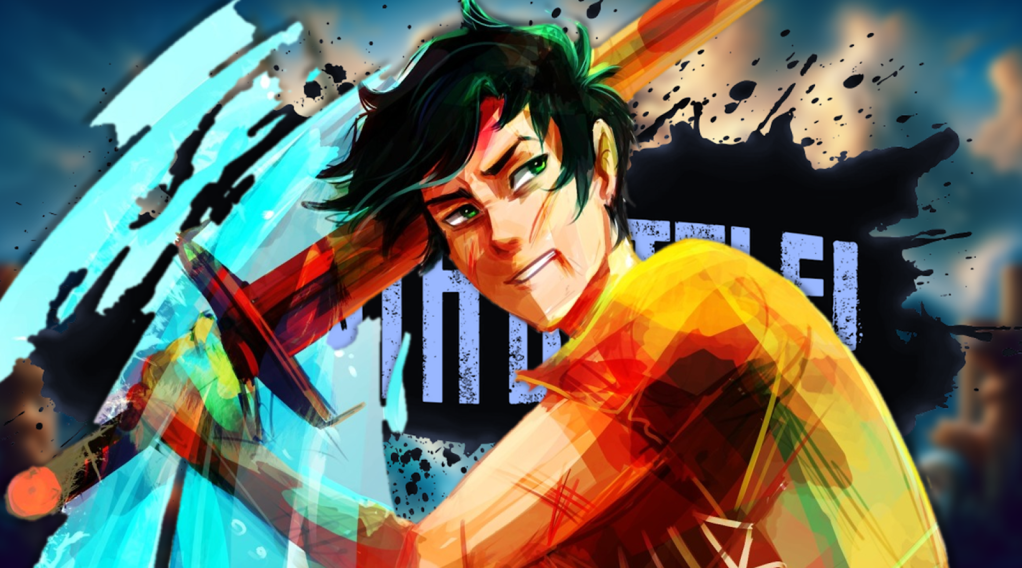
- Full Name: Perseus Jackson
- Age: 18 years
- Demigod son of Poseidon
- Accolades:
- Savior of Olympus
- Hero of two Great Prophecies
- Counselor at Camp Half-Blood
- Former praetor of Camp Jupiter
- Trained by Chiron, Luke, Quintus, Lupa
- AKA: Seaweed Brain, Peter Johnson
- Likes: Blue food, his friends, Annabeth
- Has a pet hellhound named Mrs. O’Leary
Throughout the annals of human history, myths of gods and goddesses are ever-present, defining mankind’s perception of the world around them. To the Greeks, to the Egyptians, to the Norse and many, many more, these deities were more than legend, they were reality. And human belief is a powerful thing. Even nowadays, with Western Civilization having advanced far beyond where it was in Ancient Greece, the gods of old are very alive, their presence hidden out of sight of mortal eyes, and their influence all around us. This was the reality that the young Percy Jackson was thrust into.
Throughout his childhood, Percy was never particularly normal. From strangling a snake to death as a baby, to having run-ins with cyclopes, pegasi and more, to accidentally blowing up his own school bus (whoops), Percy jumped around from school to school, never really understanding these strange occurrences and never really fitting in. But when he was 12 years old, this would all change with the accidental homicide of his pre-algebra teacher. Turns out she was a Fury sent by Hades to attack Percy, as he was mistakenly suspected of a crime. Yikes!
Turns out, Percy is a demigod. Half human, half god, with his mother being mortal, and his father being an unknown Greek god (spoiler alert, it’s Poseidon). As a demigod, Percy is more attuned to the supernatural than a normal person, capable of seeing beings that ordinary humans would be completely unable to perceive. On top of that, all the monsters wandering the streets of New York have a taste for demigod flesh, and a really good sense of smell. As a demigod gets older and more powerful, their scent becomes stronger, and by the age of 12, Percy had become too much of a target to continue living a normal life.
And so he was ferried away by his protector and best friend, Grover, to a safe haven in Long Island: Camp Half-Blood, overseen by the god Dionysus and the centaur Chiron, a summer camp which demigods from across the country call their home. It was here where Percy would train his powers, make new friends, and for the first time in his life find a sense of belonging.
Unfortunately, even among demigods, Percy was special, and the life of a half-blood is rarely easy. As the son of Poseidon, Percy is a child of one of the “Big Three” Olympians – Zeus, Poseidon, and Hades – one of whom, years prior, had been prophesied to sire a child who would decide the fate of Olympus itself. As a result, the three had sworn an oath to never have another demigod child. Unfortunately, only Hades could keep it in his pants. Womp womp.
As the hero of prophecy and a demigod of prodigious power, Percy went on quest after quest, becoming stronger and stronger as he got older, to the point of surpassing every other demigod alive, Greek or otherwise. He’s fought monsters of all shapes and sizes and proven his worth against even some of the gods themselves. And when the Titan Kronos rose from Tartarus in a bid to destroy the world as we know it, Percy rose to the task and fulfilled the Great Prophecy, albeit in a way nobody ever expected. As reward for saving Olympus, he was even offered immortality and a spot amongst the gods, but he turned it down, preferring to live his life as a human and grow older alongside the people he cares about.
…And then he was thrust into a second Great Prophecy just months later! No rest for the weary.
Whether Kronos, Gaea, the Emperors of Rome, or the greatest horrors found in the deepest depths of Tartarus, there’s no challenge that Percy and his friends haven’t managed to overcome. Still, even as he’s racked up accolades and become one of history’s most accomplished demigods, all Percy truly desires is a normal life. Having saved the world many times over, his goal now is to simply go to college with his girlfriend, be there for his little sister as she grows up, and take a long rest from demigod affairs. Unfortunately as it always has, trouble has a tendency to come knocking at his door. But those who keep fighting the good fight prefer not to trouble him if it can be avoided; he’s earned that rest, after all. And if it can’t be avoided? Well, there are few better demigods to have on your side than Percy Jackson.
Zagreus
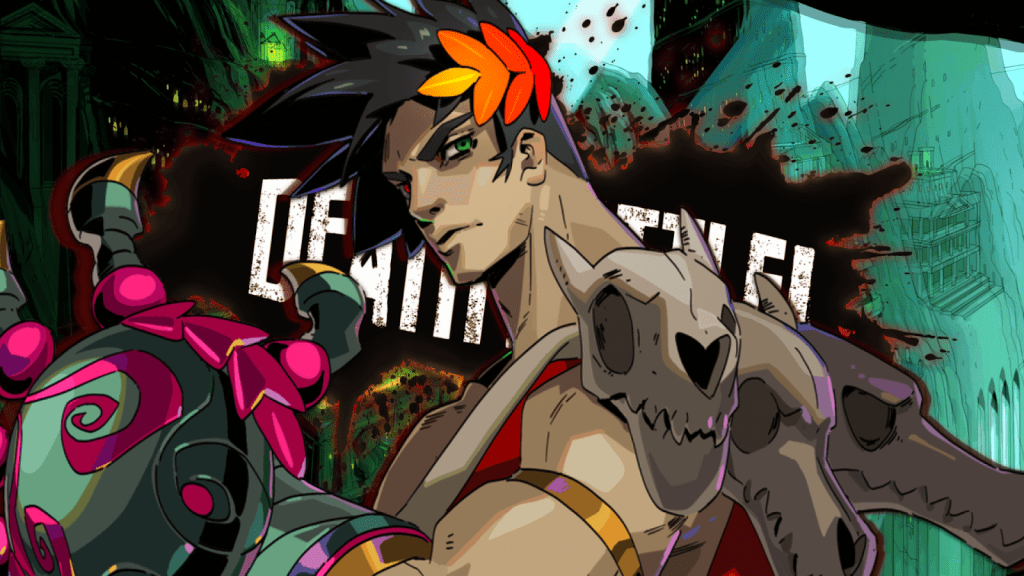
- Name: Zagreus
- Age (physically): 22 years
- Prince of the Underworld
- Son of Hades and Persephone
- Name means ‘Great Hunter’
- Visual and tonal references: MCU Loki, Castlevania Alucard, Spike Spiegel, Dante, Dread Pirate Roberts
- Bisexual awakening for many
Born to Hades and Nyx as prince of the Underworld, Zagreus never felt like he fit in amongst his Chthonic brethren. He never got along with his father, and constantly struggled to succeed at any task he was given. He was aimless in life, and had no real idea of what his future would hold. Zagreus’ lack of belonging grew and grew, increasing with every dispute and every failure. He eventually was certain that there was something wrong, and he needed to find out what.
One day (or night, neither exists in the Underworld), Zagreus got his friend, the God of Sleep Hypnos, to put everyone in the house to slumber with a spell. This gave Zagreus the opportunity to rummage through Hades’ parchment work to try and find some answers about his place in the House of Hades. It was then he found a goodbye note Hades had stored from his long lost lover, Persephone. As Zagreus pondered over what his mother’s hand writing meant, the game’s narrator spilled the beans on Persephone being Zagreus’ mother much like I just did, leading to the Prince’s outrage. His entire life, and everything he knew, was a lie.
After receiving more context from his now foster mother, Zagreus gained Nyx’s help so that he could accomplish something impossible: escape the Underworld. By making contact with the Olympians, he could receive their aid, and with the power of Nyx’s mirror and his own talents and powers backing him up, Zagreus would go on to ravage the Underworld during numerous escape attempts.
His father sent mighty warriors and heroes to get in his way, but the prince pushed forward and overcame every challenge, no matter how many times he got sent back to the House of Hades with each failure. Through enough trials and tribulations, he was able to reach the surface, only to be faced with his own father. After a grueling battle, Zagreus prevailed, with Hades’ telling him that when he saw his mother, to tell her that Cerberus was doing well.
After so long, Zagreus met his real mother. In truth, Persephone did not abandon him, but left from heartbreak. Due to the prophecy of Hades never having a son, Zagreus was born dead, and was only secretly revived thanks to the work of Nyx and the Fates, without Persephone’s knowledge. Many tears were shed at the reunion, but their time was scarce, for Zagreus is tied to the Underworld, and can only walk among the surface for so long before the Styx took him back. However, this did not sway him. He promised Persephone he would come back, again and again, fighting tooth and nail, so that they can both reconnect, and so he can learn the truth of his existence and the Olympians. However long it takes, he will return.
Indeed, Zagreus kept his word, and continued rampaging through the Underworld and escaping to meet his mother again. But, in his many journeys, it was not just Persephone he was able to connect with, but many others. In truth, it was not Zagreus’ tenacity, nor skill, nor arsenal that was his greatest strength, but his kindness and wanting to help others. In his escape attempts, he forged genuine bonds with several residents of the Underworld and House of Hades, such as Dusa, Thanatos, Megaera, and Sisyphus, and was even able to slowly mend broken relationships. From the torn apart to healed marriage of Orpheus and Eurydice, the reunion of long lost lovers in Achilles and Patroclus, to restoring the eons lost parental connection of Nyx and Chaos.
His empathy had touched the hearts of many lost souls and gave them a place of belonging, showing the strength of compassion and relationships being fundamental to our existence, dead or alive. And each time he reunited with his mother, he ended up learning more of himself, and had reached a sense of belonging in the world, just like the many others he helped. Soon enough, his efforts paid off in bridging back the distant relationship of Hades and Persephone, and his mother set a trip back to the Underworld, to return to husband and son.
Through family reunification, Zagreus and Persephone were able to quell Hades’ fear in disclosing the existence of his wife in that it would cause a war between all of Olympus. They prepared a feast, and invited all the Olympians together to reveal the truth, the web of secrets finally being broken. In spite of shock and looming feelings, they were accepting, and festivities were shared. Zagreus’ efforts reunited more than just him and his mother, but the gods themselves. Later on, his escape attempts became an official job to continuously test the Underworld’s security, and his relationship with his father had finally softened. And so, Zagreus continues ascending. No matter the challenge, no matter the death, let all the undead and gods beware, for no hell can contain the Prince of the Underworld for very long.
Experience & Skill
Percy Jackson
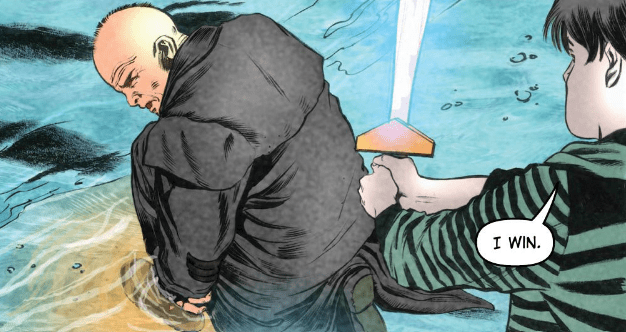
As the son of Poseidon, Percy possesses a natural talent for skills that are related to Poseidon’s various domains, and in some cases lacks aptitude for skills that are less related to Poseidon. For example, he’s good at canoeing and sucks at archery.
Most prominent among his gifts however is his skill at sword fighting, in which he is the most talented demigod in 300 years with the sole exception of Luke Castellan, whom he rivaled at the age of 12 (when Luke was 19) and has undeniably come to surpass since then. His skill in a sword fight is so great that he can keep up with every detail of an opponent’s movement and his surroundings, including things as precise as which parts of an opponent’s body are tensing. He has also shown to be capable of analyzing fellow demigod Ethan Nakamura’s weaknesses and fighting style and armor mid-fight to strategize around them, easily winning their duel. This skill has allowed him to contend with and get the better of the God of War, Ares, when he was only 12 years old, and much later contend with Chrysaor, who was comparable to Ares in skill. It should be noted however that in the battle with Chrysaor, Percy noted that he was rusty when fighting swordsmen on such a skill level, having spent years since the fight with Ares without encountering any such foe, and he was ultimately defeated.
In spite of this rust in regard specifically to god-level swordsmen, Percy’s experience should not be underestimated, as he’s fought dozens of monsters, demigods, gods and titans which all have their own individual powers and talents, and frequently needs to adapt his strategy to the opponent and the situation. The common formula in Percy Jackson books is that the good guys come across some kind of mythological entity, whose nature and powers are unknown, and they need to figure out that person’s identity, goals, and abilities in order to play the scenario to their advantage and defeat them. This has given Percy a lot of experience with analyzing opponents and deducing enemy weak spots. For example, he was able to come up with a plan to kill the indestructible Nemean Lion, figured out how to kill the giant Geryon in spite of his multiple hearts, deduced how Antaeus’ immortality and regeneration worked and how to beat it, on top of many other examples.
Percy is also a lot smarter than one might realize at first glance, as he commonly acts clueless and tends to joke around a lot, but beneath his carefree attitude is a highly observant and deceptively cunning strategist. For example, the Roman demigod Hazel assumed upon meeting Percy that he wasn’t very clever, only for him to deduce the details of a complicated situation that had recently occurred without being told, based only on the small actions and offhand comments of others. A casual demonstration of intelligence that caused Hazel to immediately rethink her judgement of him and make a note not to underestimate him again. In more practical situations, Percy’s cunning has allowed him to outsmart tactically gifted demigods like Luke, manipulate monsters like Procrustes to behave in certain ways with words alone, and perhaps most notably outsmart the seer Phineas in a gambling match, coming out on top in a high-stakes tactical situation.
It’s also worth mentioning that Percy’s experiences have made him very “genre savvy” in a sense, which is to say that he knows a lot about Greco-Roman mythology as a result of having encountered hundreds of prominent mythological figures, and having had to defeat a good chunk of them. By necessity, he’s learned a lot about mythology even outside of those he’s met, and he can frequently recognize and identify an opponent based on their comments, behaviors, or if he learns their name. He isn’t perfect however, and isn’t always familiar with every being under the sun, with other demigods like Annabeth still being much more knowledgeable than him in this area.
Zagreus
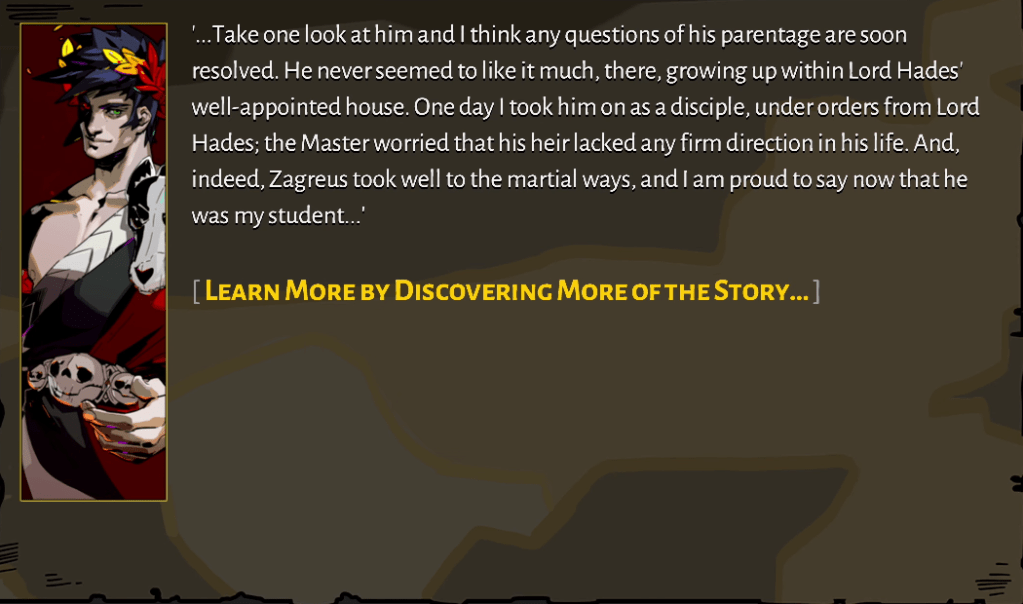
Throughout his constant attempts of escaping the Underworld, Zagreus has proven himself to be one of the greatest fighters to exist. The most obvious to point out is his proficiency and skill in using pretty much any weapon you can think of, from swords, shields, bows, and even a railgun, of which he immediately is able to wield them like a master. He’s also well versed in employing devastating combination attacks in conjunction with his weaponry, through the mix of magic, summons, and more, showcasing his ability to unleash his readily available arsenal at its most powerful.
His father put him under the tutelage of Achilles before the events of the game, and Zagreus has been described by his teacher to be well trained in the martial ways and in weaponry, with the two sparring together frequently. Soon enough, he was able to surpass the warrior in skill, with Achilles himself having nearly ended the Trojan War single-handedly and defeating entire armies alone. Not even the gods themselves are too much for him, for Artemis, the goddess of hunting who’s unequal in her archery skills and who can hit a bullseye in her sleep, has said that Zagreus would be able to match her prowess if she didn’t continue practicing within the same sentence. He’s also, of course, able to defeat Hades, even when he battles Zagreus the same way as when he vanquished the Titans at his prime, with his father having existed and battled for eons.
Zagreus’ incredible skill is only matched by his experience, as he’s fought through hell and back against everything the Underworld throws at him. From teleporting witches, the Fury Sisters, gorgons, a bunch of spooky skeletons, a Hydra, and dozens more, he’s seen it all, and is able to quickly adapt to such different fighting styles quickly and come out on top. On the flip side, many of these opponents are unable to get an easy read on him, with even Asterius, the Bull of Minos and equal to the champion of Elysium, Theseus, finding Zagreus’ strategies and ever differing arsenal difficult to adapt to. It helps that aiming for 100% completion of Hades would require several tens to even over a hundred escape attempts from the Underworld.
Equipment
Percy Jackson
Riptide
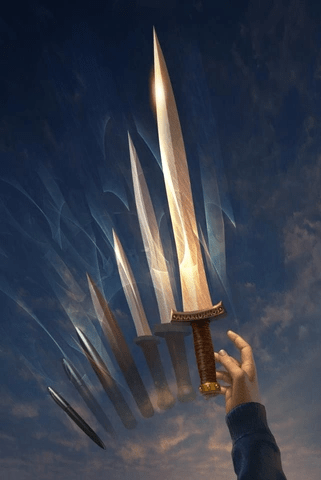
Also known as “Anaklusmos”, Riptide is Percy’s sword, which was forged by the Cyclopes, tempered in the heart of Mount Etna, and cooled in the River Lethe. Originally gifted to Heracles by the Hesperide Zoë Nightshade, Riptide is made of Celestial Bronze, a magical metal which can hurt monsters and other supernatural foes but is harmless to mortals, as they are not important enough for it to hurt them. Even mortals who are capable of seeing through the Mist, such as Rachel Elizabeth Dare, cannot be harmed by Riptide, as the blade will simply pass right through them like they aren’t there. Monsters, meanwhile, will be vaporized on contact, while gods and demigods are more in the middle, suffering normal sword injuries from the substance. It should be noted that gods, demigods and monsters are not the only entities that the blade can harm, as Egyptian magicians like Carter Kane, a normal human with magical powers, have been injured by it in the past.
Celestial Bronze also emits a faint light to illuminate dark places, and the sight of it can induce fear and hate into most monsters, even ghosts. In fact, not only is it able to explicitly harm ghosts in spite of their intangibility, but it can also harm mortals possessed by ghosts, who would normally be impervious to Celestial Bronze. While it cannot prevent ghosts from regenerating, in the event that they are able to do so, it can implicitly destroy them otherwise. It should be noted however that the Nosoi – unkillable plague spirits – were able to become impervious to the effects of Celestial Bronze by transforming their bodies into smoke, allowing it to pass through harmlessly, meaning there are limits to what it can affect.
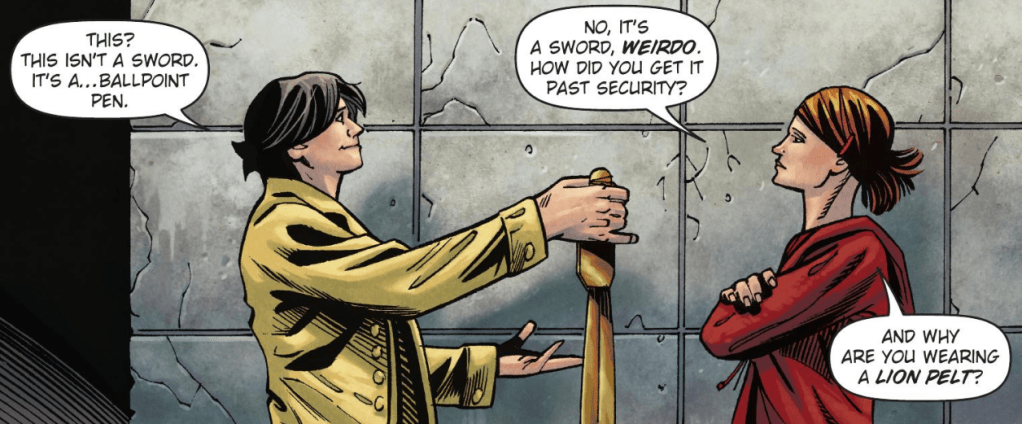
Riptide has a double-edged blade, a leather-wrapped grip, and gold studs riveting the hilt. While the sword is not designed for such uses, Percy has shown to be able to throw it like a boomerang in addition to more standard swordplay. Most distinct of its traits is that when Percy is not using it, it takes the form of a ballpoint pen for easy carrying, which then transforms into a sword when it is uncapped. By placing the cap back on the tip of the sword, Percy can transform it back into a pen, and by placing the cap on the hilt at the opposite end, he can use the pen as a normal writing tool. Of course, Percy has a tendency to lose pens, but no worries, the pen also has a magical retrieval function in which it will always reappear in his pocket after a few moments if it is lost. This happens no matter whether it is in pen or sword form when he loses it; it will regardless reappear in his pocket as a pen. In the past, when owned by Zoë, it could turn to and from a hairpin rather than a pen; the method by which it was changed to a pen instead is unspecified.
Nectar & Ambrosia

Nectar and ambrosia are the drink and food of the gods respectively, which are incredibly useful tools for demigods, as they can be used to rapidly heal most wounds. Percy carries an emergency supply on himself at all times when embarking on dangerous quests. In addition to their healing properties, which can repair lacerations and cure poisons through either ingestion or direct contact with the wound, nectar and ambrosia mimic the taste of whichever food and drink the individual most enjoys, with Percy noting that nectar to him tastes like his mother’s blue chocolate chip cookies.
The healing capabilities of nectar, at least in regard to curing poisons, exceeds the potency of Percy’s own water-based regeneration, as it was able to cure a scorpion sting that water could not. However, ambrosia is not able to quickly heal things as severe as broken bones. Demigods are also limited in terms of how much nectar or ambrosia they can consume within a certain time-frame; too much too quickly will cause them to be incinerated, their blood turning to fire and their bones to sand. They’re better off than normal mortals though, who can’t consume nectar or ambrosia at all without burning up.
Armor
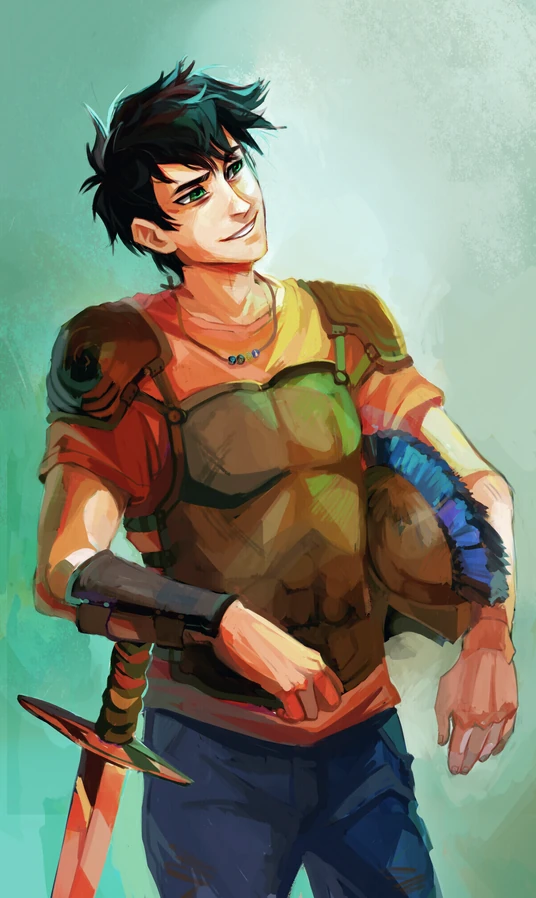
Percy doesn’t always use armor – sometimes jeans and an orange t-shirt are the only things available – but when he has the option to go into battle with some degree of protection, he frequently utilizes the armor provided by Camp Half-Blood. There isn’t much special information to go over here; it’s normal armor that lacks any particular boons or magical properties, but is useful for not getting stabbed to death. When empowered by the Curse of Achilles, Percy chose the small of his back as his weak point specifically because it would be a place that his armor would cover.
Transforming Shield
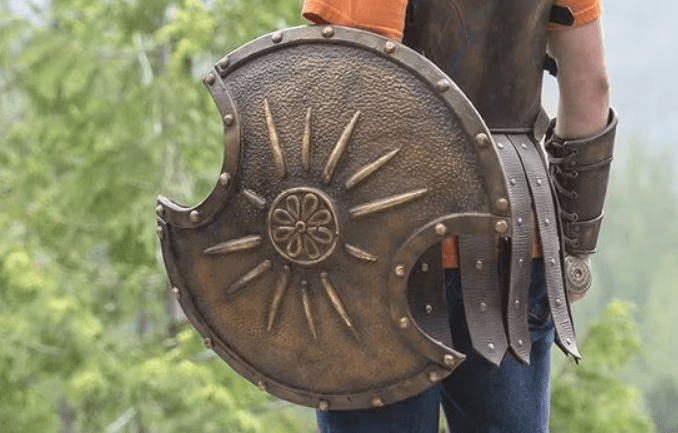
From his half-brother Tyson, Percy once was given a bronze shield, four feet in diameter, for the purpose of defending from attacks. Like Riptide, this shield turns to and from an everyday object for the sake of concealment and easy transportation; in this case, the shield takes the form of a wristwatch when not in use. Unfortunately, in his first outing with it, the shield was damaged beyond use by the chimera Dr. Thorn. Not to worry though, Tyson fixed it right up again! Only for Percy to then lose it, throwing it at Kampê to distract her long enough for Tyson to escape. Big RIP. Technically it’s not a one-off tool, but Percy didn’t keep it for long either time he had it, so you could possibly still say it’s not standard.
One-Off Equipment
Percy in various books gets gifted special equipment that he carries with him for that one book and then uses up or loses during that quest at some point to achieve an objective. Basically a Chekhov’s Gun. With this in mind, it should be noted that most of the items in this section are things that Percy has never possessed simultaneously, nor has he kept for more than a portion of one book. Exact standards on what to include will of course vary, so we’re covering everything to make sure nothing is left out. The impact these items might or might not have on the debate will be covered in the verdict.
Poseidon’s Pearls
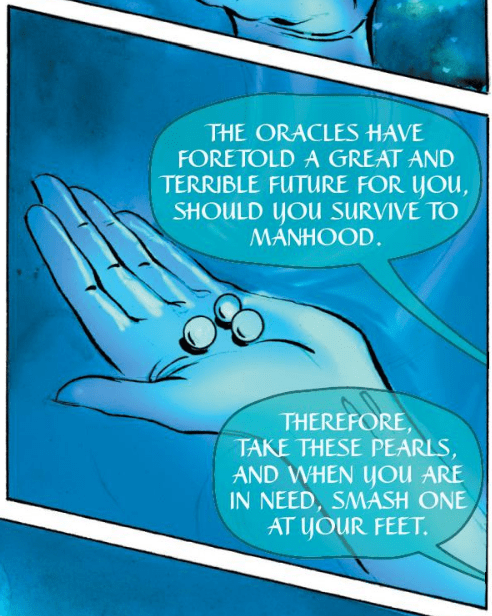
In The Lightning Thief, Percy acquired three pearls from Poseidon to bring into the Underworld when he went to confront Hades. By crushing a pearl under one’s feet, a user could manifest a bubble around themself to transport them out of a dangerous situation. Percy, Annabeth and Grover each used one of the pearls to escape the Underworld, with the bubbles carrying them out and phasing up through the ground until they emerged off the coast of Los Angeles. As their activation requires the pearls to be broken, they were one-time use.
Multivitamins
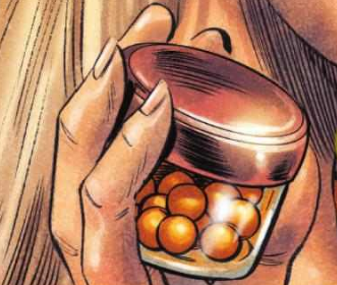
In The Sea of Monsters, Percy acquired a bottle of magical multivitamins from the god Hermes, for use in his quest. These multivitamins grant the user protections against magical alterations, with a single one of them being able to transform Percy back to normal after he was turned into a hamster by the sorceress Circe. The full bottle was subsequently used up to free numerous other hamster-fied prisoners, and for a short period after their consumption, they were able to further protect Percy and co. from Circe’s transmutation, preventing her from reapplying the effect.
Wind Thermos
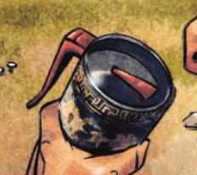
Another tool acquired from Hermes in The Sea of Monsters, this magic thermos contains the spirits of the North, South, East, and West winds. Inspired by a bag that Odysseus was given in The Odyssey, this thermos, when opened, can release the might of the four winds to propel the user. For instance, by very slightly unscrewing the lid, Percy was able to produce a gust of wind to propel the lifeboat he was using to escape the Princess Andromeda cruise ship. Later on, against the sea monster Scylla, the lid was removed completely and the four winds escaped, producing an intense storm. Because the winds escaped from their captivity, the thermos is no longer useful after this.
Nemean Lion Jacket
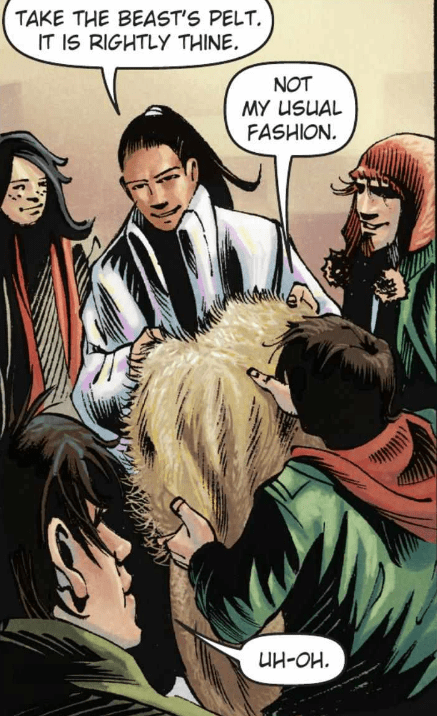
In The Titan’s Curse, upon his defeat of the Nemean Lion, Percy gained its pelt as a reward, which transformed into an indestructible golden-brown duster jacket, durable enough to block bullets and even strikes from Riptide. Later in the book, however, Percy used the pelt as a sacrifice to Poseidon, giving it up to ensure that his father would answer his prayer.
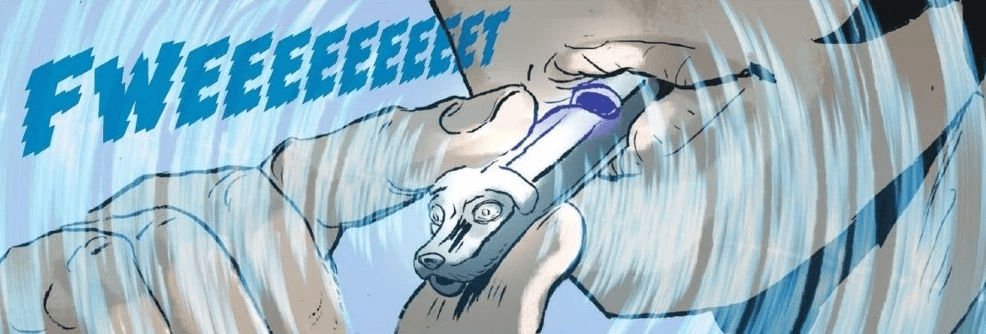
Stygian Ice Whistle
Mrs. O’Leary
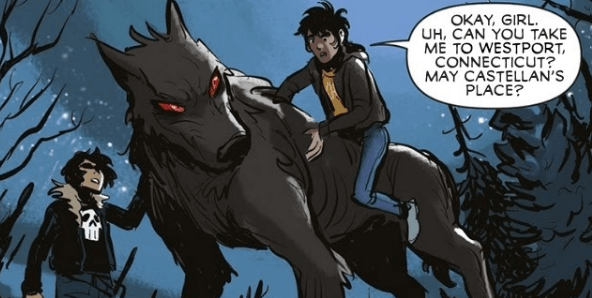
Mrs. O’Leary is sweet and playful, like a normal dog, except she’s also a hellhound who’s larger than a tank and barks louder than an artillery gun. Her speed and strength is immense to an extent befitting her size, and she possesses a special ability called Shadow Travel, in which she can travel to any place on Earth or within the Underworld by transporting herself through shadows. The strain of doing so is significant however, with even the most powerful users of Shadow Travel being unable to do so more than a few times in a row without passing out and requiring significant rest, and Mrs. O’Leary is no exception. Users also tire more quickly when transporting others via Shadow Travel, with multiple passengers (or larger passengers) taking more energy.
It should be noted that although Percy no longer has the whistle (he used it and it shattered, as advertised), he can still summon Mrs. O’Leary for help without it nowadays, since she’s now his pet and not Quintus’. In the event that she is too far away to sense his call, he also has a Celestial Bronze whistle made by Leo that can summon her without breaking.
Chameleon Armor

In The Demigod Files, Percy briefly made use of a special armor during a game of Capture the Flag, which allows the user to blend into their surroundings like a chameleon, though this is much less useful up close. Percy has never made use of this armor in a serious situation.
Sand Dollar

In The Last Olympian, Percy was given a sand dollar by his father for his birthday, which serves as a form of underwater currency and is capable of purifying water, reducing the pollution in the East and Hudson Rivers, though not entirely cleaning either. Percy ended up breaking the sand dollar in half and giving each half to the spirit of each river, in exchange for their cooperation against Kronos’ armies.
Zagreus
Stygius

Zagreus’ original default weapon, the Stygian Blade is one of the greatest swords to ever slay the wicked. When being wielded by Poseidon, the blade was used against the Titans, and it’s certainly no weaker in Zagreus’ capable hands. He can swing the blade for deadly slashes and stabs, and can directly stab into the ground with a mighty thrust for a powerful shockwave attack. Additionally, this weapon and all others have multiple forms called Aspects, all wielding different perks and powers.
- Aspect of Zagreus: The initial and most basic version of Stygius, and the first weapon Zagreus ever attempted escape with, the Aspect of Zagreus is still respectable. A blade “such as this seeks not to remain idle for more than an aeon or two”. And thus, it makes sense that its effect would be a 15% increase to Zagreus’ movement and attack speed.
- Aspect of Nemesis: The form of the blade when wielded by Nyx’s daughter Nemesis, the effect this version has is very simple, in that it increases Stygius’ critical hit rate by 30%.
- Aspect of Poseidon: The variant of the sword when it was wielded by the Sea God Poseidon, this variant increases the damage done by Zagreus’ casts by 50%. Additionally, when striking the ground with his special attack, any enemies caught in said attack will have the bloodstones the casts pierced them with dislodged. Allowing Zagreus to use them again immediately.
- Aspect of Arthur: One of many unique forms Zagreus saw his weapons reveal, the Aspect of Arthur is very different compared to the rest of Stygius’ forms. Rather than be light and quick, the sword Excalibur is heavy and absurdly strong, preferring heavy swings compared to quick slashes. To fit this more bulky variation, the aspect grants Zagreus an additional 50 health points to his life total, and gives his downward slamming thrust a new effect: it creates a wide defensive aura called the Holy Excalibur Aura that’ll last 8 seconds, and reduces damage Zagreus receives by 40%. Enemies and projectiles move noticeably slower in it, projectiles especially. The aura also disables traps caught inside of it.
The different states of Stygius are not the limit of its versatility however. Through Hammers of Daedalus, all of Zagreus’ weapons are capable of receiving potent upgrades. Some upgrades are incompatible though, and this will be specified for Stygius and the other primary weapons Zagreus uses. Stygius has the following:
- Breaching Slash: Attacks do 300% more damage to armored foes
- Cruel Thrust: Zagreus’ downward thrust does 200% more damage and has a 40% critical chance. Cannot be combined with World Splitter or Flurry Slash
- Cursed Slash: In exchange for only having 40% of his max HP, Zagreus’ strikes restore 2 HP per hit
- Dash Nova: Zagreus’ downward thrust attack makes him lunge forward and makes him Sturdy (have 30% damage reduction and makes his attack uninterruptable) for 0.8 seconds
- Double Edge: When Zagreus attacks out of a dash, it attacks twice and does 20% more damage
- Double Nova: Zagreus’ downward stab shockwave does double damage, but has no knockback
- Flurry Strike: Zagreus’ standard swipes are spammed far faster than normal. Cannot be combined with World Splitter or Cruel Thrust, and is incompatible with the Aspect of Arthur
- Hoarding Slash: Zagreus’ basic attacks gain a damage increase equal to 5% of his currently owned amount of coins
- Piercing Wave: Zagreus’ basic attacks fire an additional damaging sword beam
- Super Nova: Zagreus’ downward thrust shockwave is bigger and does 20% more damage
- World Splitter: Zagreus’ basic attack is replaced with a ginormous damaging slash. Cannot be combined with Flurry Slash or Cruel Thrust and is incompatible with the Aspect of Arthur
- Greater Consecration: Exclusive to the Aspect of Arthur, it increases the Holy Excalibur Aura size by 45% and the enemy speed reduction by 10%
Varatha

From slaying Titans in the hands of Hades, to being tossed through him by its own son, the Eternal Spear Varatha is a godlike weapon with quite the history. Zagreus can perform plenty of stabs and swipes, though Zagreus can attack in a couple unorthodox ways. He can grab Varatha by the back hilt and swing it to slice at a large area, and he can toss it a far distance through foes. Notably after this toss, Zagreus can immediately telekinetically call the spear back to him.
- Aspect of Zagreus: The default version of the Eternal Spear, the Aspect of Zagreus’ focuses on enhancing his spear throw. Compared to other aspects, this one’s spear throw has no wind up time, does 25% more damage, has 25% more range, and is 25% faster than normal.
- Aspect of Achilles: Based on the variation used by his teacher Achilles, this aspect makes Varatha different by allowing Zagreus to perform a super fast dash towards the spear post-throw as an additional attack, rather than simply having the spear return to him telekinetically. After this rush is performed, Zagreus’ next four attacks also do 150% more damage. Notably the spear throw requires a brief charge up time for more distance compared to the other Aspects.
- Aspect of Hades: The spear that Zagreus’ father Hades used to wield, the Aspect of Hades amplifies Varatha’s spinning attack to be larger. Additionally, any enemies hit by it are inflicted with Punishing Sweep, a status effect that makes them take 150% more damage from non-spin spear attacks for 10 seconds.
- Aspect of Guan Yu: Another historical aspect, Guan Yu’s spear has a big trade off. When wielded, Zagreus’ total amount of health, as well as the total he heals from various sources, is cut in half. So a 2% heal would instead only be 1%, and he has 50 HP instead of 100. The trade off is that he recovers 2 HP per hit landed by his new spin attack, Frost Fair Blade, where he throws a spinning spear blade instead of doing a spin attack around himself. Other differences include the spear having slower but heavier jabs, as well as a spear toss with a longer wind up in exchange for more raw power.
Varatha can also be upgraded by Hammers of Daedalus, improving with the following upgrades:
- Extending Jab: Zagreus’ primary stab has more range and deals 40% more damage to distant foes
- Chain Skewer: Zagreus’ special spear throw can bounce between up to 7 foes, and deals 30% more damage on its bounces. Cannot be combined with Exploding Launcher, and incompatible with the Aspects of Achilles and Guan Yu
- Breaching: Zagreus’ spear toss special does 400% more damage to armor
- Vicious Skewer: Zagreus’ spear toss special does 50% more damage, and the return movement has 50% critical chance. Cannot be combined with Exploding Launcher, and is incompatible with the Aspect of Guan Yu
- Exploding Launcher: The special spear toss is replaced with an energy shot that does damage in an area. Cannot be combined with Chain Skewer or Vicious Skewer, and incompatible with the Aspects of Achilles or Guan Yu.
- Massive Spin: The spin attack deals 125% more damage and hits a wider area. Cannot be combined with Flurry Jab
- Quick Spin: The spin attack charges and recovers far faster. Cannot be combined with Flurry Jab
- Flurry Jab: Instead of a spin attack, Zagreus now gets a chargeable jab spam attack. Cannot be combined with Flaring, Massive, or Quick Spin, and is incompatible with the Aspects of Hades and Guan Yu
- Charged Skewer: Zagreus’ special spear throw can be charged up for up to 200% more base damage at the cost of reducing its minimum throwing range. This is incompatible with the Aspect of Achilles
- Serrated Point: Zagreus’ Varatha Dash Strike hits 3 times, though having this upgrade reduces dash range by 25%. Cannot be combined with Flurry Jab
Flaring Spin: Charging his Spin Attack gives Zagreus the Sturdy effect and releases energy pulses. Cannot be combined with Flurry Jab
- Triple Jab: Zagreus’ spear attack strikes 3 times in a spread pattern.
- Winged Serpent: Exclusive to the Aspect of Guan Yu, the Frost Fair Blade spin attack travels for 80% more time
Aegis

The Shield of Chaos used to defend from the Titans, Aegis is far more than just a barrier. It’s fantastic at this of course, being able to fully defend Zagreus from the simplest of Brute club smashes, to blocking the full power stream of energy that is Hades’ Hellfire blasts. Though it also excels for offense, as its regular strikes deal potent knockback to foes for maintaining distance. Additionally, Zagreus can charge the shield up while blocking to fly straight at foes with a powerful Bull Rush, or throw the shield at enemies only for it to bounce off whatever it hits and fly back into his hands. Meet Captain Underworld everyone.
- Aspect of Zagreus: The base version of Aegis’ that Zagreus first discovered is once again very simple. His basic and dash attacks just do 15 more damage than normal. Not 15%, just 15 more hit points.
- Aspect of Chaos: Wielded previously by the primordial origin of everything, the Aspect of Chaos is equally as strange as its original wielder. After Zagreus performs a Bull Rush, his next shield throw tosses five shields at once, allowing for a big AOE attack.
- Aspect of Zeus: Previously used for Zeus’ titan slaying battles, this aspect makes Zagreus’ shield toss instead turn into a hazard of sorts. Rather than strike an enemy once before returning to Zagreus, it will instead be like a spinning blade moving slowly in the direction he threw it. He can call it back to change its direction by making it trail him, or he can just pick it up to rethrow it. This is the best weapon in the game by the way so no wonder Moro is picking it for Indie Cross.
- Aspect of Beowulf: Soon to be wielded by the heroic king Beowulf, this shield trades defense and speed for all out offense. Zagreus’ basic attack becomes a shield smash to the ground that causes a destructive shockwave, and his shield toss has more wind up in exchange for more power. The big difference with the shield is the Bull Rush. Rather than use them traditionally for Cast attacks, Zagreus’ Blood Stones are instead infused into him before being unleashed in a massively amped up Bull Rush (cast amps to Boons will also make the Bull Rush gain those bonuses, such as a thunder shock or a watery shockwave) called Naegling’s Board Cast, which also contains much more horizontal range now. The trade off for all this extra power is that Zagreus takes 10% more damage than normal.
Aegis can also be upgraded by Hammers of Daedalus, improving with the following upgrades:
- Dread Flight: Zagreus’ shield toss can hit up to 4 more foes before returning. Incompatible with the Aspect of Zeus, and only effects one of the shields tossed by the Aspect of Chaos
- Sudden Rush: Increases Zagreus’ Bull Rush charge speed
- Pulverizing Blow: Zagreus’ main shield bash hits twice, though has no knockback
- Dashing Wallop: Zagreus’ Dash Strike attack deals 50% more damage and hits a wider area
- Explosive Return: When Zagreus catches his shield, it releases a damaging shockwave to nearby foes
- Minotaur Rush: At the split instant the shield reaches the energy for a max Bull Rush, it can be released for a Power Rush that does 500% more damage
- Breaching Rush: The Bull Rush attack does 400% more damage to armored foes
- Charged Shot: This replaces Zagreus’ Bull Rush attack with an unblockable piercing energy shot
- Charged Flight: Zagreus can charge up his shield toss for up to 200% more damage. Cannot be combined with Dashing Flight, and Incompatible with the Aspects of Chaos and Zeus
- Empowering Flight: After Zagreus hits a shield throw attack, his next two attacks deal 80% more damage
- Dashing Flight: When performing a dash, Zagreus can throw out his shield so it can do 200% more damage. Cannot be combined with Charged Flight, and incompatible with the Aspect of Zeus
- Ferocious Guard: After blocking an attack, Zagreus gains an additional 20% damage and movement speed for 10 seconds. Cannot be staked
- Unyielding Defense: Exclusive to the Aspect of Beowulf, using Naegling’s Board Cast makes Zagreus sturdy for 3 seconds
Coronacht
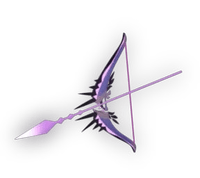
Coronacht the Heart-Seeker is without a doubt the finest bow ever conceived, and it’s not like it fails to live up to that reputation in Zagreus’ hands. Whether it be for Hera’s previous Titan slaying or Zagreus’ rebellious phase, its giant arrows can skewer right through foes after a brief windup, charging up arrows to the max and then releasing at just the right time will also produce a super powered Power Shot. Additionally, if he wants to focus more on rapid fire, Zagreus can shoot out ten arrows around a large horizontal range, covering a big amount of distance with smaller yet still respectable power. Or you know, you can play optimal and use this for point-blank attacks to land all ten arrows, but that sounds slightly less cool.
- Aspect of Zagreus: The Heart-Seeking Bow’s base form that Zagreus acquired. All of its attacks have an increased 15% chance to land a Critical Hit.
- Aspect of Chiron: Previously wielded by Chiron, this aspect focuses on single target destruction. In exchange for only having 8 arrows involved in Zagreus’ special sweep attack, all 8 of those arrows will now automatically seek the specific foe last hit by Zagreus’ primary arrow shot.
- Aspect of Hera: The Queen of Olympus was deadly when using Coronacht, and that can be seen with how she amplified her arrows. By loading his Blood Stones directly into his bow, Zagreus can massively empower his next shot. He can load a few or all of them at once depending on how much of a power increase he wants. Once an enemy is hit by an amplified arrow, it’ll take 5 seconds for the Blood Stones lodged into them to dislodge. Any cast bonuses will additionally be added to Blood Stone amped arrow shots.
- Aspect of Rama: Another historical aspect, Rama’s skill in multi-targeting is displayed here. Zagreus’ sweeping arrow attack instead becomes a single target flurry of arrows that can bounce between foes called Celestial Sharanga. Notably, they inflict a status effect called Shared Suffering, which makes enemies take damage equal to 60% of the damage their allies take from Zagreus’ primary charged arrow attacks. For example, if one skeleton is hit for 100 damage, another inflicted with Shared Suffering will take 60. Additionally, someone who already has Shared Suffering will take bonus damage when they’re hit themselves. A 100 damage arrow shot would do 160 damage to a Shared Suffering inflicted enemy, for instance. Additionally, the Aspect of Rama’s arrow shots are far wider (being more like energy waves than arrows, frankly) and stronger than normal arrows in exchange for a longer charge time.
Coronacht can also be upgraded by Hammers of Daedalus, improving with the following upgrades:
- Twin Shot: Zagreus’ arrow attack fires 2 shots side-by-side simultaneously, but has reduced range. Cannot be combined with Triple or Sniper Shot
- Sniper Shot: Arrows deal 200% more damage to distant foes. Cannot be combined with Point-Blank or Twin Shot
- Explosive Shot: In exchange for a longer charge time, Zagreus’ arrow deals 300% damage in an area when hitting an enemy. Cannot be combined with Flurry or Chain Shot
- Flurry Shot: Instead of charging up shots, Zagreus instead fires arrows rapid fire. Cannot be combined with Perfect or Explosive Shot, and incompatible with the Aspect of Rama
- Perfect Shot: Power Shots are easier to execute, and deal 150% more damage. Cannot be combined with Flurry Shot
- Relentless Volley: Zagreus’ special omnidirectional arrow fire fires 4 more arrows than normal. Cannot be combined with Charged Volley
- Triple Shot: Zagreus fires 3 arrows in a spread pattern instead of just 1. Cannot be combined with Twin Shot
- Charged Volley: Holding the omnidirectional arrow barrage allows for up to 250% more damage, though there’s a slight range reduction. Cannot be combined with Relentless Volley, and incompatible with the Aspects of Chiron or Rama
- Chain Shot: Arrow shots bounce off of up to 3 foes, dealing an extra 15% damage to said foes. Cannot be combined with Explosive Shot
- Point-Blank Shot: Nearby foes take 150% more damage from main arrow shots. Incompatible with Sniper Shot
- Concentrated Volley: Zagreus’ special omnidirectional arrow fire attack does 3 more base damage for each consecutive hit on a foe. Incompatible with the Aspect of Rama
- Repulse Shot: Exclusive to the Aspect of Rama, the Celestial Sharanga attack creates a no-damage but heavy knockback focused shockwave around Zagreus
Malphon
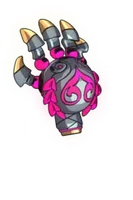
What’s a better weapon than your own hands? They’re the origin of all weapons after all. The Twin Fists of Malphon work to empower Zagreus’ hand-to-hand capabilities, letting him land fast jabs and a special double uppercut for quick burst damage at close range. Additionally, Zagreus can follow up his Dash ability with an immediate uppercut, though he cannot do a double uppercut with this technique.
- Aspect of Zagreus: The form of the Twin Fists found by Zagreus, this variant gives Zagreus an additional 15% chance to dodge enemy attacks automatically.
- Aspect of Talos: Wielded by the bronze giant, this Aspect gives Zagreus’ uppercut attack a magnetic pull. It will automatically draw enemies towards Zagreus while damaging them, leading to them taking an uppercut to the face. This uppercut also makes enemies take 50% more damage for 6 seconds from all attacks.
- Aspect of Demeter: Previously utilized by the chilling God of Harvest, the bonus here is long term but significant. After landing twelve punches, Zagreus’ next uppercut instead multiplies to become six uppercuts in a single attack. Any status effects his uppercut does are also applied six times.
- Aspect of Gilgamesh: Another historical aspect, Gilgamesh’s power is condensed into the twin fists. These new claws, rather than gloves, focus on strong slashes rather than quick punches. Wielding the gloves at all also lets Zagreus perform his Dash two more times than normal. Additionally, if Zagreus dashes into his uppercut, he’ll inflict Maim. When this status effect is applied, enemies will deal 50% more damage while taking 25% more damage themselves for 4 seconds. After the 4 seconds are up, the Maim will deal a 400 damage burst before vanishing.
Malphon can also be upgraded by Hammers of Daedalus, improving with the following upgrades:
- Breaching Cross: Zagreus’ Dash-Strike attack pierces foes and does 900% more damage to armored foes
- Rolling Knuckle: Zagreus’ Dash-Strike deals 60% more damage and can be performed at the end of a normal attacking combo without dashing. Cannot be combined with Heavy Knuckle and incompatible with the Aspect of Gilgamesh
- Long Knuckle: Zagreus’ primary punching attacks have more range and do 10% more damage. Incompatible with the Aspect of Gilgamesh
- Draining Cutter: Whenever Zagreus’ uppercut attack slays enemies, he restores 2% of his total health
- Concentrated Knuckle: Zagreus’ attack deals 5 more base damage for each uninterrupted hit to a foe during a combo
- Explosive Upper: Zagreus’ Dash-Uppercut combo deals 100% more damage with a shockwave spreading that damage further. Incompatible with Kinetic Launcher
- Flying Cutter: Zagreus can charge his uppercut special for more range and up to 100% more base damage. Cannot be combined with Rusk Kick or Kinetic Launcher, and incompatible with the Aspect of Talos
- Rusk Kick: Zagreus’ uppercut attack is replaced by an advancing kick that does two bursts of damage. Cannot be combined with Flying Cutter or Kinetic Launcher, and incompatible with the Aspect of Talos
- Quake Cutter: After using an uppercut, Zagreus releases a damaging shockwave when he lands on the ground. Cannot be combined with Kinetic Launcher, and incompatible with the Aspect of Demeter
- Kinetic Launcher: Zagreus’ uppercut special becomes a charged ranged attack that fires damaging energy. Cannot be combined with Rusk Kick, Flying Cutter, Explosive Upper, or Quake Cutter, and incompatible with the Aspects of Talos or Gilgamesh
- Heavy Knuckle: Zagreus’ main attack combo becomes a slower 3 hit combo that does more damage. Cannot be combined with Rolling Knuckle, and incompatible with the Aspect of Gilgamesh
- Colossus Knuckle: When doing standard punches or his uppercut, Zagreus is automatically Sturdy
- Rending Claws: Exclusive to the Aspect of Gilgamesh, foes afflicted with Main take 25% more damage and move 30% slower
Exagryph
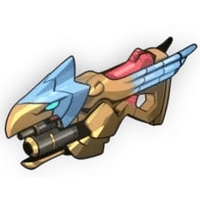
Abandoned by the Gods due to the dreadful… nature of the weapon, the Adamant Rail Exagryph is in simplest terms, a god gun. Being able to fire 12 bullets before needing a reload (which seems to come from an endless ammo supply), the Rail trades close range burst damage for long-range zoning. Though if Zagreus wants to skip back to the burst idea, he can also fire an explosive shot into the air that will create a massive boom once it hits the ground, blowing away anyone who dares disrespect the future of warfare.
- Aspect of Zagreus: The Adamant Rail’s form that was found by Zagreus, the effect is very basic. Zagreus’ max ammo per mag is increased from 12 to 24.
- Aspect of Eris: The destructive form used by Eris, Zagreus’ Special explosive blast lets him do 75% more damage for 4 seconds if he’s in the blast radius when the bomb explodes.
- Aspect of Hestia: The burning Goddess Hestia’s version of the Adamant Rail is very notable. After Zagreus reloads his gun, his next gunshot does 150 more base damage and has 150% more range. Talk about a bullseye.
- Aspect of Lucifer: The historical Aspect of Exagryph is very notable, which might be undersaying things when this version was used by actual Satan. Rather than bullets, this Aspect shoots a beam of continuous Hellfire called Igneus Eden that can be shot out for roughly 2.7 seconds (dealing 20 ticks of damage in game) before having to reload, with the beam damage ramping up over time the longer it blasts an enemy. Its speed is similar to lasers shot by Brimstone enemies as well as Demeter’s Crystal Cast Boon, as it reaches its targets instantly with a straight beam of energy that looks identical to those other attacks. Additionally, its explosive shot doesn’t detonate instantly. Instead, it drops an orb wherever Zagreus targets that deals passive damage to enemies around it with its aura. Once the orb is attacked or run into by Zagreus or enemies however, it will release a devastating explosion.
Exagryph can also be upgraded by Hammers of Daedalus, improving with the following upgrades:
- Flurry Fire: Zagreus’ railgun fires faster, more accurately, and the mag can have 6 more bullets at a time. Cannot be combined with Spread Fire or Delta Chamber, and incompatible with the Aspect of Lucifer
- Ricochet Fire: Zagreus’ shots can bounce off of up to one more foe before hitting another. Cannot be combined with Explosive, Spread, or Seeking Fire, and incompatible with the Aspect of Lucifer
- Spread Fire: Zagreus’ shots become short spread energy waves that deal more damage at the cost of 6 less bullets per magazine. Cannot be combined with Flurry, Ricochet, or Seeking Fire, and Delta Chamber, and incompatible with the Aspect of Lucifer
- Explosive Fire: Zagreus’ shots deal damage in an area whenever they hit foes. Cannot be combined with Ricochet or Piercing Fire, and incompatible with the Aspect of Lucifer
- Delta Chamber: Zagreus’ shots are instead a 3 round burst, and he never has to reload now. Cannot be combined with Spread or Flurry Fire, and incompatible with the Aspect of Lucifer
- Piercing Fire: Zagreus’ shots pierce foes and do 50% more damage to armor, and cannot be blocked. Cannot be combined with Explosive or Seeking Fire
- Triple Bomb: Zagreus can use his explosive shot 3 times in quick succession. Cannot be combined with Cluster or Hazard bomb
- Rocket Bomb: Zagreus’ explosive shot is replaced with a rocket. Hell yeah, Hell Rocket Launcher. Cannot be combined with Hazard Bomb and incompatible with the Aspect of Lucifer
- Targeting System: Foes in the target range of Zagreus’ explosive shot move slower and take 30% more damage
- Hazard Bomb: Zagreus’ explosive shot deals 300% more damage in a larger area, but Zagreus will be damaged if caught in the blast unlike his normal explosive shot. Cannot be combined with Rocket, Cluster, or Triple Bomb, and incompatible with the Aspect of Lucifer
- Cluster Bomb: Zagreus’ explosive shot fires a spread of five bombs, though each does 30% less damage than the original single bomb variant. Cannot be combined with Hazard or Triple Bomb, and incompatible with the Aspect of Lucifer
- Seeking Fire: Zagreus’ shots seek the nearest target and deal 10% more damage. That’s right he installed aimbot. Cannot be combined with Piercing, Ricochet, or Spread Fire, and incompatible with the Aspect of Lucifer
- Concentrated Beam: Exclusive to the Aspect of Lucifer, the Igneus Eden beam attack’s damage ramps up twice as fast. Cannot be combined with Eternal Chamber
- Flash Fire: Exclusive to the Aspect of Lucifer, the Igneus Eden beam starts firing and fires 50% faster with 15% more range
- Triple Beam: Exclusive to the Aspect of Lucifer, the Igneus Eden beam fires 3 beams in a spread pattern
- Eternal Chamber: Exclusive to the Aspect of Lucifer, in exchange for no damage ramp up, the Igneus Eden blast has infinite ammo and never needs to reload. Cannot be combined with Concentrated Beam
- Greater Inferno: Exclusive to the Aspect of Lucifer, the Igneus Eden Hellfire explosive shot radiates 250% more damage and has extended range
Gigaros
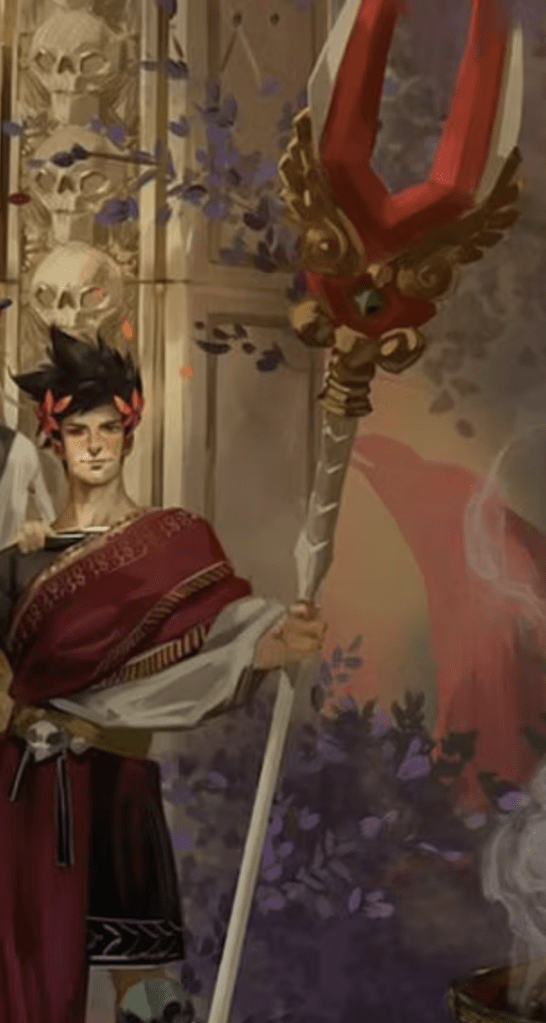
Originally the spear of his father, Gigaros is a mighty weapon, stronger than even Poseidon’s trident. It was given to him by Hades through careful persuasion, and though he may not be accustomed to the weight of it, he can still use it well enough for quick jabs and heavy swing attacks.
The spear has an important ability worth mentioning. Throughout the plot of Hades II, in order to permanently kill Chronos, Melinoë needed an incantation known as the Dissolution of Time to unmake him and negate his very being, suppressing his ability to reconstitute himself. Gigaros was chosen to wield this power, as Chronos was highly resistant to the previous Infernal Arms used to defeat him in the past. Soon enough, Melinoë imbued the oversized pitch fork with this power, and it would have worked, though for plot related reasons she opted to talk no jutsu Chronos instead of killing him forever.
Additionally, Melinoë imbued within Gigaros the Dissolution of Monstrosity to permanently defeat the monstrous Typhon, undoing his immortality and leaving no trace behind. He was undone and thoroughly eradicated, with Chaos even describing it as the power to unmake creation.
The catch to this is two-fold; one, the enemy has to be weakened enough for the incantations to work in the first place, so it’s not an immediate instant win, self evident by how Melinoë is able to survive hits from Gigaros in her fight with Zagreus without immediately dying, or how she had to battle Typhon extensively before using the spell to kill him. Second, the incantations above are only for Chronos and Typhon, and to bypass their specific immortality. As such, while a potent ability, Gigaros’ immortality negation is exclusive to the specific enemies and has other caveats that make it highly unlikely to come out in most fights.
Keepsakes
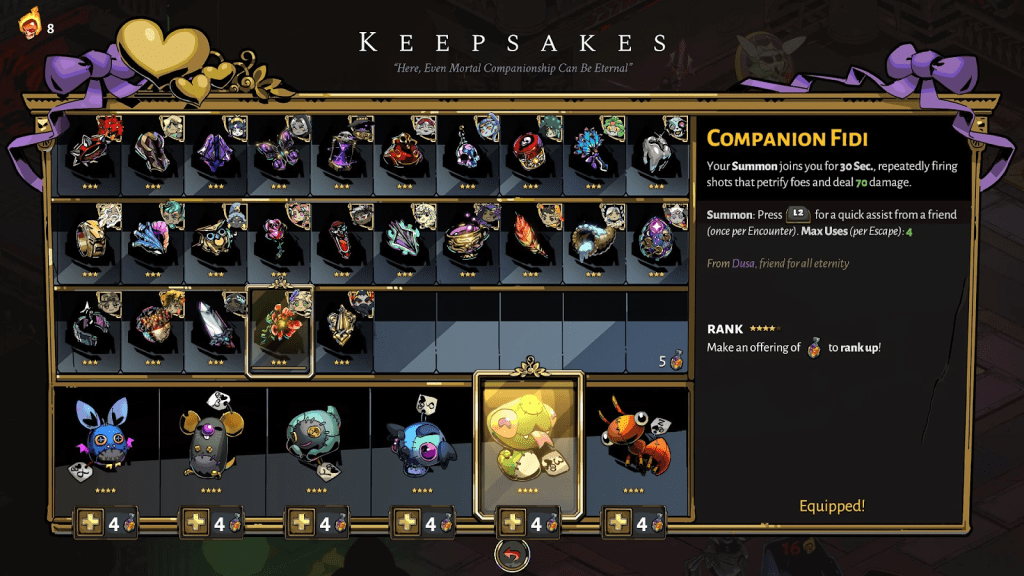
Through generous donations of nectar and ambrosia to his friends and family, it is only fair that Zagreus receives potent Keepsakes in exchange for this generosity. Keepsakes that, of course, come with a plethora of potent effects. Zagreus can only bring one Keepsake with him at a time, so not all of these different buffs are stackable. However, some are especially useful.
- Old Spiked Collar: A gift from the ever-lovable Cerberus, the good boy’s keepsake adds 50 points to Zagreus’ life total.
- Myrmidon Bracer: From his teacher, Achilles, the bracer reduces the damage Zagreus receives from attacks to the front by 30%, at the cost of attacks from behind doing 10% more damage.
- Black Shawl: A strange gift from Zagreus’ original mother Nyx, it increases the damage Zagreus does to undamaged foes by 20%. This boost also applies when striking enemies from behind.
- Pierced Butterfly: From Zagreus’ counterpart God and
verygood friend Thanatos, this keepsake increases the damage Zagreus does by 2% per successful encounter where he does not take damage. Given the theoretical maximum number of rooms of 34 (due to 3 bonus room visits, the max possible damage increase is 74%. - Bone Hourglass: An hourglass from the boatman Charon that increases the duration of items purchased by the Well of Charon by 8 encounters.
- Chthonic Coin Purse: A gift from Zagreus’ believed to be half brother Hypnos, he gets to have an extra 150 coins every escape attempt. He’s rich!
- Skull Earring: A gift from the nicest (not saying much) Fury Sister Megaera. Whenever Zagreus is below 35% HP, this keepsake will let him deal 40% more damage.
- Distant Memory: A keepsake received from the House of Hades’ Court Musician, Orpheus. It increases the damage Zagreus does to foes from a distance by 30%.
- Harpy Feather Duster: A cleaning tool from
best girlDusa that gives Zagreus a 6% chance to find healing items whenever he breaks an urn. - Lucky Tooth: A literal tooth from Zagreus’ personal training dummy, Skelly. Once per escape attempt, it will revive Zagreus with 100 HP when he is killed, acting as a bonus use of Death Defiance. Granted the HP gain from revival can be lower than Death Defiance, though the weird perk of this Keepsake is that if its revival is used up and Zagreus gets all of his Death Defiances back, the revival slot from Lucky Tooth will now be filled with a Death Defiance use. Super specific, but a neat fun fact.
- Thunder Signet: Zeus’ keepsake that guarantees one of their boons is found the next time a boon can be found, and increases the chance for said boon to be Rare rarity or greater by 20%.
- Conch Shell: Poseidon’s keepsake that guarantees one of their boons is found the next time a boon can be found, and increases the chance for said boon to be Rare rarity or greater by 20%.
- Owl Pendant: Athena’s keepsake that guarantees one of their boons is found the next time a boon can be found, and increases the chance for said boon to be Rare rarity or greater by 20%.
- Eternal Rose: Aphrodite’s keepsake that guarantees one of their boons is found the next time a boon can be found, and increases the chance for said boon to be Rare rarity or greater by 20%.
- Blood-Filled Vial: Ares’ keepsake that guarantees one of their boons is found the next time a boon can be found, and increases the chance for said boon to be Rare rarity or greater by 20%.
- Adamant Arrowhead: Artemis’ keepsake that guarantees one of their boons is found the next time a boon can be found, and increases the chance for said boon to be Rare rarity or greater by 20%.
- Overflowing Cup: Dionysus’ keepsake that guarantees one of their boons is found the next time a boon can be found, and increases the chance for said boon to be Rare rarity or greater by 20%.
- Lambent Plume: Interestingly enough, Hermes’ keepsake acts differently compared to the other Olympians. Rather than guarantee Zagreus finds one of his boons, Hermes’ plume increases Zagreus’ movement speed and dodge chance by 1.2% every time he quickly clears an encounter. Given the theoretical maximum number of rooms of 34 (due to 3 bonus room visits), the max possible speed and dodge chance increase 40.8%.
- Frostbitten Horn: Demeter’s keepsake that guarantees one of their boons is found the next time a boon can be found, and increases the chance for said boon to be Rare rarity or greater by 20%.
- Cosmic Egg: A literal egg from Chaos himself that allows Zagreus to enter Chaos’ realm without taking recoil damage. It also increases the chance for Chaos’ boons to be rare or better by 40%.
- Shattered Shackle: Broken restrainment from the eternal boulder pusher Sisyphus. When using it, Zagreus’ weapon and cast attacks deal 100% more damage when not empowered by one of the Olympians’ boons.
- Evergreen Acorn: A nice piece of nature from the nymph Eurydice that allows Zagreus to take 0 damage and recoil the first five times he’s hit in the final encounter of an Underworld Region. Basically, the final boss of an area.
- Broken Spearpoint: A broken off spearpoint given to Zagreus by Achilles’ greatest friend, Patroclus. Whenever he takes a hit, it will give Zagreus 1.5 seconds of invincibility. Reusing it requires a 7 second recharge time.
- Pom Blossom: A beautiful flower given to Zagreus by his mother Persephone. Every time Zagreus wins 4 encounters, it will increase the power of one of Zagreus’ boons he gets from the Olympians.
- Sigil of the Dead: A gift from the lord of the dead and Zagreus’ father, Hades. It is incredibly unique compared to all other keepsakes, as rather than amplifying Zagreus in one way or another, it gives him a whole new ability by making his Call Hades’ Aid. More details will be included in the Calls section. Additionally, Zagreus starts encounters with his God Gauge already 30% full.
Chthonic Companions

By increasing his bond with others as much as he can, Zagreus eventually attained several unique plushies. Yes, plushies. Called Chthonic Companions. But through the bond said plushies symbolized, Zagreus could use them to summon allies mid-fight to assist him in battle temporarily, typically with short burst techniques. He can only use a Companion summon once per fight, and can only bring one for an escape attempt. However, the previous restriction is most likely just game mechanics, as each companion can be called multiple times within a single escape attempt. This means he can summon an ally up to 5 times during a fight for burst support. Here are his options.
- Companion Batty: From Zagreus’ really really good friend Megaera, Batty lets Zag summon Meg to unleash a horizontal rain of energy attacks on the opponent. First Zagreus has Megaera target a circular area right in front of him, then she releases more attacks horizontally across from that ground zero.
- Companion Mort: Originally owned by Zagreus’ other really really good friend Thanatos, Mort gives Zag the power to summon Than temporarily. Thanatos will target a specific area before unleashing his death magic upon it. In gameplay, said attack does 3000 damage, but considering the fact the attack is identical to his attacks that Thanatos does that’re instant death to enemies normally, it’s safe to assume this attack should count as instant death as well.
- Companion Rib: From his training dummy pal Skelly, Zagreus can temporarily summon the Bloodless to be an annoying pain in the ass, distracting enemies with his loud voice and directing their attention to him. In doing so, they focus on attacking him instead of Zagreus, allowing him to land hits while the foe is distracted.
- Companion Shady: From the humble duo of Sisphyus and Bouldy, this companion lets Zagreus summon Bouldy himself to the battlefield, having him fall from the sky onto his opponent’s head. This does less damage than the other burst attack summons, but in exchange also spawns healing items, Darkness, and Coins for Zagreus to collect.
- Companion Fidi: The gift received from the delightful Gorgon head Dusa, this companion lets Zagreus summon her for 30 seconds to aid in battle. She is invulnerable to any and all damage, and while around she will shoot rocks at enemies. Said rocks having a chance to petrify the poor soul they catch.
- Companion Antos: Given to him by Achilles, Zag can call forth his mentor and his partner Patroclus to assist in combat. The duo perform only two attacks, one each, but they deal massive damage, around 1500 hit points individually. While normally they target different enemies, if there’s only one foe on screen, they’ll both attack them, dealing 3000 damage total.
Well of Charon Items

By spending coins at Wells of Charons spread around the Underworld, Zagreus can buy a variety of different items to gain miscellaneous buffs for a miscellaneous set number of fights.
- Aether Net: Zagreus starts fights with his God Gauge already 15% full
- Braid of Atlas: Zagreus’ Casts do 50% more damage
- Centaur Soul: Increases Zagreus’ max HP by 25 points (though it’s not automatically healed up)
- Chimaera Jerkey: Zagreus’ weapons’ Special attacks do 40% more damage
- Cyclops Jerky: Zagreus’ weapons’ normal attacks do 30% more damage
- Eris Bangle: Zagreus’ first attack on an undamaged foe does 50% more damage
- Eye of Lamia: Slain foes have a 15% chance to drop healing items
- Fateful Twist: Zagreus gets any other random item the Well of Charon can offer
- Flame Wheels Release: SPECIFICALLY prevents Flame Wheel enemies from spawning for a few encounters
- Gaea’s Treasure: Zagreus gets 11 to 14 Gemstones
- Hydralite: Zagreus recovers 10% of his HP whenever he enters a chamber
- Ignited Ichor: Zagreus’ movement speed increases by 20%
- Kiss of Styx: Zagreus can replenish 1 use of Death Defiance if he is missing a usage once he reaches a Well of Charon
- Life Essence: Zagreus restores 22 to 38 HP when he buys this item at a Well of Charon
- Light of Ixion: Zagreus guarantees a Chaos Gate will spawn in a later chamber
- Nail of Talos: Zagreus deals 50% more damage against armored foes
- Nemesis Crest: Zagreus deals 50% more damage striking foes from behind
- Night Spindle: Zagreus gets one more use of his Chthonic Companion summon, increasing the max number to six uses.
- Price of Midas: When exchanged for, Zagreus converts health to money. Ow!
- Prometheus Stone: Zagreus gains one extra Bloodstone to use for his cast
- Skeletal Lure: Zagreus ensures a fishing point will spawn ahead
- Stygian Shard: Traps will deal an extra 500% damage to Zagreus’ foes
- Tinge of Erebus: Zagreus gets some solidified Darkness
- Touch of Styx: Makes Zagreus’ Stubborn Defiance restore 10% more health than normal when used
- Trove Tracker: Zagreus ensures an Infernal Trove (AKA Hell treasure chest) will spawn ahead
- Yarn of Ariadne: Increases the rarity of the next boon Zagreus finds (or at least the chance of higher rarity, it varies)
Abilities
Percy Jackson
Demigod Physiology
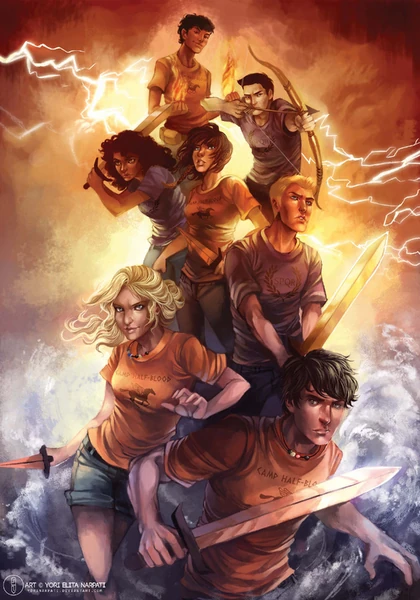
As a demigod, Percy is inherently stronger, faster, and more durable than an ordinary human, and possesses superior senses and greater awareness of supernatural entities and events. He is able to see things invisible to mortal eyes (see “The Mist” section) and resist numerous effects to a much greater extent than ordinary mortals (see “Supernatural Resistances” section). Unlike mortals, he is vulnerable to magic weapons made of materials like Celestial Bronze and Imperial Gold, while unlike gods and monsters, he is vulnerable to mundane weapons made of materials like steel and such. Worst of both worlds in that regard.
As a demigod, he is able to call on the power of not only Poseidon, as is the case with all of his innate abilities, but also pray to other gods in the event that he needs assistance in their dominion – for example, he once prayed to Apollo to let his arrow fly straight, knowing that he himself lacks any innate talent for archery. However, it is up to the individual god or goddess to grant him blessings at any given time or refrain, and the gods are finicky and can’t be considered reliable – case in point, his prayer to Apollo went ignored, but Hera blessed his arrow to travel straight in that instance regardless.
Hydrokinesis
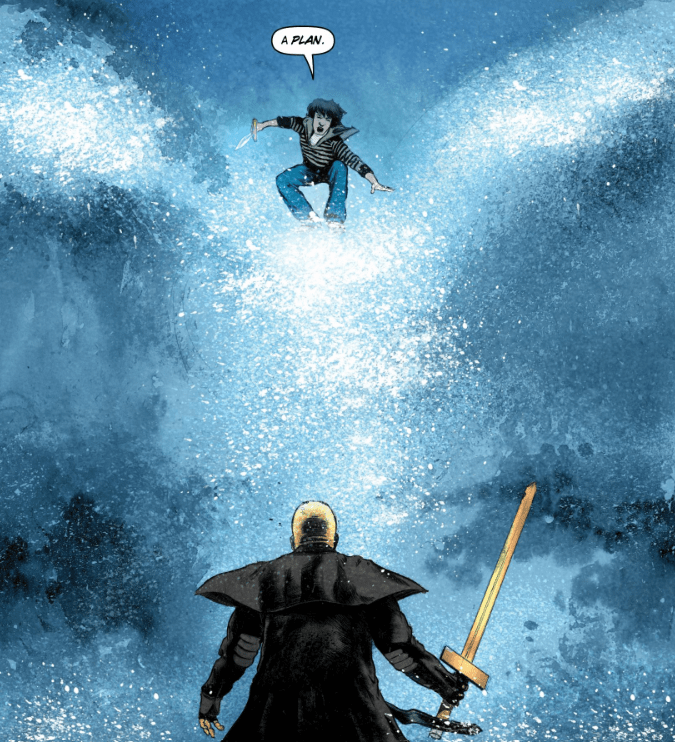
As the son of Poseidon, Percy’s most powerful and prominently-used ability in combat is his manipulation over water. Though Poseidon is the god of the sea, Percy possesses a broad command over both fresh and saltwater, and is able to command that which is in his vicinity to devastating effect. This ranges from natural sources of water like rivers and lakes, to things like water fountains and even toilet water. By backing up things like pipelines, he can make them explode. Though he cannot produce water out of nothing, he can summon it to his location from as far as half a mile away, or even further if he has access to seashells, from which he can conjure saltwater even if there is none nearby at all.
The most basic application of Percy’s water manipulation is simply flooding an area or causing enormous waves to wash over a target with great force, disorienting them or even drowning them. However, he also possesses more precise control, allowing him to grab people with water and even form constructs out of it, such as giant hands that mimic his own movements. While submerged in water, he can manipulate the currents to propel himself or his opponent around, granting him high mobility and complete control over any underwater battlefield. He can also make shields out of water to protect himself both submerged and otherwise, and in alternate canon like the movies can form weapons out of water, such as a trident.
It should be noted that Percy cannot simply control any water he wants, though most water is his to command. Despite claims that Poseidon controls all water on Earth, this isn’t quite the case, and if he encounters foreign water that isn’t connected to Poseidon at all, it will be difficult or impossible for him to control it. For example, he is largely unable to control water that is enchanted to prevent such, or under the power of another, though with sufficient willpower he is in some cases able to override this limitation.
Water Immunity
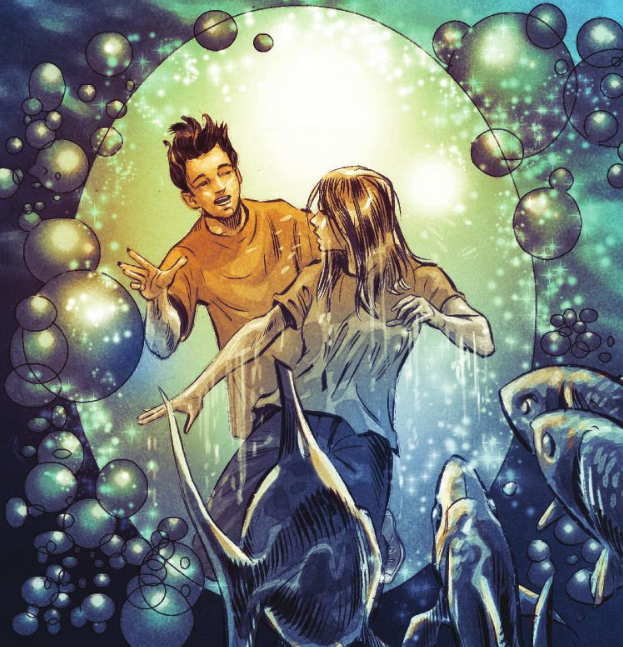
As water is his father’s domain, Percy possesses broad protections from various methods by which water could harm him. For one, it can’t make contact with him unless he allows it to, with him remaining completely dry even while submerged in water entirely, an effect which is also transferred to his clothing and any object that he touches. He also isn’t subject to water pressure, being capable of withstanding it to a far greater extent than anyone who lacks such protections. This immunity was able to grant him protection from the effects of the River Lethe, which normally wipes the memory of anyone submerged within it, proving that it can protect him from being touched and affected by even water with special properties, so long as that water has some connection to Poseidon.
Naturally, he can also breathe underwater just as effectively as he can above the water, though there are some exceptions to this. Like with his control over water, his ability to breathe and remain unaffected is reliant on the water’s connection to Poseidon. At one point, for instance, he was unable to breathe in water tainted by the poison and malicious life force of the Nine Nymphs, which was actually able to drain his power.
Water Empowerment
& Restoration

Perhaps most important and significant of Percy’s water-related powers is his ability to empower himself through direct contact with water. Simply being in contact with liquid connected to Poseidon will not only grant Percy a significant strength boost, but also continuously heal his injuries and completely eliminate any fatigue he is feeling, though if he separates from the water this buff will be lost and his fatigue will return.
The healing factor that water grants him can clear his senses and negate the numbing and muscle-related effects of electrocution. It can restore the strength to his arms if they are tired, and even provide a buff to his skill, making him more alert and allowing him to take down opponents with greater skill and dexterity than he would normally be capable of. It can near-instantly repair large gashes, and cure him of fatal poisons, though this is not perfect as a powerful enough poison has occasionally required nectar to be healed.
At this point though we start to get away from “it heals him and makes him less tired” and start to get into water kind of being a cheat code anti-hax. For starters, it can even repair wounds to his soul, as it was able to heal a wound inflicted by Kronos’ scythe which was causing his soul to leak out of his body. It can negate mental effects, as simply touching water was able to break him out of an illusion from Phobos, the god of fear. It can counter time slowing (???) because when Kronos slowed time around Percy to the point it was nearly stopped, immobilizing him, Percy was still able to control nearby water and flood the area, which broke the time slow as soon as he was doused.
Once again this aspect is reliant on the water in question being connected to Poseidon. As previously noted, the Nine Nymphs’ tainted water was able to drain his power rather than amplify it, and he also was unable to reinvigorate himself using the water in Tartarus.
Atmokinesis
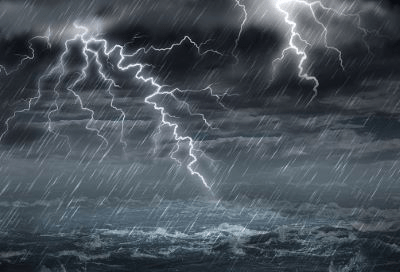
Thanks to his control over atmospheric water in addition to liquid, Percy is also capable of altering the weather on a localized scale, which he tends to do in serious fights in which more high-level destructive force is needed. Most prominently, he frequently conjures miniature hurricanes around himself, battering an opponent with wind, rain, hail and sleet with enough power to overwhelm even Titans like Hyperion.
Cryokinesis
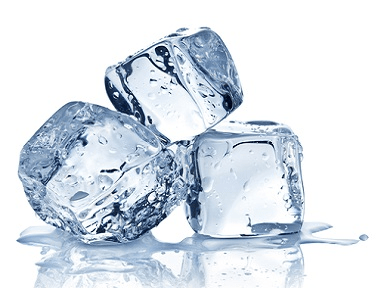
Though used much less prominently than his manipulation of liquid or even gaseous water, Percy does possess some degree of control over ice as well. For example, he was able to manipulate frozen water in his brief scuffle with Thalia Grace in The Titan’s Curse. He has also been shown to be capable of creating hurricanes out of ice vapor in addition to water.
Limited Toxikinesis
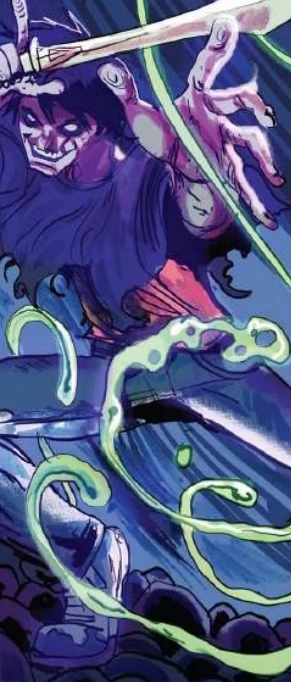
During his battle with Akhlys, the Protogenos of misery and poison, Percy demonstrated the ability to manipulate poisonous liquid to some extent, due to its similarities with liquid water. It is worth noting however that Percy only theorizes this is possible in the first place because the fight is taking place in Tartarus, which “has its own rules” (i.e. fire is drinkable, the ground is the body of a god, the air is acid), potentially implying that he would only be capable of doing this within Tartarus and not anywhere else.
Instinctive Marine Navigation
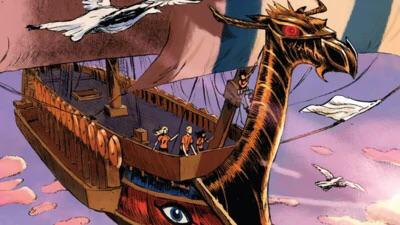
While less useful in most combat situations, Percy is an expert in every way with boats. Not only does he possess complete telekinetic control over all aspects of a boat, from the sail to the rudder to the steel wool used to scrub them, but he also instinctively has perfect bearings and awareness of his exact location at all times while at sea. With these powers combined, he can control boats as though they are an extension of his own body, with perfect awareness and control over his path.
Saltwater Transmutation

Extrasensory Perception

While not a super explicitly acknowledged ability, Percy does have consistent showings of possessing greater sensory awareness than a normal person, though a combination of superhuman instincts and genuine supernatural perception. This ranges from more vague and basic things like sensing danger in an area and recognizing that a fight is coming, to more practical things like instinctively sensing he’s about to suffer a fatal surprise attack, to more unusual showings like somehow sensing that someone died in the process of forging Luke’s sword, Backbiter. This has allowed him to instinctively know where he needs to go and what he needs to do in high pressure situations, even if his memory has been erased and he is in a location where he’s never been before. In combat, he can sense the movements of people and objects in a manner akin to ocean currents, allowing him to track things like the movement of bullets in slow motion, and detect details as small as the tensing of certain muscles.
While underwater, he possesses even greater senses, being able to see the heat of living forms and the cold of the current, allowing him to navigate even at depths where there is no light. He can sense the presence of people in the sea, and even detect disturbances as small as Annabeth throwing her dagger into the ocean in an attempt to signal him that something was wrong.
The Mist
Known as the Glamour to those who follow Norse religions, and the uppermost level of the Duat to the Egyptians, the Mist is the mystical, supernatural veil that covers the mortal world, obscuring the supernatural from the eyes and minds of the mortals therein. Basically, it’s the aspect of reality which keeps normal people ignorant to the existence of monsters, magic, and mythological figures. Demigods on average possess a much greater ability to see through the Mist compared to an average mortal, though this isn’t a hard rule. They can still be affected by the Mist in certain situations, and some individual mortals possess a remarkable clearsightedness that allows them to see through it – in some cases to an even greater extent than demigods, such as with Sally Jackson and Rachel Elizabeth Dare, among others.
The Mist is very powerful; in addition to the illusory effects that are in place at all times to prevent mortals from seeing supernatural things, it can also rewire their minds and even alter their memories in order to ensure that they remain blissfully ignorant. For example, when Percy killed his pre-algebra teacher, who was actually a monster, the Mist altered his classmates’ minds to remember a completely different pre-algebra teacher who had been present since the beginning of the year, and that alternate teacher actually showed up immediately like it was normal, despite Percy having never seen her before. For another example, when the Norse Einherji Magnus Chase used a plane to reach his destination, and left the plane mid-flight, rather than recognize “hey, this passenger I had just disappeared”, the plane attendant who was present simply forgot that Magnus was ever there to begin with. Another passenger on that plane, Magnus’ friend Amir, who was mortal but aware of the supernatural, had difficulty recalling whether Magnus was on the plane later on, despite the fact that he was conscious of the supernatural and aware that the Mist was affecting his mind. With that in mind, it is also not reliant on the individual being unaware of the supernatural or the Mist, affecting them the same regardless.
While this might sound creepy and uncomfortable, the Mist is more or less essential to the world operating in any sort of semi-functional way. Mortal minds simply are not built to know about these things and would break if subjected to them without magical reinforcement. Amir, for instance, almost went insane trying to comprehend the existence of Norse deities, and required assistance from Magnus’ healing powers to fully break through the Mist and interact with the supernatural in a functional way. Some things are even too intense for demigods, with the Mist protecting Nico di Angelo from witnessing Nyx’s true nature, something that would have driven him insane.
Percy actually possesses some limited control over the Mist. Demigods with sufficient aptitude and training can alter it to make people see, think, and understand things however the demigod wants. While Percy is unskilled in this particular art, he still possesses some rudimentary capabilities. For instance, he once made a police officer believe there was a presidential motorcade coming, just by pointing and saying so. Demigods who are more adept at manipulating the Mist, like Thalia and Hazel, can achieve even greater effects, but this is not Percy’s modus operandi.
Multilingualism
Zoolingualism &
Animal Telepathy
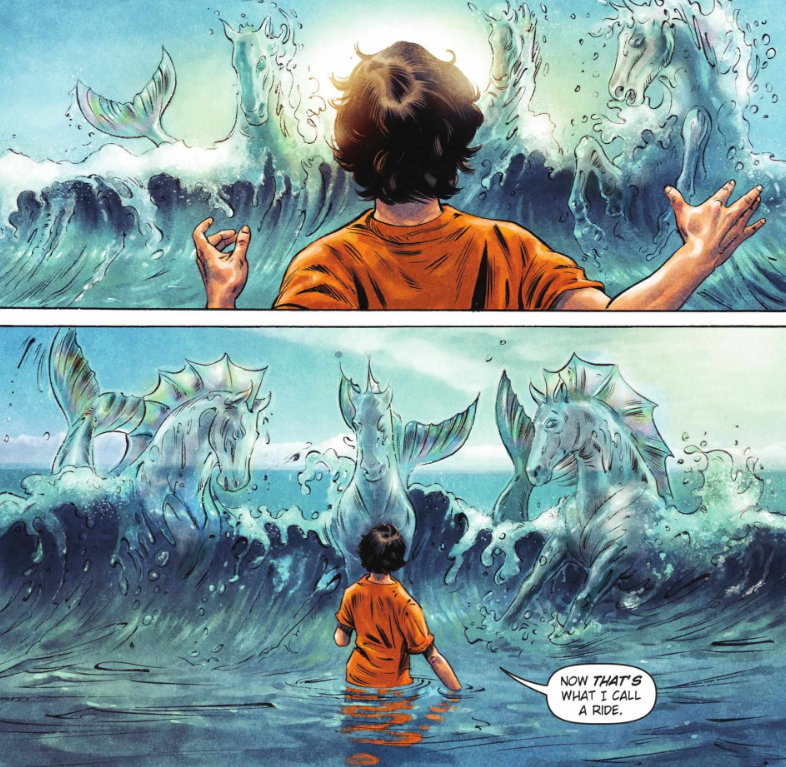
Little known fact: Poseidon isn’t only the god of the sea, he’s also the god of horses. Go figure. This domain of Poseidon’s allows Percy telepathic communication with equine creatures, ranging from normal horses to zebras to pegasi and so on. And of course, because of the sea aspect, Percy can also communicate with all manner of sea creatures, including things like whales and such. He can also communicate with them verbally as well as telepathically, though doesn’t do so in their own language. It’s more of an auto-translation thing where both sides speak their own language and inherently understand each other.
Empathy Link
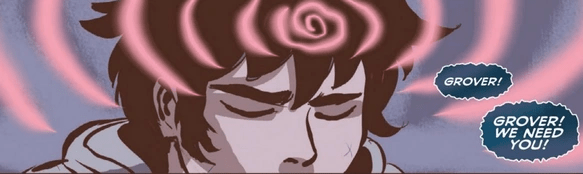
Though not particularly useful in a combat scenario, Percy has a supernatural connection known as an Empathy Link with one of his closest friends, the satyr Grover Underwood. This is essentially a telepathic connection, which allows Percy or Grover to transmit images and messages to the other when the receiver is asleep. It also grants the two of them greater attunement with the other’s emotions than normal. Because of the connection between the two linked individuals, if one dies the other likely will too.
Banishment

Demigods occasionally make use of a special hand gesture for warding off evil, in which they make a claw-like sign over their heart and then push their hand outward. While seemingly a purely superstitious thing at first glance, this gesture does actually have some tangible effect, as when Percy used it toward his stepfather Gabe Ugliano, it caused the door to their house to spring shut on him with enough force to knock him up a staircase. Much more significantly, Jason Grace used the same hand gesture to banish the insane ghost of his mother, causing her spirit to disappear.
Non-Physical Interaction

While it varies between different monsters, and some monsters are incorporeal to an extent that demigods cannot affect them, it has been shown that demigods are able to grasp certain enemies despite the fact that they lack tangible form. For example, Piper McLean was able to grab onto the body of a wind spirit as though they were a tangible object, despite the fact that they were made of pure wind (this is explicitly called out as unusual and implied to be because she is a demigod, rather than because the wind spirit was tangible in any way). Percy specifically has also used his powers to deflect ghosts, no Celestial Bronze required.
Superhuman Resistances
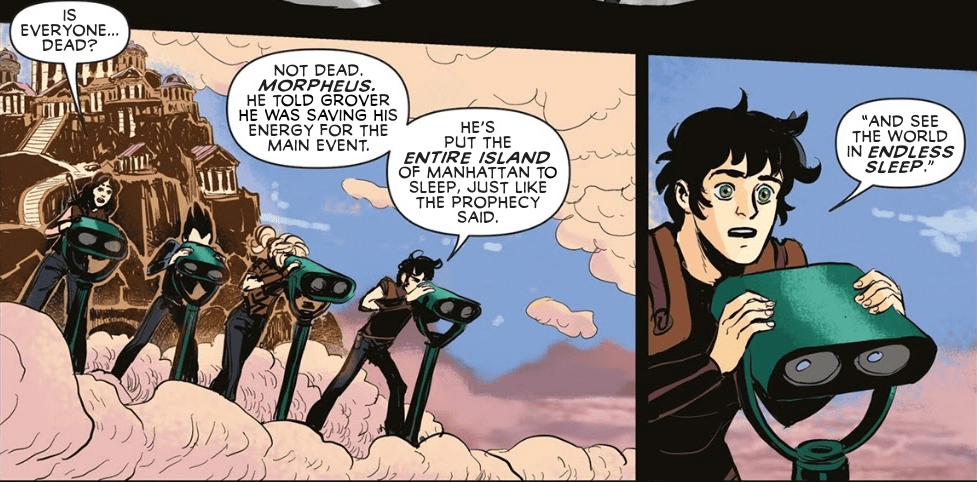
As a demigod, Percy possesses a greater resistance to a variety of supernatural effects than any mortal, frequently remaining unaffected by various hax attacks, being able to counteract them with water, and so on. Notable forms of attack that Percy can resist include:
Extreme Heat: Percy was able to resist being directly subjected to the lava within Mt. St. Helens, as well as the eruption of the volcano on top of him, with a volcanic eruption being able to reach up to 1,250 degrees Celsius. In the Trials of Apollo books, Lester Papadopoulos (the god Apollo reduced to human form) and Piper were able to survive in near proximity to Helios, whose heat was compared to that of a nuclear core, though it was noted that a demigod’s body is not built to survive such heat, and more direct exposure had the potential to kill them quickly.
Extreme Cold and Freezing: Though certainly a lesser resistance, weaker demigods than Percy such as Thalia have survived being completely frozen solid in ice by the snow goddess Khione, surviving just fine after being simply defrosted, despite the fact that being frozen to such an extent would undoubtedly be fatal for any normal person. Provided a demigod has the additional means to defrost themselves (which Thalia does not, but Percy does, being able to control ice), the fact that they can survive the process would be a solid resistance.
Illusions: On top of obviously being able to see through the myriad illusions created by the Mist, Percy was also able to break out of an illusion from Phobos by touching water. In a similar vein, weaker demigods like Hazel have managed to recognize that they are trapped in an illusion and break out, if they are subjected to them.
Hypnosis: Though affected at first, Percy was able to break out of the hypnotic trance placed on him by Medusa when he was only 12 years old. Similarly, Lester-Apollo was able to resist Python’s hypnosis.
Mind Control: Even as a 12 year old, Percy was able to resist the mind-altering effects of the Lotus Hotel and Casino, which can normally keep people under its spell for decades with resistance being impossible. He was also able to break free from a celedon’s mind control by thinking about Annabeth being mad at him (lol), and could resist the mental effects of the River Styx which sap a person’s will. Demigods from other pantheons, such as Norse Einherji, have shown to be similarly capable of resisting mind control via sheer willpower, with both Alex Fierro and Samirah al-Abbas having resisted Loki’s mind control, and Alex having resisted Surt’s as well.
Memory Manipulation: The Mist frequently rewrites the memories of mortals to account for supernatural occurrences, but demigods are naturally resistant to this. On top of this, Percy was also able to resist the mental effects of bathing in the River Styx, which is stated to sap the memories of anyone who submerges themself in it. While Percy did have his memory successfully erased by Hera in Heroes of Olympus, he was still able to retain some memory of Annabeth even immediately after waking up, while Jason, who was subjected to the same memory wipe, didn’t initially remember anything of his former life.
Invisibility/Concealment: Demigods possess greater supernatural awareness than mortals, allowing them to see magically concealed invisible things, such as Camp Half-Blood. This resistance is not absolute though, as even more powerful forms of invisibility, such as that of Annabeth’s magic Yankees cap, can still fool demigods.
Madness Manipulation: Simply being near Dionysus, the god of madness, is stated to be enough to widen the cracks in anyone’s psyche, and Percy and other demigods have survived extended stays in Dionysus’ camp without being any worse for wear. The Mist is also able to protect people from things that would drive them mad, as demonstrated by both Nico and Amir, and Percy has withstood Hades’ aura, which is stated to be capable of driving someone insane – though in fairness that may be reliant on Hades’ Helm of Darkness, which he did not possess when Percy survived his aura.
Emotion Manipulation: Percy was (again) able to survive the effects of the River Styx, which saps a person’s emotions. He was also able to withstand the effects of the River Cocytus, a river which induces incredible sadness and despair into a target, diminishing their will to live.
Transmutation: While Percy has no inherent resistance to transmutation as far as we’ve seen, he is capable of temporarily rendering himself immune with Hermes’ multivitamins, which were able to grant resistance to Circe’s transfiguration magic.
Soul Removal: Percy was able to withstand being cut by Kronos’ scythe, which normally severs the soul from the body with a simple touch. Though this wound continued to eat away at his soul regardless, Percy healed completely from it by simply submerging in the ocean.
Soul Destruction: Say it with me… “Percy has survived the effects of the River Styx”… which was stated to be like acid to the human soul, eventually incinerating it entirely if the individual isn’t able to handle it. Other demigods have also demonstrated resistance to soul destruction; Nico was able to resist the soul-destroying effects of the River Acheron, Lester and Piper were able to withstand Helios’ heat which was said to be able to dissolve souls, and Luke was able to resist Kronos’ attempts to crush his soul.
Acidic Effects: Percy was able to resist being subjected to Akhlys’ acidic steam, despite the fact that she is the Protogenos (the primordial being) who represents misery and poison, essentially the sentient embodiment of poison as a concept. Nico and Will were also able to survive being subjected to the acid clouds within Tartarus.
Death Manipulation: Percy resisted Hades’ aura, which was supposedly able to stop hearts, though again this may have been reliant on the Helm of Darkness. More substantially, we can again look to the Norse demigods, with Alex and Samirah having resisted Loki’s death manipulation through sheer willpower, remaining alive despite the fact that he willed them to die, their hearts to stop beating and their breathing to stop.
Curse of Achilles
(Non-Standard)
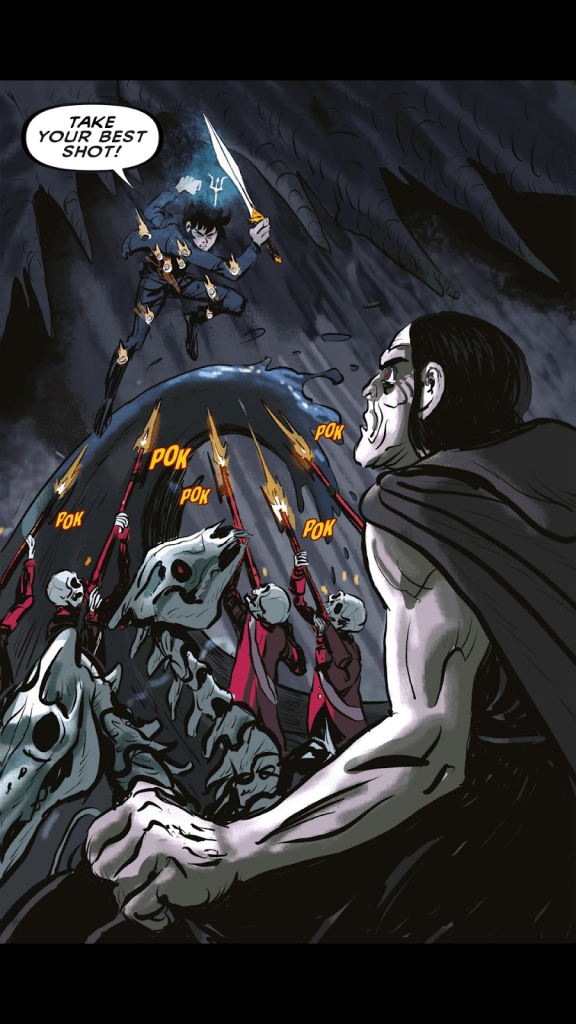
In The Last Olympian, to prepare for the final war with Kronos, Percy took a dip in the River Styx and emerged with a blessing known as the Curse of Achilles. As the name implies, this is the same supernatural resilience that Achilles possessed, which supposedly made him invulnerable across every part of his body except his Achilles heel. Specifically, it increases an individual’s physical power beyond that of any mortal and makes them invincible, aside from one weak spot where their soul anchors their body to the world. The location of the weak spot varies between individuals, with Percy’s being located on the small of his back, a spot normally well-protected by armor.
With the Curse of Achilles, Percy was able to blitz and slaughter an army of Romans and Redcoats so fast that even he himself didn’t realize what had happened, before blitzing and pinning down Hades immediately after, forcing him to flee. This godlike strength and speed enabled Percy to fodderize enemies like the Minotaur whom he had previously struggled with, easily overpower Titans like Hyperion, and contend with Kronos-Luke, who himself also possessed the Curse of Achilles. The downside, in addition to the weak spot on his back, is that possessing the Curse of Achilles made Percy tire faster than he otherwise would.
It should also be noted that the “invulnerability” the curse provides isn’t absolute. Sufficient force can harm him in spite of it, burning him or scratching up his hands. Electrocution or long falls could also prove fatal if sufficiently strong, presumably because the damage would affect his entire body including his weak spot. And of course, if Percy were faced with a greater force than he has encountered, there’s no basis to believe the Curse of Achilles will be powerful enough to protect him.
After Kronos’ defeat, Percy maintained the Curse of Achilles for a few more months, before having his memory erased by Hera and getting dumped off on the other side of the country, in order to force cooperation between the Greek and Roman camps. Upon entering Camp Jupiter, the Roman base of operations, the Little Tiber River washed away the Curse of Achilles, as it was a Greek blessing that could not survive in Roman territory. Removing Percy’s invulnerability permanently.
Zagreus
God Physiology

Due to his Chthonic heritage, Zagreus has the physical capabilities like that of any god. While certainly not as experienced with his abilities as those who sit atop Olympus, he has honed them in to the best of his ability, and continues doing so to make his escape attempts easier to bare through
- Superhuman Physicality: Zagreus is far stronger, tougher, and faster than any other mortal, able to break down large pillars and survive wounds that would kill any ordinary person
- Immortality and Resurrection: Gods within Hades are unable to age, but more impressively, due to his position as staff of the House of Hades, Zagreus can’t really die. Well, kind of. It is possible to overwhelm and properly kill him, but whenever he meets death, his body will travel through the River Styx and bring him right back to the house, reemerging within the Pool of Styx. Even if he dies in the surface, he’ll rise again from the literal bloodbath, ready to face another escape attempt
- Enhanced Senses: Zagreus is able to search through the lowest depths of Tartarus, unbothered by the darkness. He’s able to spot and catch Slavug’s, a feat considered nearly impossible due to how much they blend in with magma, thus making them nearly impossible for the naked eye to see
- Non-Physical Interaction: Several enemies within the game are nothing but spirits, and Zagreus is able to damage and even kill them
Dash
One of Zagreus’ defining abilities is him being able to dash in and close distances, and is noted to be similar to Thanatos’ shift ability, requiring heavy practice to use effectively. Dashing grants benefits beyond just a momentary speed boost; it can let him cross bridges in gaps without difficulty, give a quick getaway in the heat of combat, and allows Zagreus to phase through enemies, their attacks, and any other physical object. He can perform an attack during or immediately after a Dash, known as a Dash-Strike, though it comes at the cost of his phasing for the rest of the movement. Zagreus can only Dash in one specific direction and needs a second long cooldown before using it again, so it’s in his best interests to use it wisely.
Cast

Zagreus is able to utilize a special item called a Blood Stone in order to shoot out a projectile called a Cast. Casts will track targets, though they can’t curve too much to do so, only hitting targets just a little left or right to him. After hitting a target, the Stone will be lodged into them, and Zagreus will have to wait a few seconds for it to first dislodge, then float back to him. That said, he can skip the second part of the process by going to the Stone directly. Zagreus has multiple ways of increasing his total number of Blood Stones as well as their power, though that is through external means like Boons and not his Cast ability itself.
Mirror of Night Abilities
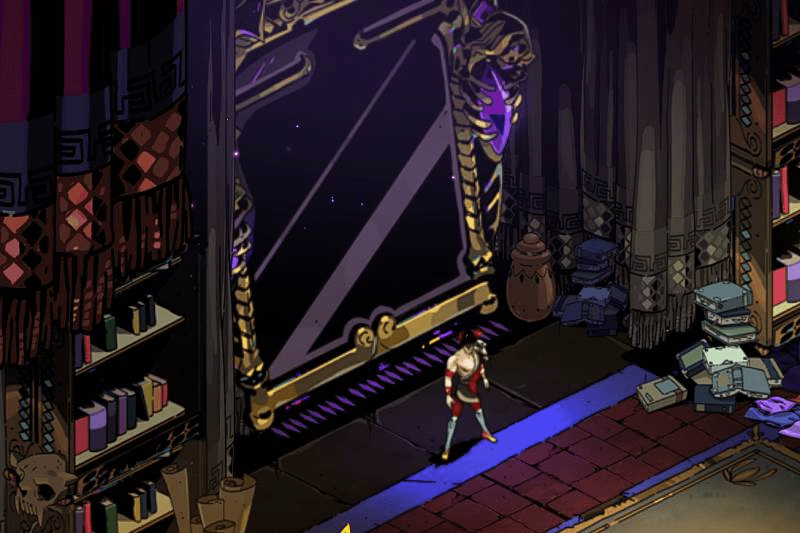
In order to help him in his escape attempts, the embodiment of darkness, Nyx, gave Zagreus the mystical Mirror of Night. With it, Zagreus is able to amplify himself in a large variety of ways to buff himself for escape attempts. Eventually, Zagreus also got an additional set of options that are alternate versions of existing Mirror abilities. However, he can only choose one of the two choices between a base mirror ability and its alternate at once. All Mirror abilities will be listed below, and the options where Zagreus can only pick one will be listed together.
- Presence Powers
- Shadow Presence: Zagreus deals 50% more damage when striking foes from behind
- Fiery Presence: Zagreus deals 75% more damage on the first hit on an undamaged foe
- Restoration Powers
- Chthonic Vitality: Zagreus restores 3 HP when exiting a chamber
- Dark Regeneration: Zagreus restores HP equivalent to 60% of any solidified Darkness items he obtains
- Defiance Powers
- Death Defiance: Zagreus will resurrect upon death with 50% HP remaining, up to 3 times without external buffs
- Stubborn Defiance (If you pick this buff you’re objectively bad at the game I’m sorry): Zagreus gets a 30% HP extra life once per fight
- Reflex Powers
- Greater Reflex: Zagreus can perform two Dashes in quick succession instead of just one
- Ruthless Reflex: If Zagreus Dashes to avoid a hit just before it reaches him, he deals 50% more damage and has a 50% chance to automatically avoid attacks for 2 seconds
- Blood Powers
- Boiling Blood: Zagreus deals 50% more damage to enemies when a Bloodstone is inside of them
- Abyssal Blood: Enemies have their speed and damage reduced by 30% when a Bloodstone is inside of them
- Soul Powers
- Infernal Soul: Zagreus gets two extra Bloodstones for ammo, letting him launch 3 Casts at a time before needing to find more Bloodstones
- Stygian Soul: Zagreus’ Bloodstone used for a cast will automatically refill after 3 seconds post-usage
- Money Powers
- Deep Pockets: Zagreus can start each escape attempt with 100 coins. He’s rich!
- Golden Touch: Zagreus’ coin supply is multiplied by 1.05 every time he leaves an Underworld region. This’ll make him richer!
- Health Powers
- Thick Skin: Zagreus has 50 additional HP
- High Confidence: Zagreus will deal 25% more damage when above 80% HP
- Stack Powers
- Privileged Status: Zagreus will deal 40% more damage to foes inflicted with 2 or more status effects
- Family Favorite: For each distinct Olympian Zagreus is empowered by (more on that momentarily), he will deal 5% more damage. Having all 9 Olympians means 45% more damage.
- Item Powers
- Olympian Favor: Zagreus has a 40% higher chance for a Boon to be Rare or higher
- Dark Foresight: Zagreus has a 20% higher chance of finding miscellaneous distinct items.
- Boon Powers
- God’s Pride: Zagreus has a 20% higher chance for a Boon to be Epic or higher
- Gods’ Legacy: Zagreus has a 10% higher chance for a Boon to be Legendary or be a Duo Boon
- Fate Powers
- Fated Authority: Zagreus has 8 distinct dice he can use to alter the course of fate… to change the rewards of a chamber he walks into.
- Fated Persuasion: Same thing as above but for changing Boon and shop items that’re available.
As an additional note on the powers granted by Nyx, her magic was notably used to shroud Zagreus’ presence in order to make him difficult to view and track. There isn’t an issue if he’s directly nearby, but it’s a good power for countering more long distance tracking methods.
Boons of Olympus
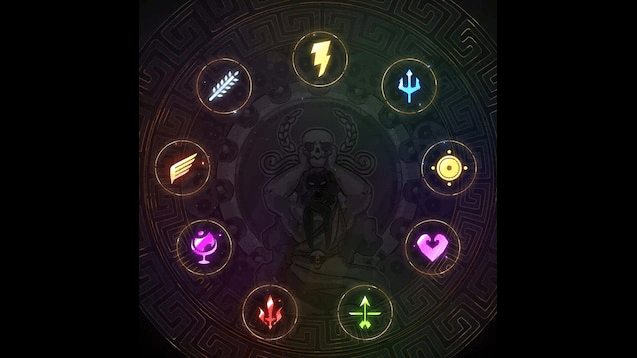
Through the gifts of the Gods, Zagreus can embrace various unique abilities reflecting their powers and strengths. 9 different Olympians aided him through his journeys, all giving different benefits. It is worth noting Zagreus cannot stack Boons that buff his melee strikes with other Boons that also buff melee strikes, and the same problem applies for Special Attacks, Casts, Dashes, and Calls.
Zeus
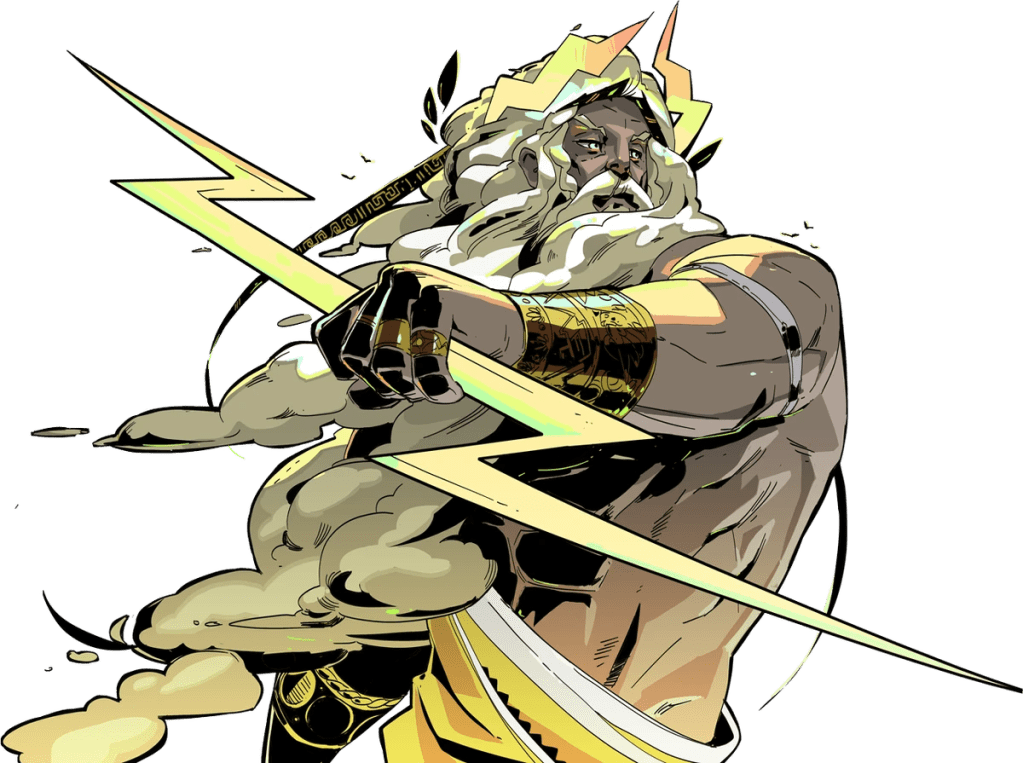
Zagreus’ uncle and king of the Olympians, Zeus is a master of all things lightning. Attacks amplified by his boons tend to make electricity that bounces off of multiple foes for multi-target damage, and some even have a potential status effect called Jolted. This causes shocked enemies to take damage whenever they next attack. As for specific boons:
- Lightning Strike: When striking a foe, Zagreus’ attack does extra damage thanks to electrical power and shocks the opponent, while also sending chained electricity to nearby enemies
- Thunder Flourish: Zagreus’ attack can be amplified through this Boon to strike the opponent with lightning whenever they are hit by a weapons’ designated special attack.
- Electric Shot: Zagreus’ cast can be empowered with electricity to both do bonus damage and bounce the shot among up to 4 foes before the Blood Stone is lodged into one.
- Thunder Dash: Whenever Zagreus Dashes, any enemies near the path of his dash are struck with lightning.
- Billowing Strength: For 15 seconds after utilizing a Call, Zagreus does bonus damage.
- Lightning Reflexes: Whenever Zagreus just barely dodges an attack with a Dash, the opponent who tried to strike him will be struck by lightning.
- Heaven’s Vengeance: Whenever someone hits Zagreus, a lightning strike will hit them in return.
- Clouded Judgment: Zagreus’ God Gauge charges up faster when he either takes or deals damage.
- High Voltage: Zagreus’ bolt attacks have a larger area of effect.
- Double Strike: Zagreus’ attacks that strike the enemy with lightning have a chance to strike them with a second lightning attack as well, potentially doubling damage.
- Storm Lightning: Zagreus’ chain lightning attacks can bounce off of more enemies.
- Static Discharge: Zagreus’ electric attacks makes hit foes Jolted.
- Splitting Bolt: Whenever Zagreus hits an enemy with lightning Boons, he fires an additional damage bolt for extra damage.
Poseidon
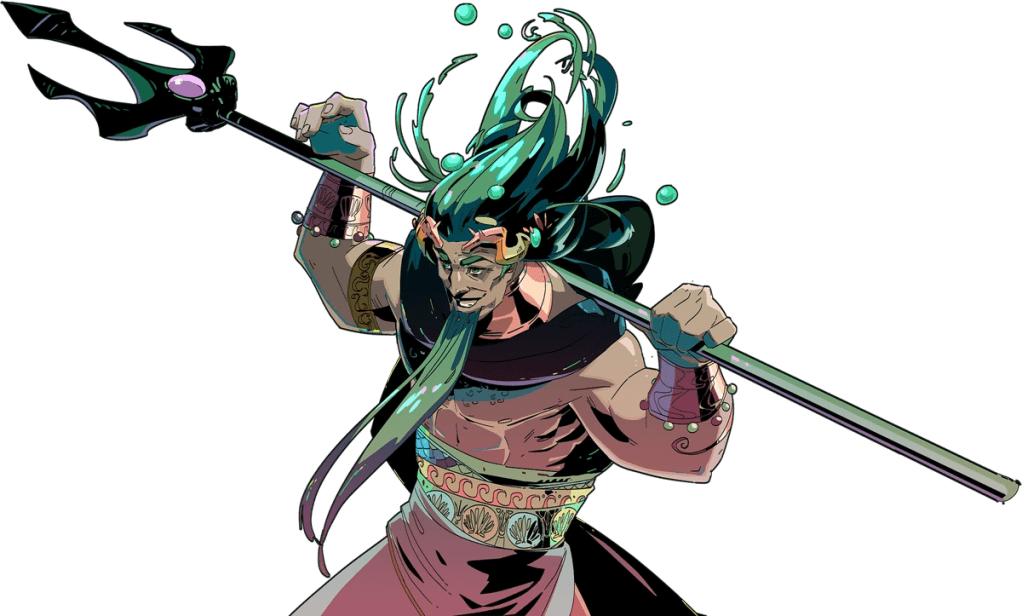
God of the seas and the older of Zagreus’ two uncles, Poseidon is always willing to give his nephew potent boons. His boons grant Zagreus’ moves potent knockback inflicting water effects. Some water attacks can even inflict a status effect called Rupture, which makes foes hit by water attacks take damage for a period of time whenever they move. As for specific boons:
- Tempest Strike: Zagreus’ basic strike is stronger and has watery knockback.
- Tempest Flourish: Zagreus’ weapons’ designated special attack does increased damage and knocks foes back.
- Flood Shot: Zagreus’ cast becomes a shot of water that does increased damage and unleashes a large damaging watery explosion that knocks foes back when it hits its initial target.
- Tidal Dash: Whenever Zagreus dashes, he unleashes a knocking back water explosion wherever his dash stops.
- Boiling Point: Zagreus’ God Gauge charges up noticeably faster whenever he takes damage.
- Hydraulic Might: For the first ten seconds in an encounter, Zagreus’ weapon attacks do significantly more damage.
- Sunken Treasure: A Boon that when obtained gives Zagreus a bunch of healing items, Darkness, and Coins. Not really battle applicable.
- Ocean’s Bounty: Increases the worth of any treasure, Darkness, or coins Zagreus finds.
- Typhoon’s Fury: Zagreus deals way more damage when he slams foes into barriers.
- Wave Pounding: Any Boons that have knockback effects let Zagreus do bonus damage to bosses.
- Rip Current: Poseidon’s call (more on that later) does extra damage and pulls foes into it when they’re nearby.
- Breaking Wave: Whenever a foe is slammed into a barrier, a watery blast is made in the area.
- Razor Shoals: Zagreus’ attacks that have knockback effects makes foes Ruptured for a few seconds.
- Second Wave: Any Boons with knockback effects deal a second push of knockback after the first one.
Athena
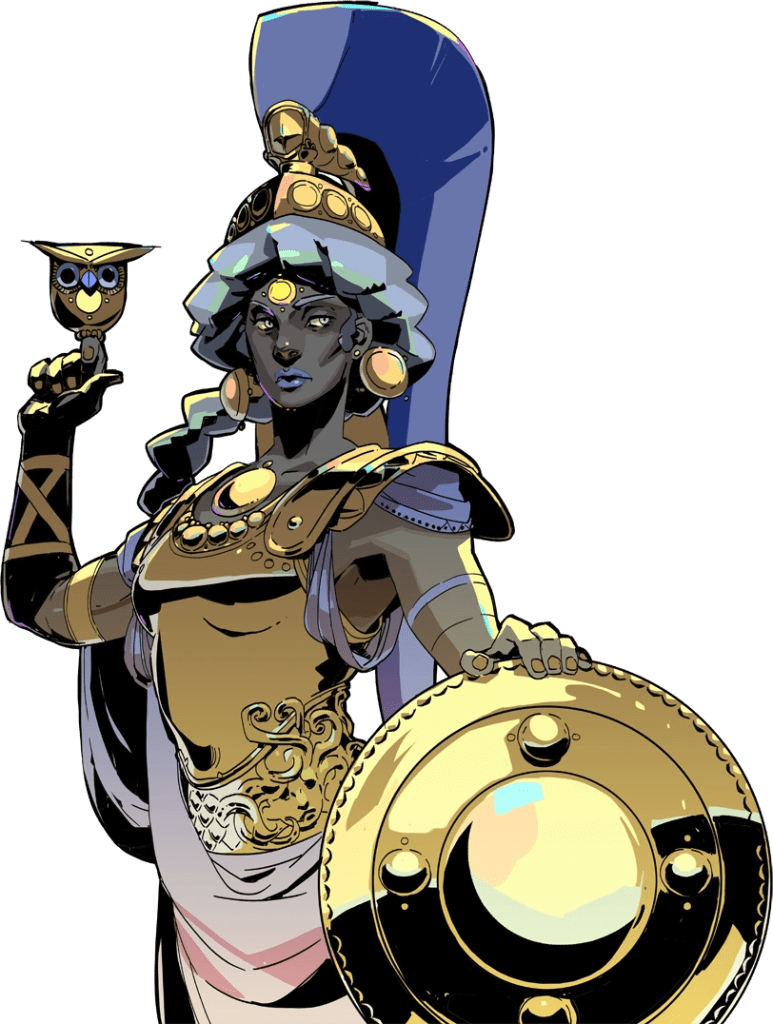
The goddess of wisdom Athena is undoubtedly one of the most potent boon producers. She can add an effect to Zagreus’ moves called Deflect, which does exactly what it says: deflect. As in, deflect any projectiles before they hit Zag, and return them back to sender, though this doesn’t work with continuous laser beam-like attacks. Additionally, some of Athena’s boons can inflict an effect called Exposed, which causes enemies to take additional damage when struck from behind. As for specific boons:
- Divine Strike: Zagreus’ basic strike is stronger and deflects projectiles.
- Divine Flourish: Zagreus’ weapons’ designated special attack does extra damage and deflects projectiles.
- Phalanx Shot: Zagreus’ cast becomes an orb that rapidly picks up speed when fired, deals more damage than a normal cast, and deflects projectiles.
- Divine Dash: Whenever Zagreus dashes, he deflects attacks for the entirety of his dash and damages enemies caught in the way of his dash. Best dash in the game by far, always pick this when you can.
- Holy Shield: Whenever Zagreus takes damage, he damages nearby foes and his body temporarily deflects projectiles.
- Bronze Skin: Zagreus has additional damage reduction, typically ranging between 5 to 12.5%.
- Deathless Stand: Death Defiance makes Zagreus impervious for a few extra seconds after use. If Zagreus is below his current DD cap, he’ll also regain one DD when collecting this Boon.
- Last Stand: Death Defiance restores more HP than usual after use. If Zagreus is below his current DD cap, he’ll also regain one DD when collecting this Boon.
- Proud Bearing: Zagreus starts an encounter with his God Gauge already partially full, typically ranging from 20 to 40%.
- Sure Footing: Zagreus massively reduces the damage he takes from traps such as spike traps or lava.
- Blinding Flash: When an opponent is hit by either a deflecting attack or a deflected projectile, they become Exposed.
- Brilliant Riposte: Deflected attacks deal additional damage to enemies.
- Divine Protection: Zagreus is invulnerable whenever he takes an attack, but he can only nullify one before losing the invulnerability. He has to wait 20 seconds before getting the invincibility back.
Aphrodite
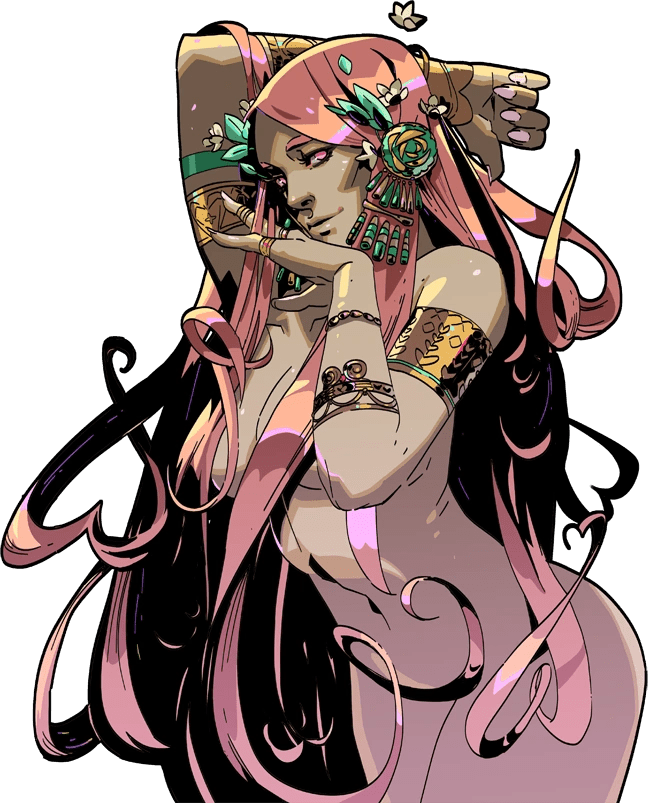
(We apologize to whoever just had someone walk
into the room while reading this blog)
The goddess of love is capable of many things, including giving Zagreus special boons. Her special status effect is Weak, an effect that makes the victim deal at least 30% less damage for at least 4 seconds. She can also cause a rarer status effect called Charm, which causes the victim to fight for Zagreus with slightly enhanced strength and speed for a short period of time, leaving them unaware and vulnerable were Zagreus to choose to attack them in spite of their new obedience. As for specific boons:
- Heartbreak Strike: Zagreus’ basic strike is stronger and inflicts Weak.
- Heartbreak Flourish: Zagreus’ weapons’ designated special attack does more damage and inflicts Weak.
- Crush Shot: Zagreus’ cast attack becomes a short ranged blast that inflicts weak.
- Passion Dash: Zagreus shoots out a blast that damages foes and inflicts Weak whenever he dashes.
- Dying Lament: Whenever a foe is slain, they damage and inflict Weak on nearby foes.
- Wave of Despair: Whenever Zagreus is hit, he damages foes around him and inflicts them with Weak.
- Life Affirmation: Any max health increases Zagreus finds provide more health than normal. Useful, though not in combat.
- Different League: Zagreus has additional damage reduction.
- Empty Inside: The duration of the Weak status effect is increased by at least 5 seconds and up to 12.5 seconds.
- Broken Resolve: Weak decreases enemy attacking power even further.
- Blown Kiss: Zagreus’ Crush Shot has extra range and deals bonus damage to undamaged foes.
- Sweet Surrender: Weak afflicted foes also take more damage than normal.
- Unhealthy Fixation: Any weak inflicting ability of Zagreus’ has a 15% chance to inflict Charm on attacked foes for 4 seconds.
Artemis

The best among the bunch (according to Blue Igneous anyways), the goddess of the hunt specializes in increasing Zagreus’ chance to perform a critical hit with her boons – a critical hit being an attack that deals at least 200% more damage than normal. Additionally, Artemis can provide a status effect called Marked, which greatly increases a foe’s chance to take a critical hit. As for specific boons:
- Deadly Strike: Zagreus’ basic strike is stronger and has an increased chance to deal a critical hit.
- Deadly Flourish: Zagreus’ weapons’ designated special attack does increased damage and has a higher chance of being a critical hit.
- True Shot: Zagreus’ cast becomes a seeking arrow that does extra damage and has a higher chance of being a critical hit.
- Hunter Dash: Whenever Zagreus dashes before landing a hit, his Dash Attack does a lot of extra damage.
- Pressure Points: Any attack Zagreus does has a slightly higher chance to be a critical hit.
- Exit Wounds: Whenever a Blood Stone is dislodged from an enemy, they take damage.
- Clean Kill: Zagreus’ critical hits do even more damage than normal.
- Support Fire: Every hit Zagreus lands on an enemy from any attack he does causes an auto tracking arrow to be fired from his body and seek out enemies. One of the best Boons in the game by the way.
- Hunter’s Mark: Whenever Zagreus hits an enemy with a critical hit, a nearby enemy will become Marked.
- Hide Breaker: Zagreus’ critical hits do a lot more damage to armor than normal.
- Hunter Instinct: Zagreus gains bonus God Gauge charge whenever he lands a critical hit.
- Fully Loaded: Zagreus has two more Blood Stones than normal to use for cast attacks.
Ares
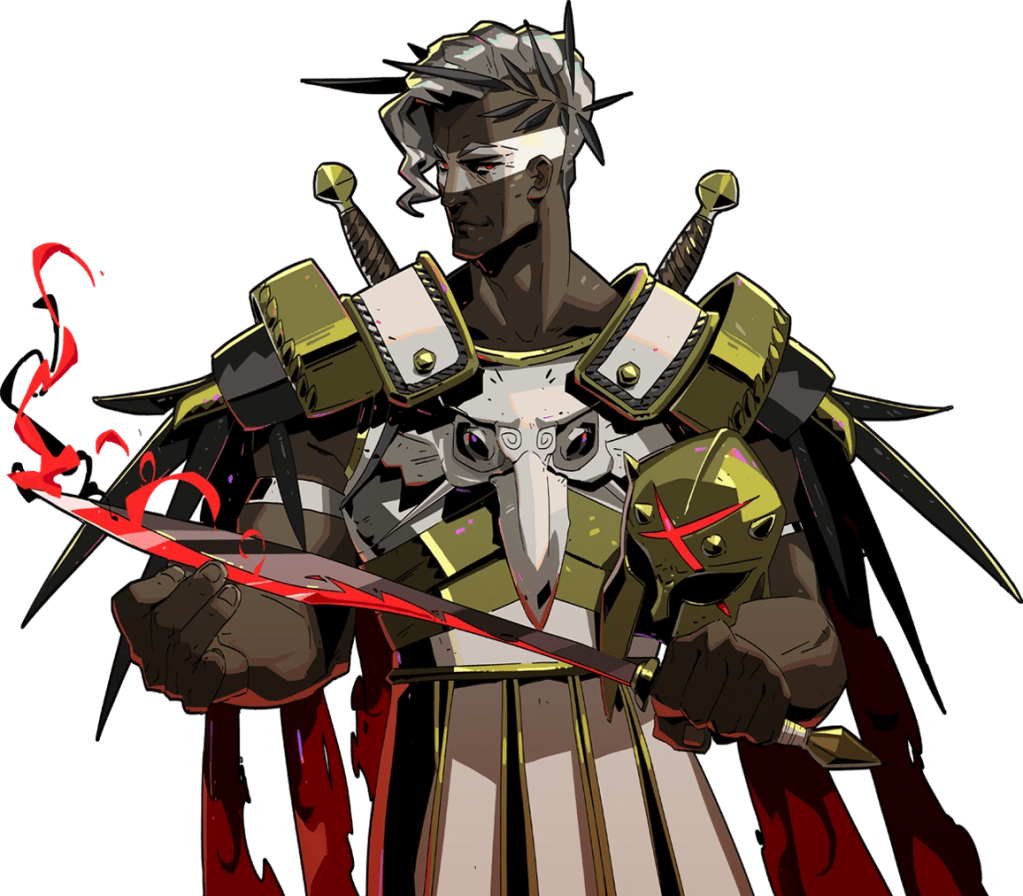
The God of War is a big advocate of the chaos and destruction Zagreus causes, and they play a part in that with their special status effect, Doom. This status effect has the inflicted target take a sudden big burst of damage after a brief moment. As for specific boons:
- Curse of Agony: Zagreus’ basic strike inflicts Doom on whoever it hits.
- Curse of Pain: Zagreus’ weapons’ designated special attack will inflict Doom.
- Slicing Shot: Zagreus’ cast becomes a slow but deadly advancing blade rift that cuts enemies to ribbons for a few seconds before turning back into a Blood Stone.
- Blade Dash: Whenever Zagreus dashes, his point of origin has a spinning blade left behind to cut up enemies before it disappears after a period of time.
- Curse of Vengeance: Whenever Zagreus takes damage, he inflicts Doom on nearby foes.
- Urge to Kill: All of Zagreus’ attacks do extra damage.
- Bloody Frenzy: Zagreus does more damage in an encounter where he uses Death Defiance.
- Battle Rage: After slaying a foe, Zagreus’ next weapon attack does massive bonus damage.
- Black Metal: Zagreus’ blade rift attacks deal damage in a wider area.
- Engulfing Vortex: Zagreus’ blade rift attacks last longer and pull foes into them.
- Dire Misfortune: Doom does slightly more damage per every additional stack of Doom dealt to the enemy.
- Impending Doom: In exchange for taking a half second longer to activate, Zagreus’ Doom effect deals more damage.
- Vicious Cycle: Each hit that a Blade Rift does causes the next hit to deal two additional hit points of damage.
Dionysus
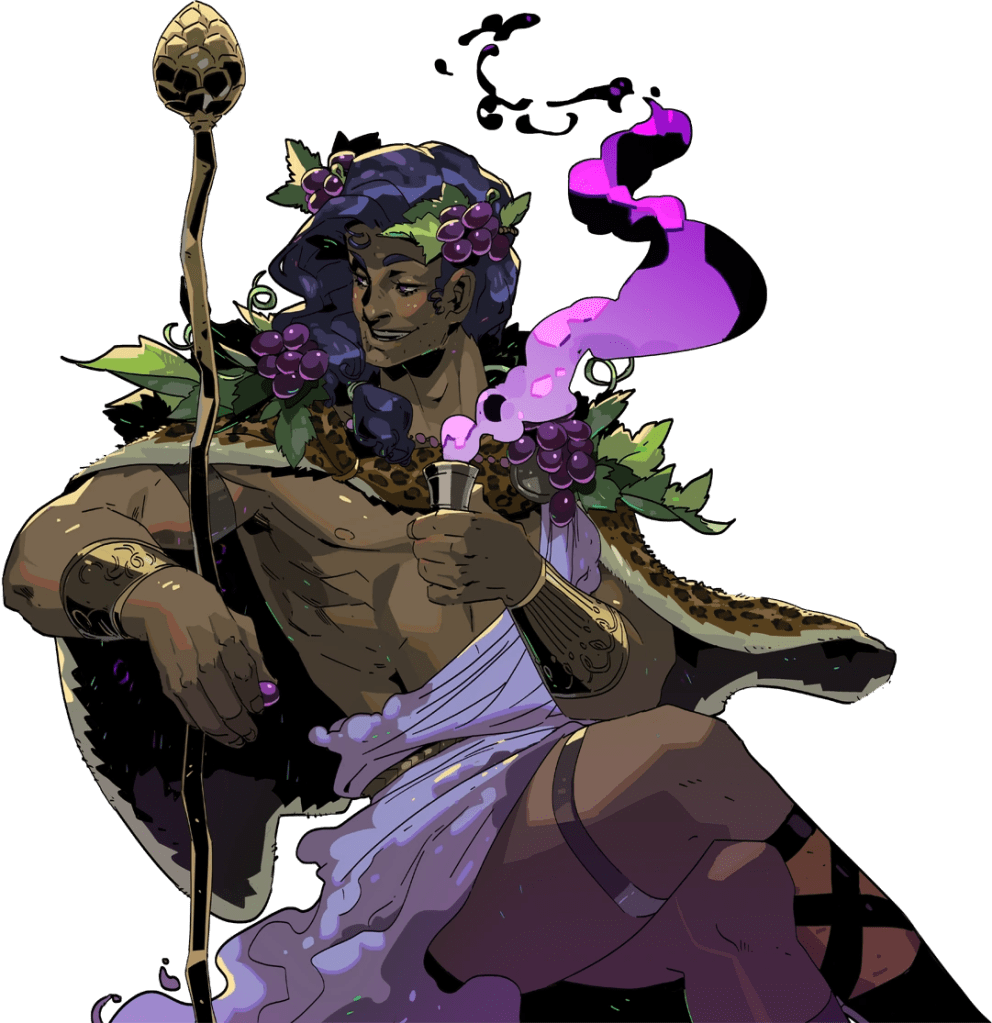
The best party goer in Greece, Dionysus’ boons have a nice taste of wine as his attacks typically inflict Hangover, a status that causes passive damage for 4 seconds, with the effect being able to be stacked up to five times for five times the damage. Zagreus can also use his power to create Festive Fog, a large expansive gas that stuns foes every 0.25 seconds as the gas lasts 5 seconds after being produced. As for specific boons:
- Drunken Strike: Zagreus’ basic attacks will inflict one stack of Hangover per hit.
- Drunken Flourish: When Zagreus hits an opponent with his weapons’ designated special attack, they will gain one stack of Hangover per hit.
- Trippy Shot: Dionysus’ Cast amplifying boon is different in that it makes Zagreus’ cast more of a grenade than a standard projectile. When used, Zagreus will throw the Cast upwards, letting it strike the ground and unleash a gust of Festive Fog on an area. This can be aimed precisely while accounting for how much space the gas will take up.
- Drunken Dash: Wherever Zagreus started his dash, a small wave of Hangover will be spread around, poisoning enemies.
- Premium Vintage: Any Nectar Zagreus finds increases his maximum health. Useful, but not combat applicable.
- After Party: After winning a fight, Zagreus’ health will be restored to a certain threshold. Typically 40% health.
- Strong Drink: When drinking from healing Fountains, Zagreus will gain all health back as well as a permanent damage boost ranging from 2 to 5% depending on the rarity of the Boon. This is notable as Zagreus can drink from up to 7 Fountains before leaving the Underworld.
- Positive Outlook: When below 40% health, Zagreus will have additional damage reduction.
- High Tolerance: Zagreus takes less damage from attacks while standing in Festive Fog.
- Bad Influence: When three or more enemies are inflicted with Hangover, Zagreus does bonus damage.
- Numbing Sensation: When an enemy is inflicted with Hangover, they also move slower.
- Peer Pressure: Enemies with Hangover will inflict it on allies near them every few seconds.
- Black Out: If an enemy has Hangover, they will take 60% more damage when in Festive Fog.
Hermes
The fastest god around, by like, a lot, Hermes is a cherry soul who isn’t as caught up in family drama. Playing off of that funnily enough, his boons are unique in that none of them add bonus effects to Zagreus’ attacks like with the other Gods. Rather, Hermes is focused on specific utility buffs such as:
- Quick Reload: Foes drop Blood Stones stuck in them faster if Zagreus has the Infernal Soul Mirror of Night ability.
- Auto Reload: Zagreus regenerates his lost Blood Stone faster if he has the Stygian Soul Mirror of Night ability.
- Greatest Reflex: Zagreus can Dash more times in a row, up to 4 additional dashes.
- Side Hustle: Zagreus gains bonus coins for every chamber he passes.
- Greater Evasion: Zagreus’ dodge chance is increased by up to 25%, making him more likely to completely avoid attacks.
- Swift Flourish: Zagreus’ weapons’ designated special attack is faster.
- Second Wind: After using a Call, Zagreus gains bonus movement and dodge speed for 10 seconds.
- Swift Strike: Zargeus’ weapons’ primary attacks are faster.
- Greater Haste: Increases Zagreus’ movement speed. The highest rarity version of this call will increase his speed by up to 50%.
- Flurry Cast: Zagreus’ cast speed is greatly increased, and he can shoot out all his Blood Stones consecutively in a quick rush.
- Quick Favor: Zagreus gains bonus God Gauge percentage overtime, with the best rarity offering a 1% increase per half second.
- Quick Recovery: Zagreus can recover up to 50% of the health he lost from an attack by dashing just after taking the attack.
- Hyper Sprint: After finishing a Dash, Zagreus will temporarily gain 100% move speed and become Sturdy (30% damage reduction and fighting game super armor) for up to 0.9 seconds with the highest Boon rarity.
- Rush Delivery: Zagreus deals bonus damage based on a portion of his bonus move speed.
- Greater Recall: As soon as a Bloodstone is dislodged from an enemy hit by Zagreus’ cast, it will instantly float back to Zagreus, meaning he doesn’t have to either wait for them to float back or pick them up manually. He can get this Boon if he has the Infernal Soul Mirror of Night ability.
- Bad News: Zagreus’ cast attack does 50% more damage to foes that don’t have Blood Stones lodged in them. He can get this Boon if he has the Stygian Soul Mirror of Night ability.
Demeter
The mother of Persephone and thus, the grandmother of Zagreus, Demeter’s defining characteristic to those who cross her is how cold she can be – literally. Her special status is Chill. When afflicted with Chill, enemies move and attack 4% slower for 8 seconds, and this effect can be stacked up to 10 times for a 40% speed debuff. As for specific boons:
- Frost Strike: Zagreus’ basic strike is stronger and inflicts one stack of Chill.
- Frost Flourish: Zagreus’ weapons’ designated special attack is stronger and inflicts one stack of Chill.
- Crystal Beam: Zagreus’ cast attack instead spawns a crystal that fires a laser beam-like projectile at enemies. It has automatic but slow tracking, and will initially fire in the direction Zag is looking when he activates the crystal. The crystal will last for roughly five seconds before turning back into a Blood Stone.
- Mistral Dash: Zagreus Dash shoots a gust of mist ahead that damages enemies and inflicts one stack of Chill when it hits them.
- Snow Burst: Whenever Zagreus shoots out a Cast, a gust of cold wind bursts from him, damaging nearby enemies and inflicting Chill.
- Frozen Touch: Whenever Zagreus is hurt, he will release a gust of cold air that does damage and applies ten stacks of Chill to whoever hurt him.
- Rare Crop: A few of Zagreus’ Boons become common rarity and gain increased rarity every few encounters. Useful, but not combat applicable.
- Nourished Soul: Any healing effects Zagreus gets from items is increased significantly.
- Ravenous Will: When Zagreus doesn’t have any Blood Stones, he takes up to 40% less damage and deals more himself.
- Glacial Glare: Crystal Beam fires longer and inflicts Chill with every damage tick.
- Arctic Blast: When an enemy has ten stacks of Chill, the effect is removed through a damaging explosion.
- Killing Freeze: When all foes are Chill afflicted, they are up to 25% slower and take a little damage every 0.5 seconds.
- Winter Harvest: If a foe is at 10% of their health or below and are afflicted with Chill, they will immediately shatter and die, inflicting Chill on nearby enemies. This effect even slays Gods as powerful as Hades once they fall below the health threshold.
Duo Boons
Not edited at all I don’t know what you’re talking about
As rare as it is, Zagreus can occasionally receive Boons that are empowered by not one, but two Olympians. These Duo Boons provide incredibly potent effects, making it clear as to why they are the rarest boons of all. Alongside the family ego of course.
- Lightning Rod: Powered by Zeus and Artemis, any Blood Stones Zagreus leaves lying around will produce lightning around themselves to hurt enemies.
- Vengeful Mood: Given by Zeus and Ares, this Duo Boon makes any of Zagreus’ revenge damage effects apply automatically around himself every 3 seconds.
- Sea Storm: The cooperation of Zeus and Poseidon results in any of Zagreus’ knockback buffed attacks also striking enemies with lightning.
- Cold Fusion: Zeus and Demeter’s combined strength makes the Jolted status effect not disappear when an enemy attacks. Instead, the status effect stays for 10 seconds and will damage enemies whenever they attack during that period.
- Scintillating Feast: Zeus’ lightning amplifies Dionysus’ Festive Fog by having lightning rain down in enemies caught in the mist when it is present.
- Lightning Phalanx: Zeus and his daughter Athena work together to make the Phalanx Shot cast now bounce between up to 3 enemies.
- Smoldering Air: Granted by Zeus and Aphrodite, this Boon makes Zagreus’ God Gauge get 5% charge per second at the cost of capping its max charge to 25%.
- Mirage Shot: Utilizing the power of either Poseidon or Artemis’ cast, they’ll combine their strength to make it so Zagreus’ cast fires a second bonus cast that does about 30% damage when compared to the first shot.
- Blizzard Shot: Demeter’s power added to Poseidon’s Flood Shot cast will make it move slower with the bonus of firing piercing ice shards in all directions while moving.
- Sweet Nectar: The waters of Poseidon and the love of Aphrodite create a Boon that adds a level to any Poms of Power Zagreus finds. This is useful, though not combat applicable.
- Curse of Drowning: Poseidon and Ares’ cooperation cause the Flood Shot cast to instead become a set of 3 pulse blasts that are released from Zagreus’ omnidirectionally.
- Exclusive Access: Combining Poseidon and Dionysus’ power makes any other Boons Zagreus finds at least Epic rarity. Again, not combat applicable, but useful.
- Unshakable Mettle: Poseidon’s tenacity alongside Athena’s will make Zagreus unable to be stunned from attacks, and make him reduce damage from bosses by 10%.
- Deadly Reversal: Athena and Artemis’ intuition provides a Boon that boosts Zagreus’ chance to deal a critical hit by 20% for 2 seconds after deflecting an attack.
- Parting Shot: Athena’s intelligence and Aphrodite’s nature working together makes Zagreus’ cast do bonus damage equivalent to 35% of the damage bonuses he has for striking an enemy from behind.
- Stubborn Roots: Whenever Zagreus is out of Death Defiances, Athena and Demeter’s concentration lets him regenerate 1 hit point every 0.8 seconds.
- Calculated Risk: Athena’s strategy merges with Dionysus… Dionysusness, to make all enemy projectiles 50% slower automatically.
- Merciful End: Through the power of Athena and Ares, any enemy that is inflicted with Doom will have that effect happen immediately if hit by an attack that Deflects.
- Curse of Longing: Aphrodite and Ares’ passion combines to make it so that when a foe has both Doom and Weak, the Doom status effect does half damage in exchange for doing continuous strikes until the Weak status effect runs out.
- Low Tolerance: Dionysus’ Hangover effects can stack up to 3 more times than normal against foes inflicted with Aphrodite’s Weak status effect.
- Heart Rend: Enemies inflicted with Aphrodite’s Weak status effect allow Artemis’ critical hits to do 150% more damage than normal.
- Cold Embrace: The Crystal Beam cast Zagreus gets from Demeter auto targets Zagreus (without damaging him of course) while doing 30% more damage than normal, allowing Zag to move the beams around the battlefield.
- Hunting Blades: Ares’ Blade Rift cast now spins faster and seeks the nearest foe for 3.3 seconds thanks to Artemis’ accuracy.
- Crystal Clarity: Artemis’ skill lets Demeter’s Crystal Beam cast track foes more effectively while doing 10% more damage than normal.
- Splitting Headache: If a foe is inflicted with Dionysus’ Hangover status effect, Artemis’ power makes them 1.5% more likely to take a critical hit per stack of Hangover inflicted.
- Curse of Nausea: Ares’ fury and Dionysus’ levity combine to make a Boon that increases Hangover’s damage rate by making it take 7/10ths of the time for a damage tick.
- Freezing Vortex: At the cost of making Ares’ blade rifts 15% smaller and slightly slower, each cut they deal inflicts enemies with a stack of Demeter’s Chill status effect.
- Ice Wine: The initial blast created by Trippy Shot is 30% stronger, and also inflicts Chill overtime.
Chaos

The being that existed before all things, and is all things, Chaos. They do not seek Zagreus directly, but rather Zagreus enters their realm to receive their boons. They initially provide negative effects, but after a few chambers will provide incredibly potent buffs, such as:
- Assault: If Zagreus has the Fiery Presence ability from the Mirror of Night, he’ll deal extra damage striking undamaged foes.
- Grasp: Zagreus gains an additional Blood Stone for the rest of his escape attempt.
- Ambush: Zagreus deals a lot of bonus damage striking enemies from behind.
- Favor: Boons from Gods have an increased chance to be Rare rarity or better. Not very useful mid fight unfortunately.
- Lunge: Zagreus’ Dash-Strike deals bonus damage.
- Soul: Zagreus’ max health is higher.
- Strike: Zagreus’ primary attack is stronger.
- Eclipse: Zagreus gains more Darkness and Treasure than usual during his escape. Not very useful mid fight unfortunately.
- Affluence: Zagreus gains more Coins than usual during his escape. Not very useful mid fight unfortunately.
- Shot: Zagreus’ cast deals more damage.
- Flourish: Zagreus’ weapons’ designated special attack does more damage.
- Defiance: For Zagreus’ current escape attempt, he gains an additional use of Death Defiance. This raises his maximum number of Defiances to 4, unlike other Boons which simply restore lost Death Defiance slots.
Calls

Zagreus is not just limited to fractions of the power of the Gods. Specific Boons can give him an ability called, well, a Call, that directly calls for aid from the Olympians. These Calls are powered by filling up his God Gauge, which charges whenever Zagreus takes or deals damage. For every 25% charge his God Gauge has, Zagreus can use a Call. If it is fully charged however, Zagreus can access a Greater Call, which has far greater power compared to a 25% Call.
- Zeus’ Aid: By calling on Zeus’ power, Zagreus can cause lightning to constantly fall around him to damage enemies for 1.5 seconds with 25% usages. It’ll have a 9 second duration when 100% charge is used.
- Poseidon’s Aid: Poseidon’s power envelops Zagreus in water, making him impervious as he charges through enemies in the form of a Zagreus-shaped tidal wave for 1.2 seconds. At 100% charge, he’ll charge for over 7 seconds.
- Athena’s Aid: Athena’s power will make Zagreus completely invulnerable and automatically deflect any projectiles that touch him for a few seconds. 100% charge will increase this super state’s duration by six times, with higher level variations being able to go for well over 10 seconds.
- Aphrodite’s Aid: The standard version of Aphrodite’s Call is unique in that it doesn’t do damage to enemies. Instead, it fires a magic tracking arrow that will inflict an enemy with Charm for a few seconds. The 100% charge version will cause the arrow to do massive damage in addition to the status effect.
- Artemis’ Aid: By using Artemis’ power, Zagreus can shoot a powerful auto tracking arrow at an enemy that has notably high critical hit chance. At 100% charge, Zagreus doesn’t fire four arrows, or six, no, he fires a whopping TEN at once.
- Ares’ Aid: With Ares’ power, Zagreus turns into an impervious undamageable blade rift capable of tearing enemies to shreds for a few seconds. 100% charge will increase the duration immensely.
- Dionysus’ Aid: Dionysus’ Hangover effect is inflicted on all foes around Zagreus for a few seconds. 100% God Gauge multiplies the duration of this by six times.
- Demeter’s Aid: Demeter’s power lets Zagreus create an expanding freezing vortex of cold, which damages foes while inflicting Chill overtime for a few seconds. 100% God Gauge lets the vortex last significantly longer, meaning it can expand to a larger size and deal more damage.
- Hades’ Aid: The Call Zagreus gets access thanks to carrying the Sigil of the Dead keepsake. Hades’ Aid, unlike other Gods, requires half of Zagreus’ God Gauge to activate the weaker variation.
- At 50% God Gauge, it will make Zagreus completely invisible and undetectable for 2 seconds, alongside making him faster. While invisible, Zagreus will move 50% faster and deal 100% more damage. The effect will go away after those 2 seconds or after Zagreus lands an attack. Said attack also gains a small damage boost compared to a normal one.
- Alternatively, if Zagreus uses the Call when his God Gauge is at 100%, he gains the “Unseen” status instead of invisibility. This status (in addition to existing benefits of the 50% version) temporarily makes Zagreus invulnerable to the effect of status effects, makes him intangible, lasts 5 seconds instead of 2, and does not go away when Zagreus lands an attack – showing off Hades’ full power through the violence performed by his son.
Fourth Wall Interaction
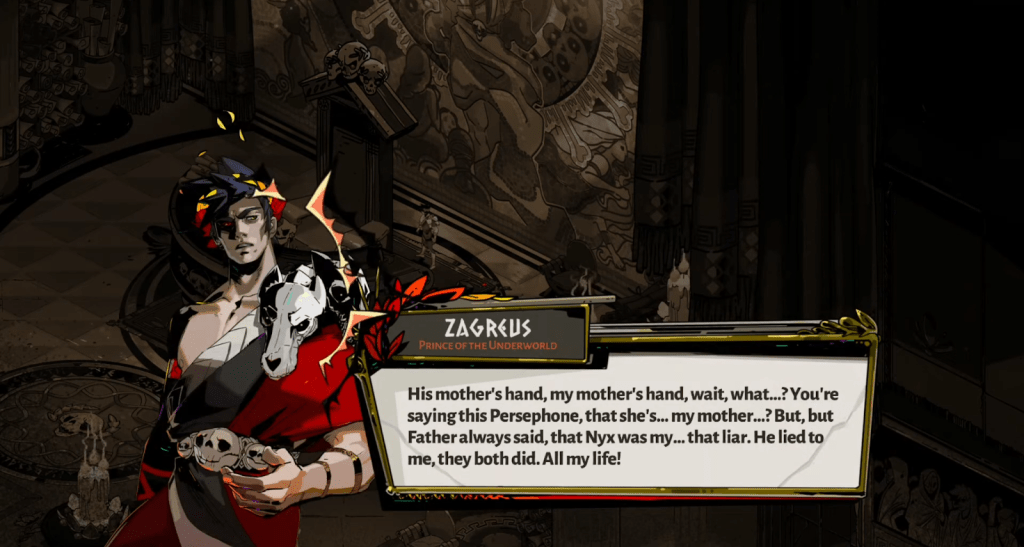
Zagreus possesses the weird trait of being able to hear the narrator of the game, for some reason. This is mostly used for jokes, though it was also how Zagreus found out Persephone was his mother (mfw he got spoiled on his own lore), so it’s an actual detail and not just some out-of-place running gag.
Resistances
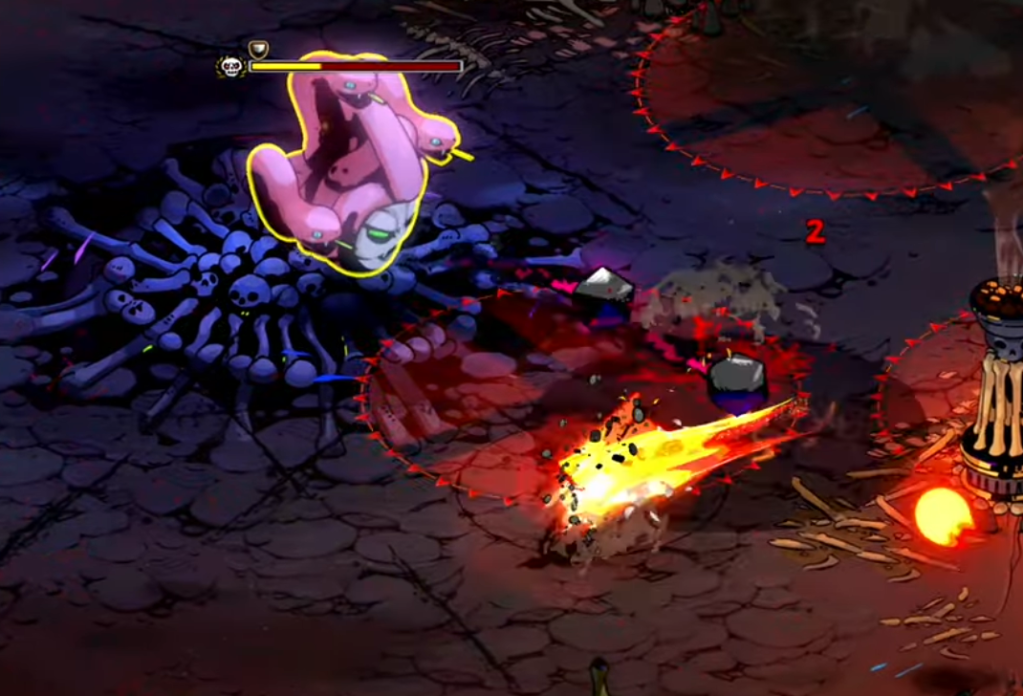
- Age: As mentioned before, Zagreus’ immortality makes him incapable of aging
- Extreme Heat: Zagreus can take all sorts of fire and laser attacks, and notably is stated to be heat resistant. Though, he is not heat proof, and can only slightly withstand the superheated River Phlegethon rather than endure it completely
- Extreme Cold: Can take attacks from Demeter’s freezing winds just fine
- Electricity: Can take attacks from Zeus’ lightning just fine
- Petrification: As shown above, while he is initially susceptible to it, Zagreus is capable of breaking out of being turned to stone by Gorgons
- Transmutation: Able to resist the effects of Twilight Curse, which turns those hit by it into animals
- Emphatic Manipulation: Zagreus can immediately break out of Aphrodite’s Charm effect being used against him
- Soul Attacks: Zagreus can withstand hits from Soul Catchers and their “soul-sucking butterflies”, and even if killed by them, still goes back to the House of Hades without issue
- Poison Manipulation: While it does damage him, Zagreus can withstand the deadly poison of the satyrs
Feats
Percy Jackson
Overall

- Best swordsman in 300 years
- Widely considered to be the strongest living demigod
- Fought and/or defeated:
- Monsters: Alecto, Minotaur, Medusa, Echidna, Chimera, Procrustes, Laistrygonian Giants, Colchis Bulls, Stymphalian Birds, Charybdis, Scylla, Hydra, Polyphemus, Dr. Thorn, Nemean Lion, Erymanthian Boar, Talos, Empousa, Kampê, Stheno, Euryale, Arachne, Maeonian Drakon, Nosoi
- Demigods: Clarisse, Luke, Thalia, Phineas, Jason, Chrysaor
- Magicians: Carter, Setne
- Gods & Goddesses: Ares, Circe, Hades, Phorcys, Keto, Elisson, Geras
- Titans: Atlas, Hyperion, Iapetus, Kronos
- Giants: Geryon, Antaeus, Polybotes, Otis, Clytius, Ephialtes
- Protogenos (Primordials): Akhlys, Nyx, Tartarus
- Endured a trek through Tartarus alongside Annabeth Chase
- Survived submersion in the Rivers Styx, Lethe, and Cocytus
- Halted Kronos’ attempt to raze Olympus and destroy the world
- Helped put a stop to Gaia’s attempt to… also destroy the world
- Somehow managed to graduate high school and make it into New Rome University
Strength
- Broke off one of the Minotaur’s horns and then killed him with it
- Pierced through Ares’ heel and made him bleed, when he was only 12 years old
- Temporarily took up Atlas’ celestial burden, bearing the weight of the sky long enough for Artemis to trick Atlas back into it
- Called upon the power of the sea within Mt. St. Helens, causing a volcanic eruption (24 megatons of TNT)
- With the Curse of Achilles, deflected a blast from Hades and then pinned him down
- With the Curse of Achilles, created his own personal hurricane by accident to overwhelm Hyperion
- Hazel compared Nico and Percy to two nuclear bombs
- Hazel claimed that until meeting Percy, Nico was the strongest demigod she knew, possibly including even Jason, but that Percy now holds that spot
- Hazel also compares Percy’s aura of power to that of a god
- Conjured a wave taller than Hubbard Glacier, and then destroyed the glacier (65.2 kilotons of TNT)
- Killed Polybotes, a giant who was born for the purpose of killing Poseidon
- Clashed with Jason with enough force to shake the pavement around them
- Stated by Nico to be the most powerful demigod he’s ever met
- Leapt several hundred yards forward
- While underwater, overpowered Setne while Setne had the Crown of Ptolemy
- Lifted millions of metric tons of water, frightening the river god Elisson with his power
Speed
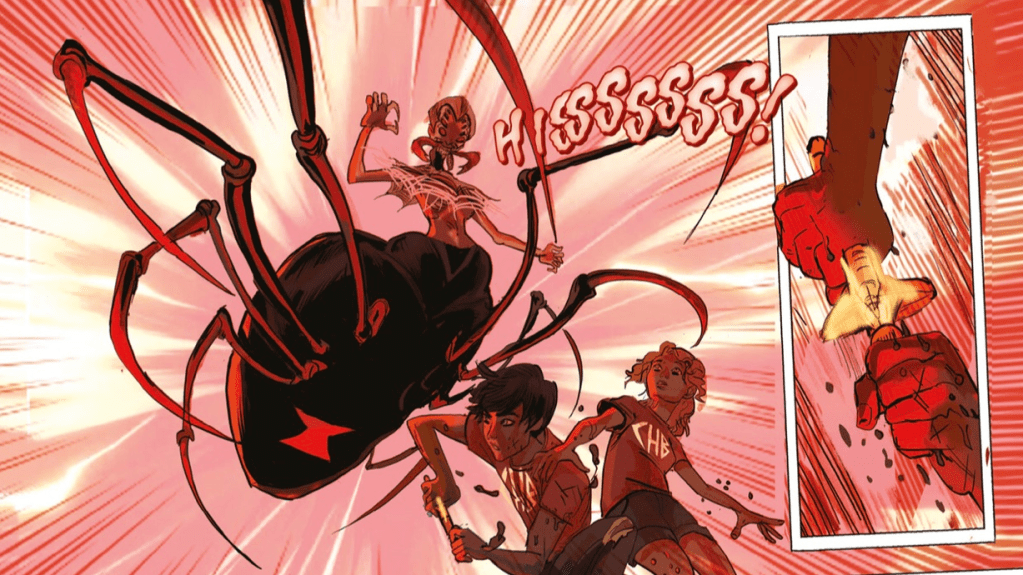
- Kept up with the speed of Grover’s flying shoes, which were fast enough to reach the deepest parts of Tartarus in moments. Tartarus is so deep that it takes nine days to fall into it. (1.4% speed of light)
- Capable of reacting while being transported by Poseidon’s magic pearls, which carried him from the Underworld to the surface within a few moments. The Underworld is 2310 miles below ground. (Mach 3612.8)
- Fast enough to keep up with Ares in sword combat as a 12-year-old
- Dodged dodgeballs thrown by Laistrygonian giants which were stated to be moving at the speed of sound
- Saw a bullet in slow motion, feeling its path like currents in the ocean before deflecting it
- With the Curse of Achilles, blitzed an army of Roman legionaries and British redcoats, cutting them up before he himself even realized what happened; subsequently also blitzed Hades
- Clashed with Jason so fast that Piper saw their strikes as a blur
- Oneshot Arachne so quickly that Annabeth was shocked by his speed
Durability
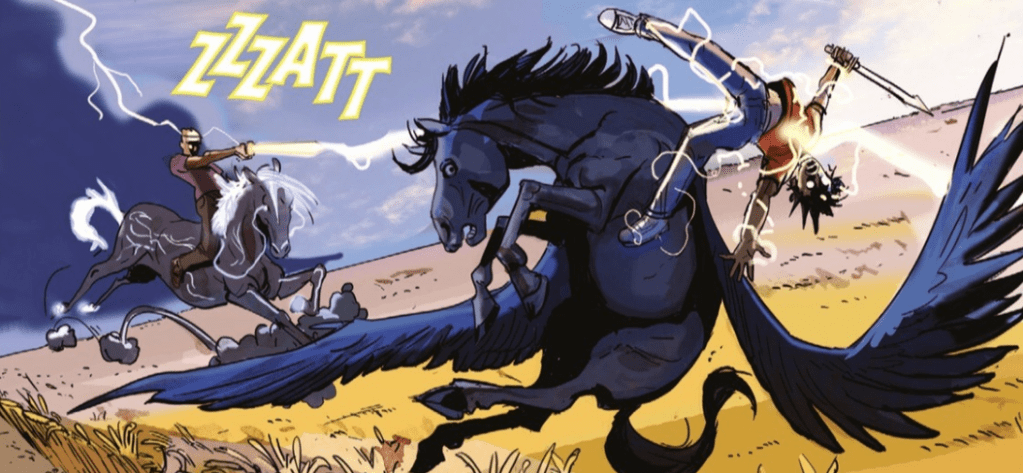
- Survived being electrocuted by Clarisse’s spear
- Tanked a lightning-charged spear strike from Thalia
- Endured the weight of the sky, which caused him agony so great it felt as though all his muscles turned to fire and his bones started melting
- Survived Mt. St. Helens erupting on top of him, and being directly subjected to its lava (24 megatons of TNT)
- Endured the agony of bathing in the River Styx, which was compared to jumping into a pit of boiling acid times 50
- Withstood a blast of energy that he compared to a nuclear explosion, though it did harm him even despite the Curse of Achilles
- Survived a blast of Jason’s lightning
- Survived a 300-foot fall
- Endured a nine-day fall into Tartarus, followed by a torturous trek through Tartarus that lasted for days
Zagreus
Overall
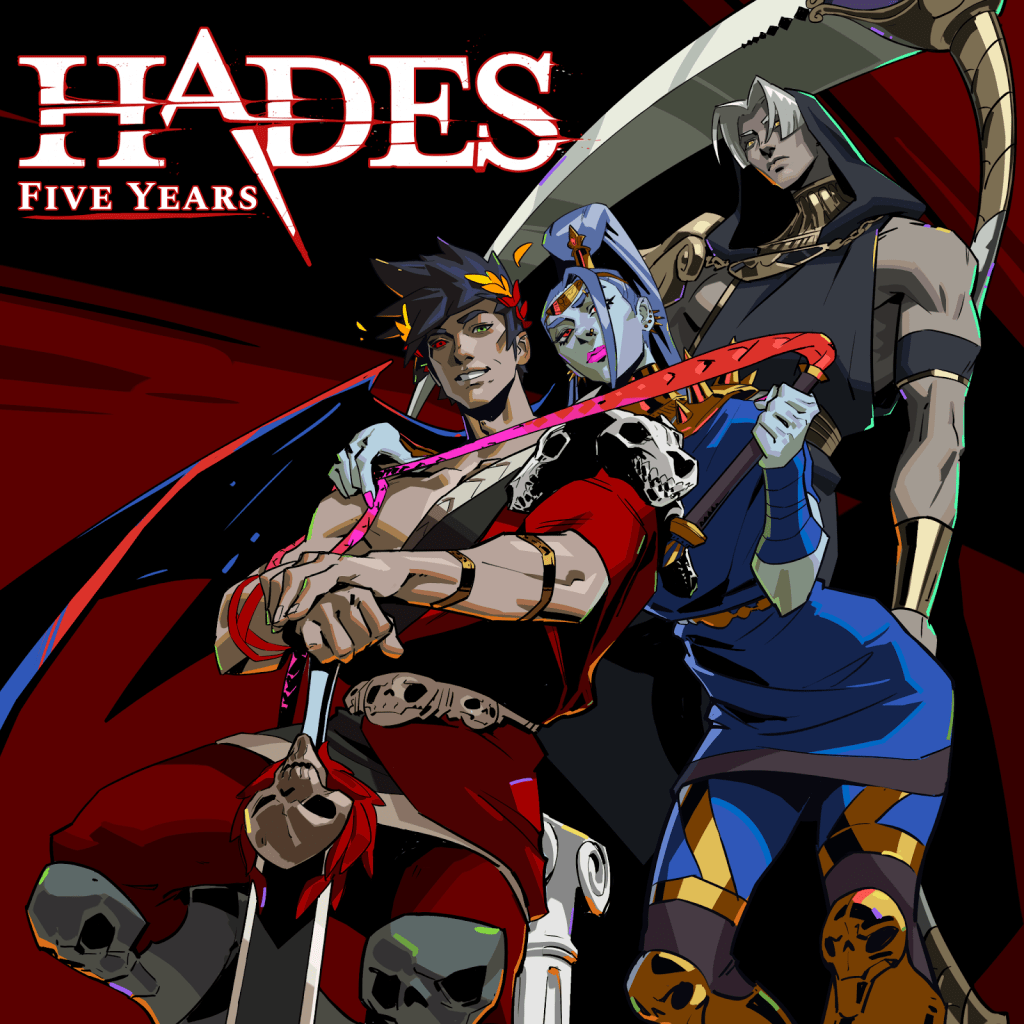
- Escaped the Underworld and reached the surface, reuniting with his mother
- Surpassed Achilles in skill
- Completed the Fated List of Minor Prophecies, catching up with the design of the Three Sisters of Fate and their weaving
- Helped break the fear of knowledge of Persephone’s existence, bringing the gods together
- Assisted Melinoë in stopping the war with Chronos
- Defeated every Underworld monster, the Fury Sisters, the variations of the Bone Hydra, the Bull of Minos Asterius, Theseus, the King Vermin, Charon, and Hades
- In a cool as fuck polycule relationship
Strength
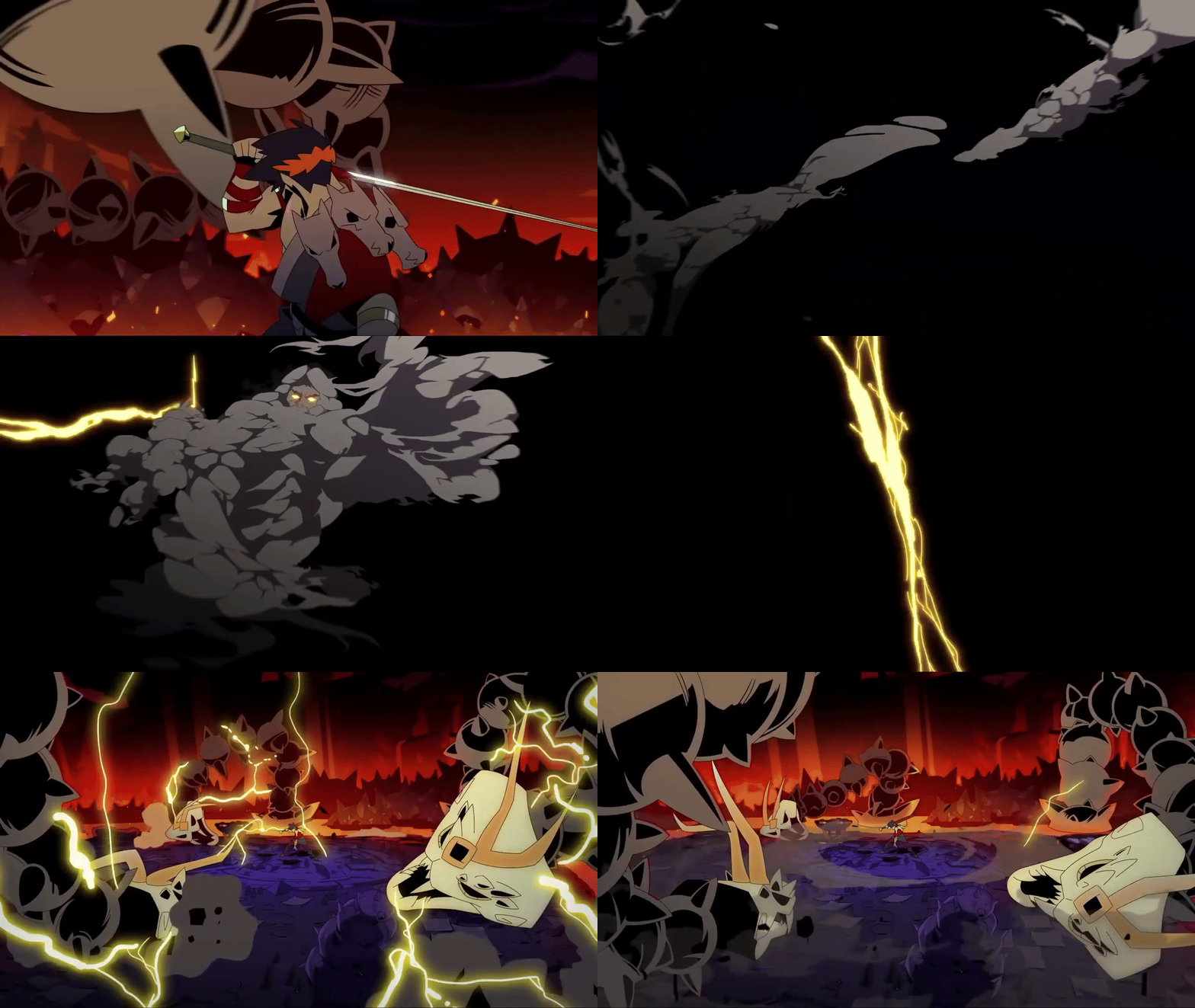
- Cracks the ground by landing upon beginning his escape attempt
- Destroys multiple pots at once (HIYAH)
- Several of his weapons can break down stone pillars in a few attacks
- Destroys a bone-like structure
- Breaks the bronze-plated Macedonian Tau-Lambda, the most durable chariot created to date
- Hades implies that Stygius in Zagreus’ hands is much better with it than when Poseidon wielded it
- Coronacht was used to drive back the Titans
- Malphon pulverized Hyperion, a Titan
- Exagryph’s power is so great that the gods sealed it away
- Varatha is nearly as impressive as Poseidon’s own trident
Speed
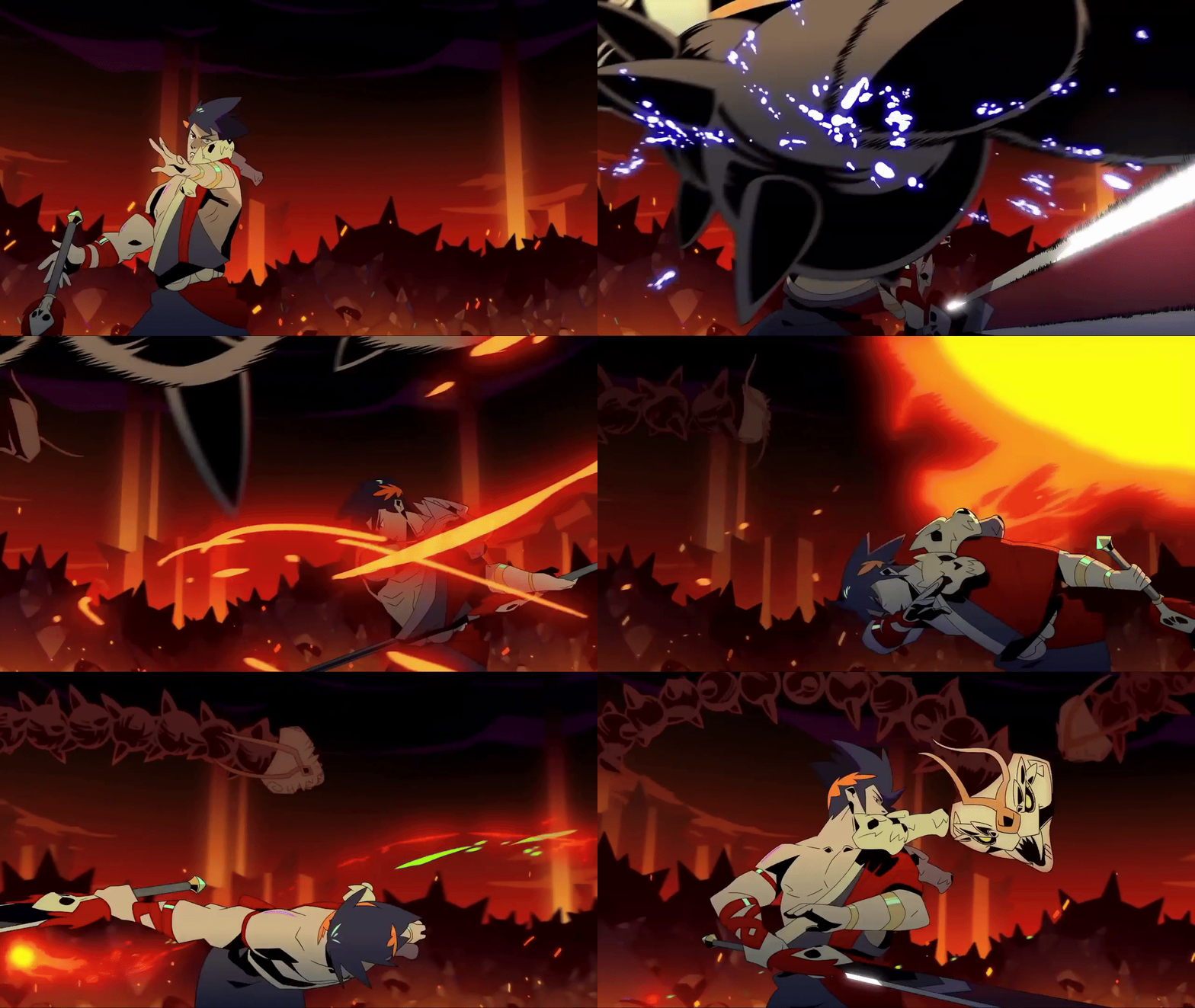
- Someone cleared the game in 5:04 those speedruns go crazy
- Dashes in tandem with explosions
- Can move in tandem with Coronacht’s arrow shots
- Hermes’ Boons make it so Thanatos can barely keep up with Zagreus
- Several weapons or Boons, like the Crystal Beam and Aspect of Lucifer for Exagryph, fire lasers at the speed of light (See Before The Verdict)
Durability
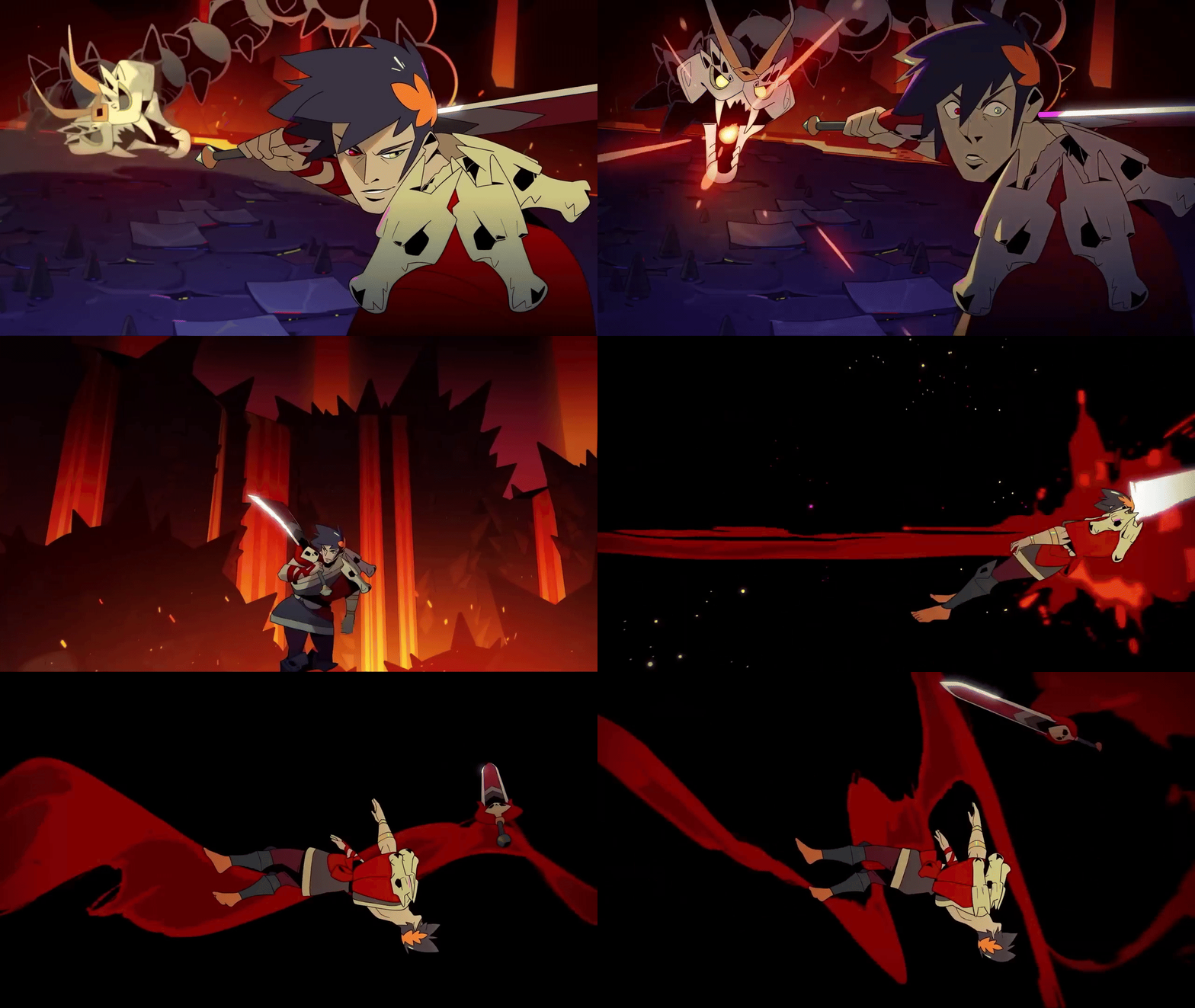
(Ignore that he kind of died here)
- Can survive attacks from the Olympians when they’re angry and trying to kill him, including from Zeus and Demeter
- Withstands a stone structure falling on him
- Can stand in Asphodel flames for a time
- Survives a magma ball attack
- Withstood close proximity to a bomb that broke down part of a pillar
- Withstands a hit that breaks a steel structure
- Survives several laser attacks, including the Snakestone beams, noted to be hot enough to burn flesh
Scaling
Percy Jackson
Greek Demigods

Percy has been stated independently by both Nico and Hazel to be the most powerful demigod they’ve ever met, with Nico being familiar with both the Greek and Roman camps, and Hazel being (at the time) familiar with just the Roman. Interestingly, despite Jason being portrayed as essentially the Roman equivalent of Percy for his camp, Hazel claims that Nico is second strongest behind Percy among the demigods she knows, rather than Jason. This claim is corroborated by Jason later on, who admits that he doesn’t think he could handle Nico in a fight. This makes Nico’s statement about Percy being the strongest much more compelling, and although Nico is undoubtedly biased toward Percy, his feats generally back up the statement as well. With this in mind, Percy should be stronger than every known Greek demigod of the modern era, with perhaps one strange exception that will be covered in more detail under the “Before the Verdict” section.
- Luke and Annabeth were both able to bear the weight of the sky (43.9 teratons of TNT – 216.1 teratons of TNT – 3.45 petatons of TNT)
- Nico as an untrained 10-year-old split open the earth all the way down to the Underworld, and erupted fire from the resulting 20 foot wide hole (43.3 kilotons of TNT – 11.2 gigatons of TNT)
- Nico was described to move with the speed of lightning by omniscient narration (Mach 524.8)
- Thalia’s lightning turned a Laistrygonian giant to ashes
- Piper and Annabeth harmed and killed Mimas, who was born to kill Hephaestus and required two gods to take down
- Piper was able to harm Enceladus, stabbing into his head
- Leo’s fire combined with Octavian’s onager blast atomized a weakened Gaea, creating a blast that was a quarter mile in radius (1 gigaton of TNT per contributor)
- Will Solace emitted the brightness and energy of a thousand suns, and then channeled it into Nico, causing him to burn like a red giant ready to explode (See Before the Verdict)
- Will was able to harm Nyx with his light beam (See Before the Verdict)
- Meg sliced an arrow out of the air
- Daedalus’ death caused the collapse of the continent-sized labyrinth, and an earthquake that could be felt across the U.S.
- Sherman Yang’s expression changed in a microsecond (See Before the Verdict)
Roman Demigods
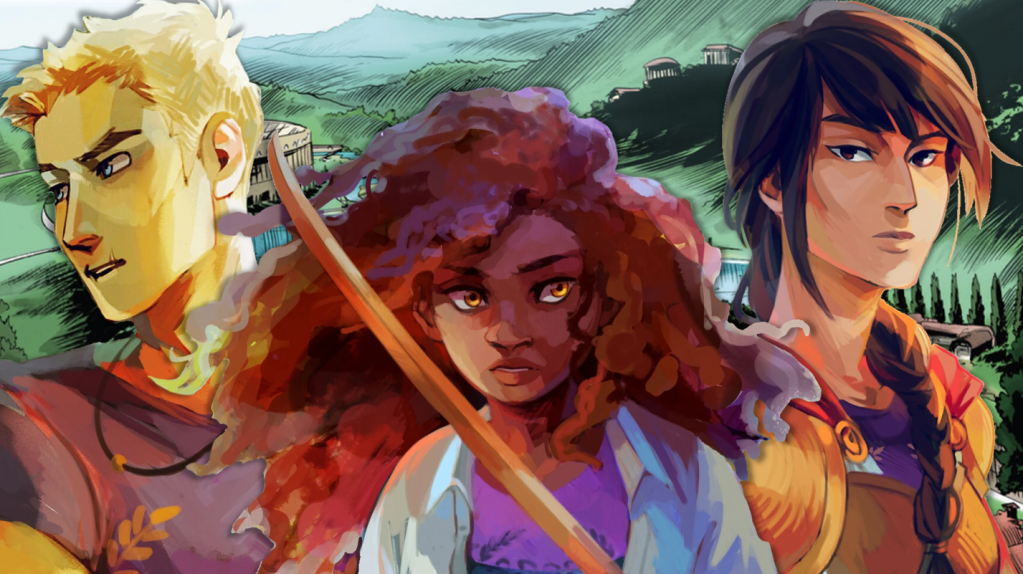
As with the Greek demigods, the Roman demigods of Camp Jupiter would be included under Nico’s statement, and corroborated by Hazel’s, as both Nico and Hazel are closely familiar with all contemporary Roman demigods. Jason, undoubtedly the strongest Roman demigod of the modern era, admitted inferiority to Nico who in turn admitted inferiority to Percy. With this in mind there are no Roman demigods whom Percy does not exceed.
- The destruction of Jason’s weapon produced a crater 30 feet deep
- Jason tanked a lightning bolt from Zeus that split Mt. Diablo in half
- Jason killed the Titan Krios with his own hands after fighting him hand-to-hand
- Jason was able to make Porphyrion bleed, albeit he was not yet at his full strength
- Jason survived the energy release/explosion of Hera’s true form
- Jason semi-killed Achelous, a river god and rival of Hercules
- Jason was able to harm Porphyrion
- Jason and Frank flew fast enough to outspeed the Argo II’s movement after Zeus smacked it from Athens to Long Island (Mach 389.3)
- In the past, Hazel caused an earthquake that sunk an entire island, delaying Alcyoneus’ revival (219 kilotons of TNT)
- Hecate says that Hazel is just as formidable as Hercules or Dionysus were as demigods
- Hylla caught an arrow from Orion
Monsters & Creatures

Percy has fought numerous monsters throughout the series, including those strong enough to rival gods. No random foe should be beyond his capabilities, not even fearsome sea creatures like Scylla or Hundred-Handed Ones like Briares. He can easily react to his own pegasus Blackjack’s speed, and is comparable if not outright superior to Hazel, who can react and fight while being transported at immense speeds by her horse, Arion. He is far beyond wind nymphs like Millie and satyrs like Coach Hedge, and easily comparable to random non-combatants like the taxi-driving Grey Sisters, and the ram Chrysomallos, from whom the Golden Fleece came.
- Scylla attacks “quick as lightning” (Mach 524.8) (See Before the Verdict)
- Scylla’s speed is compared to that of a laser beam (Possibly 1c) (See Before the Verdict)
- Zeus’ angel statues flew from the Sierras to San Francisco in a few hours
- The Hundred-Handed Ones are strong enough to break mountains
- Blackjack was stated to swoop in “as fast as light” (Possibly 1c) (See Before the Verdict)
- Blackjack flew from Long Island to Kansas quickly
- Pegasi flew from the Grand Canyon to Long Island quickly
- Mellie, a wind nymph, shot several demigods from Pikes Peak to Walnut Creek, California quickly (Mach 144)
- Mellie ponders within microseconds (See Before the Verdict)
- Hazel’s horse, Arion, is able to move “faster than forked lighting” (>Mach 524.8) (See Before the Verdict)
- Arion moved so fast that sunlight bent around him
- Arion bends time and space as he runs, though is stated to be moving at just a little over the speed of sound (???)
- Arion is stated to be “lightning-fast” (Mach 524.8) (See Before the Verdict)
- Coach Hedge reacted within microseconds (See Before the Verdict)
- Chrysomallos’ spirit became the Aries constellation (See Before the Verdict)
- The Grey Sisters’ taxi moves at lightspeed (Possibly 1c) (See Before the Verdict)
Egyptian Magicians
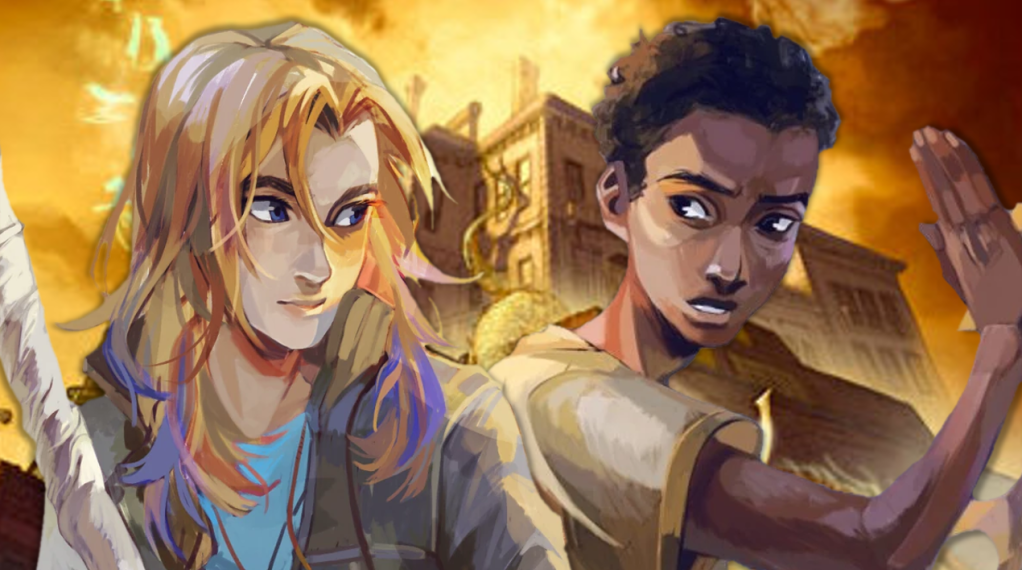
Percy has done battle with heroes from other pantheons, most notably the magician Carter Kane, who draws his power from Egyptian deities. Carter is tied with his sister Sadie and only inferior to his Uncle Amos among the top three magicians of the House of Life, making him one of the three strongest magicians in the entire world. Despite this, Percy overpowered him utterly in their fight, proving the superiority of the Greek side over the Egyptian when it comes to power, and placing Percy altogether beyond the various magicians of the Kane Chronicles books. Percy was also able to overpower the magician Setne while he had the Crown of Ptolomy.
- Even without Horus’ help, Carter was able to deflect lightning with his crook
- Carter reacted in a microsecond (See Before the Verdict)
- Zia Rashid reacted to a beam of light from less than 20 feet away (16.4% speed of light)
- Walt Stone/Anubis deflected lightning from Kwai with his staff
- Setne conjured a hurricane (143.4 kilotons of TNT per second)
- Sarah Jacobi caused a tsunami that killed more than a quarter of a million people
- Sarah Jacobi threw a blade “quick as light”(Possibly 1c)(See Before the Verdict)
Norse Demigods
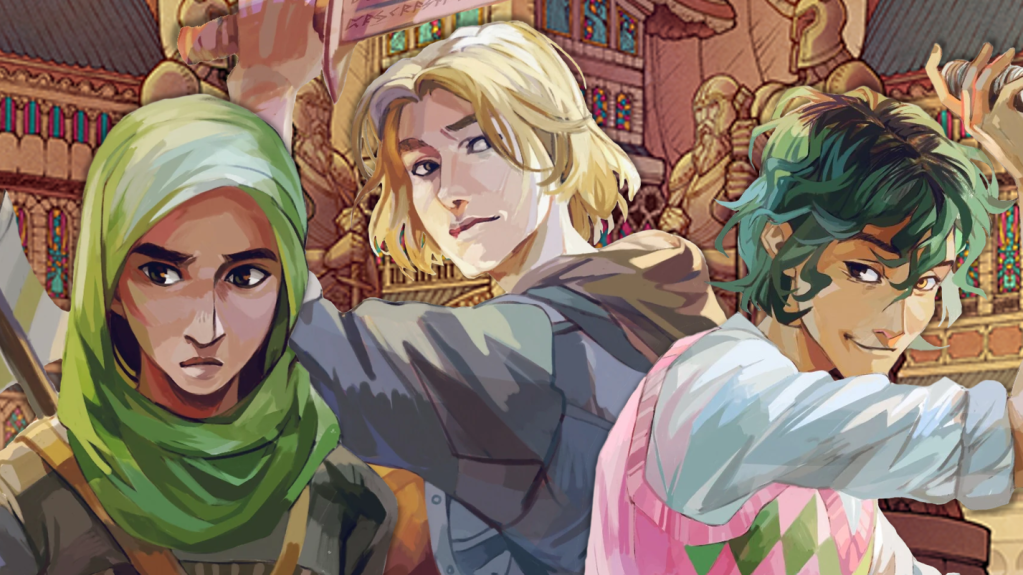
While the scaling here is a bit more tenuous than it is for the Egyptian side of things, Percy has also rubbed elbows with the demigod children of Norse deities, primarily Magnus Chase. It’s currently unclear how the Norse gods compare to the Greek outside of a statement that both Zeus and Odin claim to be the strongest being in the universe, thus no godly feats will be included here. However, it is worth noting that Magnus and Annabeth have compared notes from their adventures, and Magnus has admitted that Percy’s adventures are “more dangerous” than his own, on top of the fact that Percy spent some time training Magnus, albeit not so much in direct combat. Based on these implications it’s likely that Percy is stronger than Magnus and his Norse contemporaries, so it’s worth bringing up feats that such demigods have performed.
- Magnus reacted in a microsecond (See Before the Verdict)
- Jack (the Sword of Summer) killed a giantess, and she caused a 6.8 Richter magnitude earthquake just by falling over
Giants
Throughout the Heroes of Olympus books, Percy and his fellow demigods repeatedly do battle with the giants, a race of beings who serve the Earth Mother, Gaea. Each of the giants was created for the specific purpose of killing one of the Olympian gods, making them all god-level beings at full power. And demigods have kicked their asses over and over. Percy himself directly defeated Polybotes, who was born to destroy Poseidon, overcame Otis, one of the twins built for Dionysus, and jumped Clytius alongside the rest of the Seven, who was designed for Hecate.
Other demigods have similarly proved their mettle against the giants. Jason has defeated Enceladus (created to kill Athena). Hazel and Frank together were able to defeat Alcyoneus (created to kill Hades), harming and even overpowering him. Piper and Annabeth, undoubtedly the two physically weakest of the Seven, were both able to harm and kill Mimas, who was born to kill Hephaestus and previously required two gods to take down.
At the end of Heroes of Olympus, all the giants came back and the demigods worked together with their parents to destroy them once and for all. Athena and Annabeth teamed up to defeat Enceladus. Frank and Ares teamed up to defeat multiple giants. Hazel, Hecate and Hades teamed up to defeat Alcyoneus. Percy and Poseidon teamed up to defeat Ephialtes and Otis. Piper and Aphrodite teamed up to defeat Periboia (born to kill Aphrodite). And of course, Jason helped Zeus to kill Porphyrion (created to kill Zeus), though it was Zeus’ Master Bolt which finished the job. In all cases, the demigod and god both contributed to the battle and were able to harm the giants similarly. All in all, Percy undeniably scales to any of the giants, as there are a myriad of examples demonstrating that he and other lesser demigods are a threat to them in battle.
- Giants can throw mountains “and stuff”
- Enceladus struck the ground with his spear so hard that all of Mt. Diablo shook (1.44 megatons of TNT)
- Enceladus shook the mountain again, this time with a yell
- Enceladus said his brothers are ten times as strong as him
- Porphyrion is the strongest giant
- Porphyrion is said to be strong enough to lift mountains and be too strong for any demigod to beat solo
- Porphyrion says that Zeus isn’t powerful enough to kill him, and claims the giants are much stronger than Kronos
- Porphyrion deflected Jason’s lightning
- Giants are so large and heavy they have their own gravitational field, which is referenced multiple times
- Ephialtes caught Jason’s lightning
Titans
These dickheads are pretty much the most consistent recurring enemies in Percy’s verse, so naturally he’s fought them plenty of times. The most clear-cut and notable example is Hyperion, who he completely overwhelmed and killed one-on-one in The Last Olympian. Technically he had the Curse of Achilles when he did this, but he should be comparable anyway, as he is superior to Jason, who killed the Titan Krios with his bare hands and no such amp. Lending consistency to Percy and demigods of his level being able to defeat Titan-level foes.
Hyperion and Atlas are stated to be the strongest Titans (other than Kronos), with Atlas being the stronger of the two. Krios is indicated to be comparable to his brother Hyperion albeit weaker, and in turn stronger than their brother Iapetus. However, Iapetus is also able to aid his brothers in holding down Ouranos, suggesting that he is not so much weaker that his strength is negligible next to theirs. Which is to say that although there is a clear power hierarchy among these specific Titans (Atlas > Hyperion > Krios > Iapetus, and Atlas and Hyperion > everyone else), they’re all somewhat relative to each other and thus Percy would scale to around their level in a broad sense. It’s also worth mentioning that Percy fought both Atlas and Iapetus in his younger days, though his performance was poorer than his later showing VS Hyperion, or Jason’s showing VS Krios, as his powers were less developed at the time than they were later on. He also fought Luke-Kronos, who did not possess Kronos’ full power (he was stated to be 10 times weaker) but had the Curse of Achilles, and was able to contend, thus he compares to Kronos in that state.
It’s also worth discussing Gaea (technically a Protogenos/Primordial and not a Titan), who was weakened throughout most of Heroes of Olympus, temporarily achieved her full power upon waking up, and was then weakened again due to being separated from her power source and destroyed. It’s unlikely that anyone scales to a full-power Gaea, as Leo was only able to destroy her completely while she was in a weakened state, with some help from Octavian’s onagers. However Nyx, who was stated to be comparable to Gaea, was notably harmed by a light blast from Will Solace, a Greek demigod who may or may not be weaker than Percy. So it could at least be argued, though it’s definitely a lot more tenuous as a comparison than other Titans, and it was clear narratively that a full-power Gaea was supposed to be unstoppable, hence the need to separate her from the earth to destroy her. Feats will be listed for her, but take them with a grain of salt.
Tl;dr: Percy should scale to the Titans, generally, with the likely exception of a full-power Kronos and Protogenos like Gaea.
- Atlas lifted the weight of the sky for thousands of years (43.9 teratons of TNT – 216.1 teratons of TNT – 3.45 petatons of TNT)
- Atlas screamed loud enough to shake Mt. Tamalpais
- Kronos’ scream shook “the entire world” (likely hyperbolic) (See Before the Verdict)
- Gaea can cause volcanic eruptions in her sleep
- Gaea says the whole earth is her body
- Gaea can create mountains
- Iapetus, Koios, Hyperion and Krios together were able to restrain Ouranos
- The craters on the moon were caused by the Titan Selene’s battle with Typhoeus; it’s implied that Selene’s Moon Chariot is the moon itself (1.37 petatons of TNT – 9.2 exatons of TNT)
- Typhoeus shook the planet
- Helios can set the heavens on fire and destroy the earth if his Sun Chariot goes too high or low
- Also the Sun Chariot moves at “a billion miles an hour”, though this may be hyperbole (See Before the Verdict)
- The heat of Helios caused the California droughts
- Helios’ fire would kill Lester-Apollo in three nanoseconds upon contact (See Before the Verdict)
- In their war, the gods and Titans blew up islands and vaporized seas
Greek Gods

So the gods are a bit weird. Narratively the series can’t really decide if the gods are astronomically stronger than any demigod, or if demigods are comparable to them. The reason for this issue is basically that the series tries to maintain the gods as an ultimate authority and source of power (cuz, y’know, they’re the gods) but also can’t have the gods be powerful enough to solve all the world’s problems (cuz, y’know, there wouldn’t be a story). As a result, you’ll get a ton of statements that the gods can smear demigods across the pavement or turn them into a goat no problemo, but then you’ll also have demigods performing well against god level beings, and defeating threats who are supposed to be capable of destroying the gods.
Primarily, there are the giants, as extensively covered, who were all specifically born with the power to kill a god, and still demigods can overcome them anyway. Similarly, the Titans, while evolutionarily inferior to the gods and thus implied to be overall less powerful, are still capable of defeating them, with Atlas in particular overpowering Artemis one-on-one. Demigods also have many feats of fighting gods directly. Percy as a 12-year-old was capable of maiming Ares. Luke claimed that he (Luke) could have defeated Ares had he been more careful when they fought. Leo directly fought and overpowered the snow goddess Khione. Percy with the Curse of Achilles blitzed Hades, pinned him down and made him run away. Percy was able to nearly kill Akhlys despite the fact that she was a Protogenos beyond the gods or Titans. Jason tanked a direct lightning strike from Zeus. Jason was able to semi-kill the river god Achelous who was a rival to Heracles (with Heracles having fought major gods many times). Hazel is stated to be equally formidable to Heracles and Dionysus when they were demigods. The past demigod Otrera was able to fight Ares evenly, with modern-day demigods like Hylla having defeated Otrera repeatedly. Etc. Percy’s aura of power was even directly compared to that of a god by Hazel. Needless to say, there’s a lot of basis for Percy being comparable to the gods, to at least some extent.
There’s also, however, a lot of weirdness at play with how strong the gods are at any given time, how strong they are relative to their own selves in the past, and how much they’re even able to act in any given circumstances. However, ultimately there’s a lot backing up the idea that demigods like Percy can compare to the gods, even given all these complications, so let’s discuss them one-by-one.
First of all, gods aren’t always at full power, and in fact usually aren’t whenever they show up, because they’re able to spread their essence to different locations and be in more than one spot at once. When their essence is concentrated entirely in one area, they assume their “true godly form”, which is so radiant and powerful that demigods will die from being exposed to that much power.
For starters though, Jason has been exposed to a god’s full form, namely Hera’s, and lived to tell the tale even if it knocked him out, so it’s not altogether beyond what a demigod can handle. Secondly, enemies such as the giants need to be capable of destroying a god’s true form in order to kill them, otherwise they’d just be destroying one aspect of the god, and said god would still exist elsewhere. Thirdly, these true forms are only assumed by the gods in specific situations, and the vast majority of their feats are performed while they’re just operating normally, with their power spread out. So this aspect ultimately doesn’t compromise the scaling. And even if it did, there’s only a 10 times gap between a god’s normal state and their true form anyway, so any results could simply be downscaled a proportional amount at worst.
Second issue: gods supposedly get weaker over time. There is one statement suggesting this, from Hermes in The Last Olympian; he says that the gods were “more powerful back in the old days”, and is afraid that their old enemy, Typhon, will now be able to destroy them, since he nearly did so in the past and they are now weaker. Immediate counter: they defeat Typhon again after he says this anyway. Meaning that they didn’t decline significantly and were still capable of defeating a foe that gave them massive trouble in the olden days. This statement is also contradicted plenty even outside this book, with the gods still being capable of defeating the giants, Apollo repeatedly asserting that he could replicate feats from the distant past, and so on. It just isn’t consistent at all for them to have gotten weaker, and Hermes was more than likely being paranoid. He was kind of going through it in this book given Kronos was possessing Luke, his son, and he couldn’t do anything about it.
Third issue: gods can’t interfere. Percy Jackson as a series kind of abuses the trope that the gods don’t interfere because they aren’t “allowed” to, and things need to go how the Fates want them to, thus demigods are expected to handle things on behalf of the gods. This is true and it does answer a lot of the questions surrounding “why don’t the gods just solve every problem if they’re massively beyond demigods”, but it still doesn’t eliminate the majority of the showings that would suggest demigods are comparable to the gods. The giants can still kill the gods, demigods have still fought and defeated gods who were very much interfering directly, Percy’s aura of power has still been compared to a god, and so on. It’s true but it’s not really a counter.
Last issue: gods vary in power. Zeus, Poseidon and Hades are the strongest Olympians, with Zeus being the strongest of the three and Hades being the weakest. The Olympian council are weaker than them; Hera is stronger than Demeter, who in turn is stronger than Hestia; the rest of the council are weaker than them. Then there are all the minor gods and goddesses outside the council who are even weaker than that.
None of this is meaningful though. While Zeus has dominion over the rest of them as the king, granting him the power to say, strip them of their godhood, he isn’t actually massively beyond the rest in raw power, with lesser council members like Apollo recounting stories of being abused by Zeus and blasted by his Master Bolt without, well, dying. Poseidon would be capable of waging war with Zeus and causing planetary devastation, Apollo is capable of fighting Demeter for a lengthy period despite her being older and stronger than him, and so on. Most significantly, none of the Olympians were able to oneshot Typhon and all of them were able to damage him. Meaning that demonstrably, they’re all in the same ballpark as each other. The giants are also all comparable to each other with the sole exception of Enceladus who is ten times weaker, providing support for the Olympian gods all being, roughly, on comparable levels.
So tl;dr: there are a lot of showings supporting the strongest demigods being comparable to gods, either directly or through enemies who are established to be a threat to the gods. The gods are narratively above demigods, but most methods you could use to argue back against the feats don’t hold up under scrutiny. With this in mind, at minimum Percy should be somewhere in the ballpark of what the gods can do in battle, not necessarily equal or capable of replicating the same feats, but strong enough to pose a genuine threat to characters on the gods’ level, and defeat or get the best of them depending on the circumstances.
With all that out the way, feats from the gods include…
- Zeus conjured a huge storm over New York City, causing lengthy snow storms, flooding, and wildfires
- Zeus caused the biggest tornado ever spotted in the Hudson Valley
- Zeus caused a hurricane which could crack trees, blow down houses, and produce 20-foot waves
- Zeus’ Master Bolt sheared the top off Mount Etna and makes hydrogen bombs look like firecrackers
- Zeus smacked the Argo II from Athens to Long Island in a very short time-frame
- Zeus and the Hundred-Handed Ones tore down the top of Mt. Othrys, reducing it by half until it was only 5000 ft tall
- Zeus created a planetary storm which shook and flooded the whole world
- Zeus’ Master Bolt was compared to a supernova (See Before the Verdict)
- Zeus lifted Mt. Etna and smashed it over Typhoeus’ head
- Zeus made the Capricorn constellation to honor Aegipan (See Before the Verdict)
- Zeus created the Ursa Major constellation (See Before the Verdict)
- Zeus zapped Bacchus into a goat from Olympus within a few seconds. Olympus was so large at this point in time that it took a full day for Hephaestus to fall from it. (Mach 4504.3)
- Zeus would be capable of destroying Apollo’s Sun Chariot with his lightning bolts, which is described as “blowing up the sun” (See Before the Verdict)
- Poseidon controls all the water on Earth
- Poseidon’s wars with the ancient sea gods caused hurricanes and typhoons powerful enough to destroy the surface world
- Poseidon flooded Argos and then caused the sea, springs and rivers throughout the country to go dry
- Poseidon can make hurricanes and earthquakes, level cities and sink islands
- Poseidon can flip islands, landmasses and mountains
- Poseidon created the Cassiopeia constellation (See Before the Verdict)
- A fight between the sky and sea (Zeus and Poseidon) could “rip the world apart”
- Hades created an earthquake in the Underworld that could be felt in Los Angeles
- Apollo’s Sun Chariot is a manifestation of the Sun’s power the way humans perceive it, and provides light and heat to the world (See Before the Verdict)
- Apollo’s arrows can strike down anyone in the world whenever he wants, with Greece to Spain being the example given
- The Sun Chariot scorched the northern part of Africa, turning it into a desert
- Apollo threw a lyre into the sky, creating the Lyra constellation (See Before the Verdict)
- Apollo and Demeter reduced a few mountains to rubble in their battle
- Apollo caused an earthquake that wiped out most of Sparta by hitting a fault line with an arrow at just the right angle
- Apollo’s arrows can destroy cities
- Apollo crashing his Sun Chariot into China created the Gobi Desert (410.4 teratons of TNT)
- If someone startles Apollo in his Sun Chariot, he could potentially jump so badly that high noon would occur at 6 AM (3.3% – 13.4% speed of light)
- Apollo, as a god, would be capable of creating a new Grand Canyon
- Apollo’s Sun Chariot set several countries on fire
- Lester-Apollo threatened to turn Harley into a constellation once he became a god again (See Before the Verdict)
- Lester-Apollo threatened to turn Leo into a constellation (See Before the Verdict)
- Lester-Apollo reacted in a microsecond (See Before the Verdict)
- Lester-Apollo reacted in a nanosecond (See Before the Verdict)
- Lester-Apollo changed into his true form for a microsecond (See Before the Verdict)
- Lester-Apollo survived Helios’ heat
- Lester-Apollo reacted within a few microseconds (See Before the Verdict)
- Lester-Apollo leapt across a cabin in a nanosecond, at a speed he compared to teleportation (See Before the Verdict)
- Artemis created a constellation to honor Zoë Nightshade (See Before the Verdict)
- Artemis created the Orion constellation (See Before the Verdict)
- Ares called down a meteor the size of a school bus, which split clouds
- Hermes traveled down from Olympus in the time it took for Perseus (the original one) to complete a prayer
- Hephaestus survived getting launched into West Virginia hard enough to create a new lake
- Vulcan caused the eruption of Mt. Vesuvius
- Eros reacted in a microsecond (See Before the Verdict)
- Khione, the goddess of snow, caused an ice storm over the Mediterranean
- Kymopoleia, the goddess of violent sea and storms, made an extremely intense storm
Zagreus
Hades
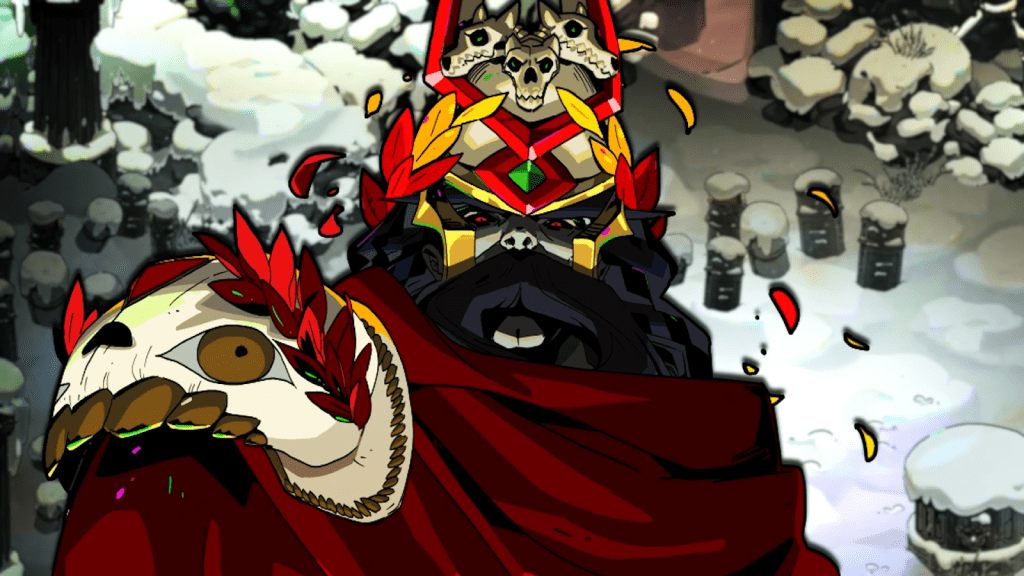
Zagreus obviously is able to defeat Hades at the end of his escape runs. While it is noted that Hades is normally much weaker than he was eons ago, the Extreme Measures of the Pact of Punishment restores the God of the Underworld to the strength he held at his prime, of which he even clarifies he fought his son with the same ferocity as when he fought the Titans. As such, Zag can scale to his father’s maximum.
- Destroys stone pillars
- Gigaros is stronger than Poseidon’s trident
- Fought back and even killed some of the Titans during his prime
Olympians & Titans
Zagreus is able to survive attacks from the Olympians when he angers them and they’re actively trying to kill him. More importantly, Hades, who Zagreus has bested, is one of the strongest gods, directly above ones like Poseidon, and several of Zag’s weapons were previously used to fight back against and even kill some of the Titans, who engaged in a large-scale war against the Olympians. Additionally, Zagreus would scale to Typhon (see the section below), who was able to damage Selene so badly that her scars still exist years later from the wound, with Selene herself being a Titan, and Melinoë, of whom Zagreus compares to, is strong enough to defeat other Titans like Prometheus. The Boons Zagreus gets from the Olympians also imbues him with not just additional abilities, but their stats as well, allowing him to, for example, gain Zeus’ strength or Hermes’ speed with his greatest builds. As such, he should scale to nearly all the gods at his best.
- Demeter is responsible for the seasons of the world, changing the weather on a global scale
- Demeter casted an everlasting winter across the planet (864.3 gigatons of TNT – 980.5 teratons of TNT)
- Demeter created clouds thick enough to blot out the sun entirely (601 gigatons of TNT)
- Demeter can freeze all of Poseidon’s oceans, which is just all the natural body of water on Earth (133.3 petatons of TNT)
- Poseidon split the land asunder and created the Rift of Thessaly, a massive flood stretching from Ephyra to Mt. Olympus (1.3 gigatons of TNT)
- Poseidon implies he can kill mankind by having the ground “swallow them up” with a massive earthquake
- Poseidon’s oceans once drank half the land (6.7 petatons of TNT goddamnit)
- The gods could wipe out Typhon, but at the cost of destroying Mt. Olympus and part of the countryside (749.8 megatons of TNT)
- Hermes is so fast at collecting death that not even Thanatos can keep up with him (Mach 1909)
- Hermes can cross any earthly distance in moments (Mach 3894.6)
- Hermes claims his boons can grant Melinoë (and thus Zagreus) ‘lightning speed’, though this may be hyperbole (Mach 524.8)
- Prometheus can make flame plumes on the horizon visible from Mt. Olympus
- Selene is able to bring Melinoë and Chronos from the House of Hades to Olympus and back to the Crossroads in a short period of time
- Selene is the moon incarnate and potentially responsible for moving the moon across the night sky with her steeds (9.2 exatons of TNT; See Before the Verdict)
- Helios is the sun itself, who is likely responsible for moving the sun across the sky with his flaming chariot (See Before the Verdict)
Melinoë

Zagreus is a secret boss within Hades II, challenged by Melinoë only after completing the main story. This would mean his sister, by this point, had defeated threats to all the gods like Chronos and Typhon. The former needed the gods to battle him 6v1 to even stand a chance, and yet even admits inferiority to the latter, who initially required the combined effort of the Olympians to be defeated, and returned much larger in the game. Despite this, Melinoë is able to defeat both Chronos and Typhon without any assistance. In spite of her accomplishments, and him being a lot rustier since his adventures in the first game, Zag is presented as an equal and difficult fight for Melinoë, even capable of killing her. As such, he’d be able to scale to Melinoë and the foes she’s defeated throughout her own journey.
- Can evade shots from Eris’ Exagryph aspect
- Wields the Aspect of Hel, which Demeter describes as being able to sense its cold all the way from Mt. Olympus
- Defeated Typhon on her lonesome
Weaknesses
Percy Jackson
Percy’s “fatal flaw” as described in the books is personal loyalty; he would sacrifice the world if it meant saving his friends. In some cases he can also be impulsive and hot-blooded thanks to his battle instincts, though this rarely hinders him. Overusing his powers can drain his stamina, though contact with water can rejuvenate him. If granted the Curse of Achilles, he will die if the weak point at the small of his back is pierced.
Zagreus
As capable of a God as the prince of the Underworld is, he is not without his main faults. His fighting style focuses on speed, meaning a faster and / or unbreakable opponent could give him trouble if he cannot collect his wits. Additionally, large parts of his arsenal are incompatible with one another due to how upgrade collection works in Hades, meaning he can’t do something crazy like multiple Calls in tandem in a single fight. This additionally applies for Mirror of Night and Daedalus Hammer upgrades, meaning Zagreus’ ginormous arsenal is actually pretty deceiving in how versatile it really can be. It’s still impressive of course, but he can’t bust out everything we listed all at once like some may assume.
Also after postgame escapes he deadass gets Looney Tunes “cross that one off the bucketlist!” style deaths. He’s died to bears, snakes, goats, big falls, comedically placed rakes, poisons, hell he LITERALLY walked into a fake painted path and died. To be clear, this all comes from the fact that, if too distant from the Underworld, Zagreus will significantly weaken in strength to the point of dying from these mundane natural causes, as was cruelly decreed by the Sisters of Fate, due to his birth being in the most lifeless place in reality. But also if it was officially documented in my house’s scroll files that my cause of death was Wile E. Coyote improv, then I’m hiding in Tartarus for eternity.
Before the Verdict
Percy Jackson
Limited Narration

While this doesn’t require a very long explanation, it’s worth noting that the overwhelming majority of books in the Percy Jackson series (and the various spin-offs) are told through PoV narration rather than omniscient narration – that is to say, it’s the characters themselves speaking from their own perspective, rather than a faceless narrator speaking objectively.
Because of this, there are a lot of statements made in narration that should be taken with a grain of salt, as they are very likely exaggerations that occur as a result of the character speaking casually, or using figurative language. The various microsecond and nanosecond statements would all fall under this umbrella, as would the various light-speed claims, comments of things moving “a billion miles per hour,” and so on. Hyperbole across the board, in all likelihood. Though of course, if you want to, you could entertain them as a high-end argument.
Stars
(How Do They Even Work?)
There are a variety of feats in Percy Jackson pertaining to celestial bodies, namely stars. From Apollo and Helios maintaining the course of the sun across the sky, to Artemis creating a constellation in The Titan’s Curse, to various other gods similarly creating constellations in The Lore™. However it is important to understand that stars in this verse are fucking weird.
Apollo’s Sun Chariot does provide heat to the entire planet and is responsible for the time of day based on its position in the sky (Apollo could change the time just by moving faster than normal). It’s also an actual car that can crash into a lake without the entire sun going away, and clearly isn’t a literal celestial body.
Does that mean that the Sun, the celestial body, just doesn’t exist in-universe? That the sun in Percy Jackson is just a car? Well, no. The Sun explicitly does exist, and science is explicitly real and accurate. It is an actual celestial body 91 million miles away. It’s just also a car. At the same time.
Confused? Well, reality in-universe is built around people’s beliefs. The gods exist because people believe in them, the afterlife that a person experiences is just whichever one that they believe in, and so on. This is why many different pantheons of gods and goddesses are able to exist simultaneously and embody the same concepts without conflicting with each other. Every belief system exists equally, and it’s explained that science is just another belief system. Science and myth exist simultaneously, which is why the Sun can be an actual celestial body, and Apollo’s Sun Chariot can still be the Sun also.
Confusing? Yeah. But what it means is that feats interacting with stars aren’t, by necessity, star level. The gods are interacting with mortal perceptions, the visual representations of those things, and in most cases (emphasis on “most,” more on that shortly) there’s no proof that they’re directly producing or interacting with “real” celestial bodies. And if they are creating real celestial bodies, that would be a weird metaphysical chain reaction, where the gods and goddesses would be creating a “myth” version of those stars that relates solely to mortal perceptions, and as a result reality shifts so that science mirrors that change. It would not be anything combat applicable in that case.
There are, however, some likely exceptions to this. Selene, the Titan of the Moon, when she rode her Moon Chariot into battle, was noted to have caused the craters in the actual Moon’s surface, implying that she is actually moving the Moon and that it is actually correlated with combat. This would by extension possibly apply to Helios with the Sun as well, since he and Selene are counterparts. Unlike the constellation feats, these feats are more usable as high-end arguments, since there is clearly an impact being had on the real celestial bodies and not just the representations, and the movement of such is clearly applicable to combat.
It’s also worth noting that when Apollo becomes mortal, he says that the Sun continues to rise every day because there are other pantheons around to keep it going. Which does imply that he (and by extension Helios) is at least on some level responsible for the actual movement of the Sun under normal circumstances. Still weird and esoteric, so at best applicable as a max-generosity high-end, and definitely dismissible from a more conservative viewpoint.
It’s also worth emphasizing that conveniently, scaling to Helios and Selene is a lot more air-tight for Percy than scaling to the gods, since they’re Titans and he’s fought and defeated stronger Titans than them. So the highest end arguments on his side (that are actually valid) are not reliant on scaling to the gods at all. Which is helpful, since scaling to the gods is a contentious topic that you could reasonably debate either way on.
Will Solace’s Weird Scaling

Percy scales to the vast majority of demigods, as he was stated multiple times during Heroes of Olympus to be the strongest among both the Greeks and Romans… but there is one weird exception. In the recent novels, which have focused on Nico di Angelo and Will Solace, Will gained the ability to manipulate light, which he used to…
*checks notes*
…channel the brightness and energy of a thousand suns, producing power comparable to a supernova, and harm Nyx with his light beams, despite the fact that she’s like a primordial deity whose body is made of stars and whose power is repeatedly compared to a black hole.
…
Um. Okay then.
Needless to say, this level of power is vastly beyond what any other demigod has shown. It’s beyond what any of the gods have shown, for that matter. Percy was completely helpless against Tartarus, a Primordial of similar stature to Nyx, and all of his statements of being the strongest demigod predate Will gaining his light manipulation. So there’s no reason to believe he would scale to Will. In the most recent book, Will’s passive light aura was stated to be capable of killing Hazel, and she’s a Big Three kid like Percy, albeit not as strong as him. With that in mind… Will is just cracked for no reason.
Is it likely that Will is intended to be stronger than Percy? LOL, probably not. There will probably be more statements in the future that Percy is still the strongest. If they were to fight in the future, in all likelihood Percy would win. But with the evidence available currently, none of Will’s feats would scale.
Zagreus
Light-speed Hades?
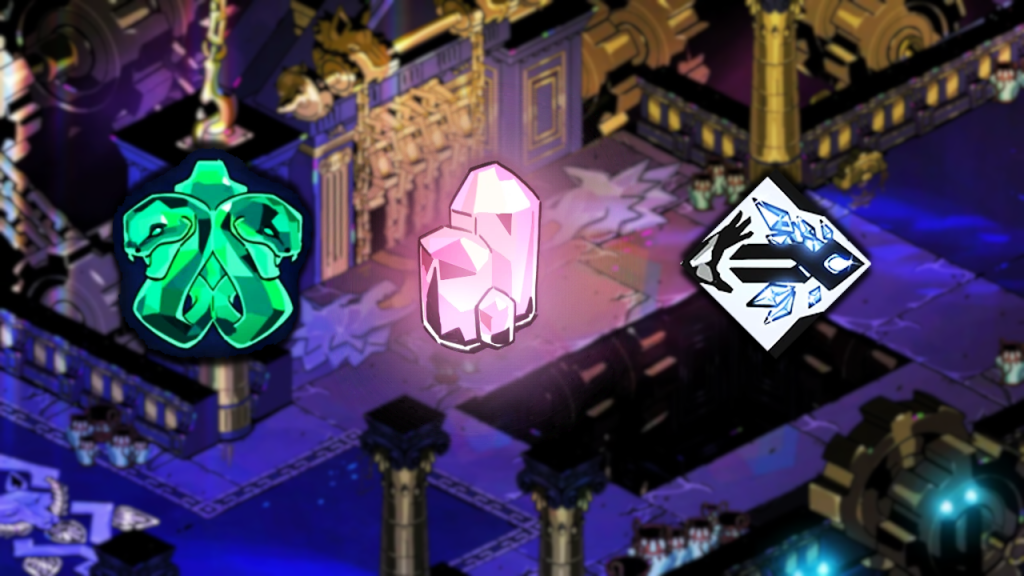
Hades has several laser attacks in game that actually meet most qualifications for light-speed. They lack notable disqualifiers like having force, are noted to have intense heat, and more importantly, come from realistic sources. The Brimstones, Snakestones, and even Zagreus’ Crystal Beam fire these beams from, well, crystals, a realistic source for refracting and emitting light. Hades II also has attacks like Lunar Ray from Selene, the moon goddess who grants her light, which can be combined with Apollo’s light to fire a solar-infused ray. So this all seems solid; what’s the catch?
This unfortunately makes calculating in-tandem movement impossible. If Zagreus’ (or any other characters) movements and the lasers’ movement are both one-frame, all that means is that both are moving in less than 1 / 60th of a second. If both movements take less than one frame, they can both just be contained within that time-frame, not be occurring simultaneously, and Zagreus’ movement could be happening first. This is a standard consistent for other video game verses, and should be held consistent here as well. Thus, while Hades has multiple lightspeed lasers, there is unfortunately no definitive way to prove the cast comparable in speed to them.
The benefit, at least, is that Zagreus has a couple of light-speed attacks. There’s the Crystal Beam Boon as mentioned, but also the Adamant Rail’s Aspect of Lucifer fires a continuous laser beam that’s also one frame, but has similar coloring and presentation to the actual lasers. While he can’t move or react as fast as them, they’re still pretty useful combat options.
Helios & Selene;
the Sun & Moon

Two Titans in Hades are pretty important when discussing higher end feats; those two being Helios, the Sun, and Selene, the Moon. These two divine beings represent the two prominent celestial objects surrounding the Earth, but how does that translate to actual VS stuff?
Starting with Helios, he’s directly said to be the sun incarnate several times. He’s also said to have a flaming chariot, and, more importantly, Thanatos claims his chariot riding across the sky is synonymous with the sun itself shining down on the surface. Selene herself even says on her rides across the night sky, she pauses to catch a glimpse of him ‘engulfing the surface’, and Demeter makes mention of Helios not shining down on the surface for quite a while. These all would support the idea that Helios is, well, the sun, and his chariot is likely responsible for its movements across the world.
The main issues come in that, while Helios controlling the sun’s movement is pretty likely and inferable, those are the key words; ‘likely’ and ‘inferable’. It’s not quite said that Helios moves the sun directly, which can throw upgrading the verse to such high levels into question.
The other sticking point is that Helios is never once shown on screen, and so there’s no solid frame of reference to use for scaling to him. However, given his status as a Titan, it’s possible to argue other characters being comparable to Helios via the defeat of the other Titans, some of whom were even killed, by the Olympians. Melinoë also defeated Prometheus and Chronos, two exceptionally powerful Titans with a lot of hype given to them, for supporting evidence. It’s unknown how other Titans compare to Helios admittedly, but an argument can still be formulated there.
Selene by comparison is more vague on whether she moves the moon. She has similar statements of being the moon incarnate, riding across the night sky, having high vantage points to see the whole world, and even an eclipse blocking out her moonlight. However, the ending credits for Hades II shows her riding her steeds across the sky and the moon not really moving.
This would muddy the argument a bit, but can be reconciled in that she’s the brother of Helios, and similarly represents the moon and rides across the sky the same way Helios does as the sun. The two are meant to be counterparts, and if Helios and his chariot are synonymous with the sun’s rising, then contextually, Selene and her own chariot should be the same with the moon. Similarly to Helios however, this is largely just inferable.
Scaling to Selene is much easier to argue by comparison; Typhon directly wounds her so badly that those scars persist, and Melinoë, who Zagreus scales to, was able to defeat a stronger Typhon on her own.
Tldr; Selene and Helios are likely responsible for controlling the movements of the moon and sun respectively (though it’s easier to argue for the latter), but it’s only just possible rather than completely airtight. Scaling to Selene is clear-cut while it’s more in the air for Helios, but can be done through the idea other Titans are equal to him and the Olympians killing several of them. That requires the assumption Helios isn’t massively above the other Titans, but given the amount of hype other Titans like Chronos get, it’s possible. However, these two feats should only be argued as max-generosity high-ends to cancel out similar arguments, and it’s much safer to put Zagreus around the other feats we know with greater certainty that the Olympians are capable of doing.
Chaos Scaling
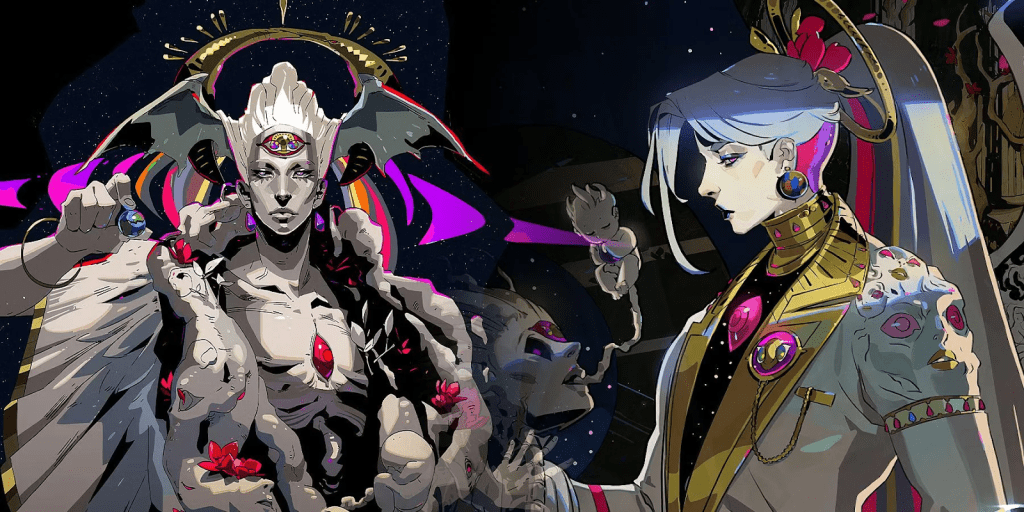
There’s one godly being that went without mention for Zagreus’ scaling chain, that being the primordial creator of all existence, Chaos. Our non-binary god has the most impressive feat in the series by far, repeatedly described and stated to have forged all of existence from themselves, having power over reality, and having created all life and consciousness. This would be pretty definitively Universal level.
The problem is scaling, or, more accurately, lack thereof. Chaos is a being unbeknownst to many of the Olympians, and so any frame of reference they could have to Chaos’ power is unknown. In fact, none of the gods have hype statements or implications reaching anything close to the cosmic scale Chaos operates in, and it’s stated even all the gods sprang from them, making it very likely the primordial being is far above them. Chaos also never directly intervenes in fights, only assisting Zagreus and later Melinoë through granting various Boons. They’re more so an observer, wanting to see outcomes unpredictable to them, and as such have no interest in engaging in combat. This also makes it so that Chaos’ lack of fights make justifying scaling even harder than it already was.
Ultimately, in spite of how impressive they are, the lack of any scaling chains to Chaos, combined with how much greater their feat is than any of the other gods, makes comparing Zagreus to them unfounded, at least as of now.
Fight Script
As a bonus, here’s an accompanying fight script for the matchup. We hope it sells you on how fun it can be. Spoilers for the outcome of course.
Verdict
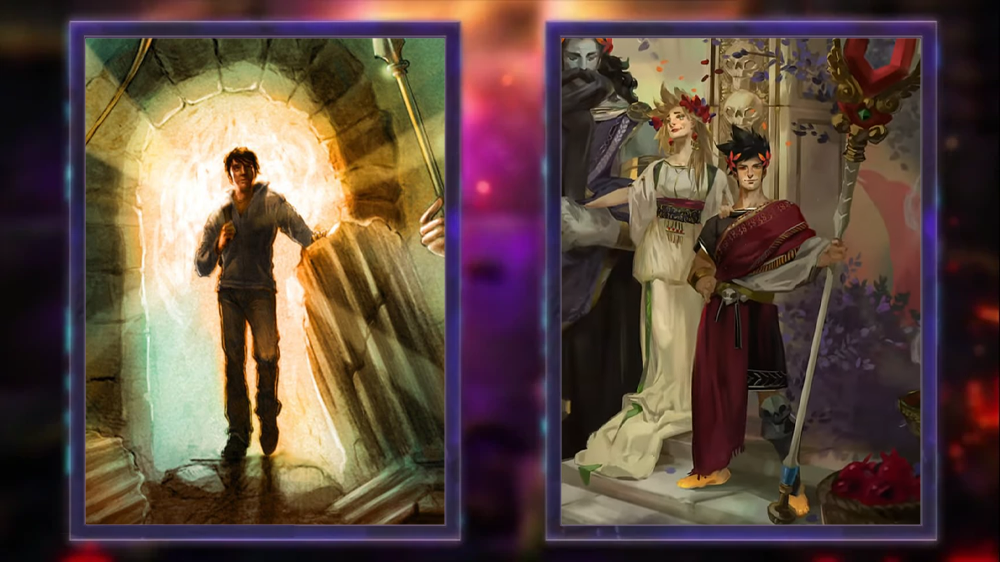
Stats
When it comes to strength, it’s worth acknowledging Percy dwarfs Zagreus just in what they’ve done directly. Causing volcano eruptions, destroying the Hubbard Glacier, and holding back Atlas’ celestial burden are all incredibly impressive, much more so than Zagreus breaking pots and pillars. However, the peak of their strength, especially for the prince of the underworld, is going to come from the wide variety of foes they defeated; most notably, their respective Gods.
This is where the scales start balancing out a bit more. Gods within both series are capable of destroying mountains (Zeus shearing Mt. Etna VS the Olympians destroying Mt. Olympus), creating heavy storms (Khione and Kymopoleia heavy storms VS Demeter creating clouds to blot out the sun), flooding massive areas (Poseidon flooding Argos VS Poseidon creating the Rift of Thessaly), and at their best, affecting the whole planet (Zeus flooding the world VS Demeter’s everlasting winter and freezing the oceans).
Of note however, the highest and most airtight calculable feat you can use for them, Zeus’ flood at 28 petatons and Demeter’s ocean freezing at 133 petatons, would end up favoring the latter by about 4.7x, and thus give Zagreus the edge. While not an insurmountable strength gap for Percy to work with, it is still a notable edge in Zagreus’ field.
There are varying arguments to have both combatants reach higher in strength, but by and large, they would cancel out. Selene in both series is implied to be the moon itself and capable of moving it across the sky and during its cycles. While it’s a bit more blatant in Percy Jackson in comparison to Hades, it’s not to such an extent that they aren’t comparable arguments with some leeway, and both arguments would thus end up being equal.
Helios in Hades is directly stated to be the sun and is likely responsible for controlling its movement, but it’s a bit inferable instead of being directly said, and scaling to him isn’t concrete due to him not showing up on screen, though it is possible due to his status as a Titan and the Olympians having defeated several of them, as well as Melinoë defeating other powerful Titans like Prometheus and Chronos. Likewise, it can be matched through various feats in Percy Jackson, namely Helios and Apollo having a similar role there as well. This can be somewhat corroborated by other gods creating stars and constellations, though the nature of how celestial bodies work in the series also make those showings more debatable. At the end of the day though, feats and arguments regarding celestial bodies for both verses are going to end up matching under most interpretations, and thus just make strength relative again for both combatants.
The biggest key factor, however, is that even if the gods in both series were comparable 1 to 1 in strength, only Zagreus directly scales to, if not slightly above the gods in Hades, whereas Percy is still ultimately weaker than his gods. He’s still able to pose a threat to them, but the narrative makes it clear he’s not directly at their level. Meanwhile, Zagreus is able to defeat Hades at his prime, and combat Melinoë on equal ground even after she defeats threats on par with, if not greater, than the Olympians.
Even with the Titans and their debatable celestial body feats, they’re portrayed in Percy Jackson as high effort foes for the son of Poseidon to defeat, and he wouldn’t be upscaling from them to such a significant extent. On the flip side, Zagreus being able to match the Olympians would put him on a level above Titans like Selene, given the Greek gods ended up engaging in a large-scale war against the Titans and not only prevailed, but ended up killing several of them. Melinoë defeated a version of Typhon even stronger than the one that gave Selene scars that persist in the modern day, which works as supporting evidence that Zagreus is superior to his Titans, and thus, stronger than Percy.
Percy can help keep up in strength by dousing himself in water to increase his physical prowess, and the boost is significant, doubling his strength and allowing him to overwhelm enemies previously crushing him. However, while Zagreus’ stat amps aren’t individually as potent, he has much more to offer between Keepsakes, various Boons (Artemis to increase critical hit rates, Athena to increase defense, various others to increase his strength), and different weapon Aspects, some of which can even stack on top of one another. While he can’t utilize every single stat buff all at once, the amount of options he has in this field can help him keep up with Percy. In this sense, it’s quality VS quantity, and once again, they by and large cancel out.
Fittingly enough, the demigod, in spite of his best efforts, falls slightly short of strength compared to the actual god in this bout.

However, it is worth noting that the power gap, even at a 4.7x advantage in Zagreus’ favor, isn’t enough to where Percy can’t do any damage to him, especially since he mainly fights with a sword. Within reason, both are going to be in the range of hurting one another, so strength won’t be what decides the match.
A much more substantial gap, and one that is just as consistent as the relatively close strength gap, lies in the speed category. No matter how conservative or generous you are, whether you’re looking at low-end or high-end showings, character statements, upscaling, consistency of performance, or just general quantity of feats, speed is a category that Percy will always have the advantage in.
For starters, if you hold back on some of the crazier high-ends and go for a more “grounded” take on speed, Percy generally has the edge. Zagreus doesn’t really have many compelling onscreen speed feats outside of Hermes’ lore statements, while Percy has deflected bullets with his sword. Additionally, Hermes claims that he grants Zagreus “lightning speed,” but even taking that literally, there are way more feats in Percy Jackson in which characters actually react to and block natural lightning on a consistent basis.
Of course, if we bring in The Lore, we start getting into higher mach speeds for both sides. And to Zagreus’ credit, he’s far from slow when we start looking at higher-end arguments. With Hermes’ boons specifically, he’s granted speed comparable to Hermes’ own. This is impressive since it’s stated in-game that there is no earthly distance that Hermes cannot traverse in moments. Taking this literally, assuming a moderate time-frame of 15 seconds, Hermes’ top speed (and thus Zagreus’) would come out to nearly Mach 3900. Maybe a little higher or lower depending on the time-frame you assume, but in that general ballpark.
In comparison, Percy as early as the first book in his series could keep up on foot with flying shoes enchanted by his own version of Hermes, which were capable of reaching Kronos’ location in the depths of Tartarus within a few moments. Given that it takes a whopping 9 days to free fall into Tartarus, the shoes in question would need to have been moving over Mach 12,000, over three times what Zagreus can reach with his best speed boons.
And that’s just one example. Maybe you don’t buy that one! That’s fine. Two books later, Nico was able to erupt fire up to the surface from the Underworld, and Percy was able to react to and dodge that. Given the Underworld has a stated depth of 2,310 miles, that would clock in at Mach 10,800, still well beyond Zag’s limit. Not to mention Apollo, who can traverse a quarter of the planet’s circumference in a fraction of a second just by getting spooked a bit too hard, requiring speeds over 13% the speed of light. That’s roughly 30 times faster than Zagreus’ top speed.
Even if you discard god scaling for Percy entirely, he’s also physically superior to his counterparts from the Kane Chronicles, given that he beat the everloving hell out of Carter, one of the top 3 magicians in the world. Carter would be superior to his allies such as Zia, who was able to react to a literal sunlight beam from less than 20 feet away after it was fired. That would require her to react and respond within about 20 nanoseconds, which translates to over 16% the speed of light, 36 times faster than Zag.
And it bears emphasizing that again, Percy is superior to this. He was able to blitz Carter from a long distance away in their fight, and that’s without additional speed amps from being in contact with water, and without accounting for the fact that Percy gets stronger and faster over time after this. Other demigods who should scale to these feats, like Annabeth and Piper, are consistently shocked at his speed even without water amps, with the latter perceiving his strikes as a blur even from a distance.
Stack his amps on top of that, and he’s going to be perceiving things that were previously relative to him in slow motion, and thus should be substantially outspeeding a value already dozens of times faster than Zag’s best. That’s even without factoring in various light-speed statements due to issues with the narration, which would widen the gap even further if accepted.
With all this in mind, in terms of both quality and quantity, Percy consistently has much better speed metas at various levels of argumentation.

An (at minimum) 36 times speed gap is going to keep him well ahead of Zagreus even with the slight strength gap. For reference, that’s larger than the speed difference between an average person and the fastest rocket-propelled torpedo ever made. In practice, you can think of it like this: Percy will be attacking 36 times in the same time span it will take Zagreus to attack once.
Now, that being said, Zagreus does have several light-speed laser attacks of his own which are… well, light-speed. Of course, he needs to actually aim and fire them, so Percy should still be capable of dodging them just fine, but the speed of the actual beams is enough to pose a threat to Percy, in spite of the physical speed gap between him and Zagreus. Which brings us to the core of the debate: can Zagreus’ overwhelming arsenal allow him to get the hits he needs in spite of the difference in speed?
Arsenal & Abilities
As far as actual equipment goes, Percy’s standard arsenal isn’t as impressive as Zagreus’. Riptide is a splendid blade, but Stygius is just as impressive, and has different Aspects and buffs from Hammers of Daedalus to offer more power. Percy actually wears armor at times unlike Zag, but the underworld prince has options to do greater damage to armored opponents through various weapon upgrades. The transforming shield is a viable defense option, but Aegis not only works for defense, but also offense, and has far more options in that field as well. Zagreus also has more weapons to boot, some of which even work at long range like Coronacht.
Most of Percy’s one off equipment is unlikely to change too much. Poseidon’s pearls can help him escape a pinch, but are limited in supply. The lion jacket is a good defensive tool, but Zagreus’ options of dealing more damage to armored foes can circumvent it, alongside greater enough power. Other options like the Chameleon Armor he hasn’t used in combat, and Zagreus has experience fighting against Hades’ own invisibility tactics to cancel it out.
Mrs. O’Leary is a powerful summon, larger than tanks and with the potent Shadow Travel ability, but Zagreus has much more summons he can call forth like Megaera, Thanatos, Achilles + Patroclus, etc., all of whom can deal huge amounts of damage within a respectable area of effect. Dusa in particular can shoot out projectiles that have a chance of inflicting petrification on the poor sap hit by them. Zagreus ends up benefiting more as far as summons go.
Percy would need to rely on his more innate abilities, and they do offer a lot of advantages in this fight. His application of water is far greater than anything Zagreus can get with Poseidon’s boons, given he can use it to flood massive areas, form water constructs, propel himself with it, and more. This also extends to his ability to alter the weather, creating mini hurricanes to overwhelm enemies, manipulating icy water, or using the Mist to potentially disorient Zagreus and make him see things that aren’t actually there.
At the end of the day though, Zagreus just has more to throw out thanks to his Boons. Sure, he can’t stack or throw all of them out at once, but they offer a wider pool of options by comparison. He has ice manipulation powers to match thanks to Demeter, and on top of that, can shoot out lightning with Zeus, fire homing arrows with Artemis, gain several barriers to reflect projectiles or defend from attacks with Athena, use several revenge Boons so that any time he’s hit by Percy, the latter is punished back, and much more. Many of these Boons can inflict various status effects like Jolt, Hangover, and Doom for bursts of damage every few seconds. These don’t just apply to Zagreus’ basic attacks, but his Cast, Dash, and Special Moves.
Even outside of Boons, Zagreus can call upon the gods for various effects like raining down lightning, giving him temporary invulnerability, turning him into a spinning whirlwind of power, or making himself invisible and intangible outright. Various items like Keepsakes, the Well of Charon, and the Mirror of Night give him typical stat buffs on top of what Boons can offer, grant him more health, reduce damage, and most impressively, allow Death Defiance, which revives Zagreus from death up to three times and continue the fight. Combined with Skelly’s Lucky Tooth and Chaos’ Defiance Boon, this means Zagreus is working with 5 extra lives in this fight at his best.
Unsurprisingly, Percy is just outmatched in this field. The Chthonic God has more weapons, more summons, more items, and more godly abilities to dish out.

With all that said, it’s important to note that Zagreus’ options for combat, while far more vast, can’t all be used in tandem or stacked on top of another; many Aspects and Daedalus upgrades are incompatible, he can only bring one Keepsake at a time, and his Boons, incredible as they are, can only have one applied to his attack options. So while he still ends up taking the edge here, it’s a lot more overwhelming on paper than it is in execution.
To follow up on that, one should consider how Percy will be able to respond to these options and withstand them, and in that regard, the Son of Poseidon actually holds up surprisingly well. For starters, yes, his water immunity makes him thoroughly impervious to any water-based attacks from Poseidon’s boons. He’s also tanked lightning from Thalia and Jason, both children of Zeus, and it’s established that water can heal him from the nerve-damaging effects of electric shocks. Ice manipulation would similarly be ineffective, since not only can Percy control ice himself, but other demigods have demonstrated the resilience to survive being frozen as long as they have a way to defrost. Which, of course, Percy does.
The majority of the Boons that are focused on dealing chip damage are going to be rendered much less useful by Percy’s healing, which will constantly undo any progress made by effects like Jolt, Hangover, and Doom. Zagreus’ healing options are much more limited by comparison, as a lot of them are only applicable outside of combat, and many of the ones that don’t require him to land an attack, which is unlikely given the speed gap. Even if Zag uses barriers to reflect Percy’s water attacks back at him, those attacks won’t be able to harm Percy anyway. And of course, it will boost his own stats upon contact, canceling out Zag’s own amps.
Invisibility and intangibility is definitely useful, but Percy and other demigods have consistently showcased the ability to interact with intangible things and see through magical veils that render things invisible. You could perhaps argue that Zag’s invisibility would still work on Percy given that Annabeth’s Yankees cap works against him, but Percy’s supernatural senses should help accommodate regardless. For example, if he floods the area or creates a hurricane around himself, he’ll be able to sense Zagreus just fine, since he’ll be in contact with the water.
Some specific summons that Zagreus has could potentially end the fight if Percy isn’t careful. A good example would be Dusa, who could turn him to stone with her projectiles if they hit him, since he has no innate transmutation resistance. However, Percy has had run-ins with Medusa before, so he would definitely know to be wary of this. Coupled with his speed advantage, he should be able to dodge pretty easily, and could even use his Multivitamins to make himself immune to the tactic altogether.
Which leaves us with two abilities that are mainly going to be a problem for Percy: the Death Defiances, obviously, and Artemis’ homing arrows, which are especially dangerous coupled with boons that give Zagreus a higher chance to land crits. Given his slight strength advantage, if Zagreus is able to land a crit, that could be deadly. That said, the arrows’ homing effect isn’t perfect. They can still be blocked or dodged by characters whom Zagreus is relative to in speed, so someone like Percy who is much faster should still be capable of consistently evading. This is made especially possible by his ability to sense projectiles in slow motion, like ocean currents, which will substantially improve his ability to respond.
Before we talk about the Death Defiances, it is important to quickly cover as well whether Zagreus has resistances to all of Percy’s kit. While it’s obvious that water and ice and swordplay aren’t going to trip him up much, it is worth noting that Zagreus has never encountered anything similar to Percy’s ability to drain the liquid from his body. If he were subjected to that, he would have very little in the way of counters. Meaning that even though Zagreus has way more to throw out compared to Percy’s limited arsenal, he loses when it comes to resistances.

Which brings us to the Death Defiances, undoubtedly one of Zag’s biggest and most undeniable advantages going into this fight. Five whole extra lives means that Percy is going to have to kill him six times for him to stay dead. Sure, they don’t bring Zagreus back at full health, but even with a speed advantage, is something like that really reasonable?
Tertiary Factors
As far as sheer combat skill is concerned, the two are relatively even. Both can solo entire armies of adversaries at their best and have triumphed over gods and monsters with thousands of years of experience, whose skills are the stuff of legends. With that said, neither is going to be substantially outperforming the other in a sheer combat sense. That said, if two fighters are of equal skill and one of them is 36 times faster, that’s not a great sign for the slower one.
And that pattern kind of persists when you evaluate other miscellaneous categories. When Percy gets serious, he tends to go for big AoE attacks that flood or eclipse the entire battlefield, which means that he’s always going to know where Zagreus is, and have an easier time keeping Zagreus overwhelmed and on the back foot in spite of the difference in variety. His range is also better, given his ability to rupture the Hubbard Glacier (which is miles long), call on water from up to half a mile away, and scale to other demigods like Nico and Jason who have even greater range feats. All of which ultimately offers him numerous options for zoning Zagreus out, preventing him from getting the attacks and hits off that he needs, and taking him down repeatedly before he can gain any substantial footing.

Moreover, assuming the fight comes down to stamina, Percy would win for a few reasons. For one, he has essentially unlimited healing and stamina refreshing as long as he has access to water, but he was also able to stay awake for 9 days and then make his weeks-long trek through Tartarus without any of that. Using actual in-game time-frames, Zagreus can fight for about an hour without any sort of issue, but that obviously pales in comparison.
And while Zagreus can keep coming back to life for a limited number of times, it’s worth emphasizing that this is something that Percy deals with literally all the time. He’s fought enemies like Antaeus that could keep regenerating repeatedly, and the entire plot of Heroes of Olympus was that monsters stopped staying dead due to the fact that the Doors of Death were open. An opponent who he needs to kill repeatedly would not be anything new or surprising to him.
Conclusion

“Look, I didn’t want to be a half-blood.”
Advantages:
- Much faster
- Comparable enough in strength to harm Zagreus
- Heightened senses will allow him to predict both projectile and melee attacks more effectively
- Water empowerment can match Zag’s amps and widen the speed gap
- Water can heal any chip damage done to him
- Water can negate various status effects
- Physically resistant to water, electricity, high heat, and so on
- Multivitamins and experience against gorgans counter Dusa’s petrification
- Has a lot of experience against opponents who can revive
- Range, area of effect, and battlefield control will help him stay ahead of Zagreus
Disadvantages:
- Weaker and less durable
- Vastly outmatched in sheer variety
- Needs to kill Zagreus several times to win
- Inferior summons

“… All right, let’s give it another shot.”
Advantages:
- Stronger and tougher, either slightly or by a decent amount…
- Various stat amps can help keep up with Percy’s increasing strength from water empowerment
- Much more variety in weapons, items, and abilities
- Superior summons, with more to boot
- Several abilities, like temporary invisibility and invincibility, can allow him to stay in the fight for longer
- Death Defiances, Lucky Tooth, and Chaos means he’s capable of reviving up to 5 times, and must be killed several times in order for Percy to win
Disadvantages:
- …but not to such an extent that Percy can’t harm him
- Much slower, with the gap only increasing through Percy’s water empowerment
- Less viable healing options by comparison, as a lot of them are applicable outside of combat or require him to land a hit on Percy
- Chip damage and status effects can be easily cured of through Percy’s water empowerment
- Far inferior battlefield control by comparison, which would make landing fatal hits even more difficult
This matchup is a lot more complex than it may seem on paper. With Zagreus’ beatable but still dangerous advantage in raw power, alongside his large ability catalogue, it’s reasonable to say that he could win a decent amount of scenarios. After all, he just needs to land 2 or 3 good hits. Seems fair, especially considering how Percy would have to land several to just get through one of Zagreus’ multiple Death Defiances. He’s going to have 3 extra lives at worst, 5 at best. Fortunately for the son of Poseidon, he had everything he needed to respond to these problems and take down the son of Hades.
The massive speed advantage of 36 times makes this a huge blitz in Percy’s favor, and that’s without considering factors like the direct light speed statements you can argue. This means that any and all of Zagreus’ attacks, apart from the ones that are actually light speed outright, would be moving in slow motion for Percy. Would it be a sword swipe, stray arrow, automatic counter attack, etc,. And even with Zagreus’ light speed attacks, Percy being so much faster than Zagreus himself would make aim dodging not that problematic anyways. It also doesn’t help that while Zagreus has a large list of potential attacks to choose from, he can only bring so many at a time into any given fight. So while he’s obviously super versatile and can attack in many different ways, it’s not as many different ways as some would assume. At least not so versatile to where Percy can’t keep up enough to press his advantages.
Of course, considering how few good hits Zagreus would actually have to land, Percy would be at risk if he stuck up close, or were crippled by Zagreus’ many different status effects. But considering his projectile range being able to extend for miles, his superior travel speed, and water being able to heal wounds and ailments? Zagreus lacks the means to chip Percy down, let alone approach him if Percy decides to get destructive and zone him out. This isn’t to say this is impossible of course. Zagreus has good mobility with his dashes and respectable travel speed in his own right, combined with that strength advantage and miscellaneous defensive powers. But the big difference here is that the difficulty in landing just one of the few hits Zagreus needs is a super big task by itself, let alone pressuring Percy enough to get past his range and more accessible healing method.
Think of it like this. You have an RPG battle between a high power giant and a speedy wizard. The giant only needs very few hits to win, but he’s only launching one hit every ten seconds that only has a 1% chance to hit. In contrast, the wizard needs a thousand hits, but he can launch one every single second, and they’re all guaranteed to hit, and if the giant goes a minute without hitting him, he can undo the damage. Zagreus may be a versatile, enduring, and strong wall to overcome, but he’s not a wall Percy can’t climb over with his superior speed, resistances and battlefield control. You may call Percy a quick Lightning Thief for how he claimed this win, but Zagreus’ chances are soaked in the blood of his defeat. The winner is Percy Jackson.
Next Time…

Thanks for reading, and Happy New Year!



 G1 Death Battle Fan Blogs
Leave a comment